A recent flurry of articles in the Guardian/Observer food pages following this year's Michelin Guide highlighted the dichotomy in Brum's food scene. The inimitable Jay Rayner's argument is that even after Carters bagging a fifth Michelin star for the city there's still little choice for good food at a reasonable price in Birmingham. It's unfortunate that the example he cites as being the exception, The Queens at Belbroughton, is actually in Worcestershire! It's a lovely pub with a reputation for really good traditional food. The Sunday roast lunch is well worth the trip out to Clent. It joins great restaurants like Polpo, A Wong and Honey & Co in this year's list of new Michelin Bib Gourmands. Birmingham has no restaurants in this lower Michelin tier that recognises "exceptional good food at moderate prices". For me it's clear that, with or without Michelin guidance, the middle ground in the Birmingham food scene is still a wasteland.
So cue a minor backlash, commenters quick to mention Balti, curry, Mr Egg and all those Birmingham food clichés that actually reinforces Mr Rayner's argument. Local food critic and egghead Richard McComb writes a response piece in the same publication but fails to mention a single restaurant in the middle ground. It's dominated by chains, big and small, that prioritise corporate ideals over anything that puts good food first. I'm going to assume that we all agree on this because if you've read this far you must believe that good food comes from good cooks that care and not from a boardroom. The issue for me are those Birmingham apologists that everytime Brum food is knocked they play the Independent card. I know how hard it is to open and run an independent business in this town, I'm not knocking any indie businesses on those grounds. BUT! There is currently a dogma in the Brum food scene that preaches and publicises a select image of Independents completely ignoring the rich diversity here and on top of that confounds the idea that Independent automatically equals good food.
Let's take that first point. I genuinely feel it's a whitewash in a somewhat literal sense, these thinly veiled PR excuses for food and lifestyle blogs in the main ignore anything that can be found in our ethnic neighbourhoods. If you were to believe your average Birmingham food blogger then we only exist in a patchy spiral that starts in the centre, meanders through JQ, Edgbaston, Harborne, Moseley and Kings Heath. A myopic vision of Birmingham which as a native I find unrecognisable and reprehensible. Stop it, just stop writing those blogs and puff pieces in your cosy Harborne cafes and get out into Handsworth, Lozells and Sparkbrook before you claim to have found the latest hidden gem.
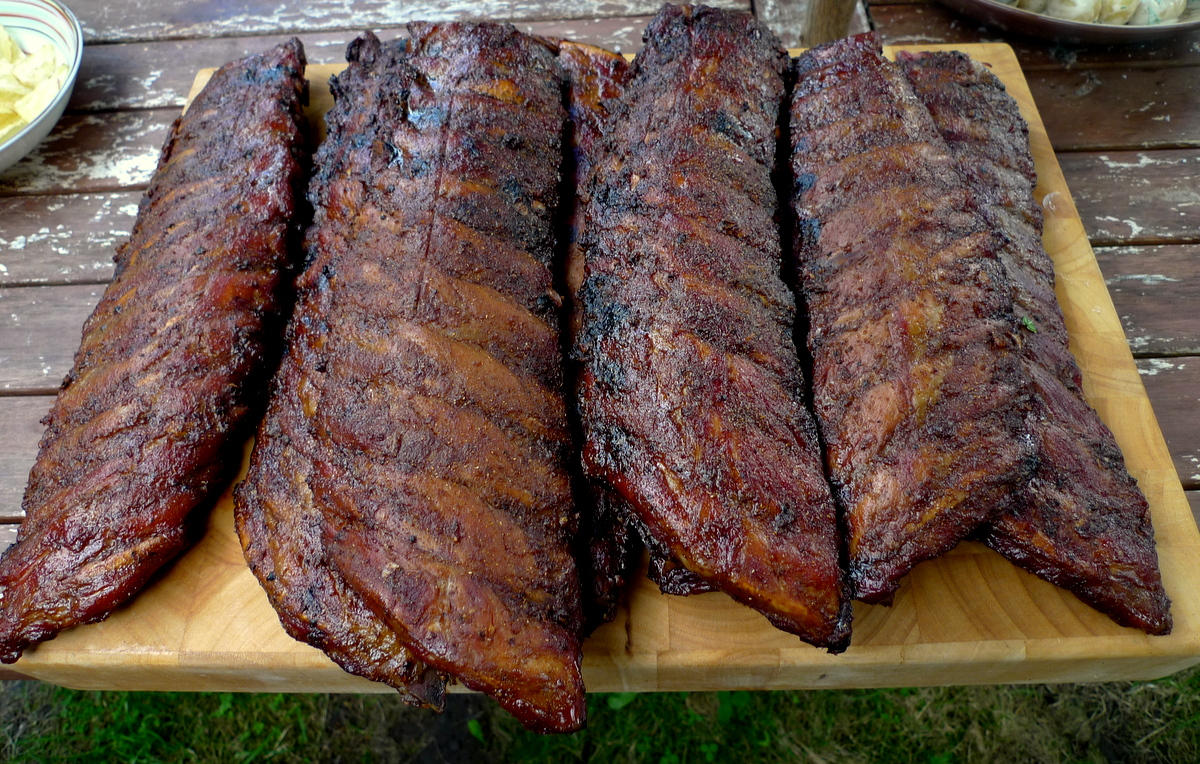
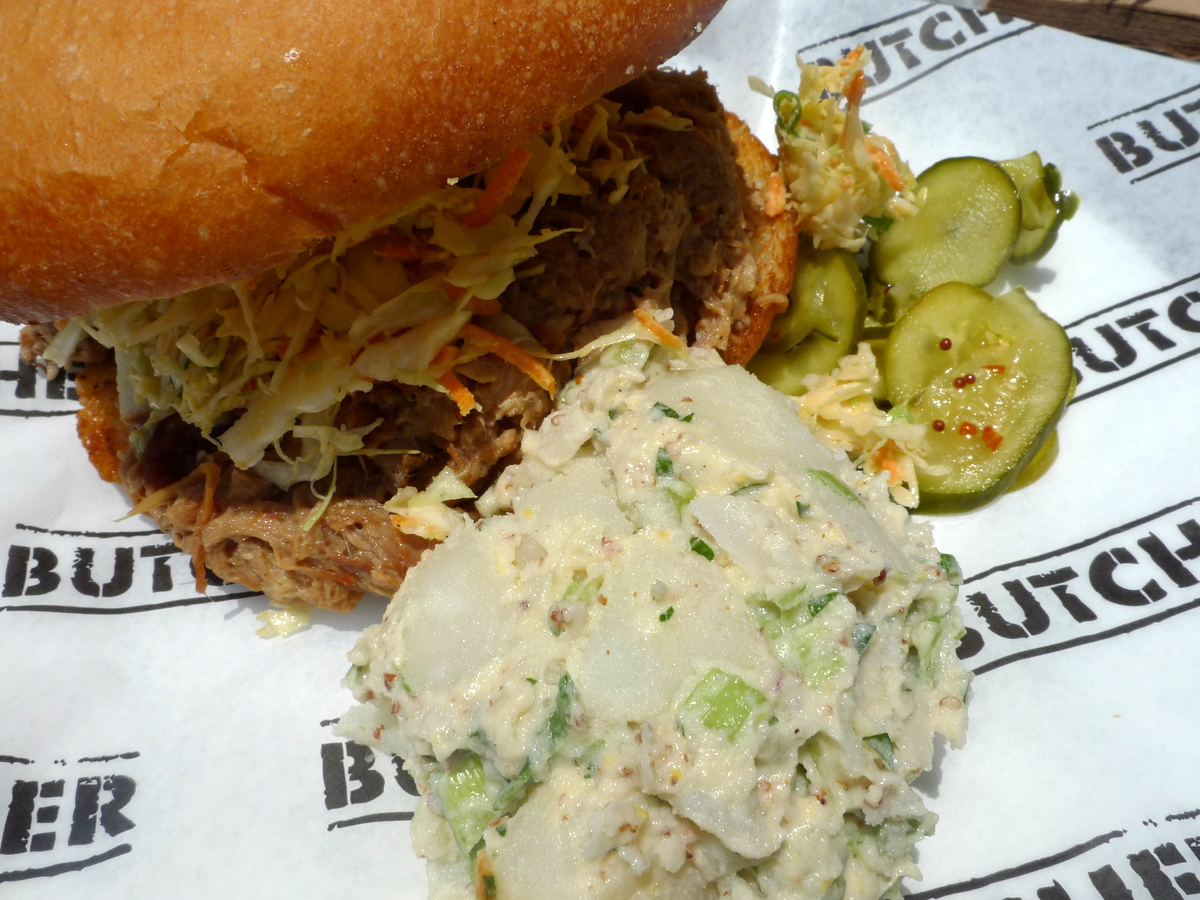
The second point needs stressing. Setting up an independent food business takes a lot of hard work and courage but absolutely does not guarantee good food. Go find the great independents in our city but don't be forcefed by anyone, least of all me. I can't tell you what to like, if you know me then you know I wouldn't listen to me either. Use your own judgment just don't believe in the image that's been glossed all over town. The middle ground isn't another mediocre gastropub/burger/bbq/wing place. The middle ground should be The Queens, Two Cats Kitchen, Fiesta Del Asado, Tipu Sultan, Pushkar, Butcher's Social, Andersons, Manchester Seafood. A combination of interesting food and/or surroundings which doesn't break the bank. If you're regularly spending £30 on starter/burger/fries/dessert in the same old places then you're the reason Birmingham doesn't have better restaurants in the middle.
You can't compare us to London, that would be like comparing us to New York or Berlin. But you need to look at these places to see what's possible. Seasonal modern British, progressive East and SE Asian (Chinese/Japanese/Korean/Malaysian/Fusion), regional Italian, real southern Bbq, Mexican, no holds barred Thai, the list goes on and on as to what Brum is missing in the middle. Let's compare us to somewhere more reasonable, Bristol. I would swap every other curry house we have for a Birch or Bell's Diner or Paco or Ethicurean. Not another chain outlet in a shopping centre. Not another tick box exercise for one of our local chains disguised as Independent.
Good food is like good music, it's made by people who care, it affects you and moves your soul. You don't want to end up watching Mumford & Sons on the pyramid stage at Glastonbury when you suddenly realise that they suck balls. Don't believe any hype about music, the same goes for food.
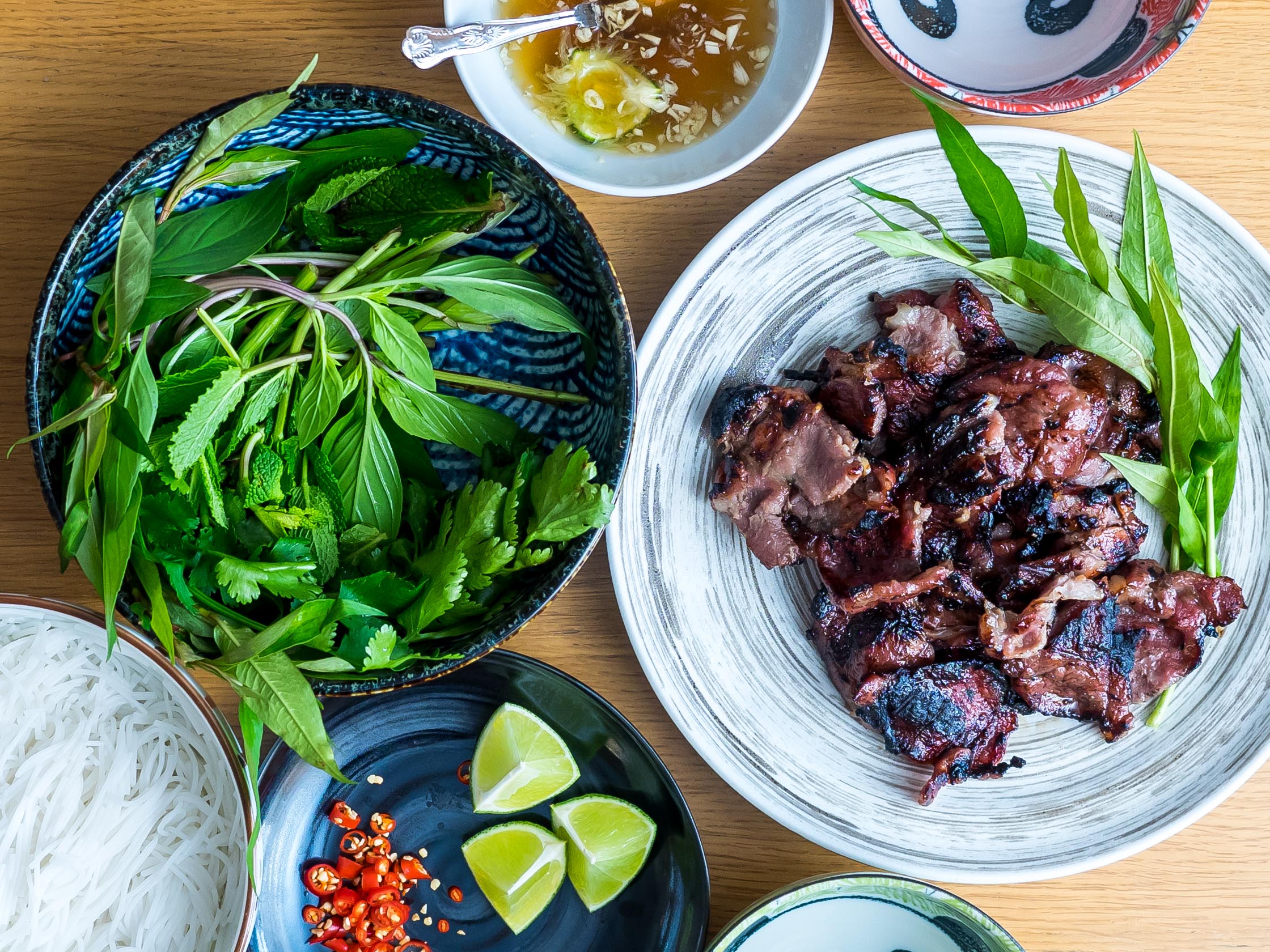
Sweet basil, Vietnamese mint, purple perilla, fish mint, betel leaves, sawtooth coriander, three crabs premium fish sauce... You don't need all these things to cook good Vietnamese food but if you have all of them then you have no excuse not to!
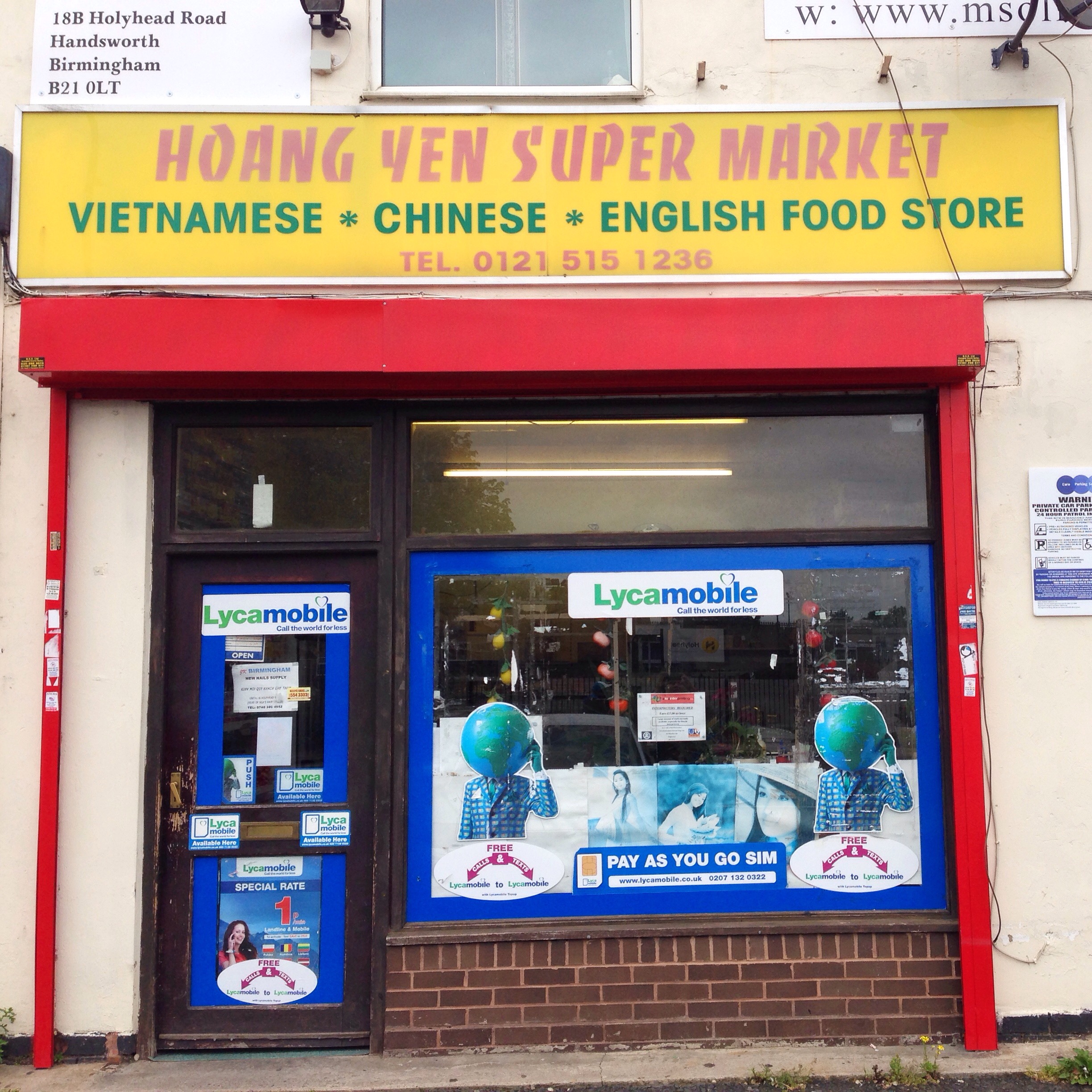
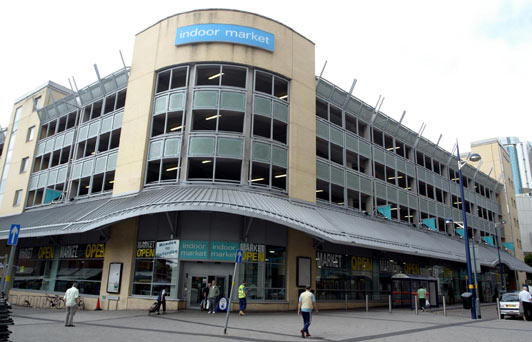
I've all but given up hoping for a good Vietnamese restaurant* in Brum, one with a decent repertoire of grilled things and rice based products loaded with the intoxicating blend of herbs they use in Vietnam. For me it's the herbs that make it special. But freshness is key, trying to keep it that way is difficult and expensive for a restaurant. Without it Vietnamese food can seem muted. Wing Yip have a limited selection and the Asian Mini Market in the Brimingham Indoor Market is good too but a £3.50 bunch of sweet basil in those places costs just £2 in Hoang Yen. Go on Friday after the late Thursday afternoon delivery and you're good for a whole weekend cooking and bingeing on bun cha, bun cuon and salads of amazing complexity yet lightness. Perfect summer food.
18 Holyhead Rd, Birmingham, West Midlands B21 0LT
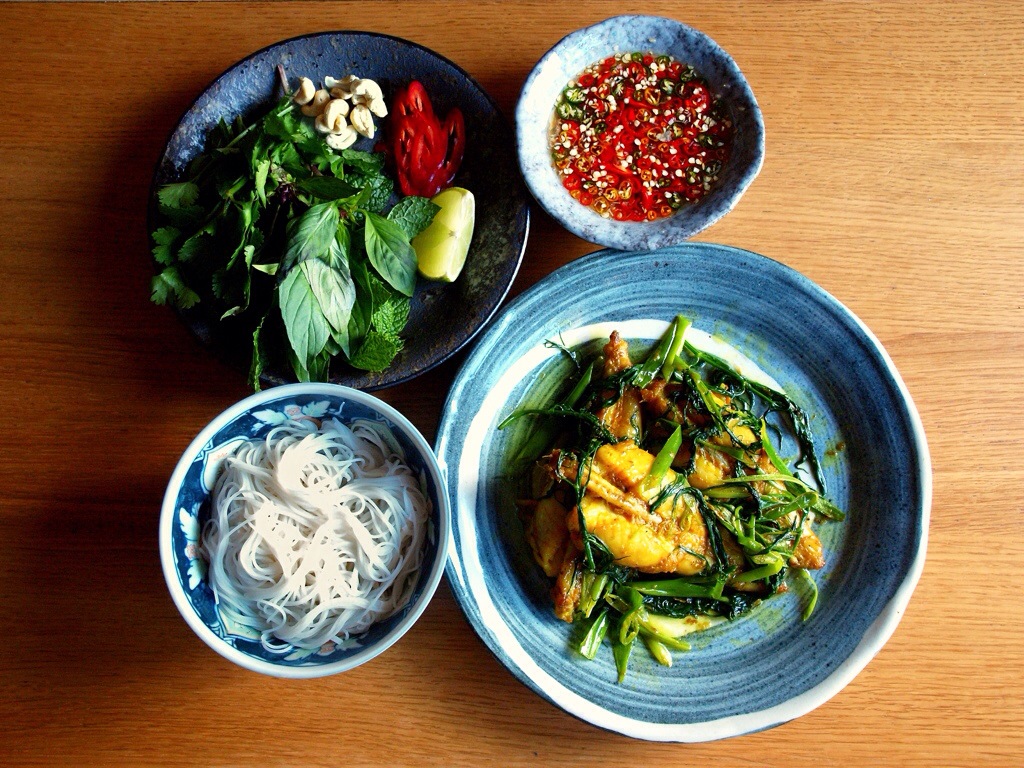
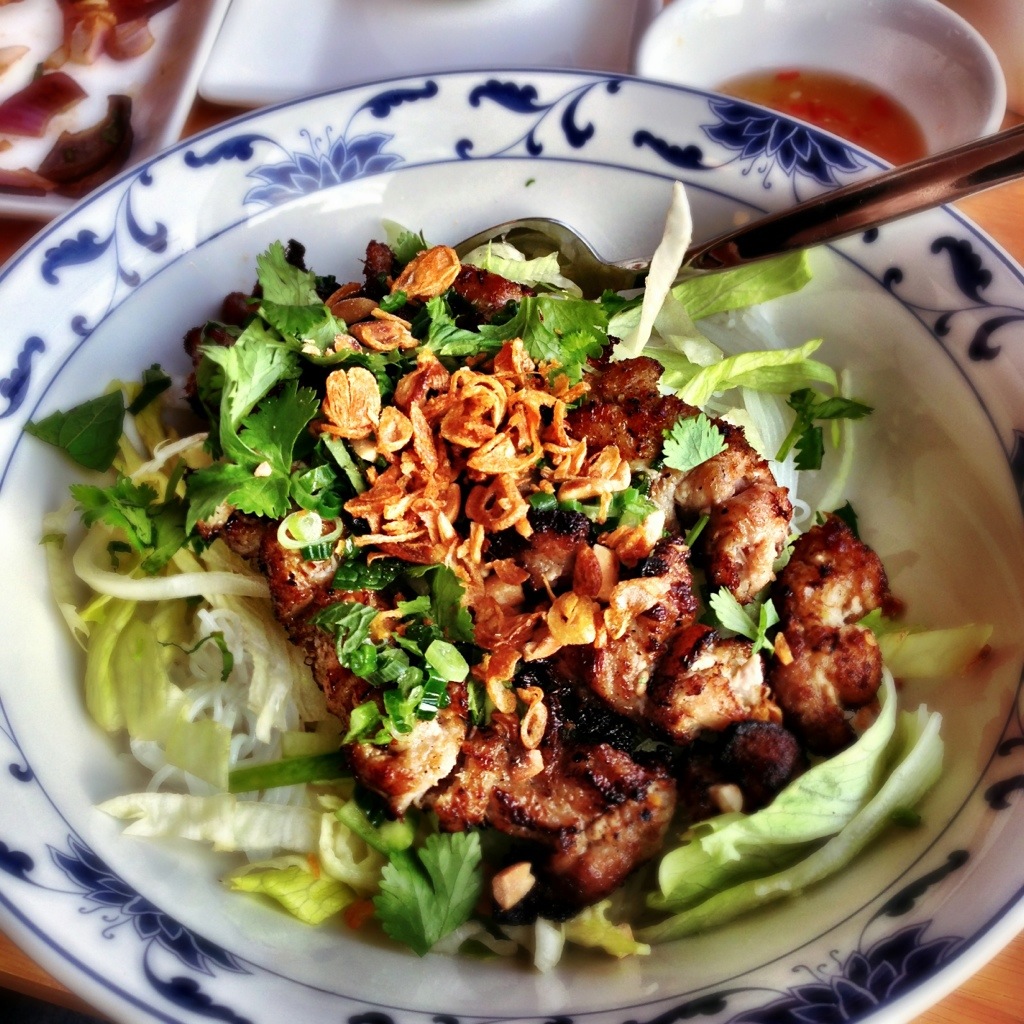
Bun cha; chargrilled lemongrass pork, rice vermicelli, dressing and a bucket load of herbs
* Pho, the London chain of noodle shops is coming to Brum's new shopping behemoth Grand Central. The pho is pretty decent there and the rest of the menu is serviceable, a little skimpy on the fresh herbs other than coriander and mint. No doubt Birmingham foodies will hail this as the holy grail of Vietnamese food. It's ok for a start.
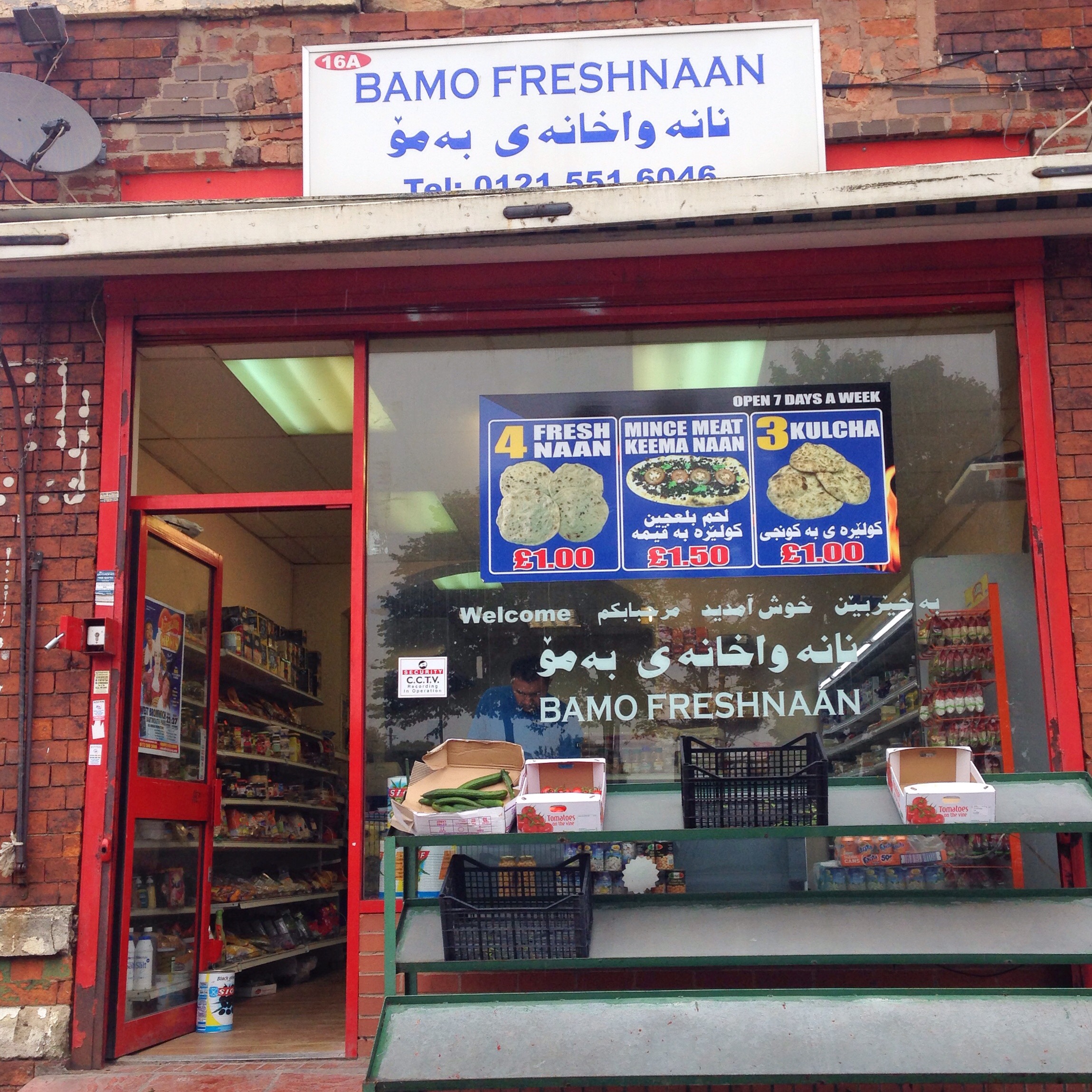
There's a direct correlation* with how pissed off your Middle Eastern baker is and the quality of his bread. I have never seen the bakers in Bamo smile or make small talk with non Kurds, but blimey their naans are tasty. So much better than the lank dishcloths in Pars supermarket (the folk in there are preternaturally smiley and friendly). The shelves of Bamo are pretty bare, the shop is no more than a front for the constant motion of tandoor and two deck bread oven. This is what they do, just churn out as much flat bread as humanly possible. Nemrut next door takes its fair share, which if you haven't been yet has probably surpassed Istanbul in my mini league table of best Turkish restaurants in Brum.
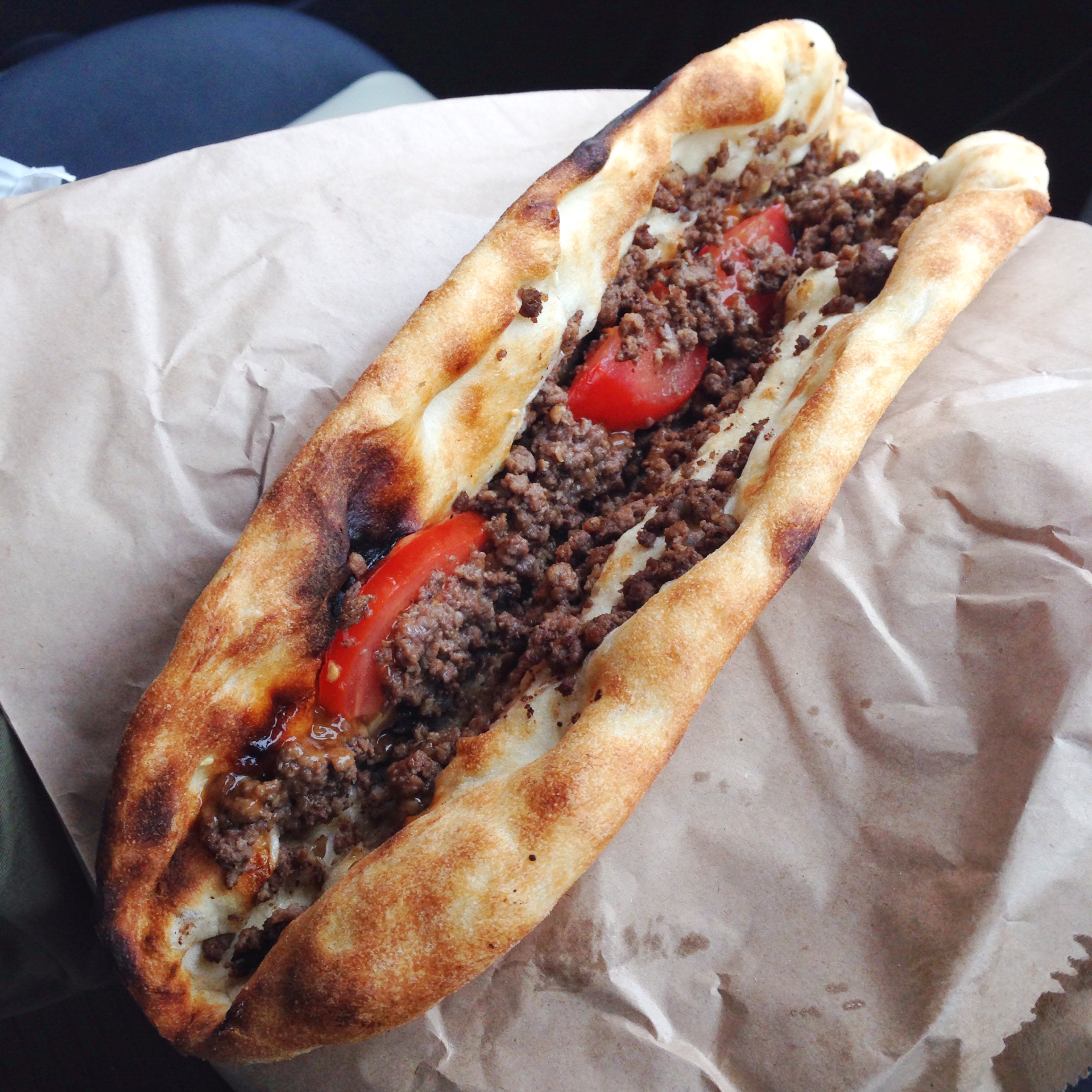
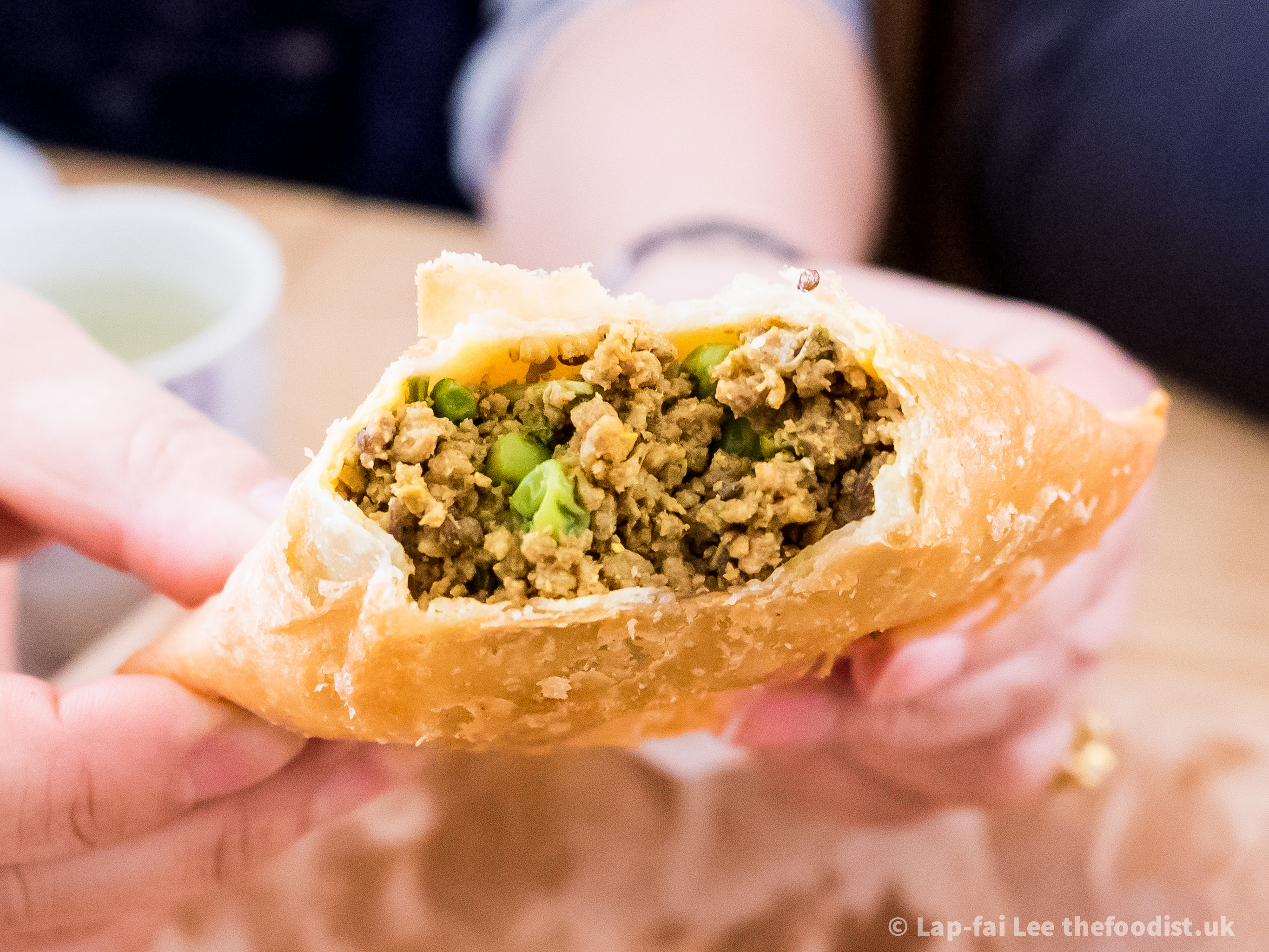
Pop in if you're driving by or have a craving for keema (chicken or lamb) naan. It's £1.50 and is basically a perfect thing. The freshly baked crusty crispy chewy bread folded over soft juicy lamb seasoned with sumac and a little chilli. I don't even know how they make money from this, one is perfect lunch sized. If they open in town they would lay waste to every indie cafe and eatery in sight.
16a Holyhead Rd, Birmingham B21 0LT
Keema naan, just about the best £1.50 you can spend on food
* sample size may not stand up to statistical scrutiny
Wah gwan bredren? For a long time now South Asian cuisine has been our most beloved ethnic food here in Brum. But on every street in every inner-city neighbourhood of our fair metropolis, Caribbean cafes and takeaways have been serving up proper soul food for decades. Who doesn't like curry goat, jerk chicken, fried chicken, ackee saltfish, dumplings, rice and peas? Preferably all at the same time. The menu is pretty standard in all of them making a comparison easier to do. When is goat mutton? Who's jerk is proper smokey? Fried chicken that is actually crispy not microwaved to soggy?
Unless you "keep it locked" on Newstyle or Hot92.fm then you probably won't have heard of many of these places but if you ever drive by you should check them out. None of these places are pretty. Don't be expect Turtle Bay decor, faux Island Time flourishes and synthetic palm trees. You might get a few posters telling you when the next bashment night is at The Drum. You won't get a discount with your loyalty card but these Brum independents will make you happy for not much money anyway.
I'll keep adding to the list as I find them. If you have any favourite please let me know. My buddy Jack Spicer Adams and I are always hungry to check them out!
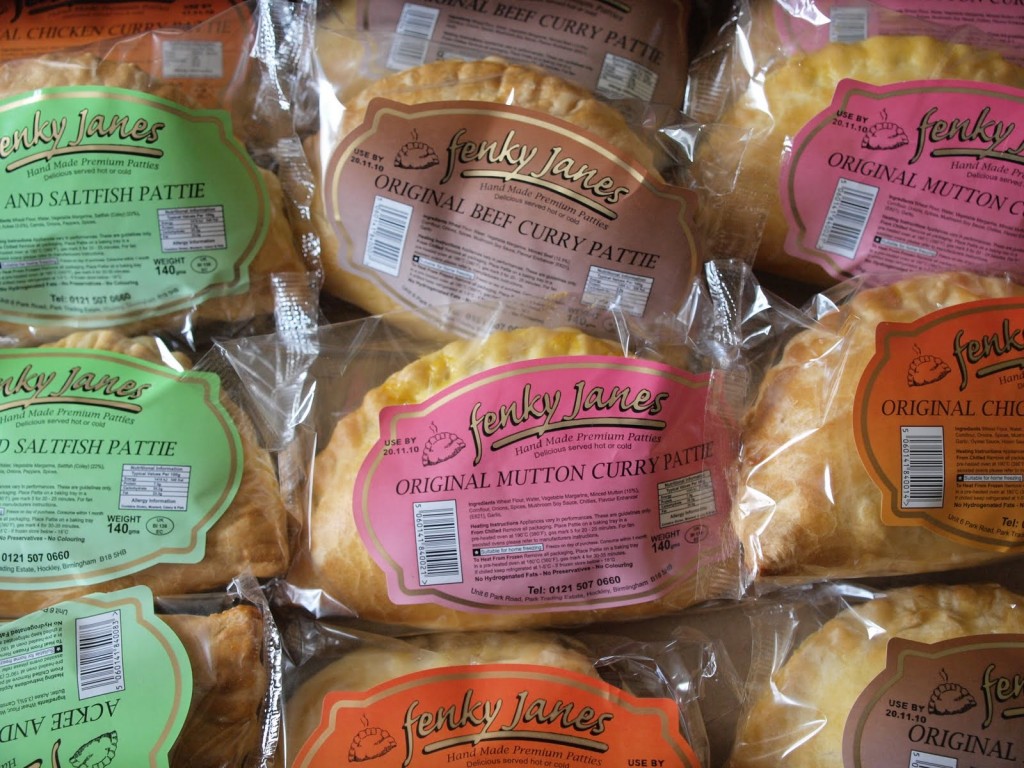
The daddy on Lozells Rd, a large cafe space in a slightly intimidating part of town. I only ever have the curry goat here, it sets the standard, lip-smackingly nice and nice. People swear by the house patties here but they are not a patch on Fenkys or Tasty Pastry.
Under the railway bridge on the way out of town past Digbeth, it's easy to miss Blue Marlin. The faded sign doesn't help. Standing room only, with a narrow counter along one side if you really have to eat in. The jerk chicken here is splendid with a proper smokey flavour and good amount of sweet brown sauce. The curry mutton here is a solid rendition, sometimes a little tough but rich with marrow.
A promising sight of a jerk pan at the front of the shop. The jerk here is quite decent, if it was fresh then it would be great. The fried chicken doesn't really cut the mustard, soggy and dry. The gloopy mutton curry has a nice flavour but didn't rock my boat. The sides were good though, excellent hard food but then you don't come just to eat hard food.
Anyone who's ever sat on The Church's roof terrace will not have failed to notice the smokey jerk aromas wafting up their nostrils from this takeaway next door. It does have a couple of small tables so you can devour things on-site because good jerk chicken waits for no-one. The jerk here is probably the best you're going to find in a shop but don't overlook the rest, it's all really good too.
Chris's Restaurant
72a Cape Hill, Smethwick, West Midlands, B66 4PB
Tel: 0121 558 0435
A door, just a door on Cape Hill high street in Smethwick. That's all Chris's appears to be. Oh that and a big sign alludes to something tasty. Follow the winding corridor back ever back to the extension of the extension to find a good space for hunkering down. The curry mutton here is excellent, the best I've eaten in Brum. The jerk juicy but lacking a nice char flavour. The fried chicken as always is the big let down, nice flavour but that coating is not crisp.
Tasty Kitchen
About to write about the tasty jerk chicken in this place in Nechells but it got closed down by the police. Some allegations of unsavouriness or another, best not to go any further. A shame because the chicken was definitely savoury.
Sharians, Esmies, The Jerk Man and other Streetfood Caribbean
Your best bet for jerk chicken is in a streetfood or festival scenario where you can see the jerk pan and the chicken slowly smoke grilling away on it. To be honest it's difficult to mess up fresh jerk chicken, chargrilled chicken in any flavour is the universal language of good food. The problem with shops is that they have to hold them for an interminable time. Good if it's fresh off the grill but when's that? Sometimes, the jerk pan only comes out once a week so they cook all their chicken for the week. What you're getting on a non jerk pan day is some reheated chicken from X days ago. Sharians is a regular on Brum market days, I always seek them out at Harborne Farmers Market and at KingshEATh Streetfood market. They is propa! Lovely one-two of jerk and curry always makes me happy. Esmies is a favourite of the Digbeth streetfood scene. Their freshly fried dumpling filled with mutton curry maybe the best streetfood item in Brum. There I said it!
Patties
I've written about Fenky Janes patties already and if you ever see them in a shop you should without hesitation buy them. But, and it's a big but, in a cafe without a pattie warmer you should never buy them. There's no sadder sight than a microwaved pattie. Tasty Pastry patties made in Handsworth are a close contender to Fenky Janes. Some even say the pastry is better, but Fenky's fillings are superior especially the saltfish and ackee. If you like the Island Delight patties you can get in supermarkets you need to give yourself a slap and wake up. They're disgusting.
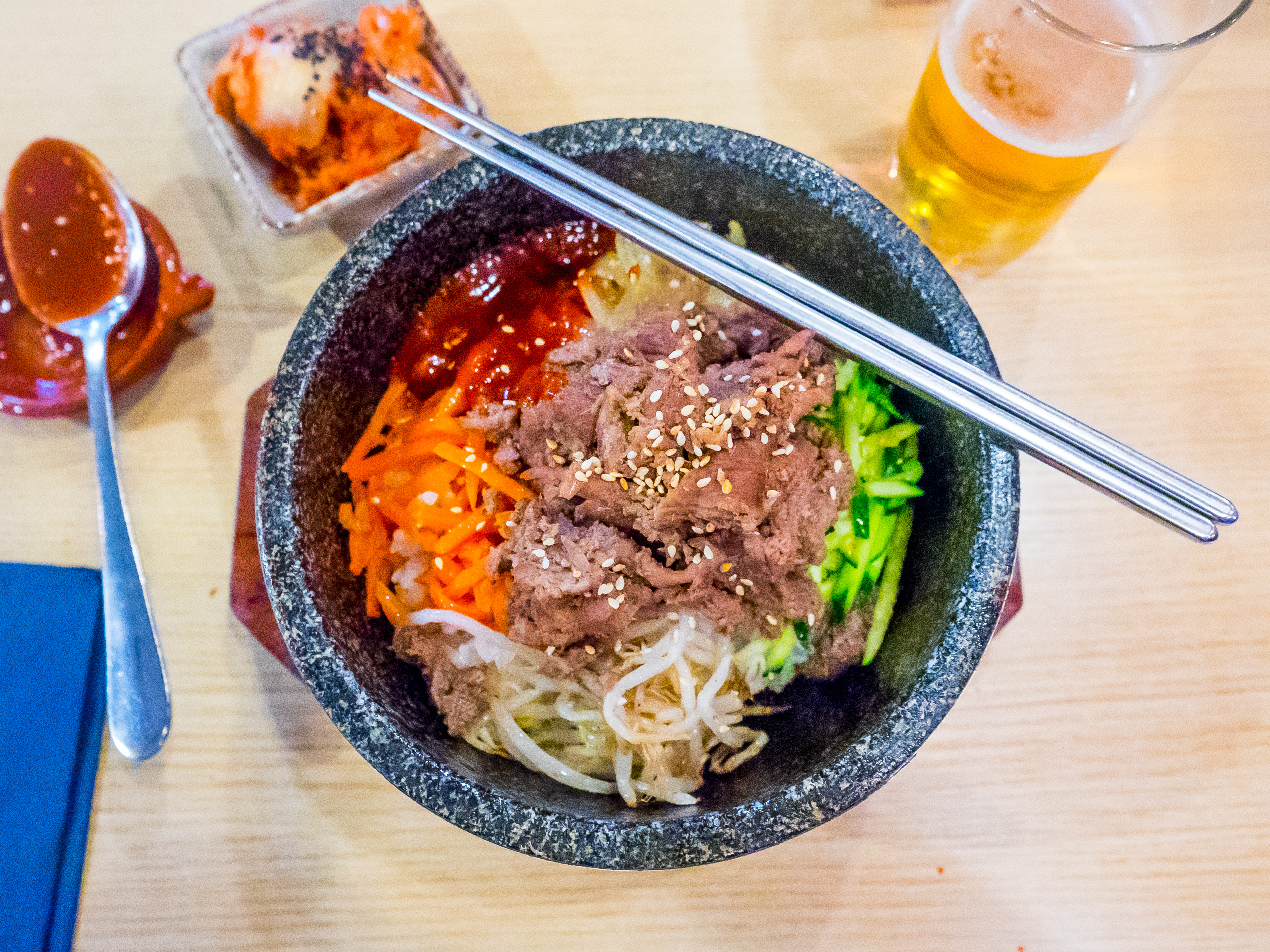
It's taken time for me to warm to Topokki's humble charms. The basic home-style Korean food was alright, it didn't really hit the spots for me. But it sneaks onto the Brumfoodmap on the strength of one dish, the Dolsot Bibimbap. A red hot stone bowl filled with rice, finely sliced fresh vegetables and a choice of meat, beef all the way for me. Mix in the Korean magic ingredient gojujang (a smooth sweet, fermented, fiery chilli paste) and bingo! Instant satisfaction. Well not instant as it's scorching hot but that's the beauty of it, the heat cooks off the gojujang and aromatises the rice as you eat it. Better still there'a nice crust of browned rice at the end of the bowl. A truly delicious way to eat rice.
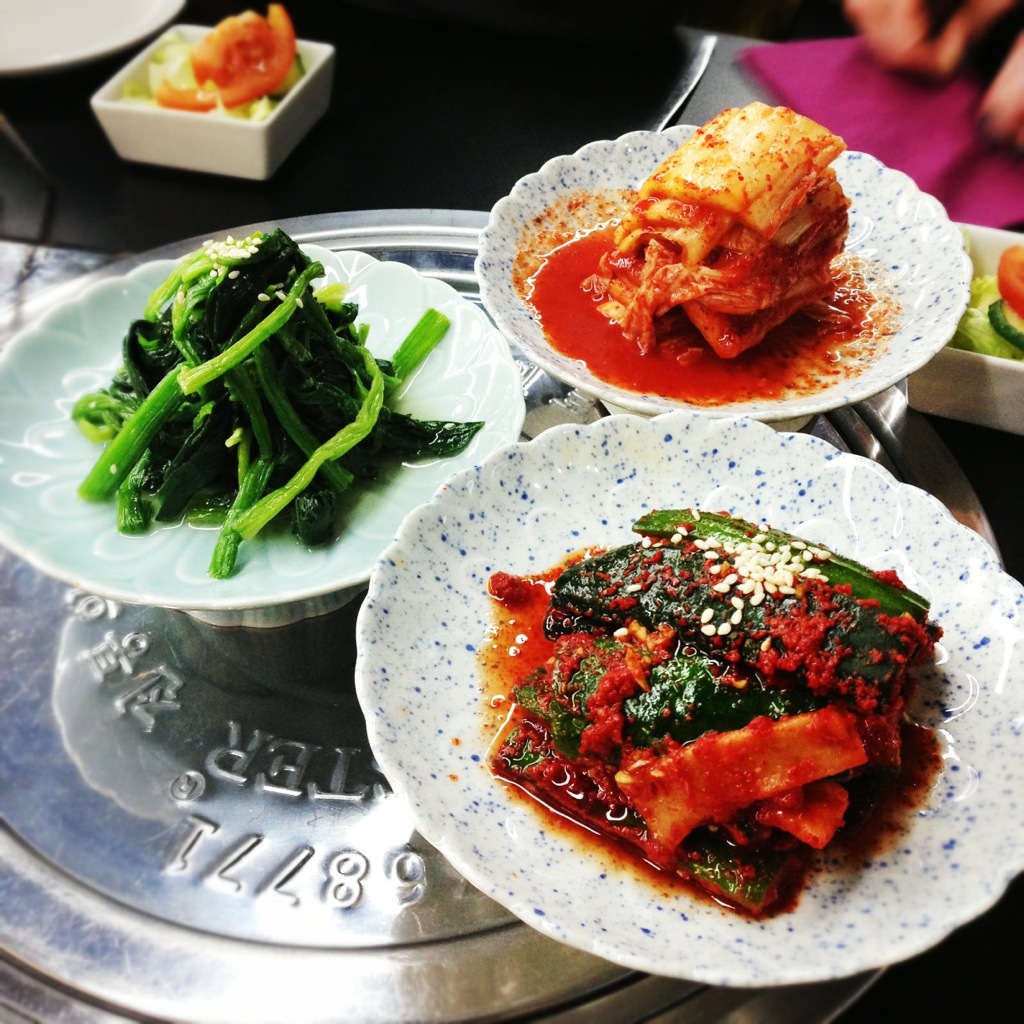
The fried chicken nuggets are tasty here if a little unsubstantial but the rest of the menu is a little boring. The kimchi is watery and bland. The room has been extended so it's a lot more comfortable. Maybe a little too comfortable, everytime I've eaten there it's been full of groups of Chinese yoofs passive aggressively treating the place like a lounge. Getting in the way of the patiently polite Korean staff after they've finished picking at their food ages ago. They're obviously the restaurant's main clientele and I'm not usually bothered by what other diners are up to, but there's a line of rudeness that people skate very close to here. I just eat my bibimbap and go!
Topokki
Unit 1C Hurst Street, Birmingham, West Midlands B5 4TD
Tel:0121 666 7200
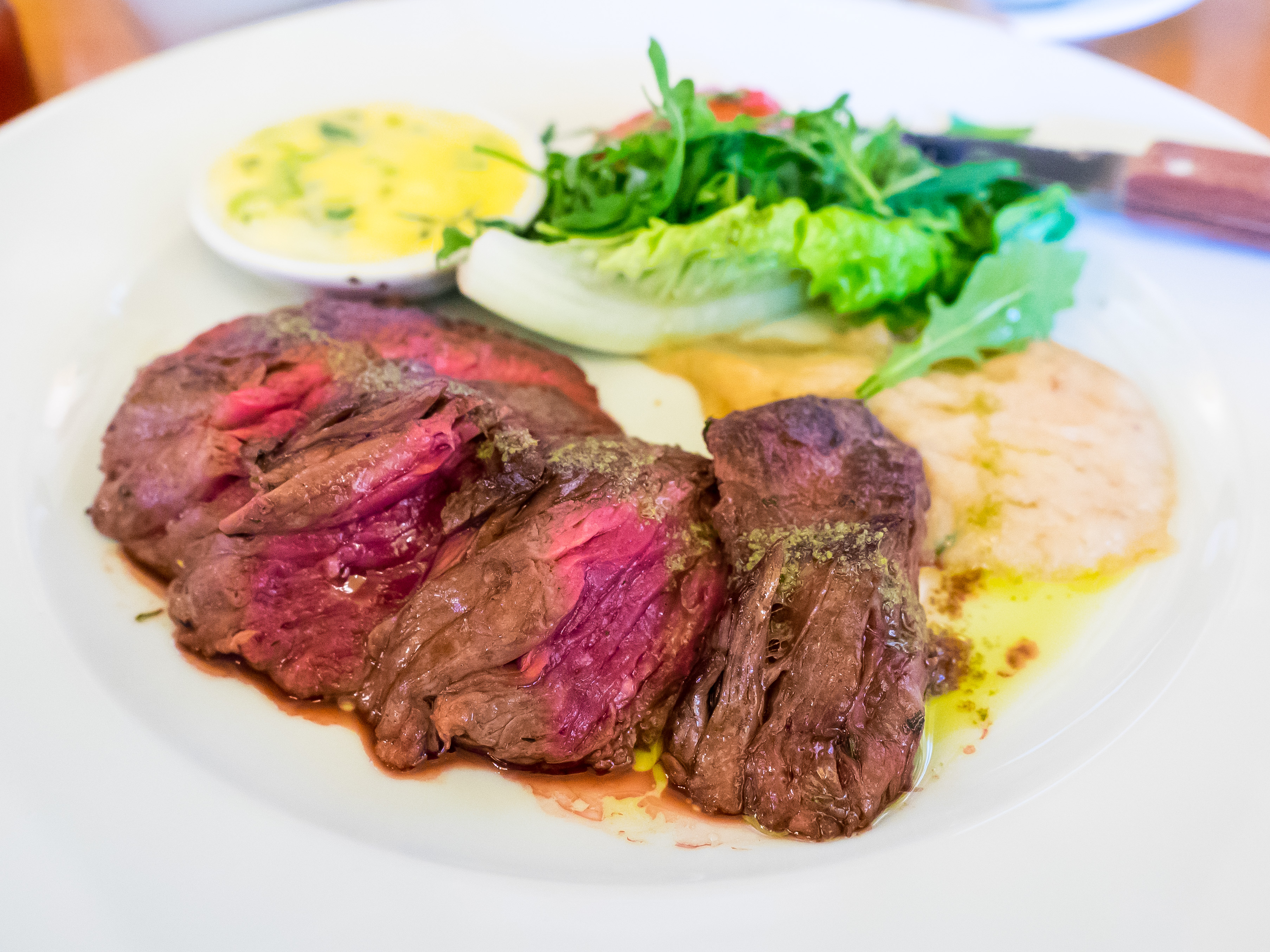
Now I know we have steak restaurants in Brum; Andersons, MPW, the marvellous Fiesta Del Asado and the mediocre meatfest Rodizio Rico. But my favourite steak to eat in Brum is the onglet in Le Truc. This classic French bistro cut is the muscle that attaches the diaphragm and separates the lungs from the other organs. It's got a deep beefy offally flavour and has to be cooked rare or it's as tough as jerky. I always look forward to ordering it, fries and bernaise on the side, a simple thing done incredibly well.
Let's not overlook Le Truc's other charms. Open a couple of years now, it used to be the popular Chez Jules off New St. The spacious room is quintessially French bistro with quirky touches and a whole wall enshrined to Serge Gainsbourg. The menu is French bistro but done without any of the corporate Cafe Rouge cynicism. It's not all French! They do a terrific Sunday roast beef too but really if you're in the mood for no nonsense Frenchiness then Le Truc does the trick.
An update of the previously seminal (not so now) BCRMB on my Foodist Blog. A new point on the Brumfoodmap, Malaysian delight, who aside from tasty roast meats do some decent Malaysian food too.
Here are the results:
New Sum Ye 新意美食
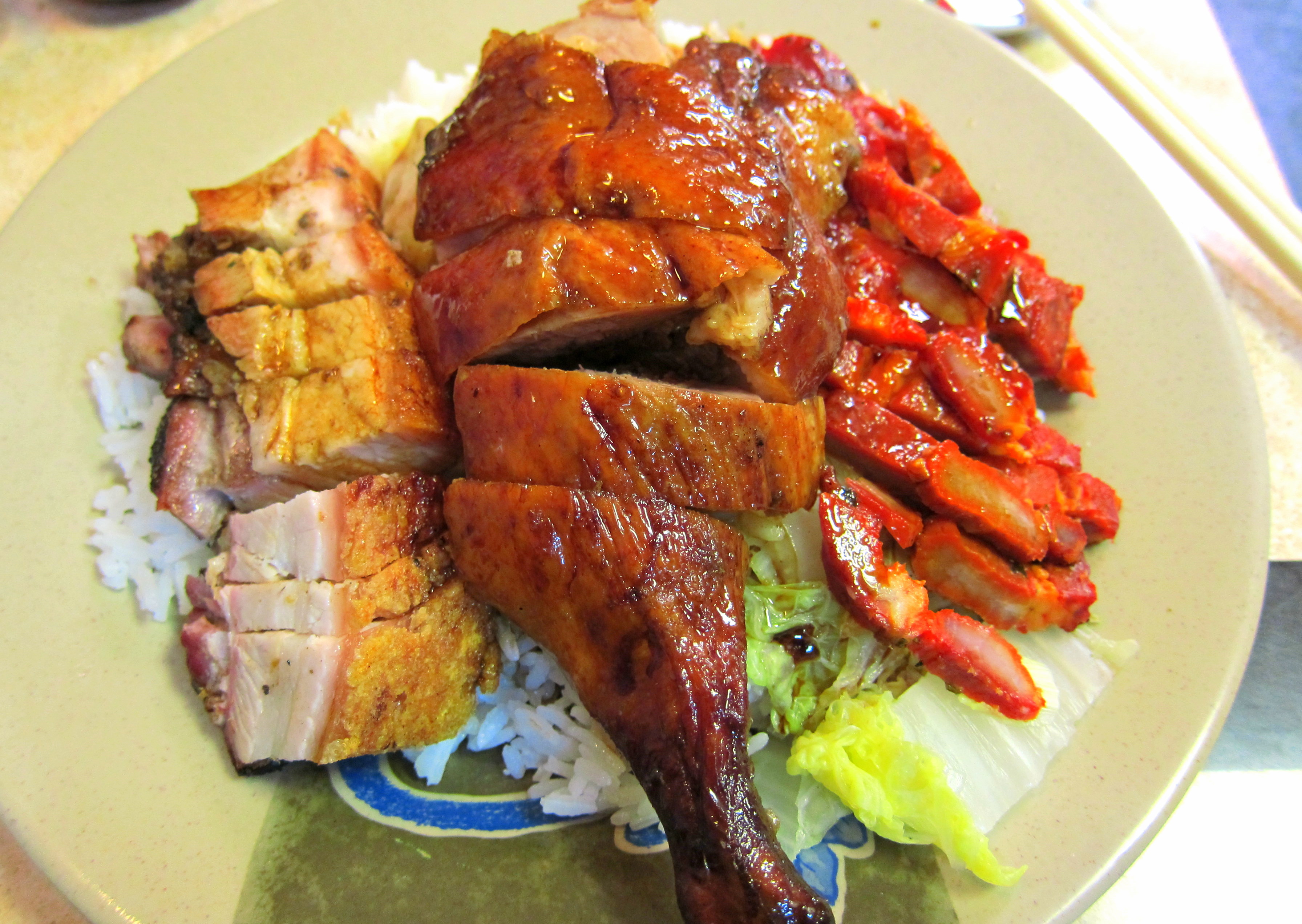
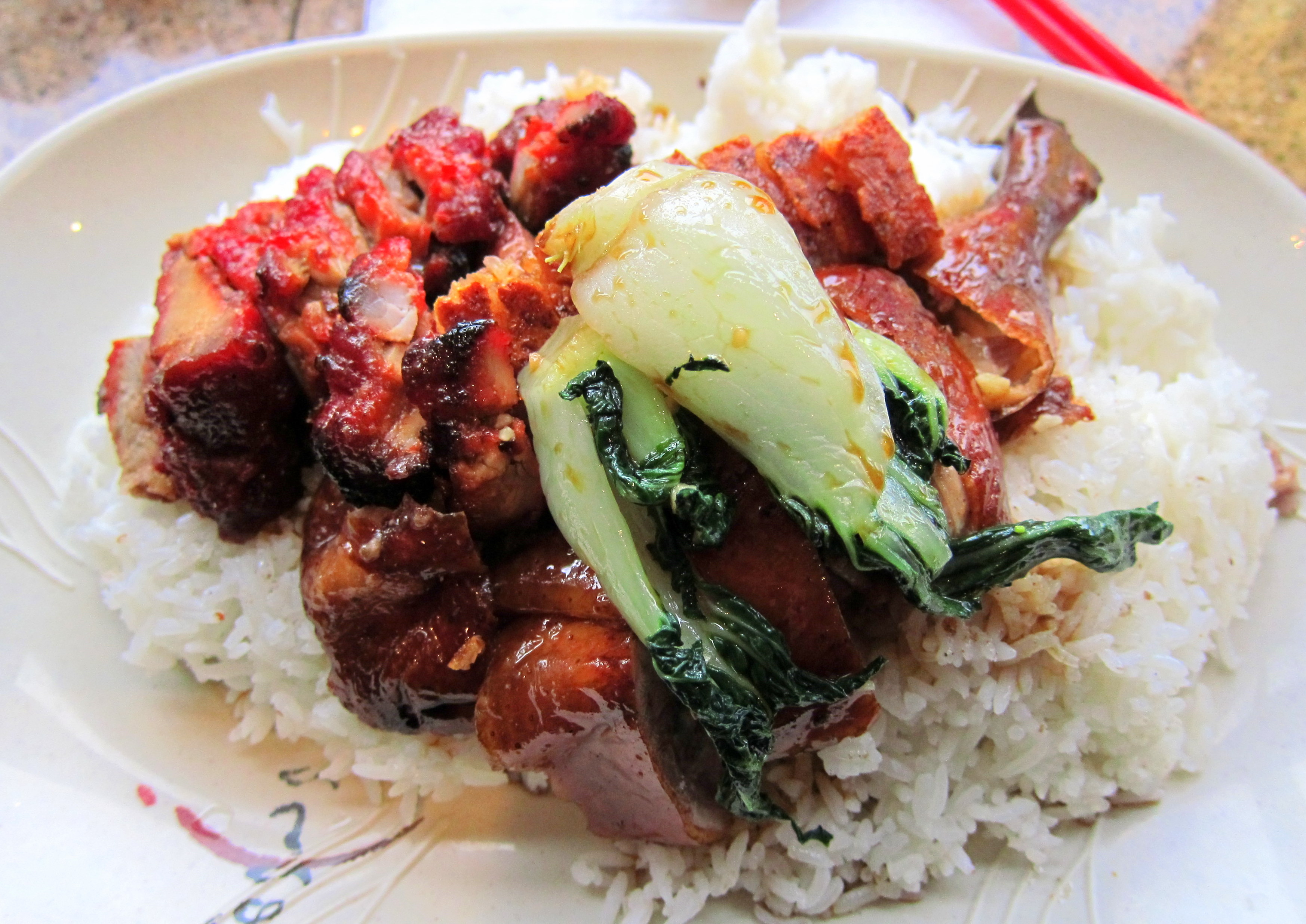
Duck 3.5 (out of 5) Pork 4 Char siu 3 Other 4.5 Total 15 (out of 20) £10.20 (£8.20, £1 duck leg supplement, £1 tea) ouch!
China Town Noodle Bar 中華美食
Duck 3 Pork 2 Char siu 3 Other 2 Total 10 £9 (£7.50, 50p dls, £1 tea)
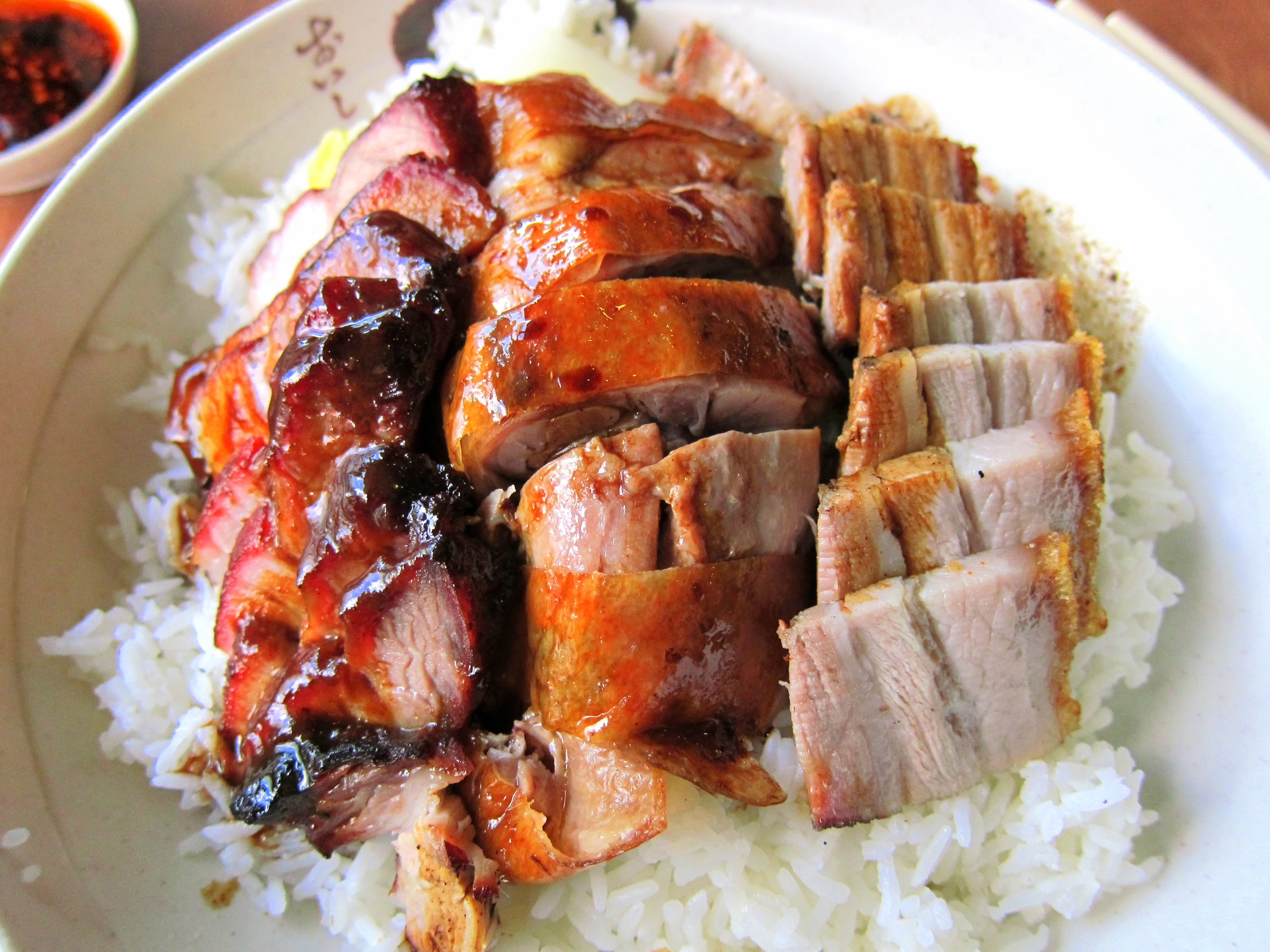
The name of the restaurant might lead you to think it's not a Cantonese roast meat place at all. But with Chinese chefs this cafe has always served up some decent roasts alongside Malaysian classics like Assam laksa and nasi lemak. If further proof is required then the hanging roast meat display is the most prominent in the whole of Chinatown, facing the main road for all to see. Not usually as much meat on display as Peach Garden or New Sum Ye so you need to get there early for the best cuts. The plate I had was fine indeed. The roast duck is flavourful and juicy with the meat slipping off the bone easily. I'd have liked more as only a drumstick was presented. The roast belly pork was a little tough and the crackling although thin could have been crispier, good flavour meat and well seasoned. Char siu was a great cut of meat, a good ratio of collar collagen for a nice bouncy texture. The flavour was a little sweet for my liking but there was a good char flavour too. Rice was slightly too cold and firm served with a measly amount of pak choi. Typically for a Malaysian cafe the chilli oil had plenty of shrimp flavour and had good heat. Overall portion size was a little on the small side.
Duck 4.5 Pork 3.5 Char siu 4 Other 3 Total 15 £9 (£7.50, £1 dls, 50p tea)
Delightful duck
Conclusion
Joint winners! Peach Garden and Ken Ho have the best roast meats in Chinatown. As a single plate of food Ken Ho probably edges it but pricewise Peach Garden is unbeatable. For £7.20 you have a triple roast and a cup of tea and know that you absolutely cannot eat a better meal for the money in Brum.
Beer and curry. Curry and beer. The two go hand-in-hand don’t they? Well it maybe so but this old fashioned drinking culture has set back the quality of Indian cuisine on our high streets. Tipu Sultan bucks that tradition and is totally dry of alcohol. Ironically it’s in the old Jug of Ale pub in Moseley. Something magical has happened to that run down pub, famous for being the city’s best Indie gig venue back in the day (Nirvana played there), it’s now the most lavishly appointed restaurant this side of Dubai. Fit for sultans and just on the right side of bling.
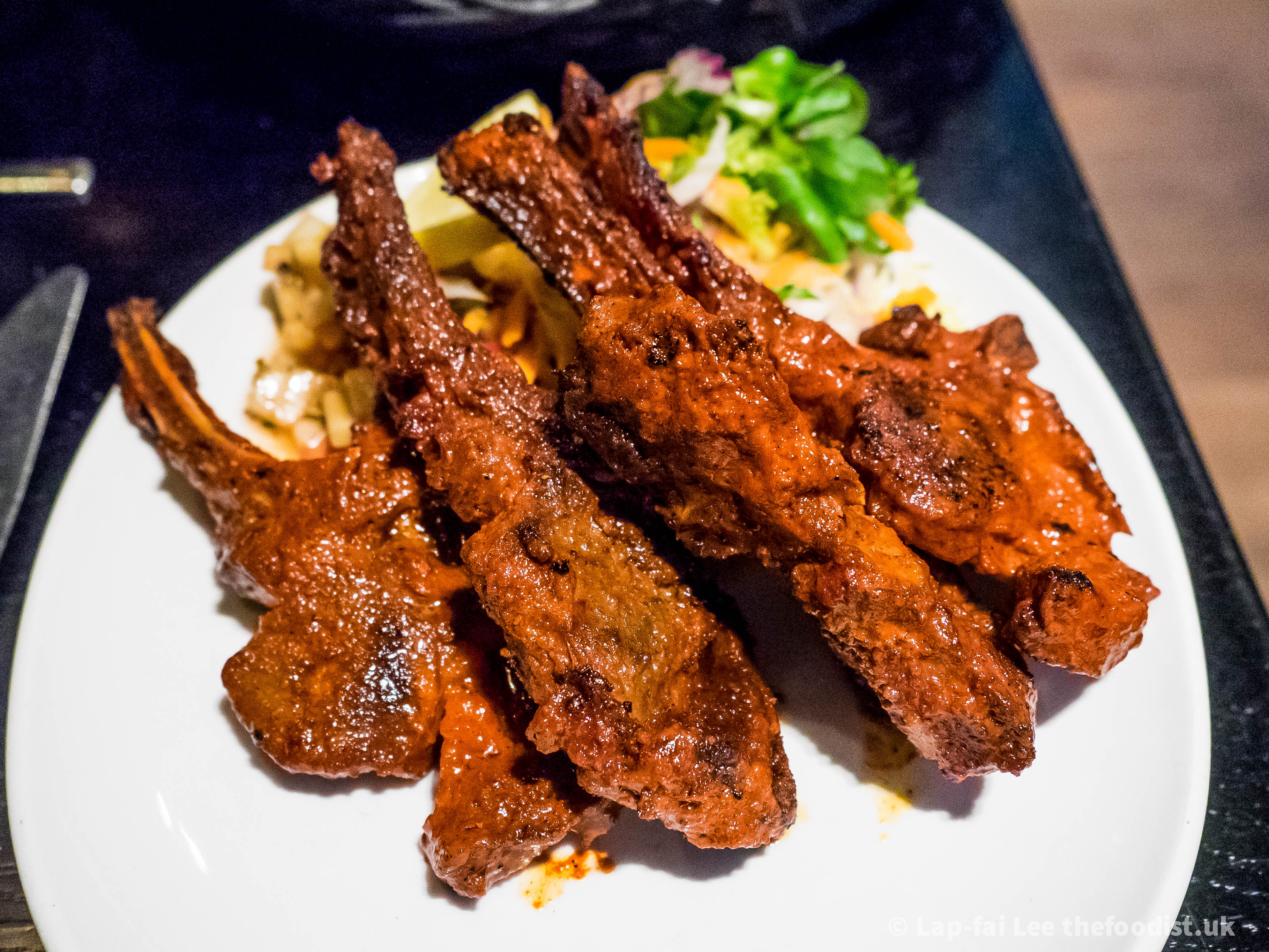
Without the help of alcohol we can focus clearly on the food offering and here it’s proudly Pakistani. Very similar to that other favourite of ours Mughal E Azam. Rich sticky meat curries that have the qualities of being slow cooked properly, not thrown together Balti style. The lamb Achari is a favourite, spicy and hot, with freshness provided by finely shredded ginger. Grilled meats are slathered in spice pastes that do not overwhelm the quality of the meat or the cooking. Their signature sultani mutton chops leave your fingers stained and your taste buds singing. It’s clear to me that if you can break the beer curry habit then you will really love Tipu Sultan. They have expansion plans so it’s definitely a habit worth breaking.
Tipu Sultan
43 Alcester Road, Birmingham B13 8AA
Tel: 0121 449 8539
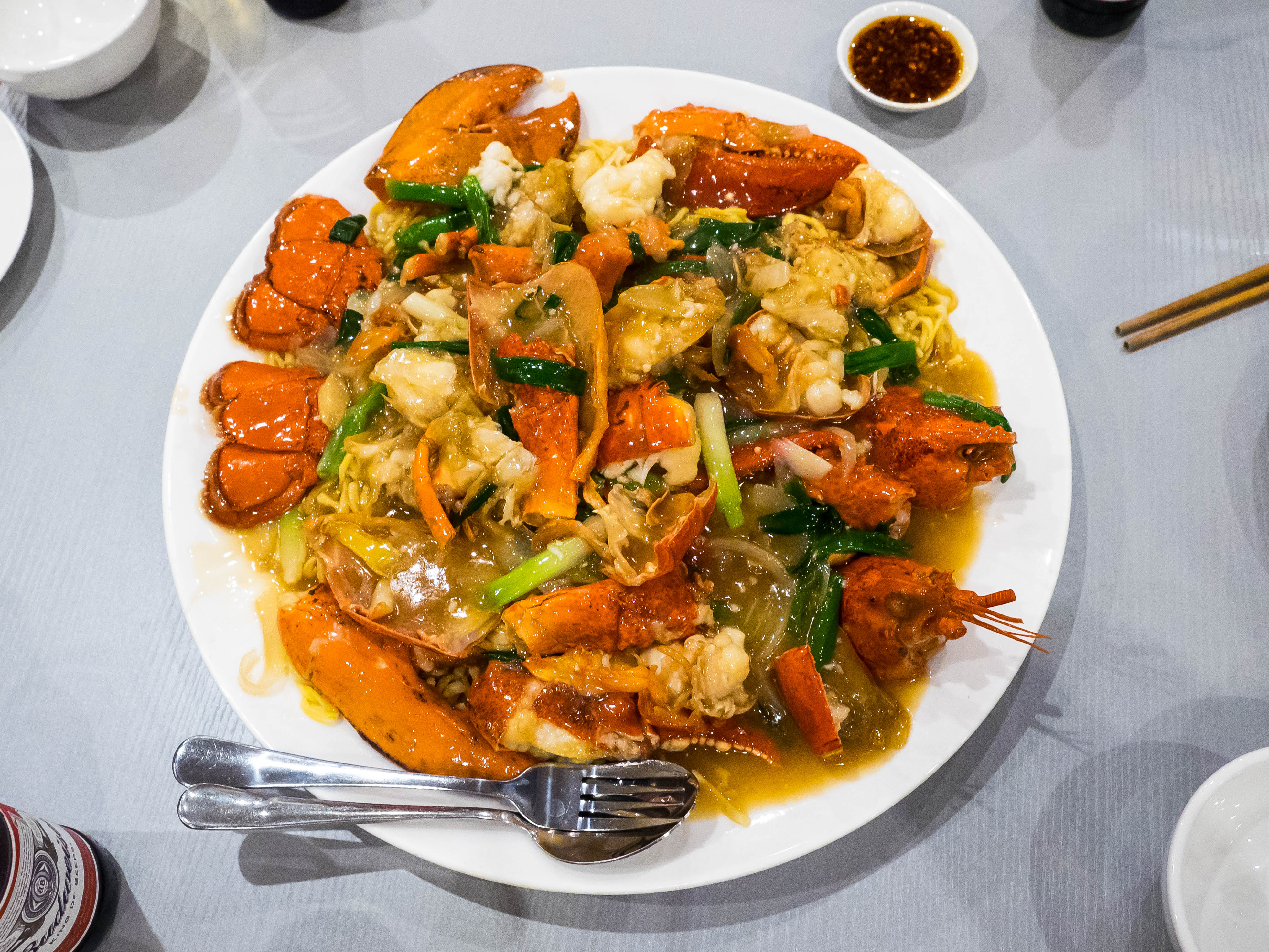
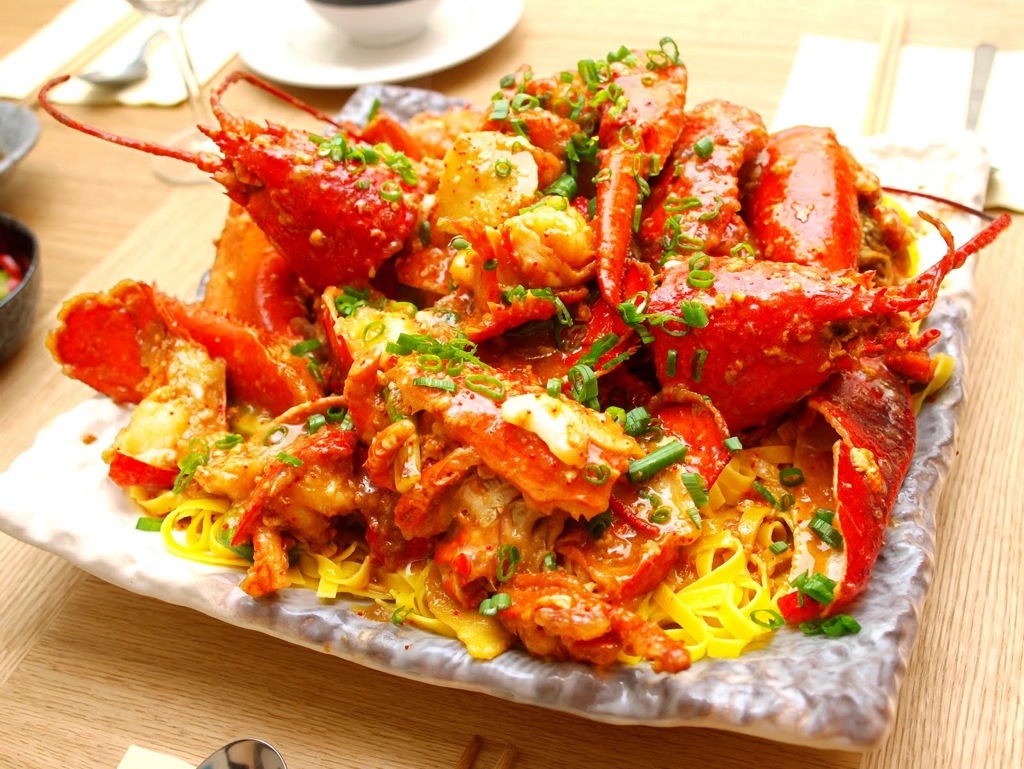
When Chinese people eat seafood we don't mess around. There's no pan-fried fillet of John Dory with seaweed butter foam perched on a bed of samphire. Forget. That. Give me two lobsters from that tank over there, chop them up whilst they're still twitching, flash fry them in a screaming hot wok with a mountain of crispy garlic. Whilst you're at it, steam us a whole turbot, braise an eel, poach prawns, prepare half a dozen crabs and let's have it all in 15 minutes. Ok? No problem.
The inauspiciously named Manchester Seafood Retail and Restaurant is just that, a seafood shop with a restaurant at the back. I say inauspicious only in the sense that us Brummies are a little
wary of our bolshy Northern counterparts. What have they got that we don't, apart from two world-class football teams and our national broadcaster? They're about as land-locked as us so to come down here with your live seafood tanks and Chinese seafood chefs who know what they're doing, well that's just marvellous! And whisper it, it is marvellous. For the first time in this country I felt a little like I was in one of the seafood towns of Hong Kong. The seafood is tinged mostly Cantonese with splashes of colour from Sichuan in their meat dishes, but they're less successful. Stick to the fish the clue is in the title.
It's best to come mob handed to Chinese restaurants like this. These are big dishes that are meant to be shared family style eaten with rice. Many times I've read reviews by old hacks that read like this: "I ordered the salt and pepper squid as a starter for myself and the steamed sea bass for main." Don't do this please. Go with like minded food lovers, order 1.5 to 2 dishes per diner, depending on how greedy. Order rice and get stuck in together. Eat Chinese if you want appreciate real Chinese food.
Manchester Seafood
Wrottesley St, Birmingham B5 4RT
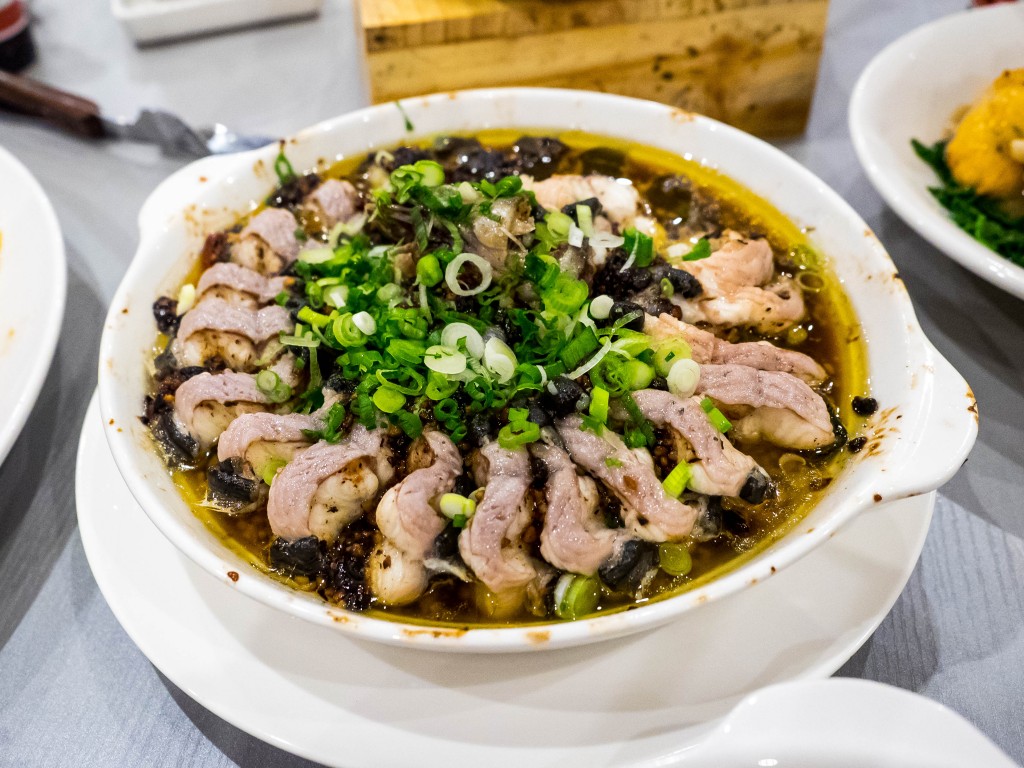
18th Feb 2015 An update! We ordered this eel dish last night and we're blown away by it. The best dish of the year so far. A fresh eel cut and skinned in such a way that it curled into the bowl like a chrysanthemum flower. Each piece still attached to the last by a merest strip of succulent flesh. This amazing piece of cooking skill also proves that a whole eel is served to you and the kitchen isn't cheating. It's been known that unscrupulous chefs will take a chunk out of the middle! The taste and texture of the dish is the best I've had anywhere, so clean and fresh. The eels in Asia can be very muddy tasting, there was none of that here. Cantonese cooking at it's very best.
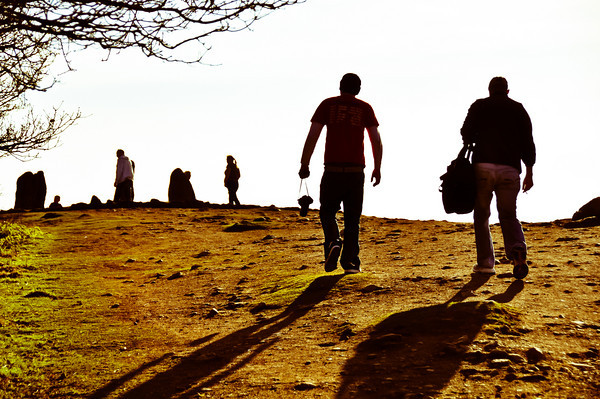
What are the ingredients of a bloody good walk? Well a nice view is always good. And a sturdy hill to climb to give a sense of achievement at the end, that's always good too. But mainly I find a food or drink incentive is the best way of getting me out of the house.
But where to go, when starting from Birmingham? Hills and views usually requires a car journey. Tolkien fans may wish to head towards Tolkien's inspiration for the Shire - the Lickey Hills, or even further to the Malvern Hills.
But I fancy that notorious bacon fancier Tolkien (there are seven references to bacon in The Hobbit) would, if he was still in walking mode, prefer to go to my top tip for a country ramble: the Clent Hills.
The walk is decent enough, a nice big hill, a trig point, a folly in the distance, the malevolant-looking Black Mountains out to the West. But the real reason to go is what must be without a doubt The Best Bacon Sandwich (nearly) in Birmingham.
If I was writing in the Guardian we could do 300 words on what makes the best bacon sandwich. But given food enjoyment is 90% context, you are halfway there already on a cold, bright winter Sunday morning, surrounded by dogs and dog walkers and half-famished from the effort of dragging yourself out of bed (sandwich should preceed walk I find). But the other 10% is well supplied with a bouncy thickly-sliced bloomer loaf, slices dunked in bacon grease and generously stuffed with well-griddled, crisp edged bacon, cut thick enough from the belly to be substantial. Red sauce optional but a must. Adding an egg often not a bad idea - you know, just for sustenance. Don't forget there's a walk after this. This is not the place for multigrain sourdough and rare breed oinkers, and all the better for it.
Be warned, this place is hella popular so you might be in for a 30 minute wait at peak times. But you can get a steaming mug of tea (always tea, never a coffee, especially here) while you wait and watch the dog owners with small-pony-sized hounds struggling to stop them shagging (or eating) the littler ones.
If you can still be bothered to walk up the hill once you've had your sandwich, there's a very decent pub on the other side for a lunchtime pint.
Open every day except Mondays and Xmas Day. If you have National Trust membership you can park for free in the car park.
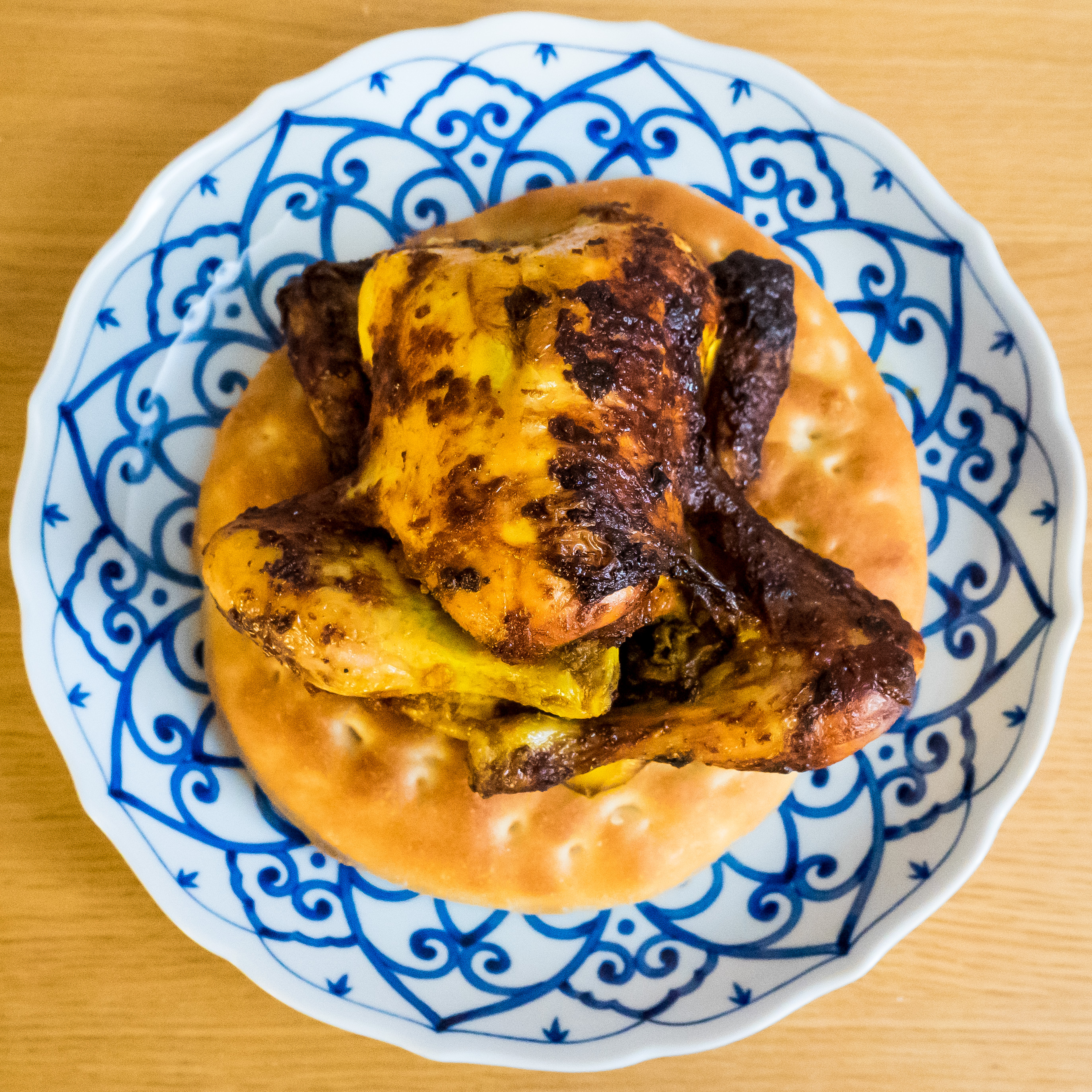
20 Jan 2015Fresh roast chicken and fresh bread for just £3.80, beats a sandwich and packet of crisps at Tesco
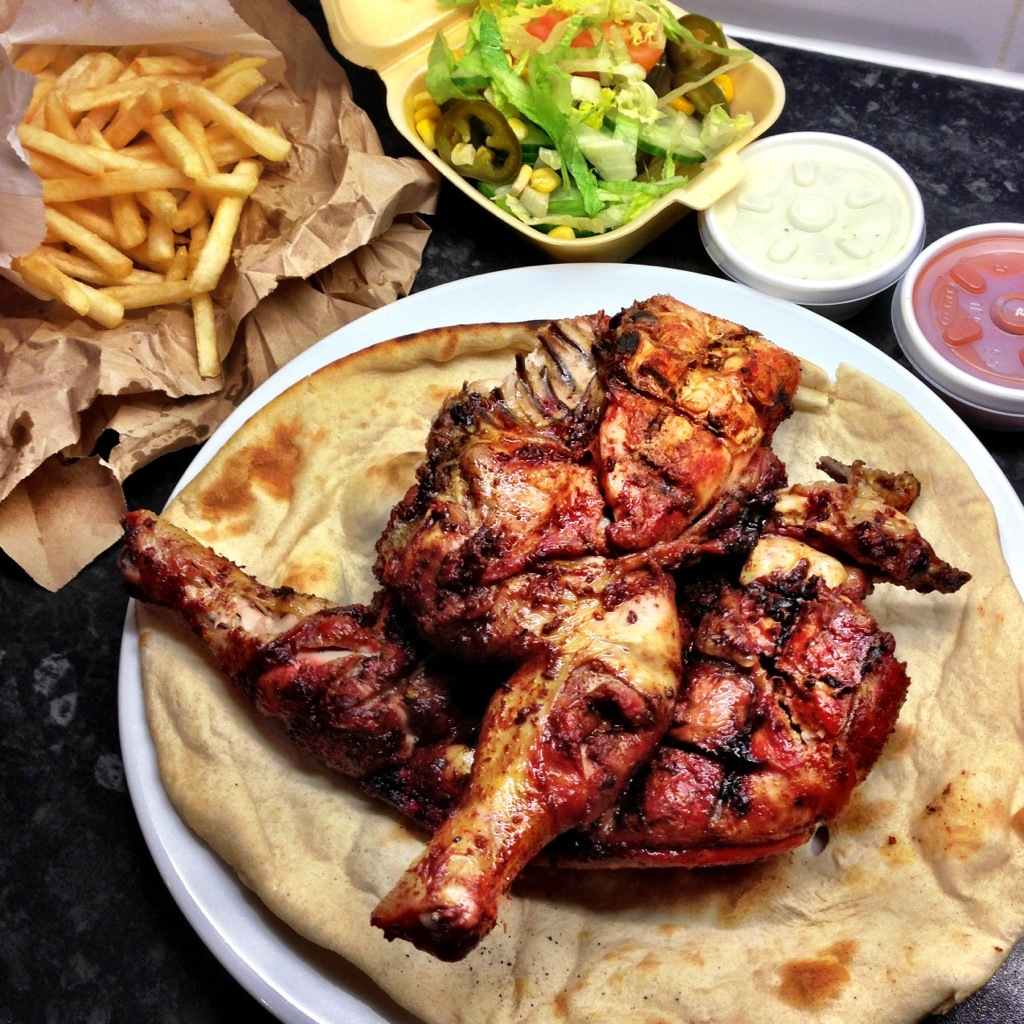
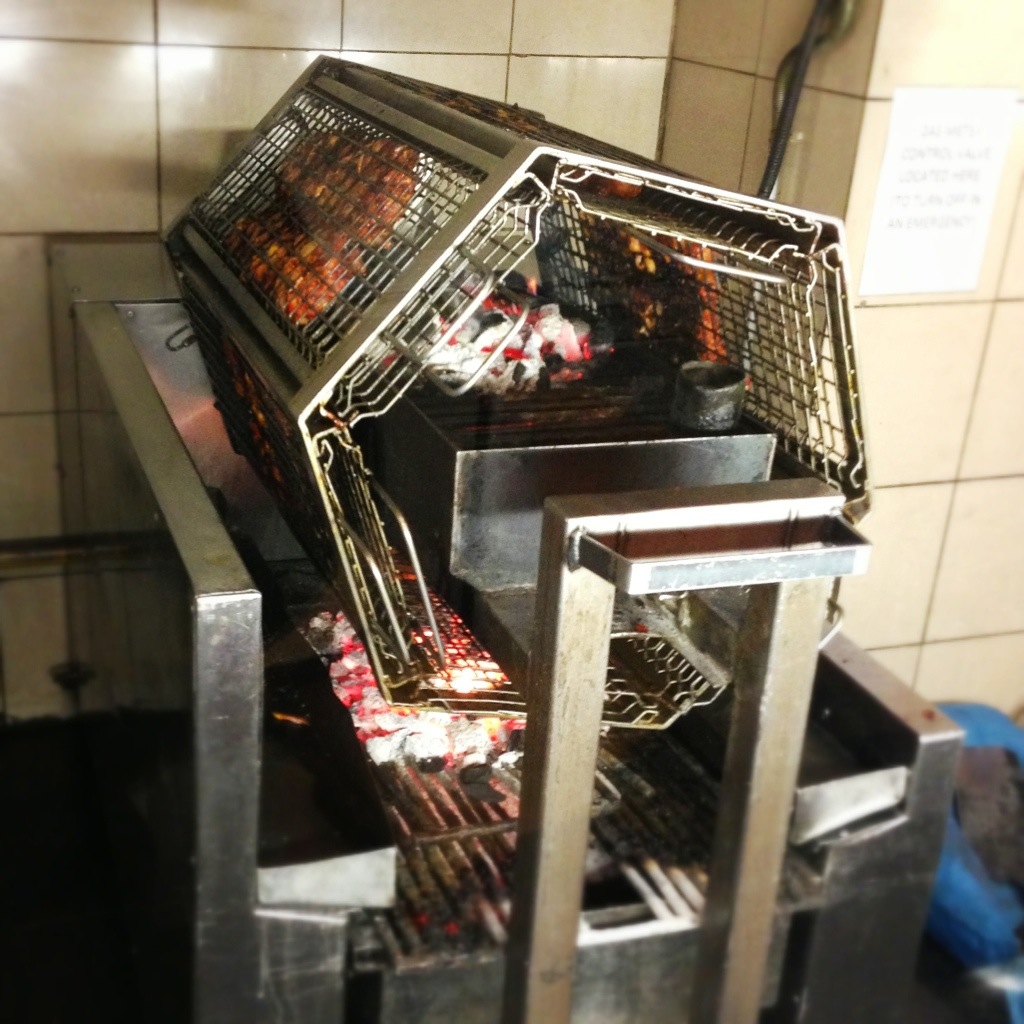
There's a cheerful Yemeni chap on the Stratford Rd in Sparkbrook that sells "Arabic Chicken" from a rotisserie on the street. His rotisserie is fuelled by a worn looking gas tube snaking from the letterbox of Al Saada Middle Eastern store. If the prospect of stopping in Sparkbrook as you drive to your homes in leafier suburbs is unappetising, then you're not going to like hearing that it's really delicious. Oh and it's £3.50 for a small whole freshly roasted chicken. It's generously slathered in his secret recipe spice paste, heavy in garlic and cinnamon. He only cooks in the afternoon, so the chicken is always freshly roasted and moist. Now if only I could persuade him to stick a tray of potatoes at the bottom to catch all that aromatic chicken fat. Like they do in French markets.
Lucky then that the Rose Bakery is next door. For 30p you can get a fluffy Middle Eastern style flatbread to soak up all that chicken goodness. Less than £4 for real bread and meat made by real cooks. Worth getting out your car for I think, you'll be stuck in traffic anyway.
Al Saada
168 Stratford Road, Birmingham B11 1AG
Rose Bakery
170 Stratford Road, Birmingham B11 1AG
A great samosa is never too far away in our fair city. You don't ever have to eat an onion filled meat samosa at your local Farmers Market ever again. A full guide to Black Country and Sparkhill samosa shops can be found on my Foodist blog.
Truly delicious meat samosas can be found at Sweet Mahal and Mushtaq's on the Stratford Rd. Suraj gives a different spin on veggies samosas. Uppals sneaks in with great paneer rolls. The Punjabi Sweet Centre is a nice place to eat in, samosas could be better though.
People who really know good food know that to yum cha or eat dim sum at a good Cantonese restaurant is a sure thing. It's the equivalent of putting Stevie Wonder on the playlist at a house party (Superstition not My Cheri Amour), people will start grooving. Ring around, anyone up for dim sum? Yes! People are moving. There's no better breakfast/brunch/lunch to be had anywhere in the world.
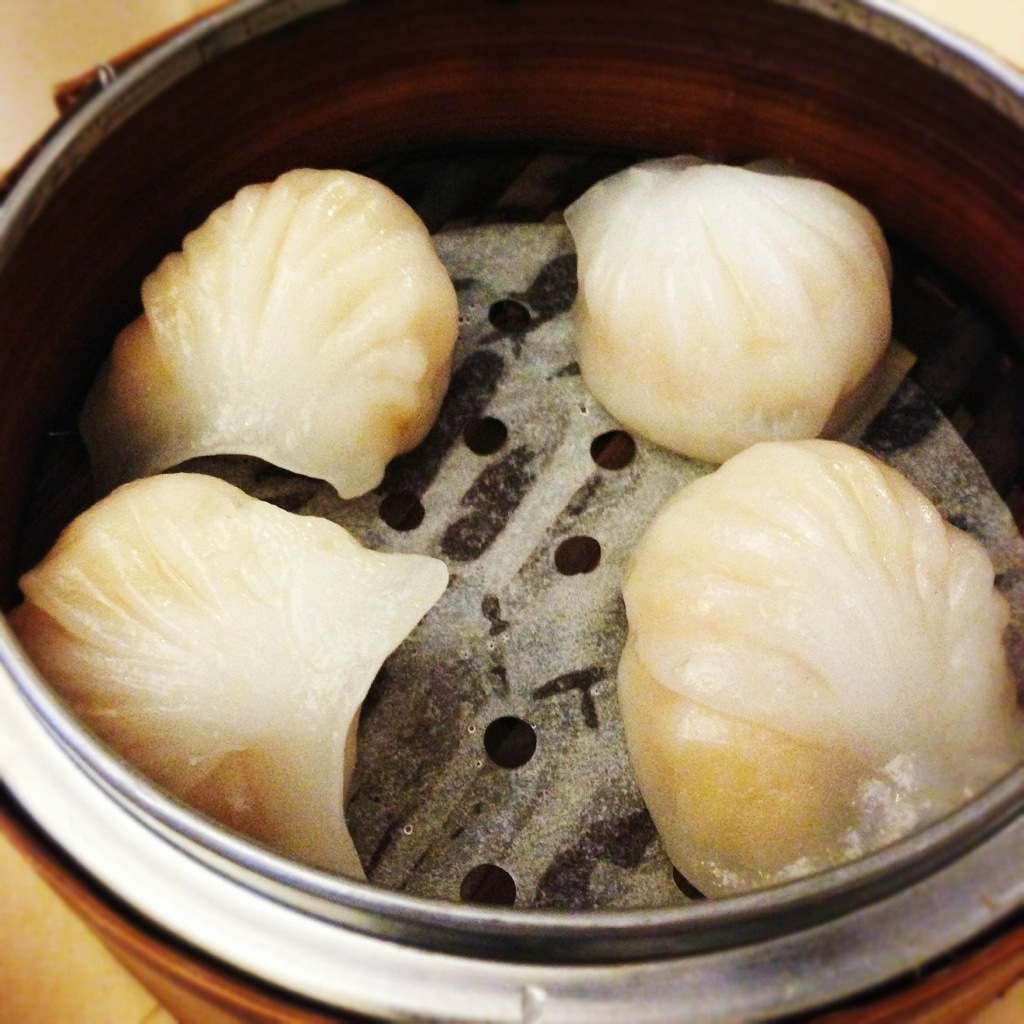
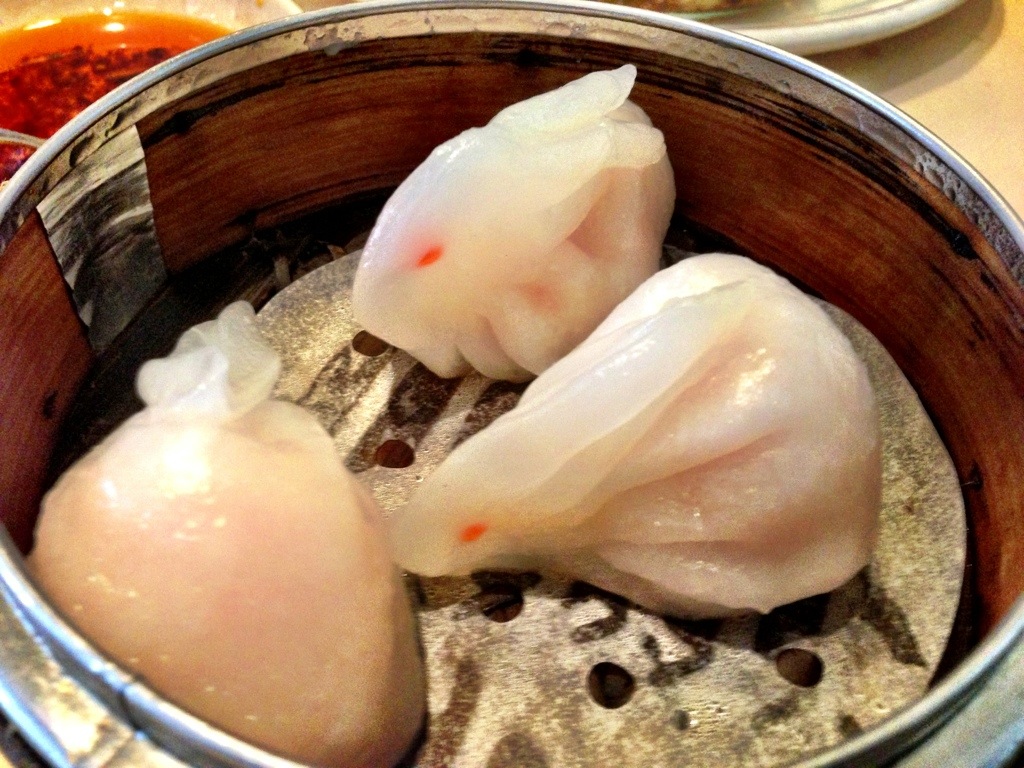
Ken Ho 双喜 ("soeng hei" lit. "double happiness") is next door to The Hippodrome theatre and is currently my favourite place to yum cha in Birmingham. The selection of dim sum is smaller than the ChungYings but what they do is all excellent. All killer and no filler, like the Har Gau 蝦餃. Bursting with juicy prawn. Roast meats are excellent, on par with the specialist roast meat shops in Chinatown. The flowing sand buns 流沙包 are a recent thing in global dim sum. They have a salty sweet runny duck egg custard centre and have to be eaten with care. So much better than the boring old custard buns 奶黄包 we had growing up. Pork chitterlings are prepared in such a way to make it look and eat like crispy suckling pig crackling. But best of all, is the off menu item pictured above. I'm loathed to tell you about it but I'm assuming anyone actually reads these blogs and acts on them. Then also assuming there's enough of you to eat them all before I get there when the place opens at midday. BBQ pork puffs, char siu sou, are as good as Yauatcha's famed venison puffs. I would go for these alone.
The only gripe is the tea charge, a minor gripe, and maybe the chicken feet in black bean sauce 豉汁鳳爪 could be better too. But I'm the only one who really appreciates that dish anyway.
Ken Ho
41-43 Hurst Street, Birmingham B5 4BJ
Tel: 0121 622 1323
Actual Turkish grill restaurants. You wait ages for one then three come at the same time. With Istanbul in Handsworth leading the way last year, Nemrut and Rod Roj are hot on it's heels. I hate to use the phrase "expertly grilled " as bloggers who say this tend to refer to cheap steaks in mediocre gastropubs. But get this, the Turks are expert grillers and to see a man (it's always a man) tending an ocakbasi is both mesmerising and strangely appetising. The aroma of lamb or chicken fat atomising on hot coals and permeating back into the meat does that to you.
Nemrut on the Dudley Rd, like Istanbul, is not in the most salubrious part of town. The restaurant is large as is the choice of grilled meats with quail and lamb testes on the menu. The portions are generous and expertly grilled here (there I go again) but the bread and salads are average. The esme salsa is terrific here but no rice or bulgur wheat accompany the meats. They have a new location on Holyhead Rd in Handsworth but can't vouch for that one.
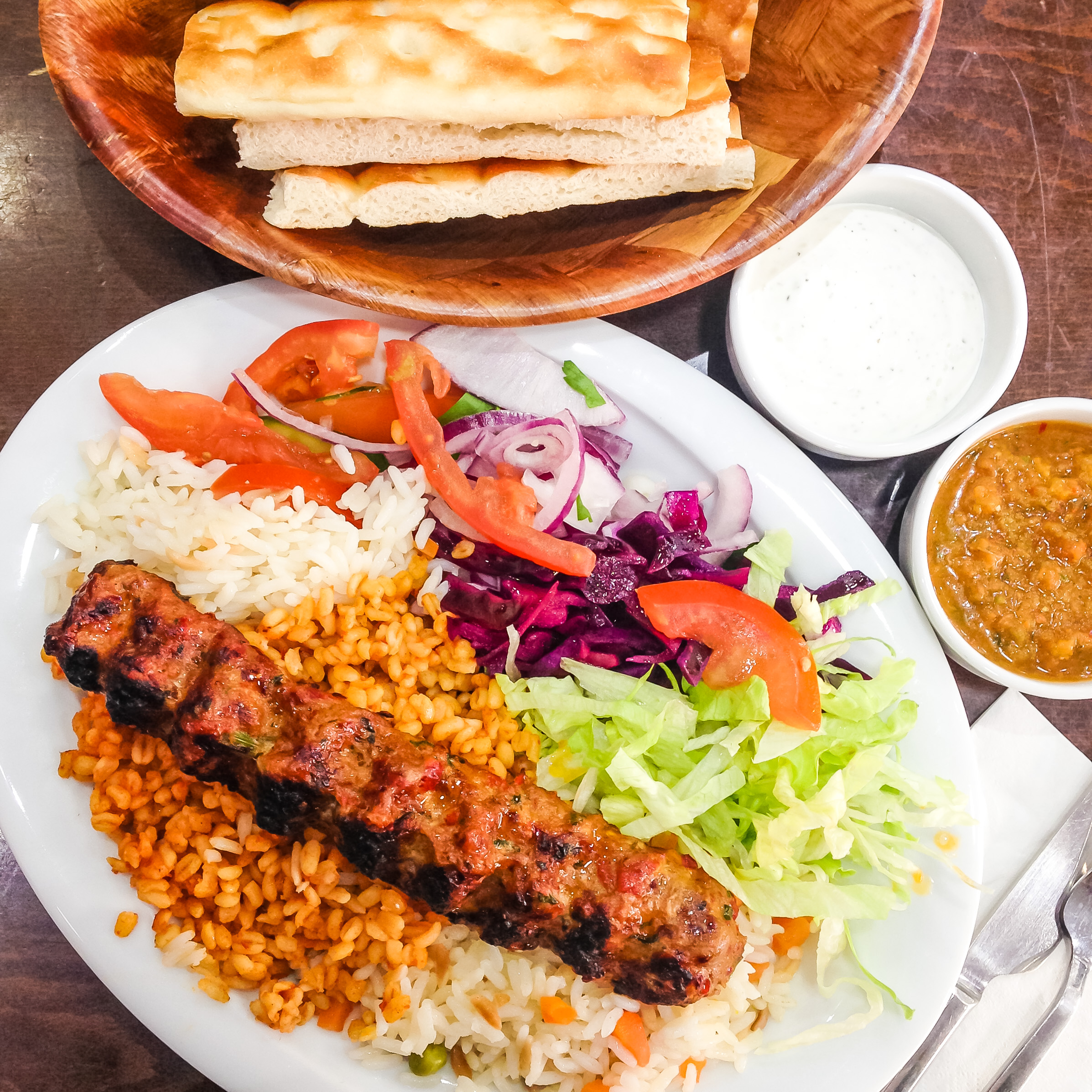
Rod Roj's Lahmacun and salad, £2.49. Better than a Greggs.Rod Roj's Adana kebap
Rod Roj looks for all intents and purposes like a greasy late night takeaway for revellers. Situated on Smallbrook Queensway in the middle of town around the corner from the Chinatown bars it attracts its fair share of the inebriated and desperate. I can assure you that I've only been in the day and they know how to chargrill. Pop in for lahmacun, the classic Turkish flatbread smeared with lamb mince and a salad. At £2.49 surely the best value eat in the whole of the city centre. Stick around for the juicy adana kebap served with rice and bulgur, the best I've eaten. Shame about the pide flatbread which is the worst. But hey it's free!
Rod Roj
Smallbrook Queensway, Birmingham B5 4HE
Tel: 0121 633 0999
Wait what’s this!? A Birmingham food blog and this is the first time we’ve reviewed a restaurant in our famed Balti Triangle?! Hold your horses, it may be at the Balti epicentre of Ladypool Rd but Bader restaurant is not a curry house, the menu is half Lebanese. Amongst the sea of standard Balti house offerings along that road is an island of Arabian calm, because the other half of the menu is Arabic with nods to Maghreb and tagines. It’s the twin sister restaurant to the original on Coventry Rd in Small Heath (which is two doors down from Arabic grill Abu Zayd). Don’t expect the deep red hues of the kebabs you would find at the nearby Lahore grill, but more subtly spiced meat and tastier for it. The real treat is the lamb arayes, a small flatbread topped with a smear of minced lamb and freshly baked. For £3.50 each I could eat these beauties till I burst but that would do the rest of the menu a disservice. Grilled meats are a strength, cooked so that they are still juicy, a state unknown to the Pakistani grills that suffuse the area. The only let down is the rice which to my Chinese palate has been undercooked to an unacceptable degree on every occasion I’ve eaten there. But tough grain aside, it’s no reason why you shouldn’t visit Bader. Certainly the lovely Arabian décor is worth checking out on it’s own.
For a number of years I scoffed at the suggestion that Byzantium in Kings Heath was really good and I should check it out. I went already! A couple of times when it first opened mid-00s, it was a bit meh and was confused why anyone would believe otherwise. Good friends with good taste would genuinely beam when they talked about the place. But I found in those early visits that it was just very ordinary, a few olives or anchovies plucked from a can into a mini cazuela. Forgettable bland dishes.
But on a recent Monday evening we were stuck for a place to eat. A few of our favourite curry houses around here being closed on Mondays. So we found ourselves here and glancing at a Spanish tapas style menu with influences from other corners of the Mediterranean. Croquetas, flatbreads, hummus, patatas bravas, souvlaki, you get the idea. We ordered a few tidbits and a couple of the specials. And you know what? I was stupidly happy to be proved wrong about the food. For a quiet Monday night it tasted like it was cooked by someone that cared. The pork belly dish being the standout, very tender with a shattering crisp skin. Great croquetas too. It wasn't all perfect, the two fish dishes we ordered, unsurprisingly, weren't that fresh but forgivable considering the time of the week. Overall with the tasty little dips and the charred flatbread we ate very nicely for not very much money.
So the moral of this blog is; it pays to go back and a lot sooner than I did with Byzantium.
We have been a bit lazy around here, almost two months into the year 2014 with no blogpost. How are you, the good people of Brum, going to decide which of our city’s unsung Indie food purveyors to spend your money in? Humbly assuming of course that you trust our opinion. It’s a funny thing blogging about restaurants, because invariably the places a blogger reviews are the ones we would go to anyway. Drawn to them because they serve food that sounds like what we want to eat at a price we don’t mind paying for. You don’t really need us to tell you that the new bar on Colmore Row (pick one) has nice drinks but the food is a bit average. You can work that out yourself. No it’s finding that Turkish place in Handsworth or the Spanish in Sutton Coldfield is really worth the short trip from the centre. So maybe the real value in this blog is to dig out these nuggets in the nooks and crannies of our city. Wipe the fluff off them and fearlessly give them a chew for you. A service we’re happy to provide.
But then we can’t strike rich everytime, not every place we try can be great and that’s where a lot of blogs fall down. Most food bloggers will only write about the nights they’ve had out where they’ve had a good time. Usually going something like this: “We had such an amazing night at X that started with amazing cocktails… the staff were so friendly and made us feel so at home…. steaks were mouthwatering and you can choose from two different cuts that had been aged for 21 days…. OHMYGOD the triple cooked chips were simply TO DIE FOR!… decadent chocolate fondant… we all went home slightly tipsy” and that’s great! You can blog about your crazy nights out but just don’t pretend you’re a food blog. The bias in blogs like those is so skewed as to make the most right-wing newspapers seem reasonable and balanced. For example, if you were to believe everything you read in the Daily Mail then you’d think that our country is full of immigrant bikini-wearing teenagers who want to rob you. If we were to believe those bloggers then every food outlet in Birmingham is just wonderful, representing the very pinnacle of their cuisine. Clearly this is not the case, and can never be in a city of over a million people each with their own opinions. So where is the balanced criticism? The truth is that our country is full of lovely decent people who eat in mediocre sometimes awful restaurants. Compiling the Birmingham and West Midlands Food Map last year has really skewed the blog a little, because all we do is recommend great places to eat and buy food. We haven’t had the time to dissect the bad places because frankly it’s harder to write a balanced piece constructively criticising them than being effusive about a good one. You try! It’s not easy. To show that all is not so rosy in the garden of Birmingham, here are some examples where I think most bloggers get carried away with the really rather mediocre food offerings.
Bodega
Everyone knows this colourful place on Bennet’s Hill, those bloggers talk about the cool vibe and the fantastic drinks in the cosy basement bar. They say the Pan-Latin American food is fresh and vibrant but whenever I’ve eaten there it’s been about as fresh and vibrant as a Birmingham pavement. I’m suspicious of pan-continental themed food offerings anyway*. There will be exceptions of course, a truly passionate and inventive Latin-American cook could offer you a sparkly fresh scallop ceviche alongside spiky carnitas and deep earthy feijoada. But with a menu that starts with those stodgy Tex-mex staples nachos and burritos, you know Bodega isn’t going for anything except lining your stomach for more cocktails.
Woktastic
I have to admit the name put me off for some time. How good can a Japanese restaurant be that’s named after bad pun about a Chinese cooking implement? Oh but so many people say it’s the best Japanese restaurant in town. Well fine, that could be true but only by the paucity of other offerings. Let’s get this straight the sushi there is not good, by Japanese standards is appalling, by British standards it’s just about serviceable. What it does do well however are Japanese comfort dishes like chicken katsu curry, a filling, tasty and unpretentious dish. Though I’d have preferred a Tonkatsu (pork) curry but Woktastic is Halal friendly, so they definitely know their market in Birmingham and it’s not catering for lovers of authentic Japanese cuisine.
Streetfood
Some of the best food I’ve eaten in this city have been under the Streetfood banner. Meatshack’s burgers, Sharians curry goat, wonderful dosas and pizzas from the market in Kings Heath. But really, reading some of the Streetfood reviews it seems that every oozy mouthful of Streetfood ever eaten in this city is an explosion of flavour. Just take a step back, yes you’re having a good time the tunes are great the beer is cold but apart from the few exceptions you or your mates can actually cook better than this. Don't be taken in by the label "gourmet streetfood", don't let fashion hide what is in fact pretty ordinary stuff you could get at any farmers market.
But why am I writing this? Apart from addressing the bias, it’s important to let it out sometimes. If you’ve been served something bad don’t be so British about it and slope off muttering under your breath to never to eat it again. Sometimes it’s so bad that these people need to be stopped and told where to go. Politely though, in the British way. You'll feel a lot better for it and in the end it might actually raise the standard. That's always been my goal for food blogging. That's why Nick and I get on so well, we don't use this blog as an exercise in PR, it's just all about the food.
* pan-continental food is deeply suspicious, it’s food stereotyping. At worst in big corporation’s hands it’s lazy mass-produced rubbish, at best in the hands of skilled chefs it’s just confusing. Imagine a Pan-European restaurant in Shanghai serving “authentic” spaghetti bolognese, fish and chips, coq au vin alongside tapas. How good can it be? There might be one or two dishes they do well but in the main it’s going to be sub-standard. But this is the equivalent to a Pan-Asian restaurant here in the UK serving chicken yakitori and satay skewers alongside stir-fried beef in oyster sauce and pad Thai. It’s usually a cheap mess wrapped in the illusion of choice.
It's been a pretty good year for Birmingham food. Street food has definitely been on-trend, with original purveyors Digbeth Dining Club going from strength to strength, with the glorious Meat Shack certainly our pick of the vendors there, with both his regular burgers and specials both worth seeking out. Also helping the cause of street food was Brum Yum Yum, loudly declaring their intentions to transform the way we dine in the city, and having established a very popular regular Saturday event in Kings Heath. Food pop-up Can Eat run by Lap and Dom Clarke from Loaf Community Bakery's premises gained a regular audience and a 5* review from Paul Fulford.
A number of independent openings have plugged the few remaining gaps in Birmingham's food offering, perhaps most particularly Istanbul for Turkish food, and both Seoul Plaza and Banana Leaf Cafe providing much-needed lunch options in Selly Oak. All this we have been (kind of) diligently documenting on our Birmingham Food Map. We plan to continue adding new sites until we have the whole city covered (please leave suggestions in the comments).
A fourth Michelin star was added to Birmingham's impressive roster of Simpsons, Turners and Purnells by Adam's Restaurant. Huge congratulations to Adam Stokes and the other head chefs for this achievement, it cannot always be easy in the current economic climate. But increasingly we find our own appetites have increasingly shifting away from this style of dining, as evidenced by the eateries featured on this blog.
Sadly there have been the inevitable closures too: Lap's favourite sichuan restaurant BBQ Village is no more. And it seems the useful independent Birminghamplus.com food board has gone the way of the dodo too?
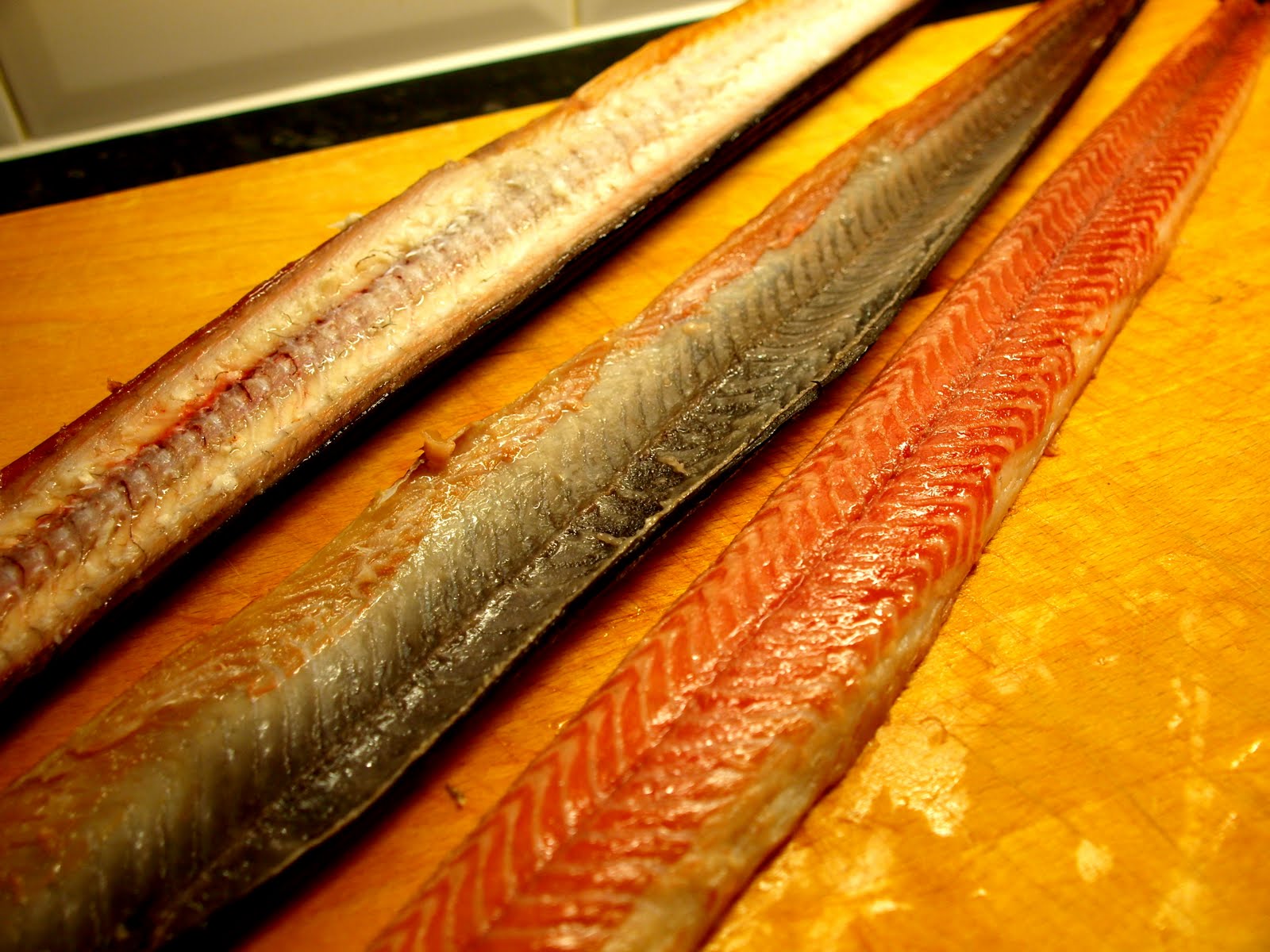
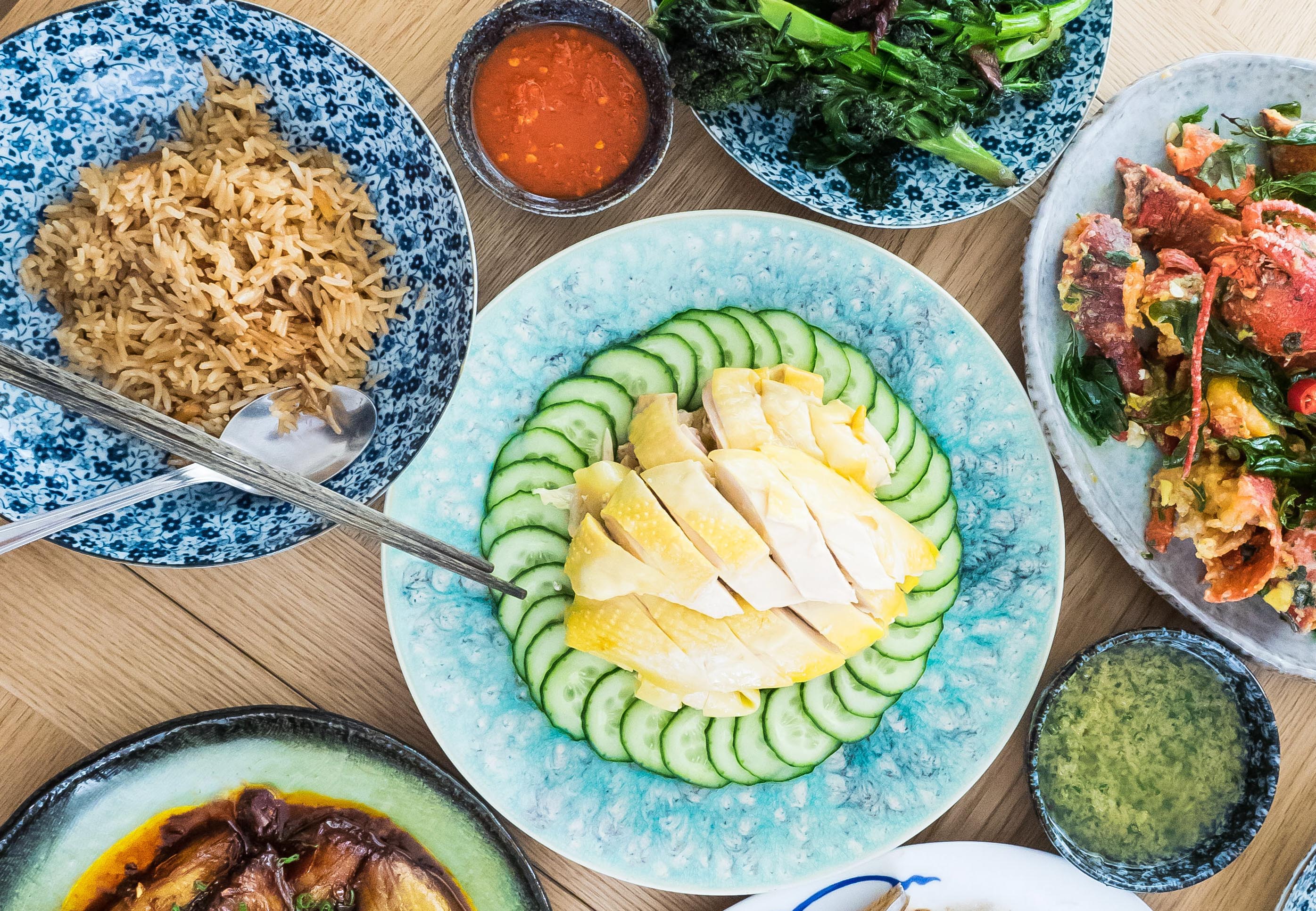
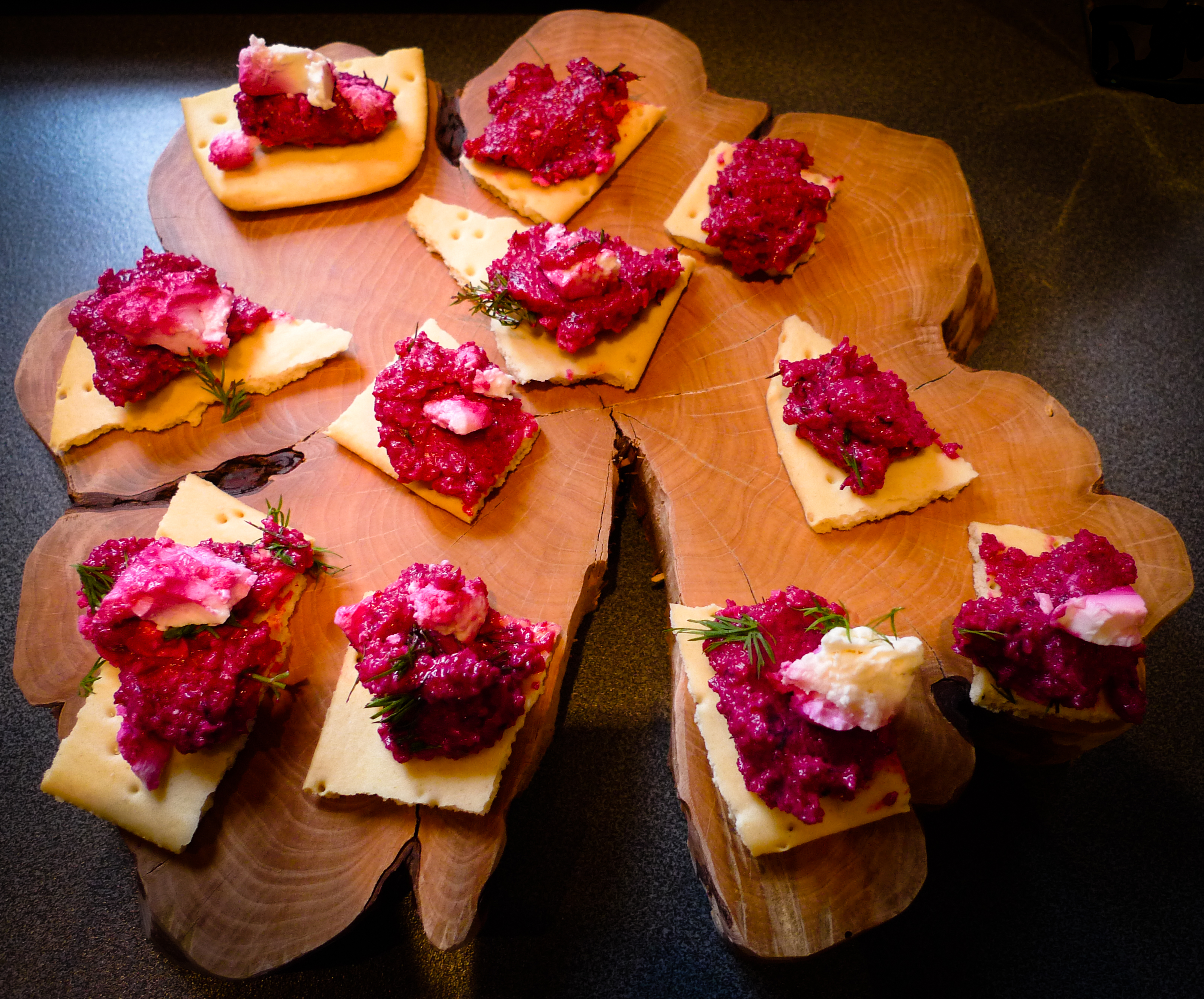
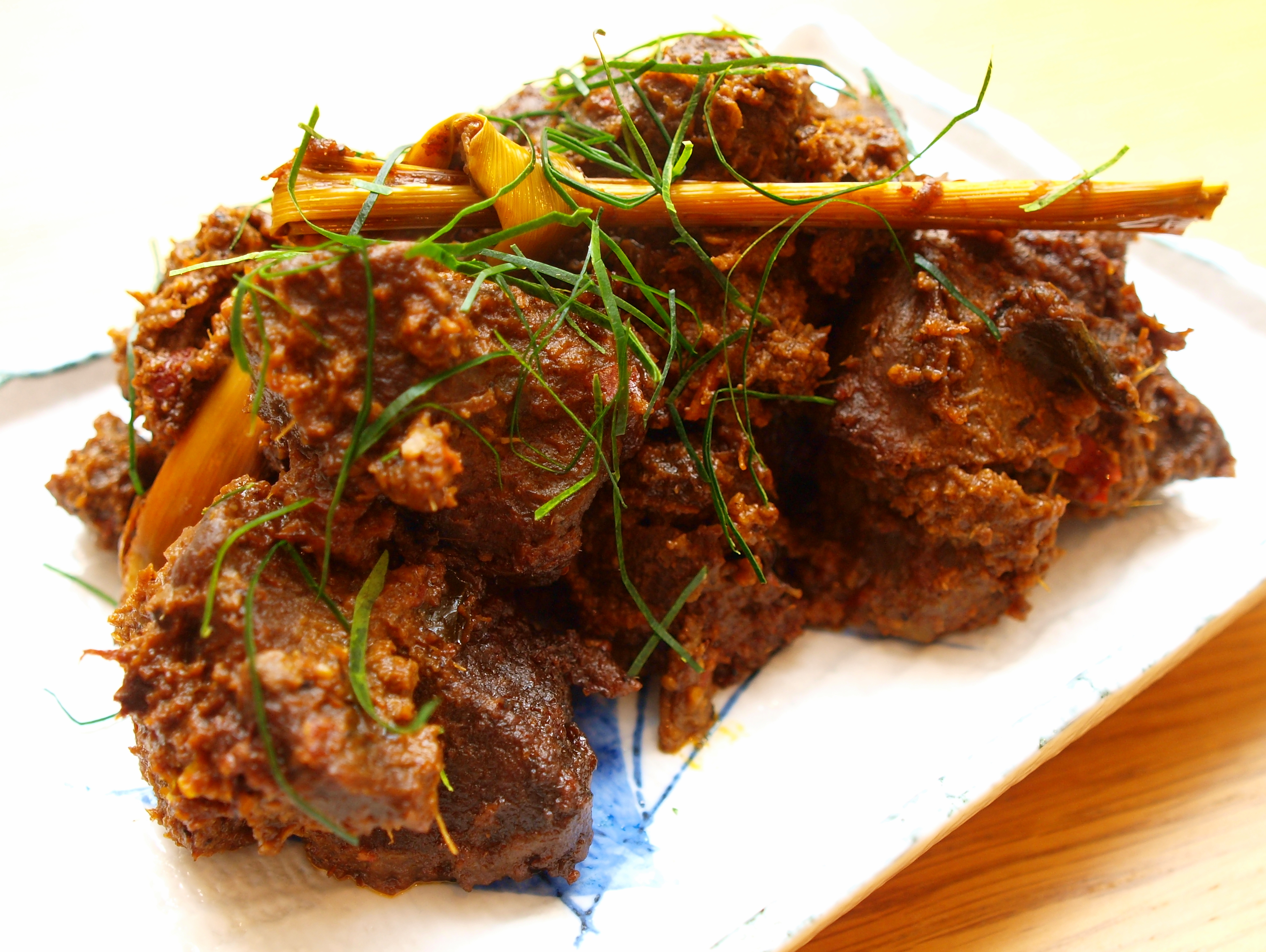
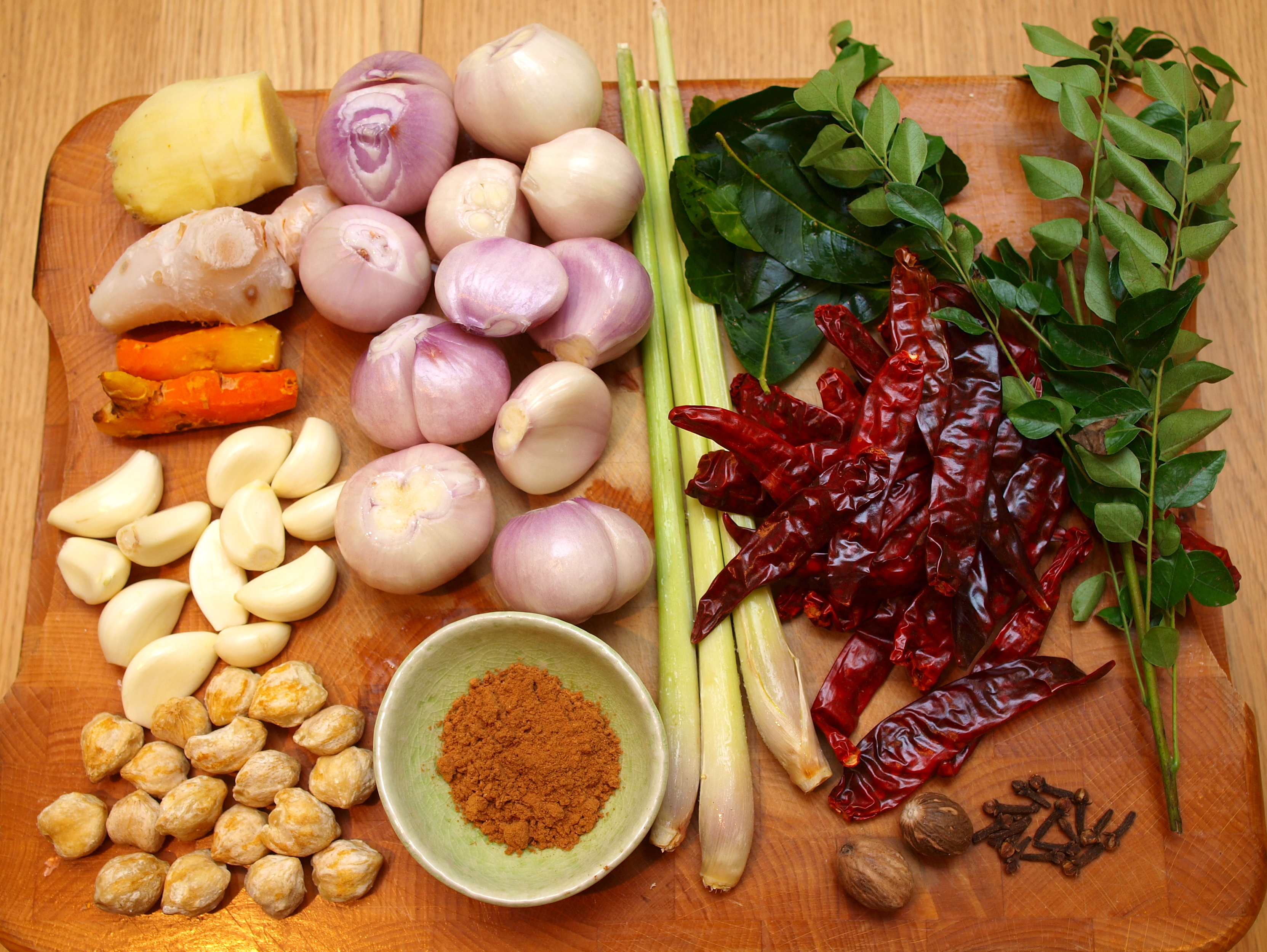
Posts from previous years that still keep giving in 2013 include Lap's encyclopedic guide to the Birmingham Indoor Market and Wholesale Market, actually the most popular post on this site and a lesson to Birmingham Council who seem set on moving and marginalising this unique asset (Birmingham Council should realise that claims of Birmingham being a foodie city are just as much to do with the market as the four Michelin stars we claim as our own). Other popular posts are Lap's excellent guide to eel smoking, his definitive guide to Hainan chicken rice, Nick's guide to Moro-style beetroot borani and the unimpeachable beef rendang recipe, which I highly recommend you try. Finally, judging from the hits, thousands of you are still desperate to find a place for sushi in Birmingham, but it sadly remains a bit of a desert out there.
So all that remains me to do is to thank you the readers of the blog for your support in 2013, wish you a Happy New Year and ask that you keep reading in 2014 and please do get involved in the comments section or on Twitter as it makes the whole experience much more rewarding for us!
It was going to be a top ten list of the best dishes of the year but I can't be arsed to put them in order and besides ten is a pretty arbitrary number innit? So instead here's a stream of consciousness in a vaguely chronological fashion.
Keller Fried Chicken
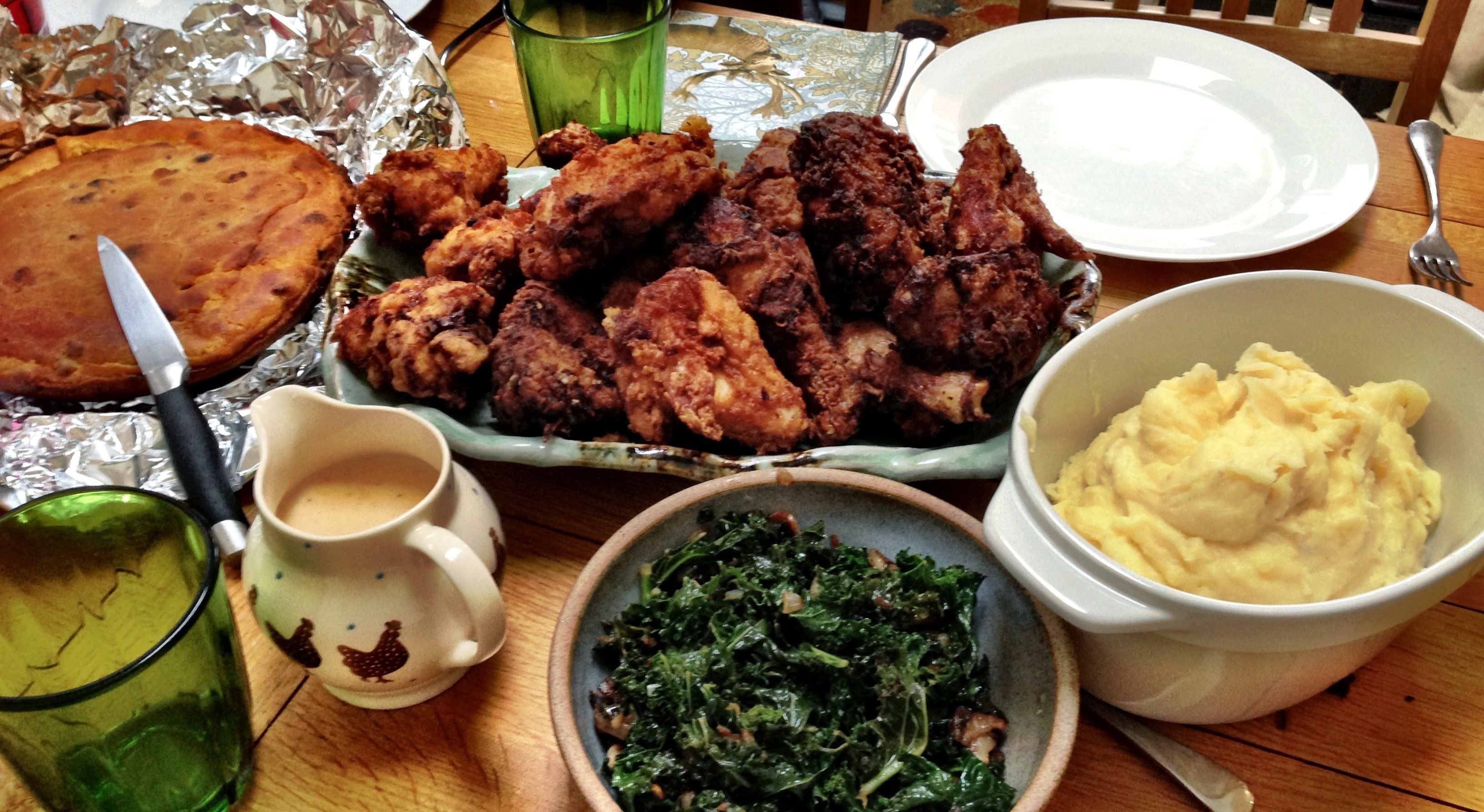
The year started strong on the 1st day with the best fried chicken any of us had ever eaten. A religious experience involving Thomas Keller's Ad Hoc Fried Chicken kit brought back from Yountville, CA by Nick. His kitchen is still getting over the mess he made that day cooking up those golden hunks. But it was worth it, the brine and seasoning made every bite juicy crunchy perfection. The standard that all fried chicken must now live up to.
Brisket Burnt Ends at Grillstock Festival, Bristol
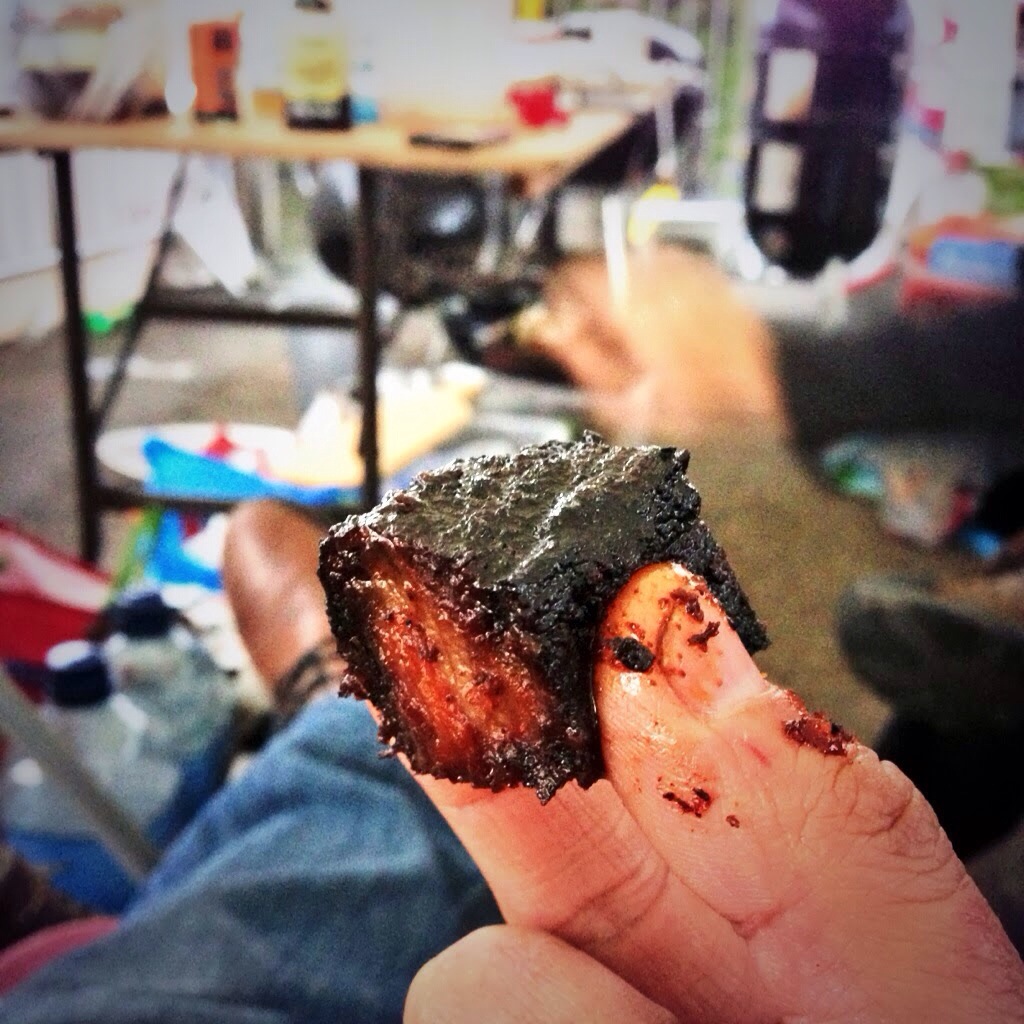
The Grillstock Festival in Bristol came early this year at the start of May which meant we were getting our practise on in the snow. But it was all worth it when we won best brisket and came 5th overall. Let’s talk about the brisket, it scored 476pts out of 500. So from the five judges it averaged over 95%. That’s like, almost, perfect! On that day the best part of the brisket was the burnt ends. In the evening after the judging when they’d had a bit more smoke I actually thought they were perfect. BBQ holy grail attained, he’s a clever bloke that Nick.
Anchovy on Toast & Prawns from Palamos at Etxebarri, Axpe
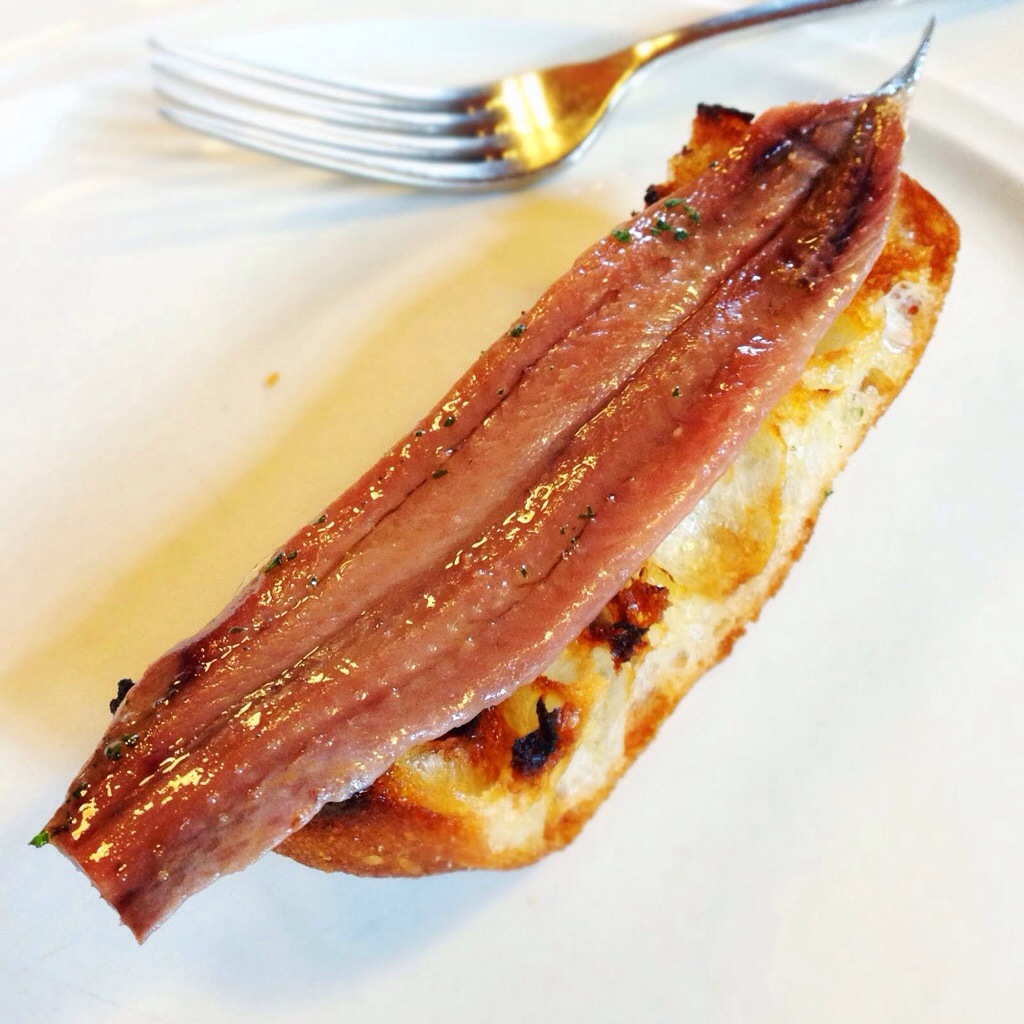
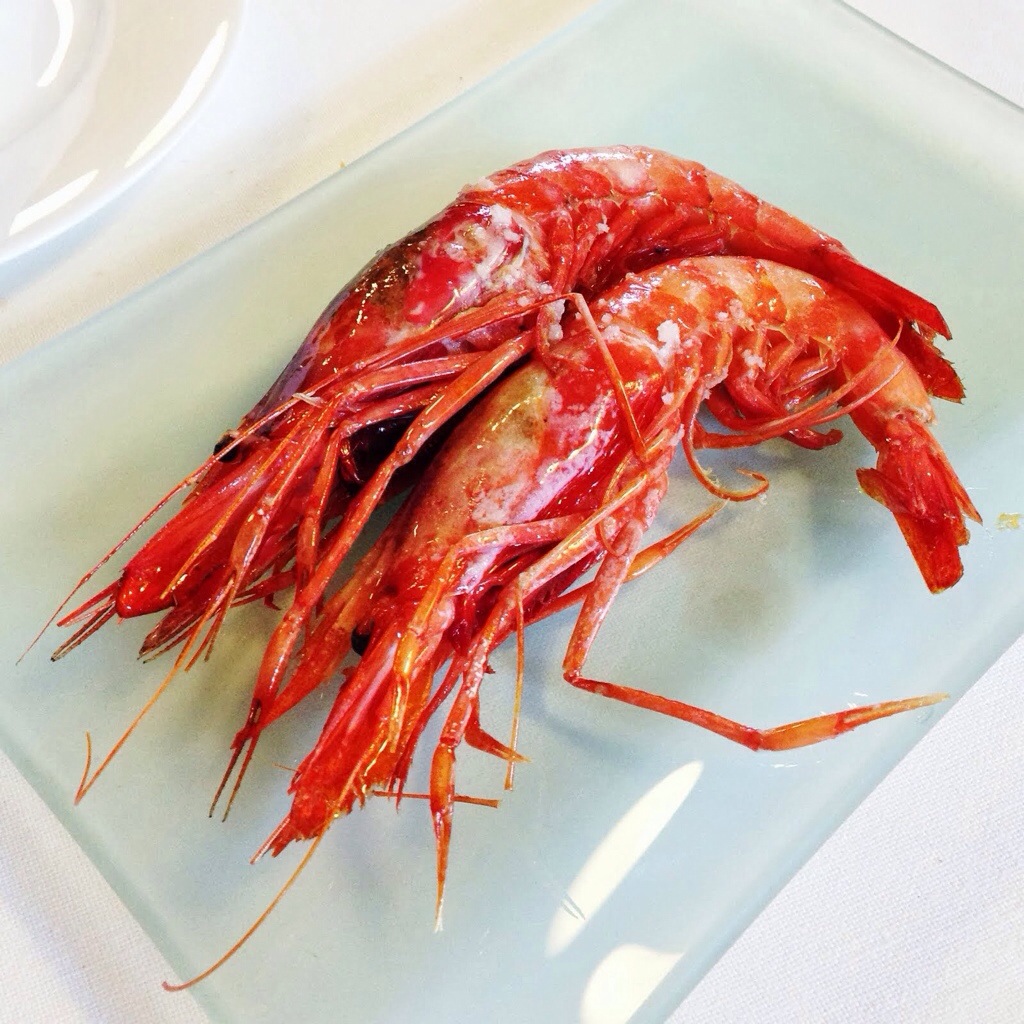
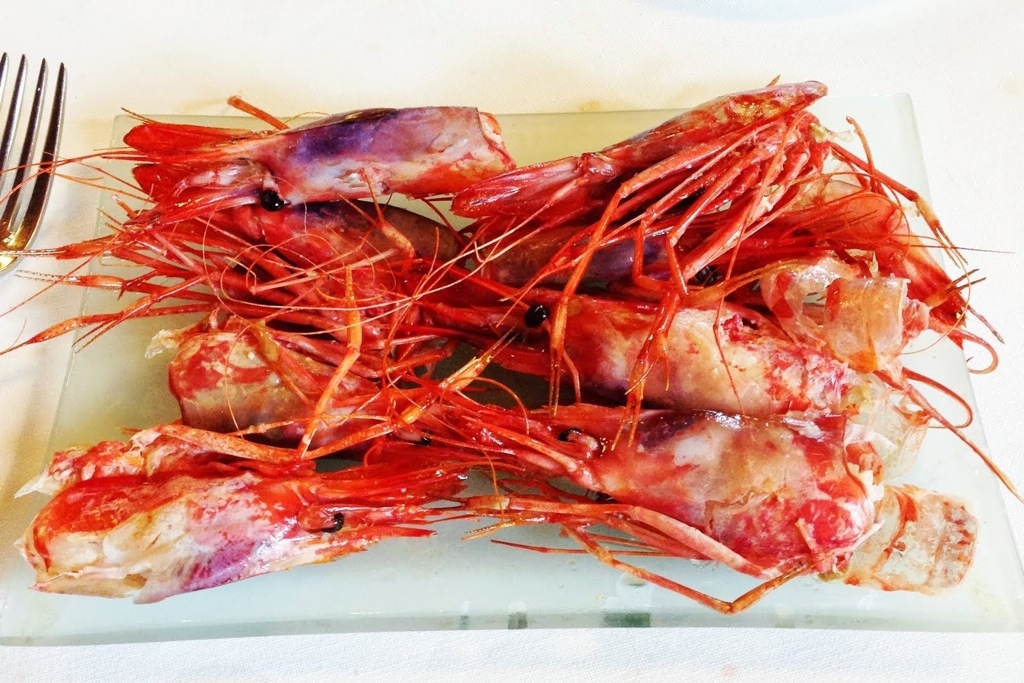
Later in May was our first visit to the Basque grilling sage Victor Arguinoniz in his restaurant Etxebarri situated between Bilbao and San Sebastien. There were lots of highlights on the tasting menu. The first that shone out was a long fat anchovy that had been caught a year ago, cured by the chef and served on toasted bread. Very simple, very perfect. So much so that to try and describe it any more would be futile. The second dish was a pair of deep red prawns, grilled with salt. Again a perfect thing, the tail meat was buttery sweet and the head juice like a concentrate shot of seafood bisque. The best thing was that no one else wanted their prawn heads so I got to suck down eight of these.
Cha Ca La Vong and Goi Cuon
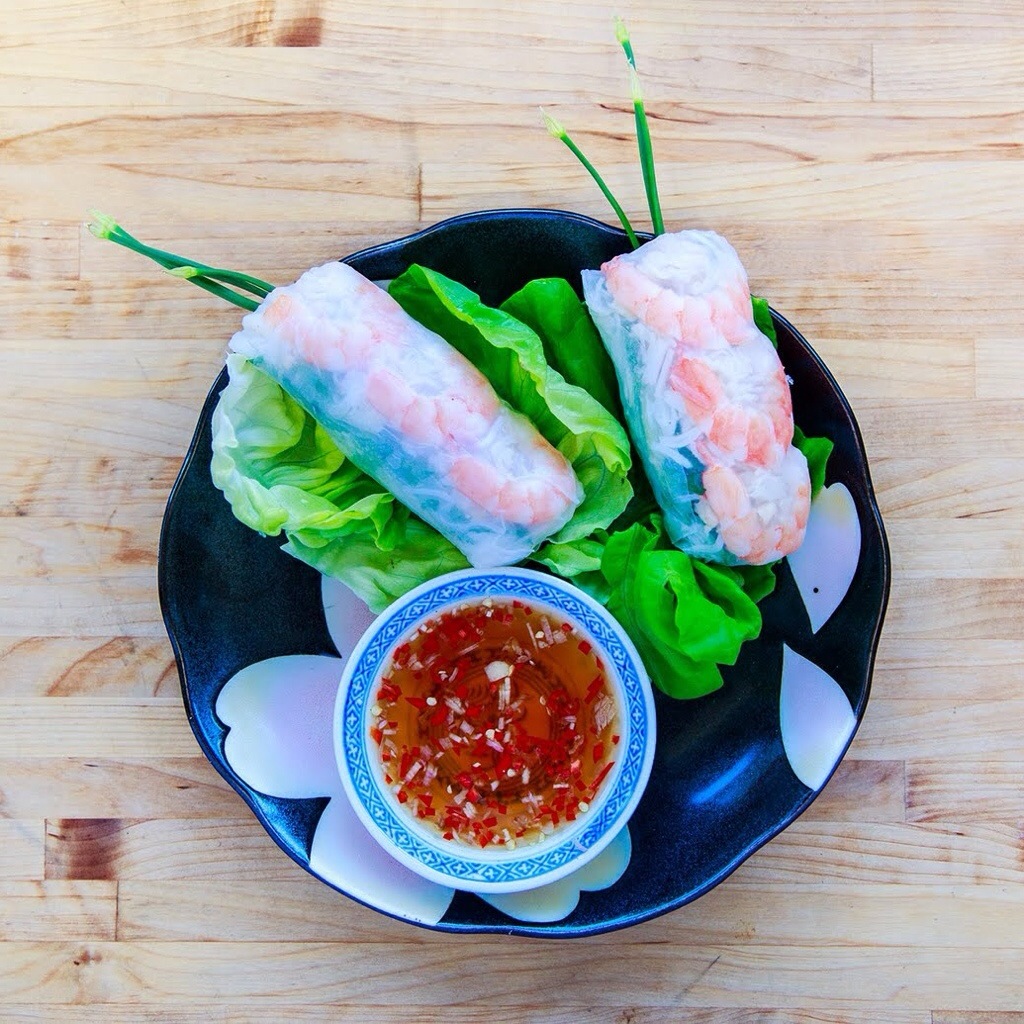
Went through a bit of a Vietnamese cooking binge mid-summer. There is a dearth of good Vietnamese food in Brum that I can’t understand. Maybe it’s the logistics of the fresh veg and herbs required to make the dishes really special. The first dish Cha Ca La Vong, I marinated baby monkfish tails in turmeric and lemongrass before frying them with spring onion and mounds of fresh dill. They’re served over rice vermicelli dressed with cashews, coriander, sweet basil, mint, chillies and nuoc cham. A taste explosion! The second dish Goi Coun or Summer Rolls. A thin rice paper wrapper filled to bursting with fatty belly pork, white crab meat, prawns, rice vermicelli and all those herbs. Dipped in nuoc cham, don’t think I can wait till summer to eat these again.
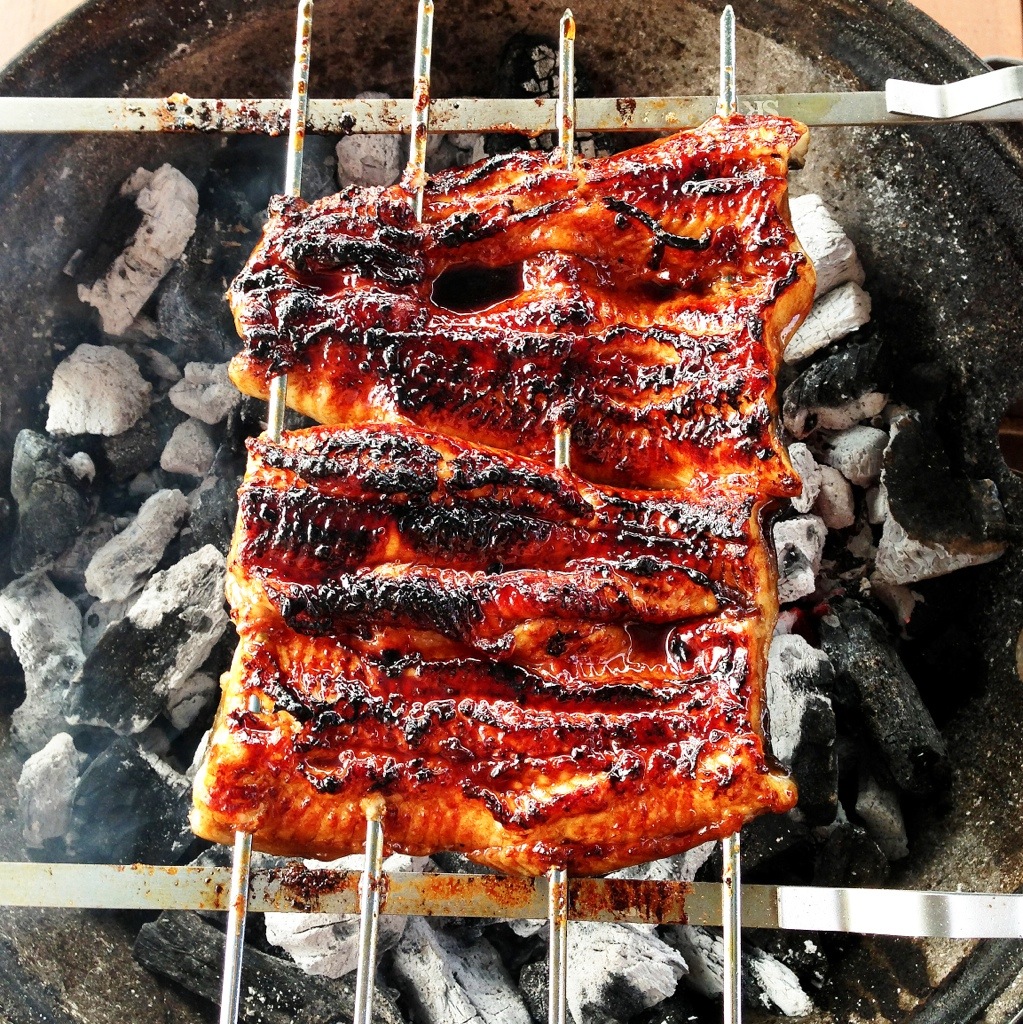
Kabayaki Unagi
As explained in this blog post here. The simple joy of cooking is learning to cook the things that you like to eat. This dish had always seemed really difficult to recreate but when I did the results were spectacularly good. The bonus being it was actually a doddle. There isn’t a week that goes by that I don’t think about cooking this again, the only problem is finding good fat clean eels.
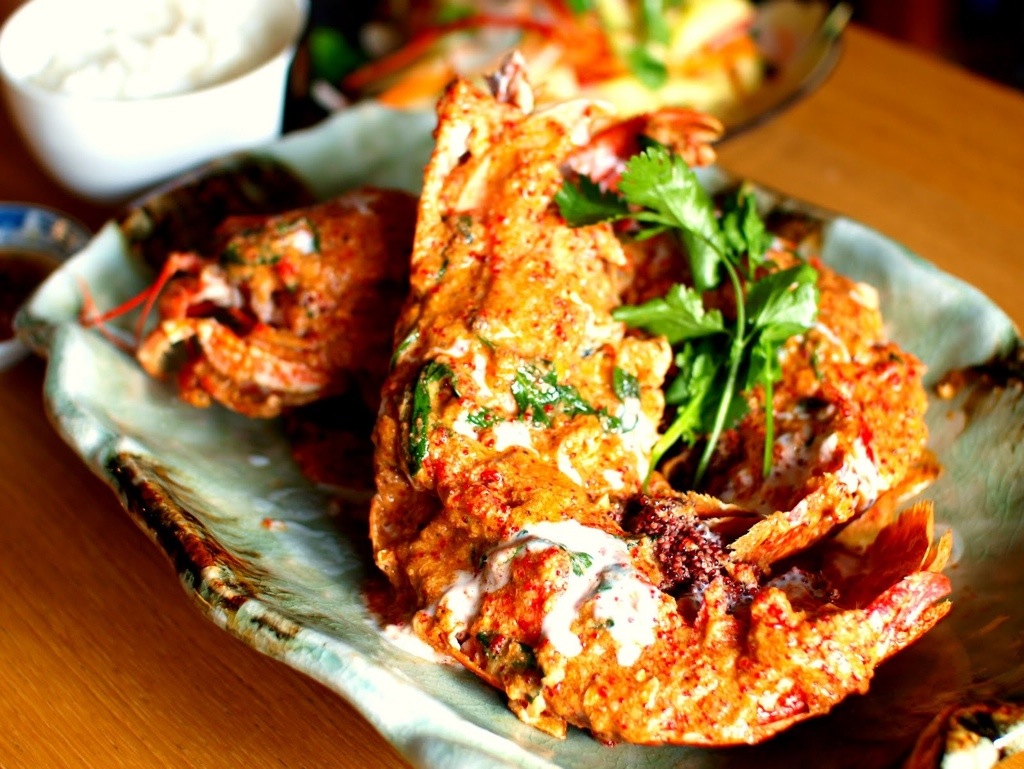
Lobster Curry
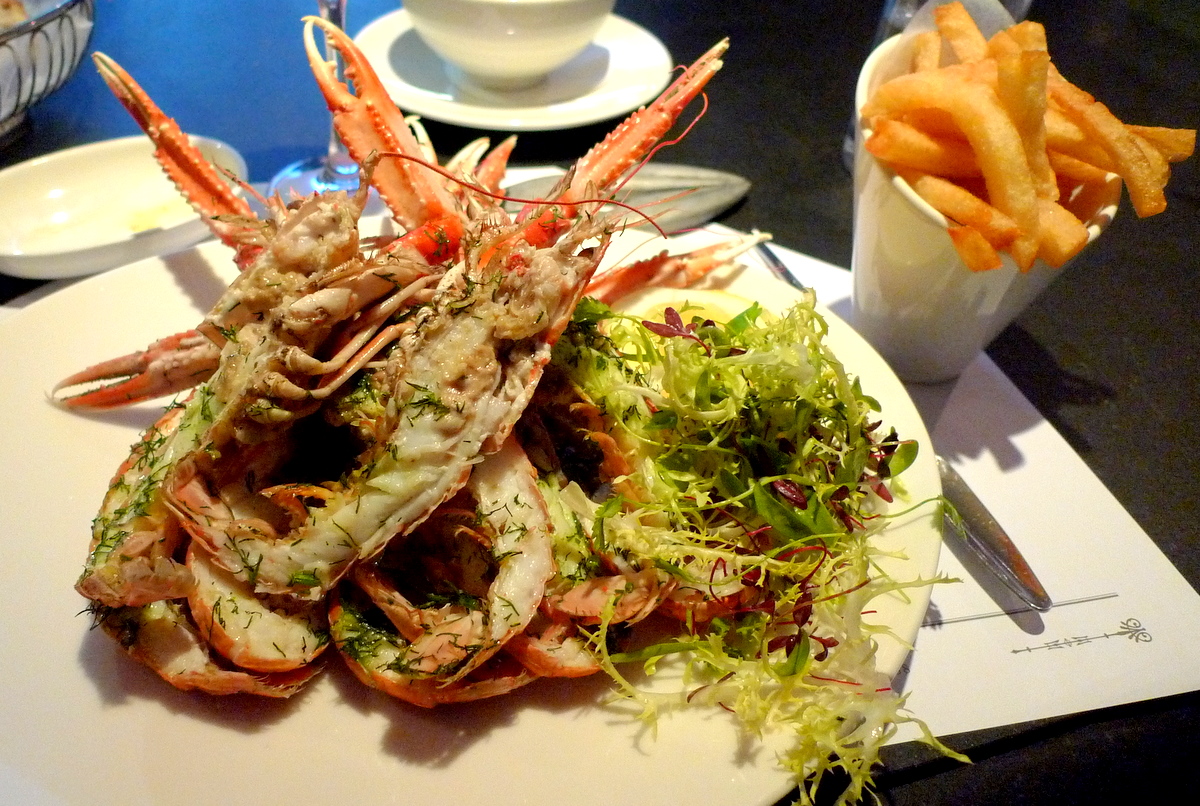
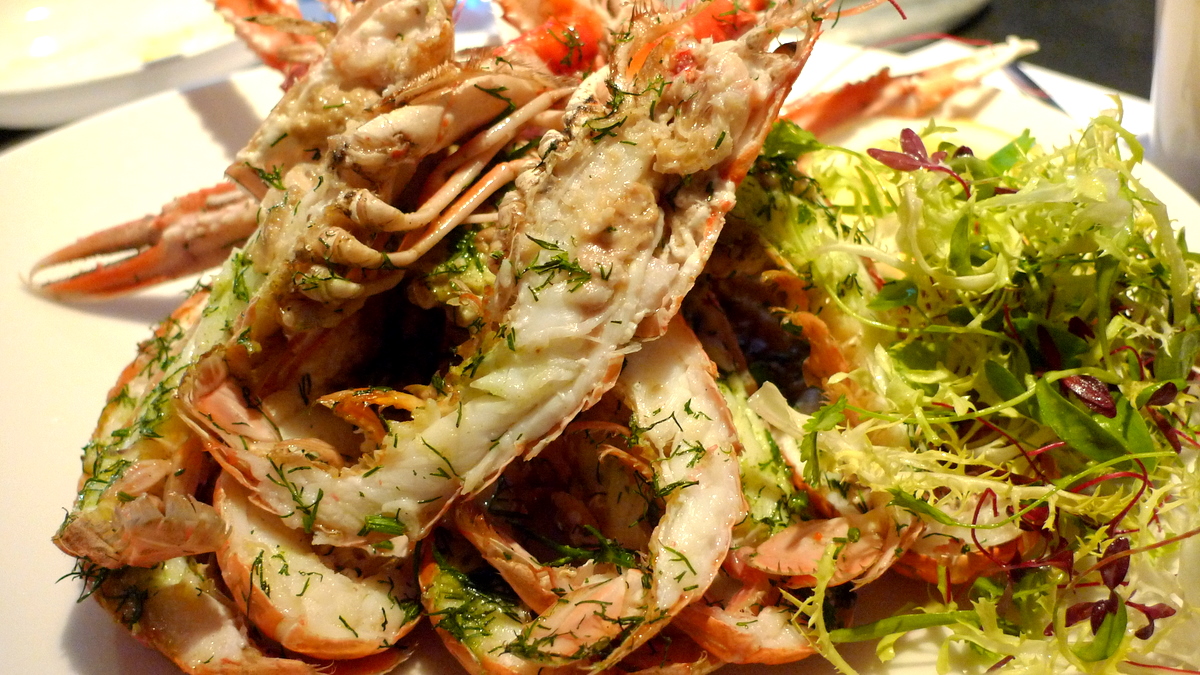
I like a bit of lobster I’m not afraid to admit. Usually stir-fried Cantonese style with noodles or Thermidor with buttery fettucine. But this summer I fancied a change and started experimenting with a Thai red curry sauce. Split female lobsters in half saving the roe and tomalley, char grill them then finish them with a red curry sauce thickened with the lobster innards. Yes, I’m salivating too as I type.
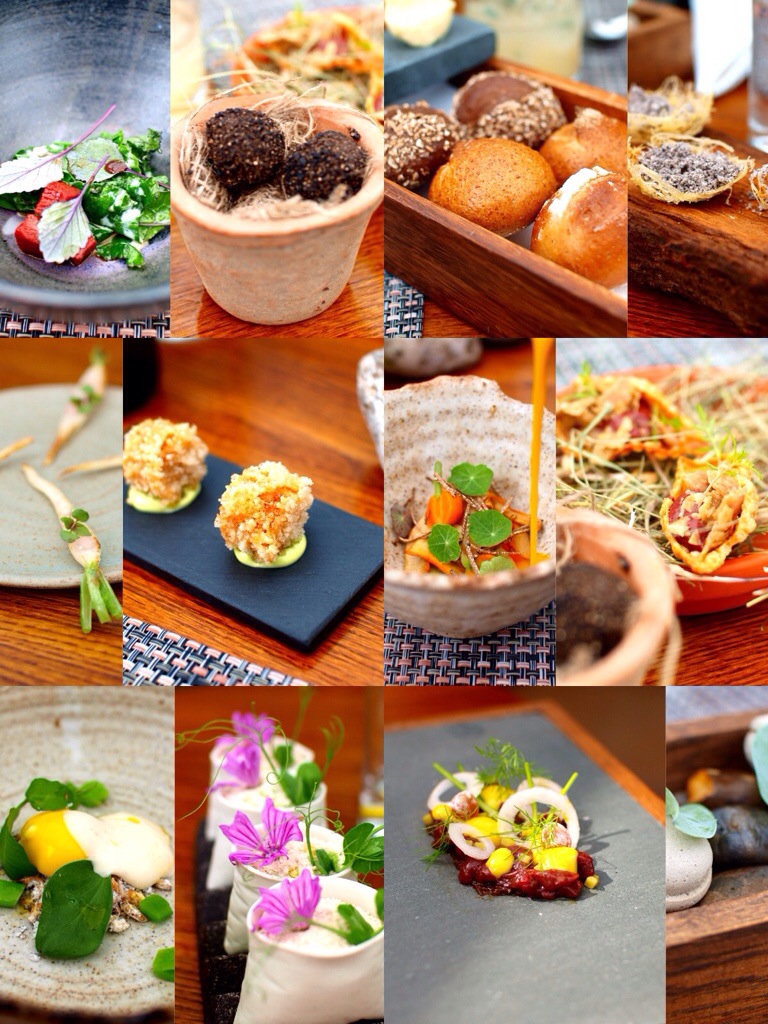
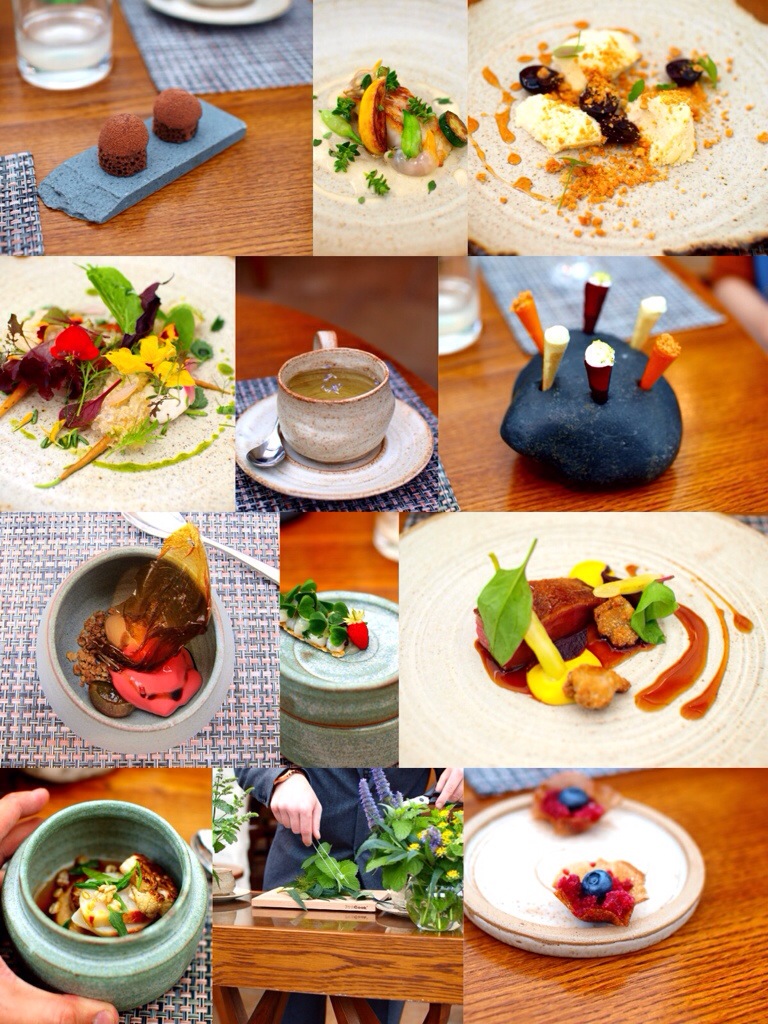
Everything at L’Enclume, Cartmel
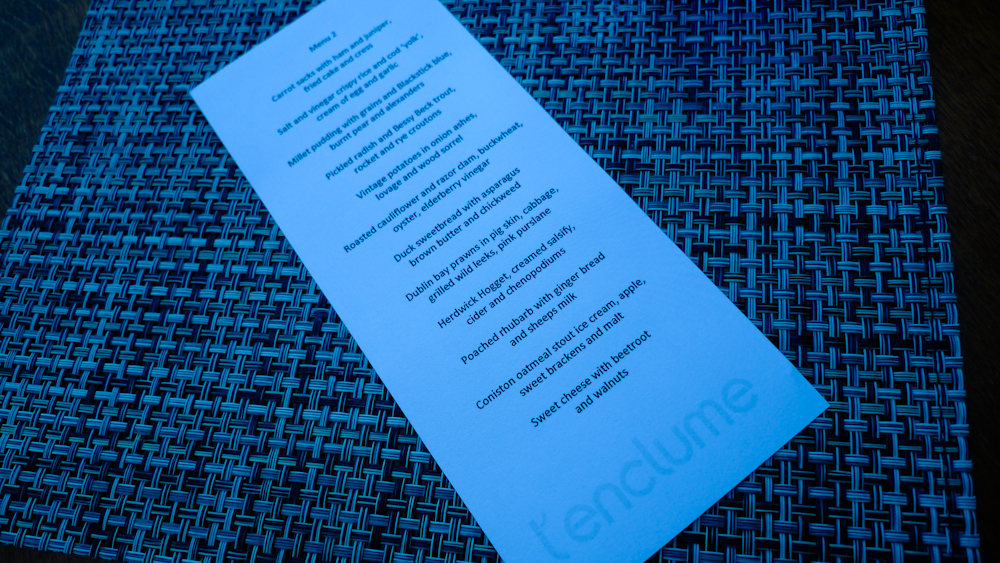
Late summer tasting menu at L’Enclume. We’ve been twice before in colder months so it was great to come back when the earth around Cartmel was at its most fecund. Is it possible to choose single dishes out for praise? Would be like choosing the best songs from your favourite album, you’d quickly end up with an album’s worth of songs. Possibly my meal of the year, but then that can be true in any year that we go.
Stilton and Prosciutto Macarons
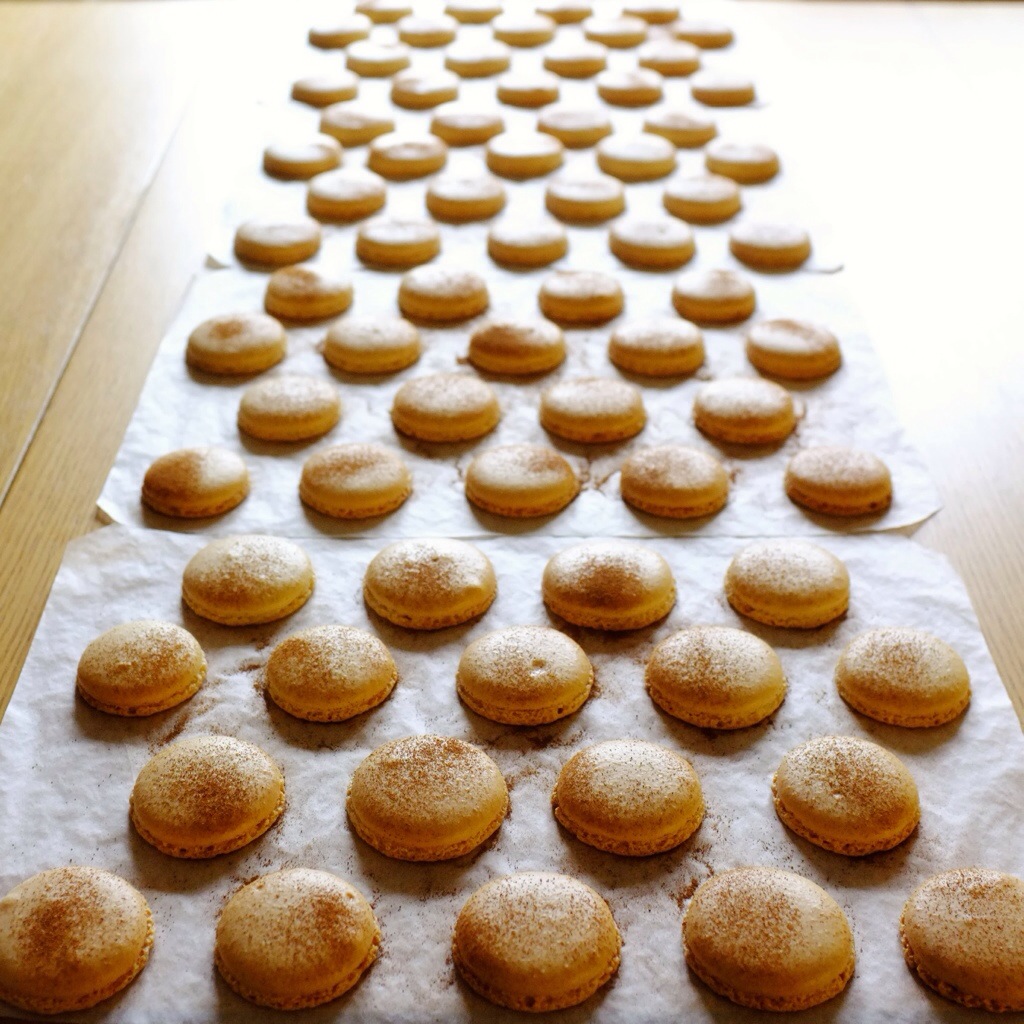
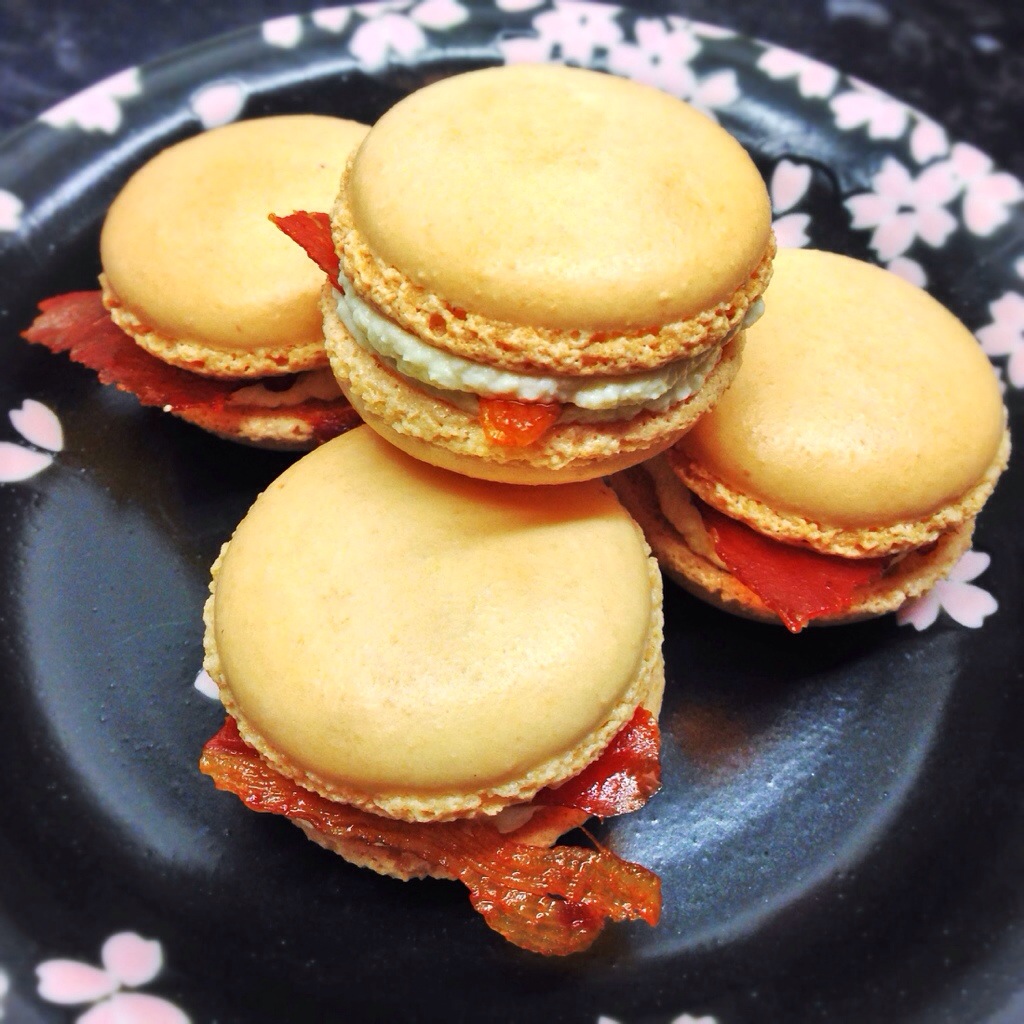
Been slowly perfecting my macaron technique this year using Pierre Hermé’s basic recipe and by Jove I think I’ve got it! So much so that it’s one of the few sweet recipes I know by heart. My favourite variation was a plain macaron piped with a mixture of white Stilton*, cream cheese, black pepper and crispy prosciutto. A savoury twist that surprised and delight everyone who tried it.
*apparently this year some TV Bake-Off muppet just stuck a wedge of Stilton between two mac shells. Unsurprisingly it wasn’t well received by the judges.
Mille-feuille at Jacques Genin, Paris
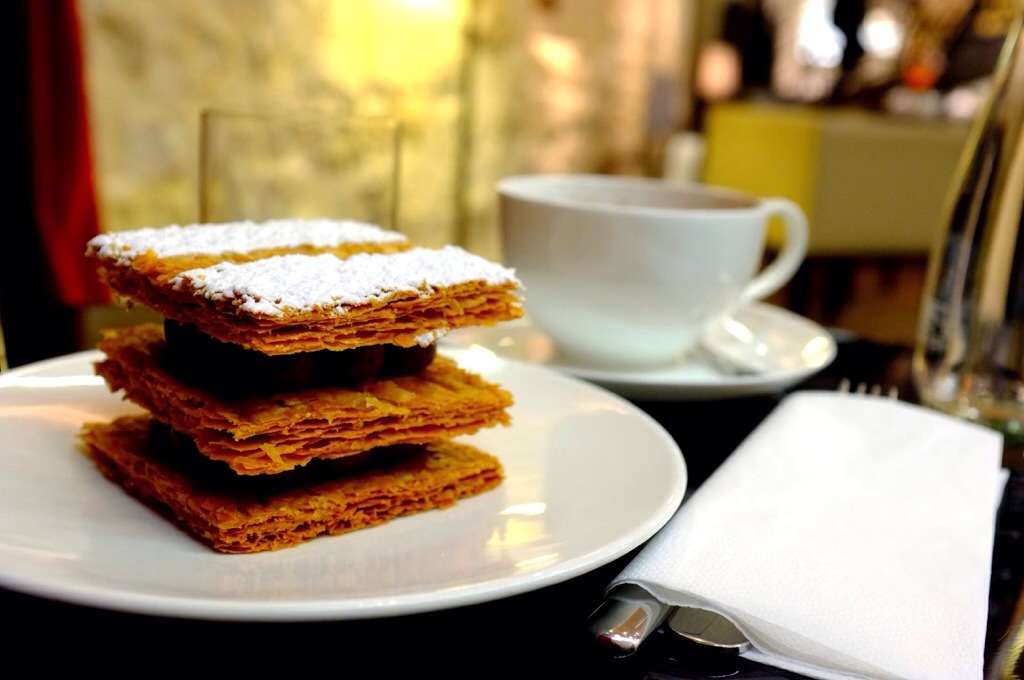
We’ve all had mille-feuille in some form or another. Custard slices we call them here, some puff pastry layered with some kind of filling or another. Cut into it and the filling squirts out from between the cold claggy pastry. You end up eating a mash up of soggy pastry and sweetened dairy gunk. It doesn’t have to be this way though. Imagine made-to-order mille-feuille, freshly baked squares of perfect light buttery puff pastry piped with delicately smooth crème patissiere or even chocolate mousse. Well you needn’t imagine it, just go to Jacques Genin’s patisserie in the Marais area of Paris. You needn’t imagine your knife falling through the layers of pastry like a sigh, clinking the plate with a whisper. Nor the perfect balance of textures and flavours melting in your mouth.
Hall Green Salami
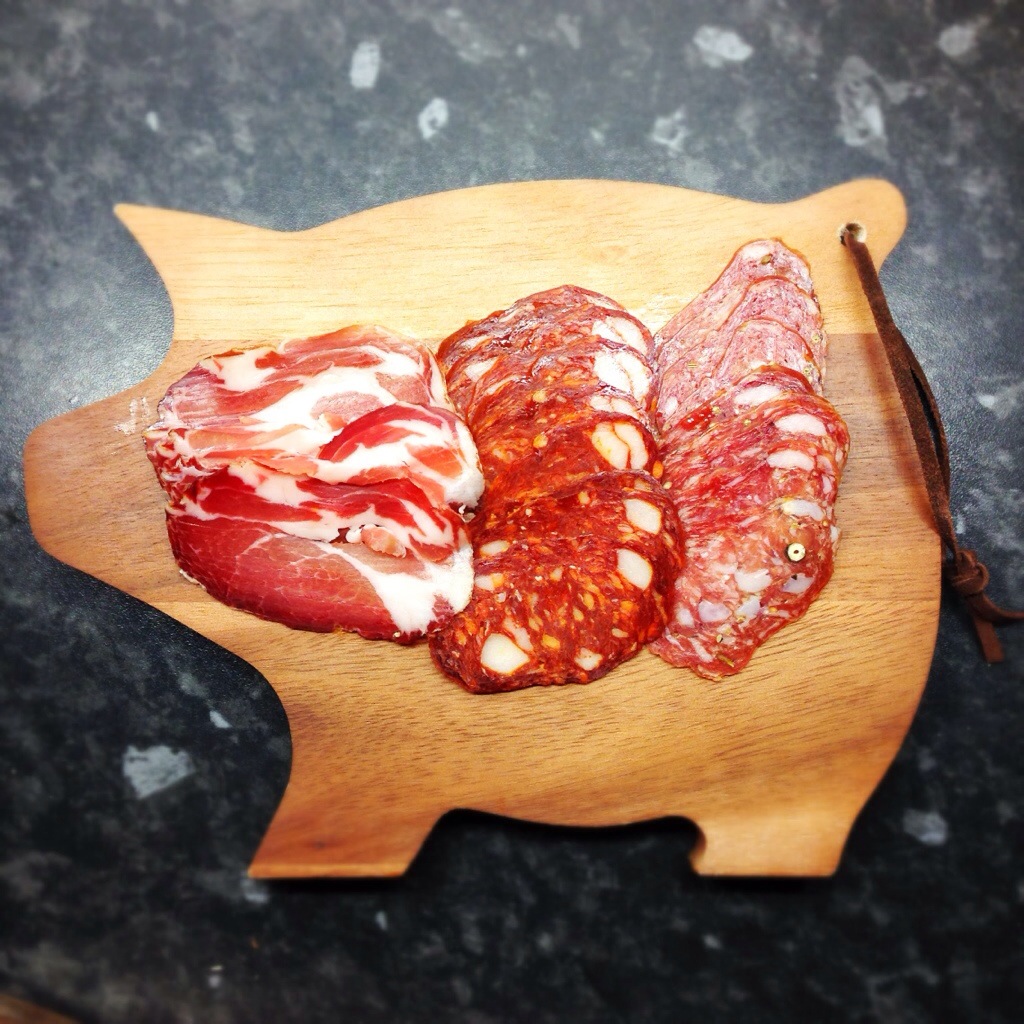
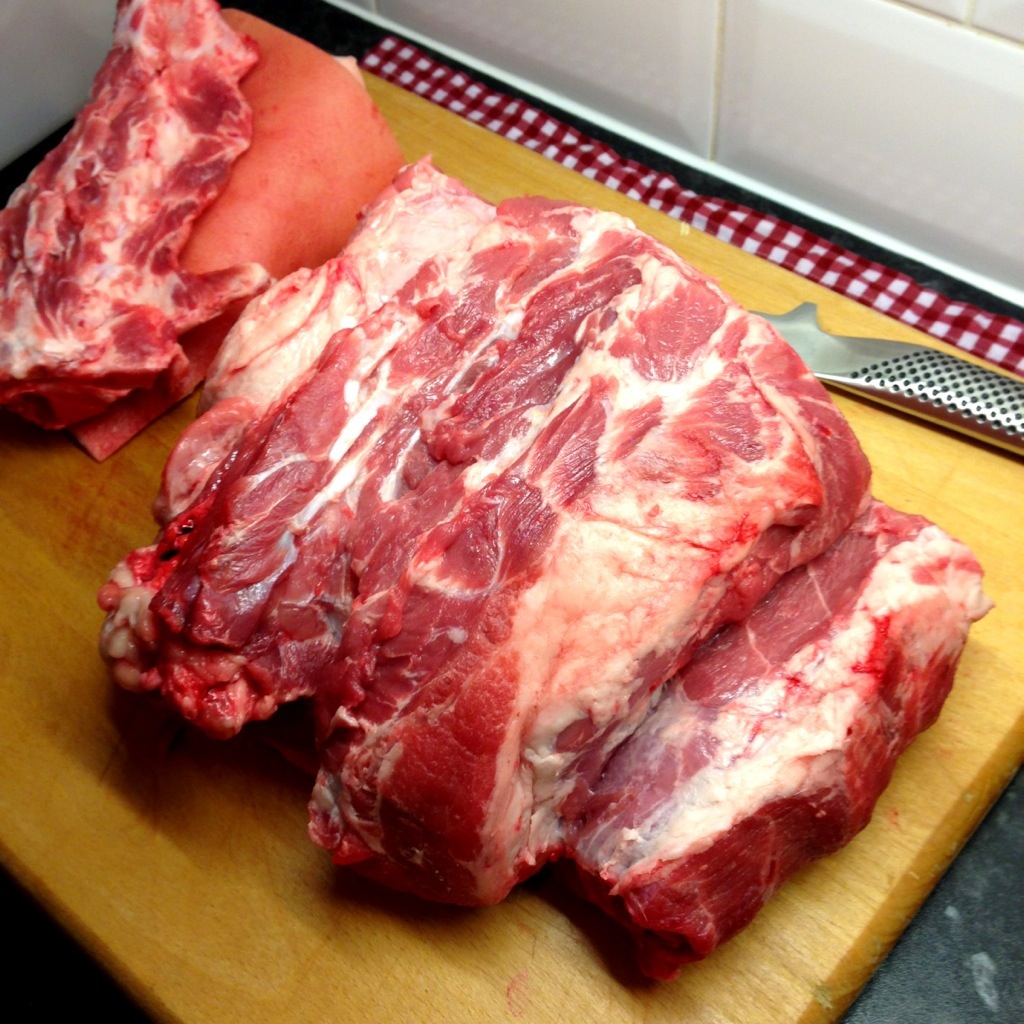
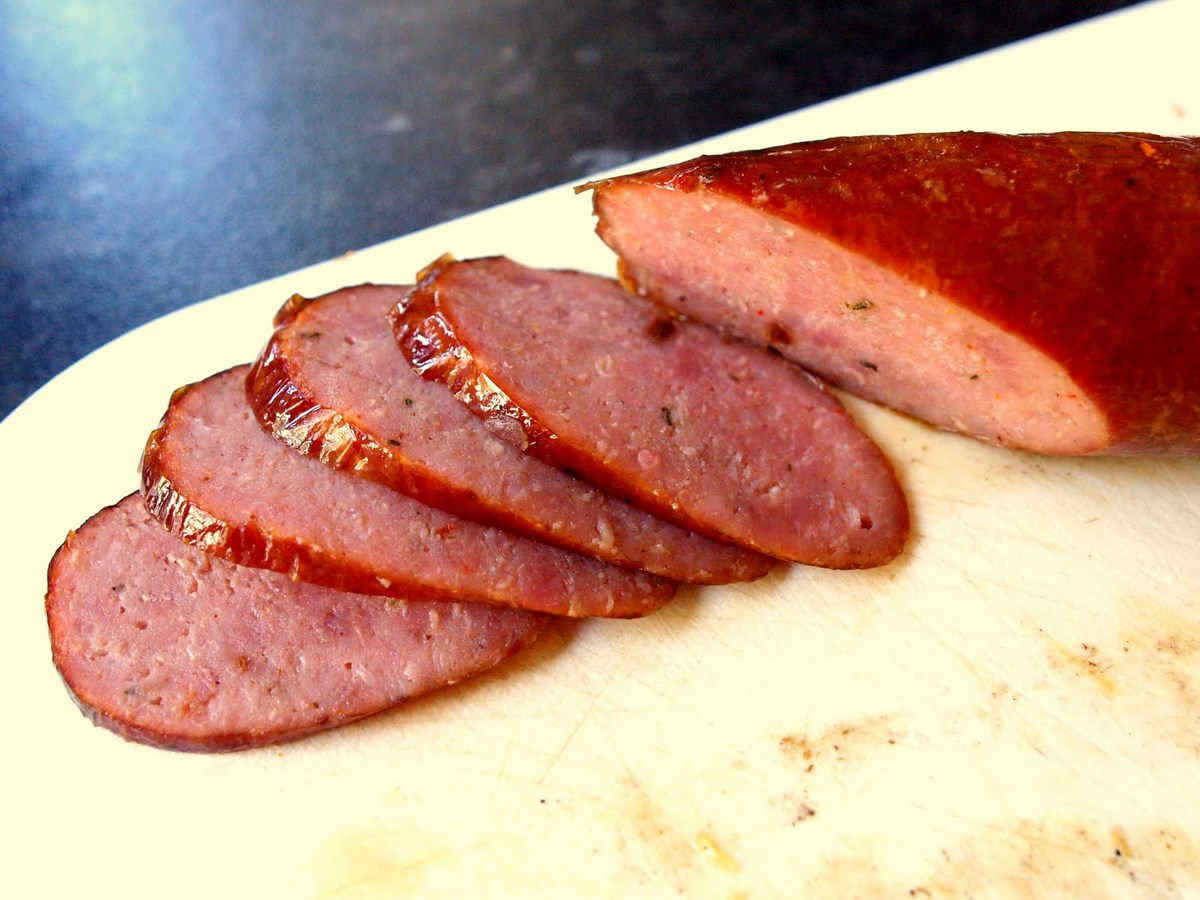
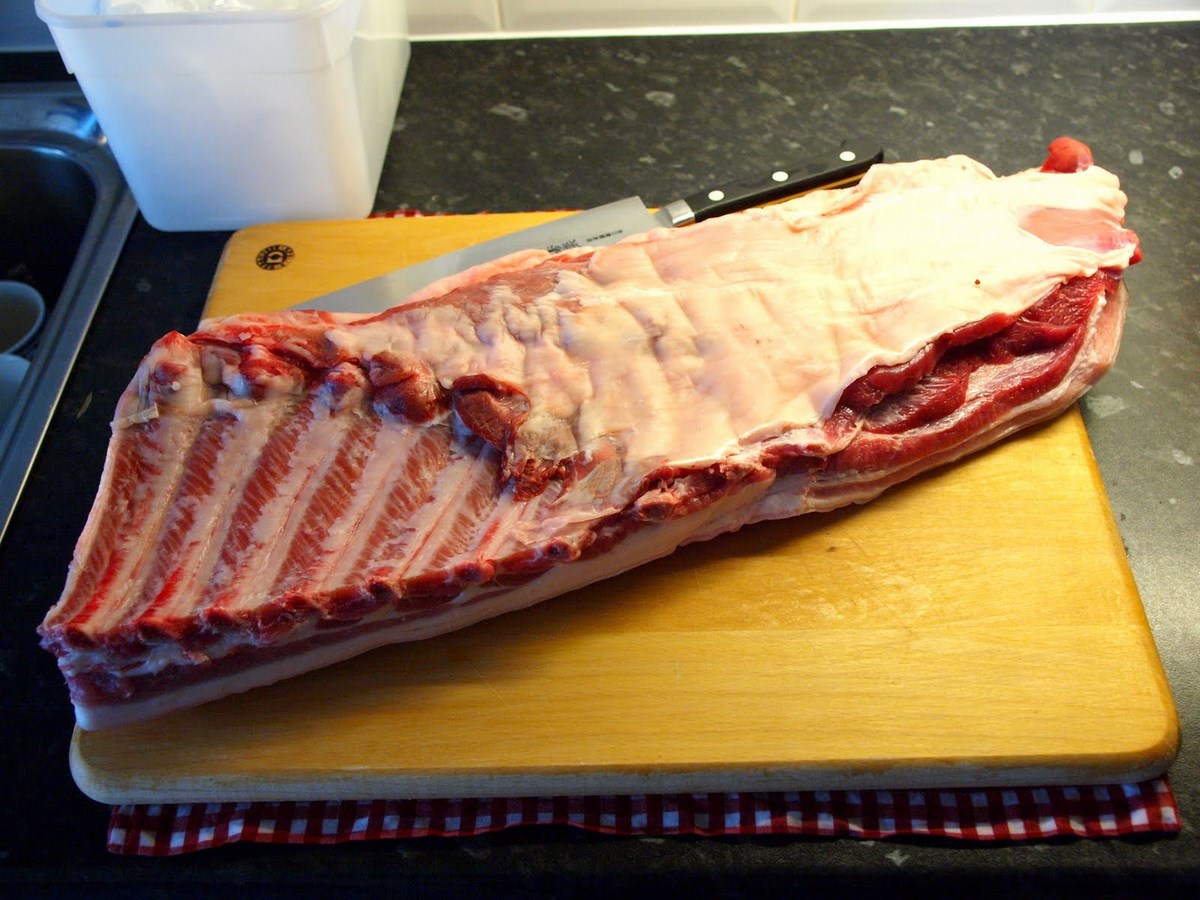
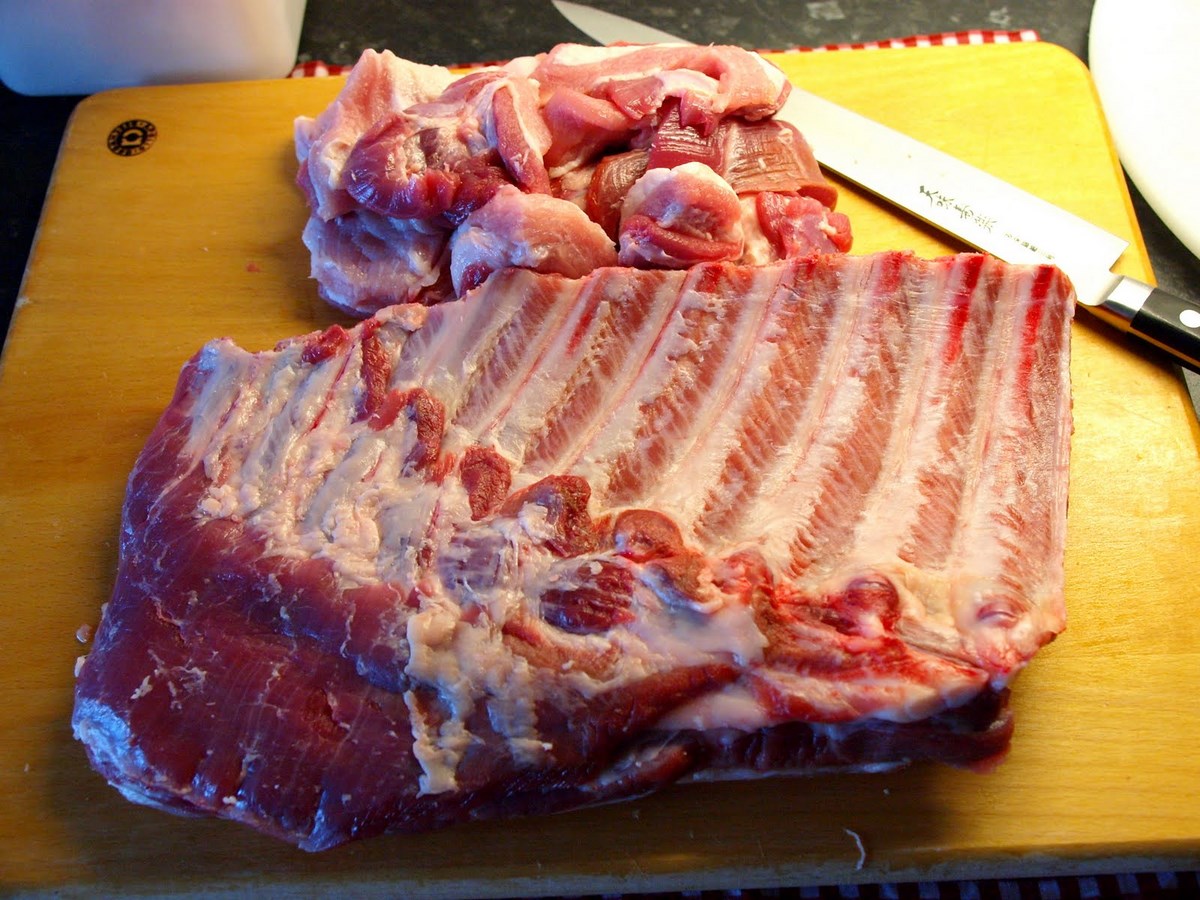
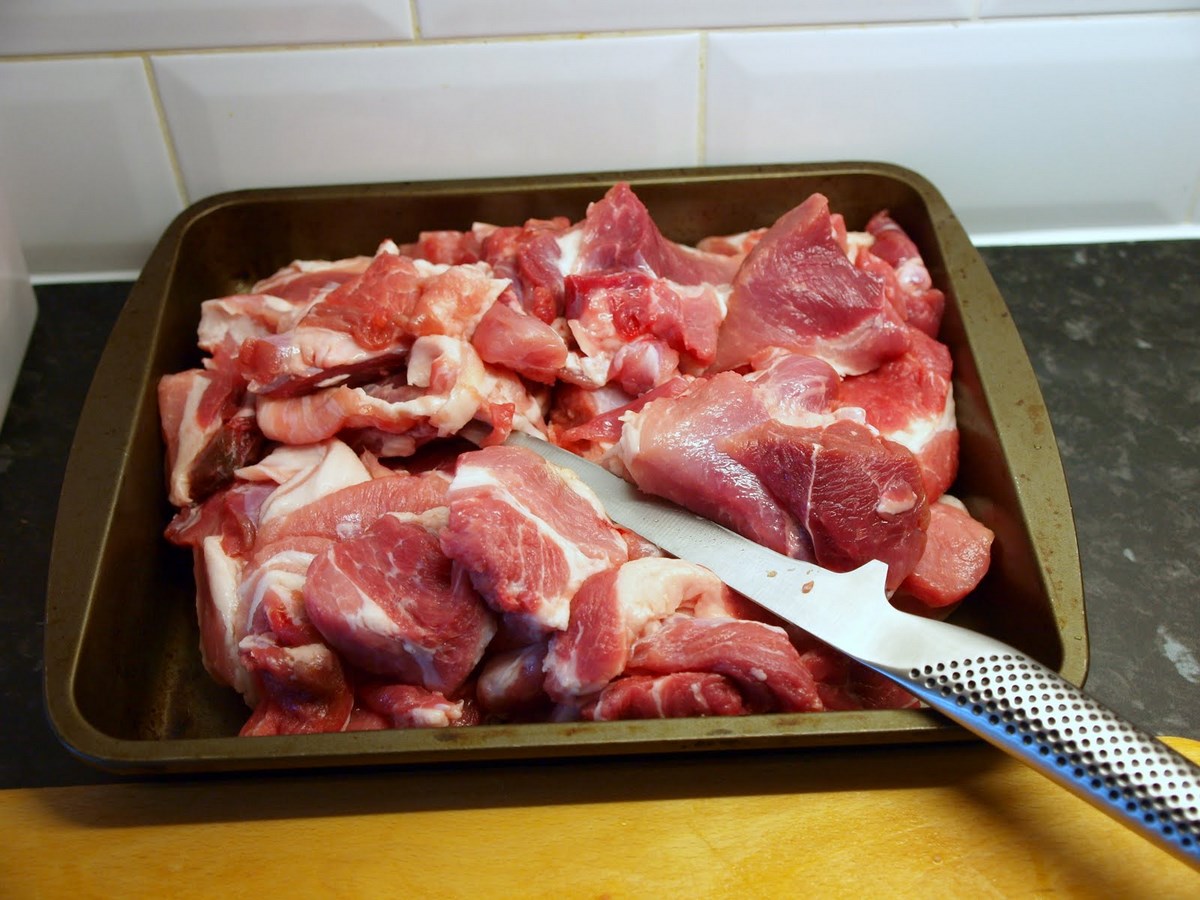
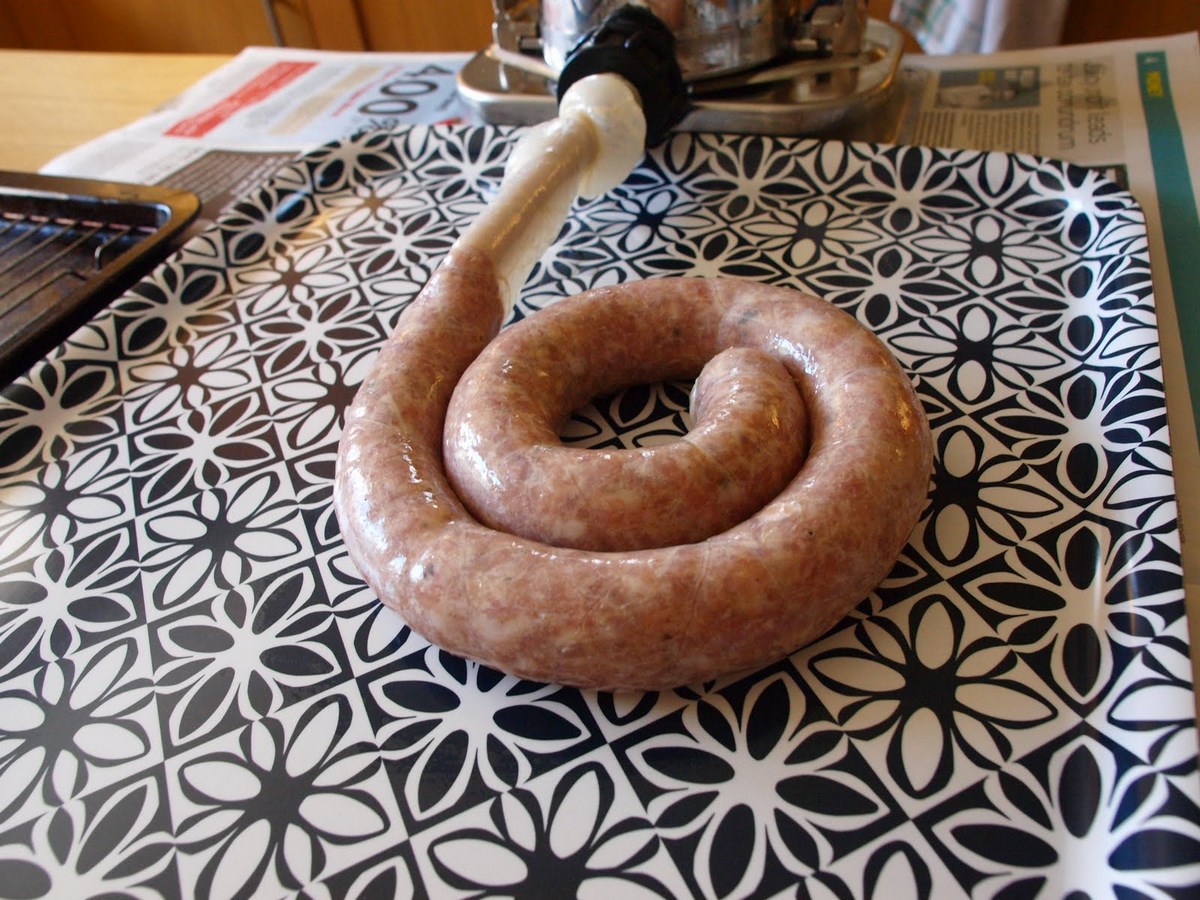
I’ve been making my own dry-cured sausages for almost 7 years with some mixed results. Not having a humidity controlled drying room would account for that. Trying to gauge how the weather will pan out three weeks in advance has been the trick for me. I took apart half a massively fat Tamworth pig in mid-October, made some fennel salami and chorizo and the dry cool weather we had in Birmingham (akin to autumnal Tuscan mountain air) produced the best charcuterie I’ve ever made.
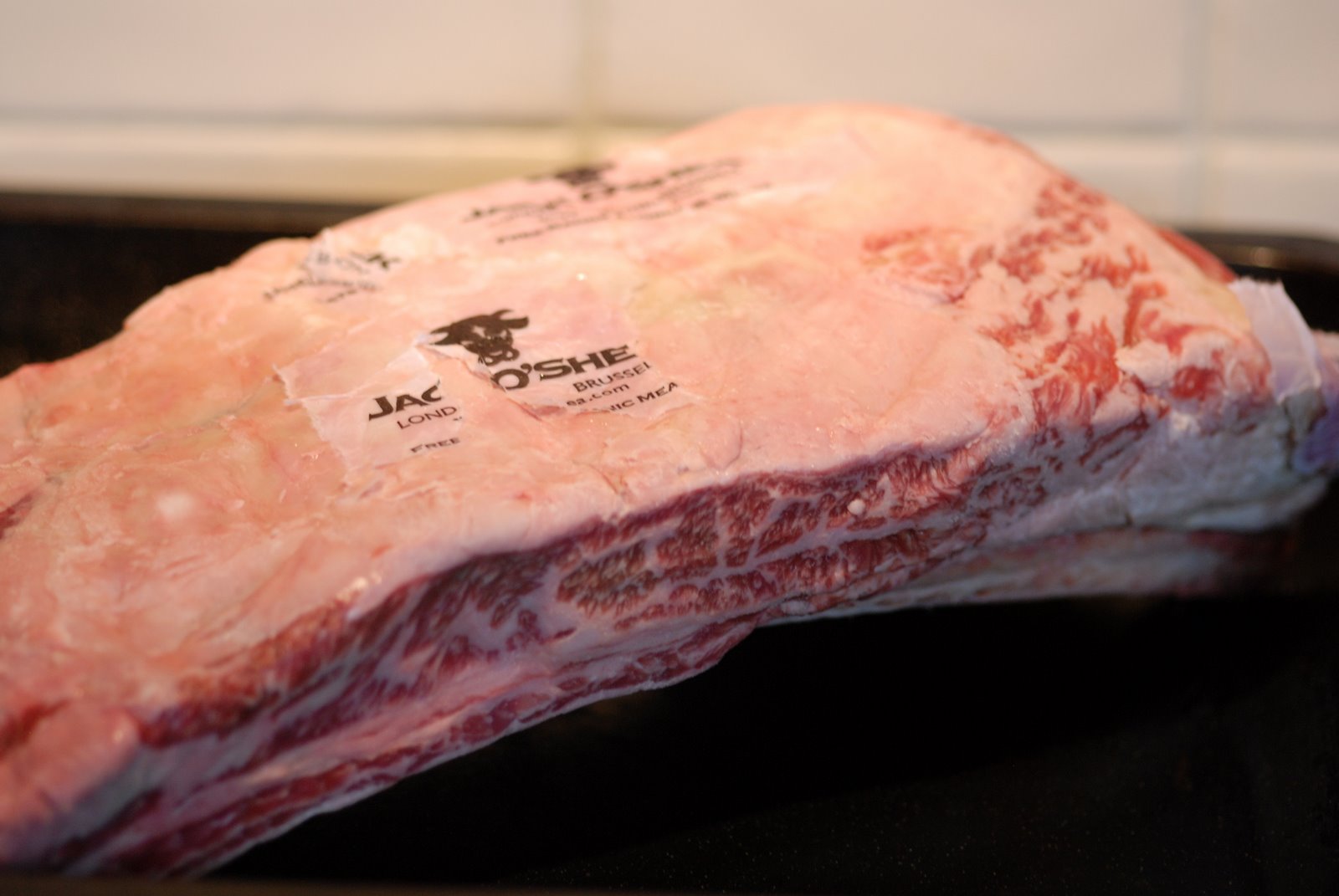
Dexter Prime Rib Roast
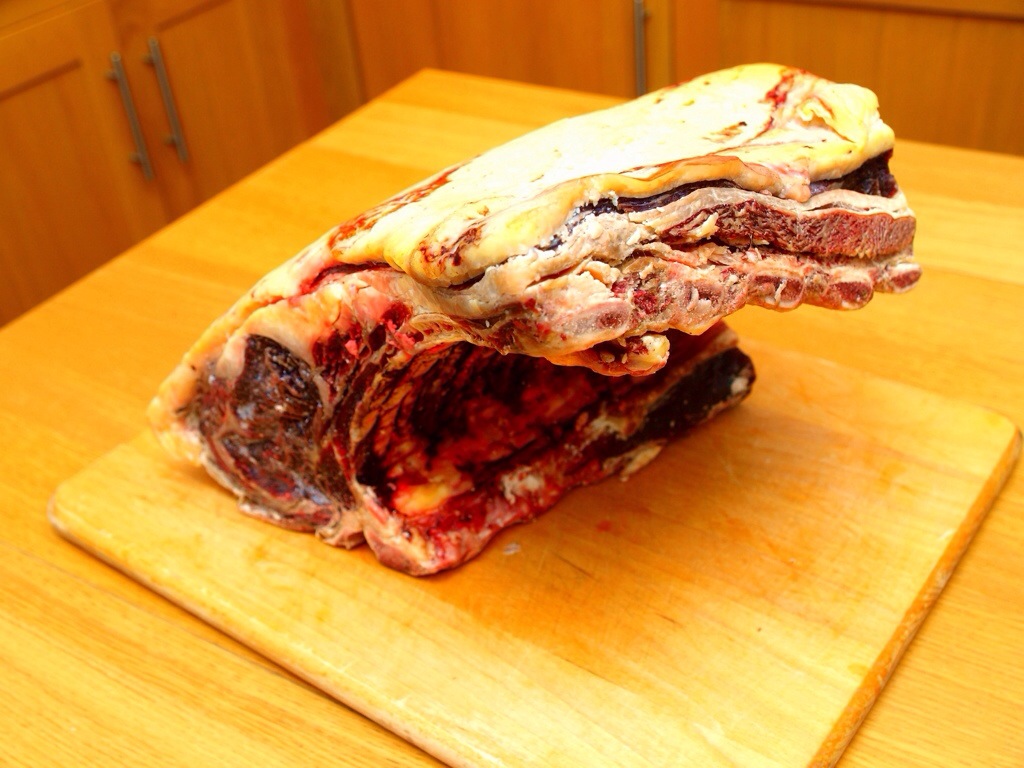
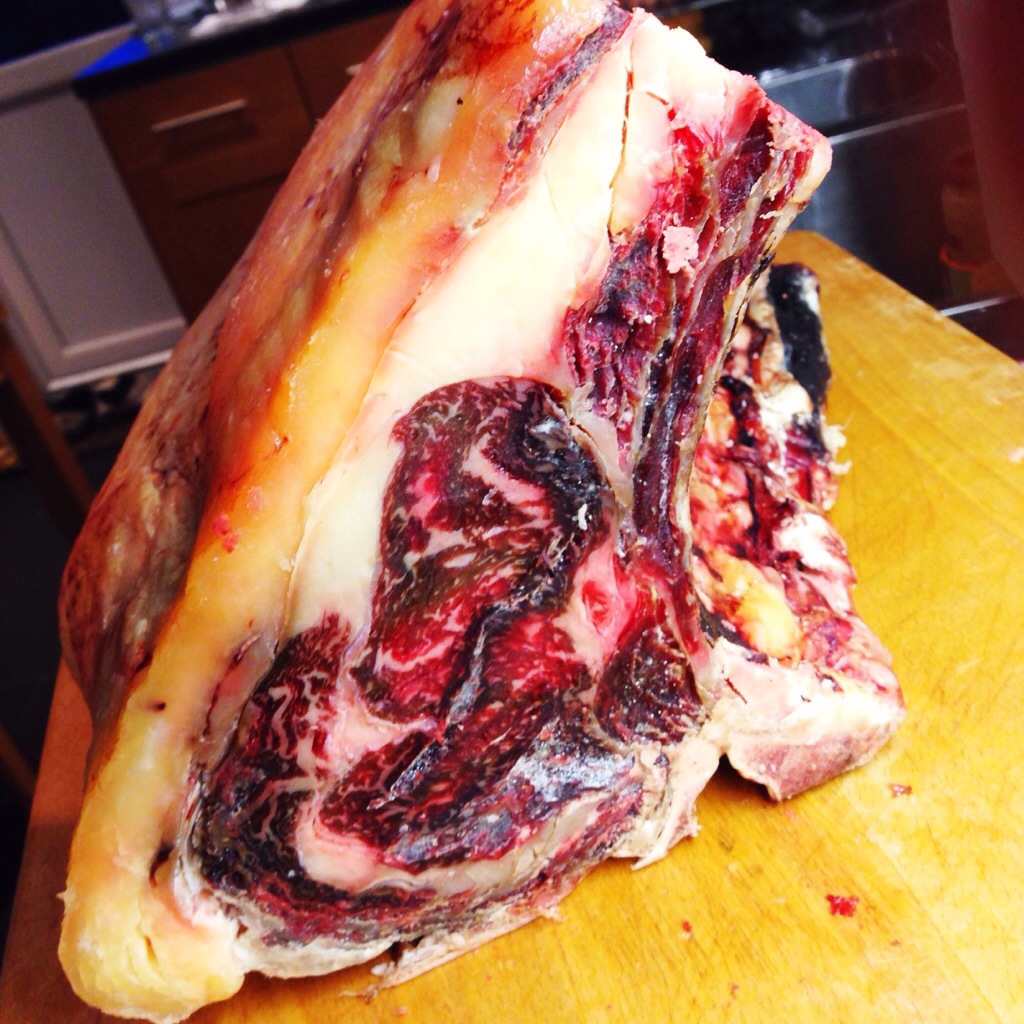
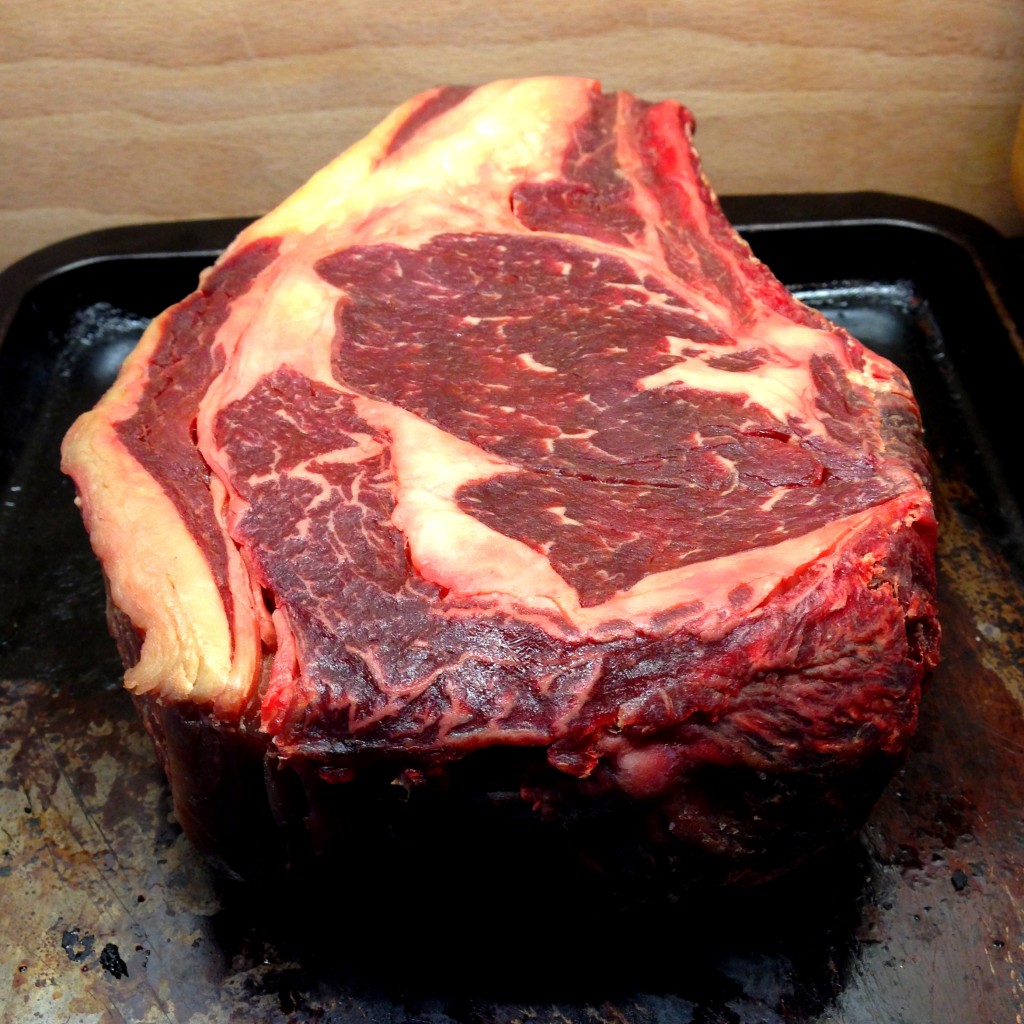
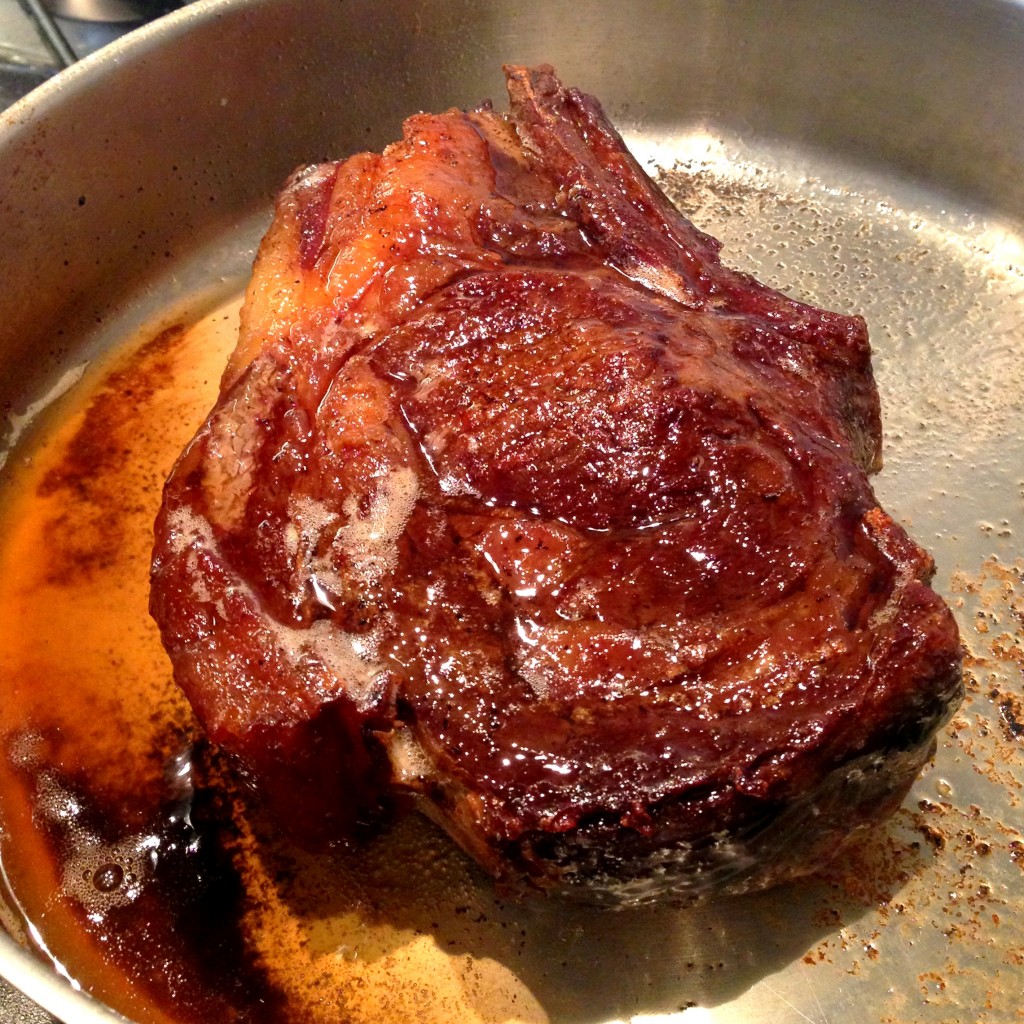
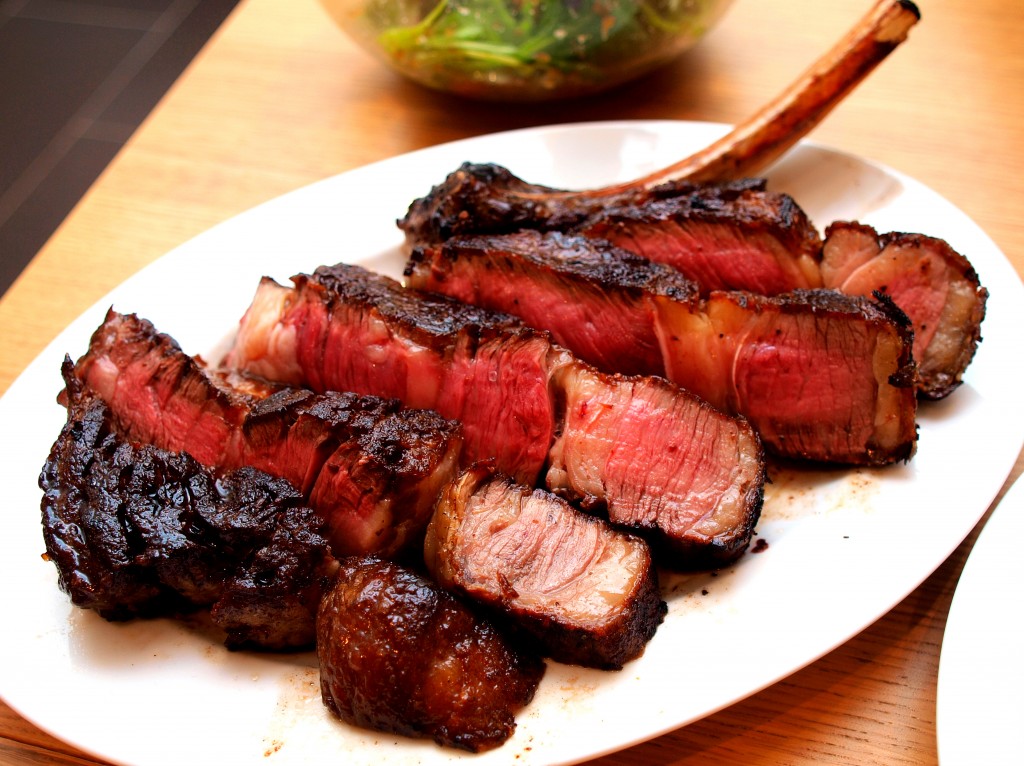
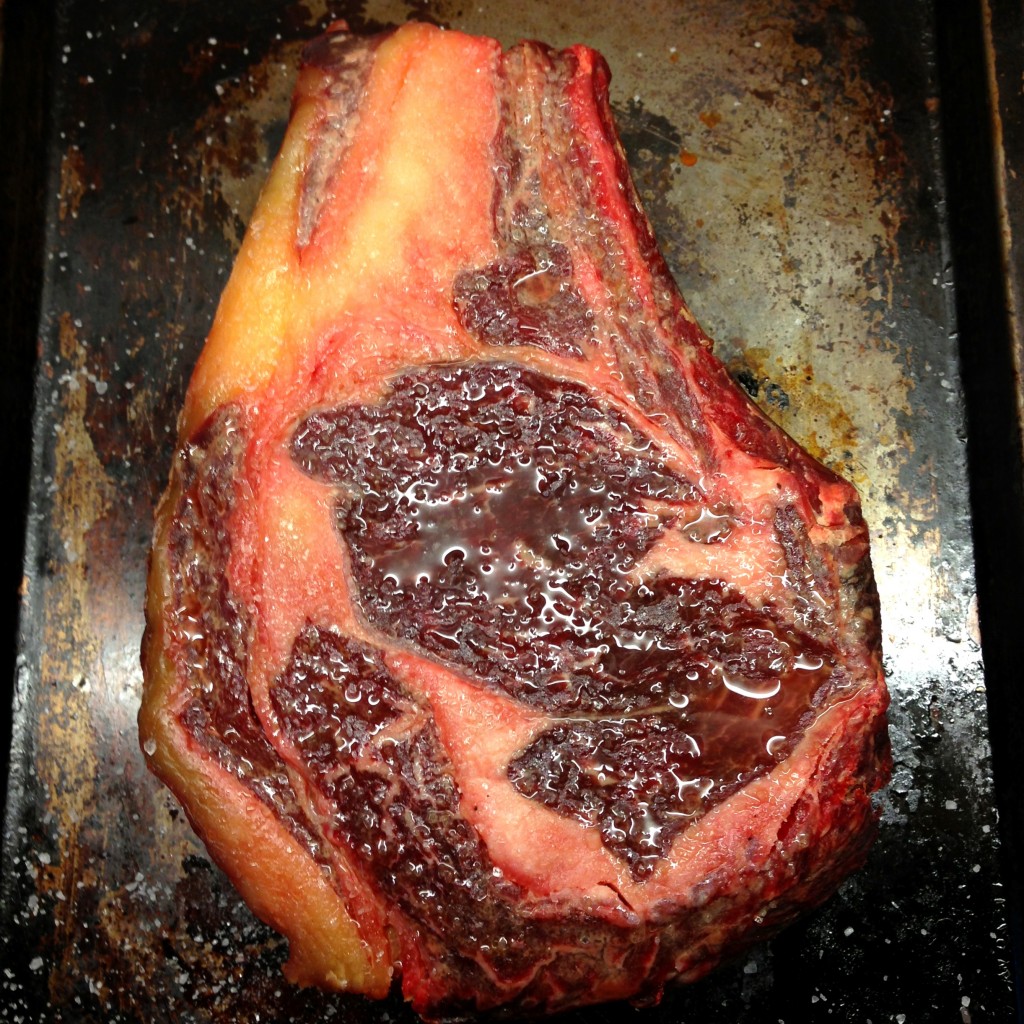
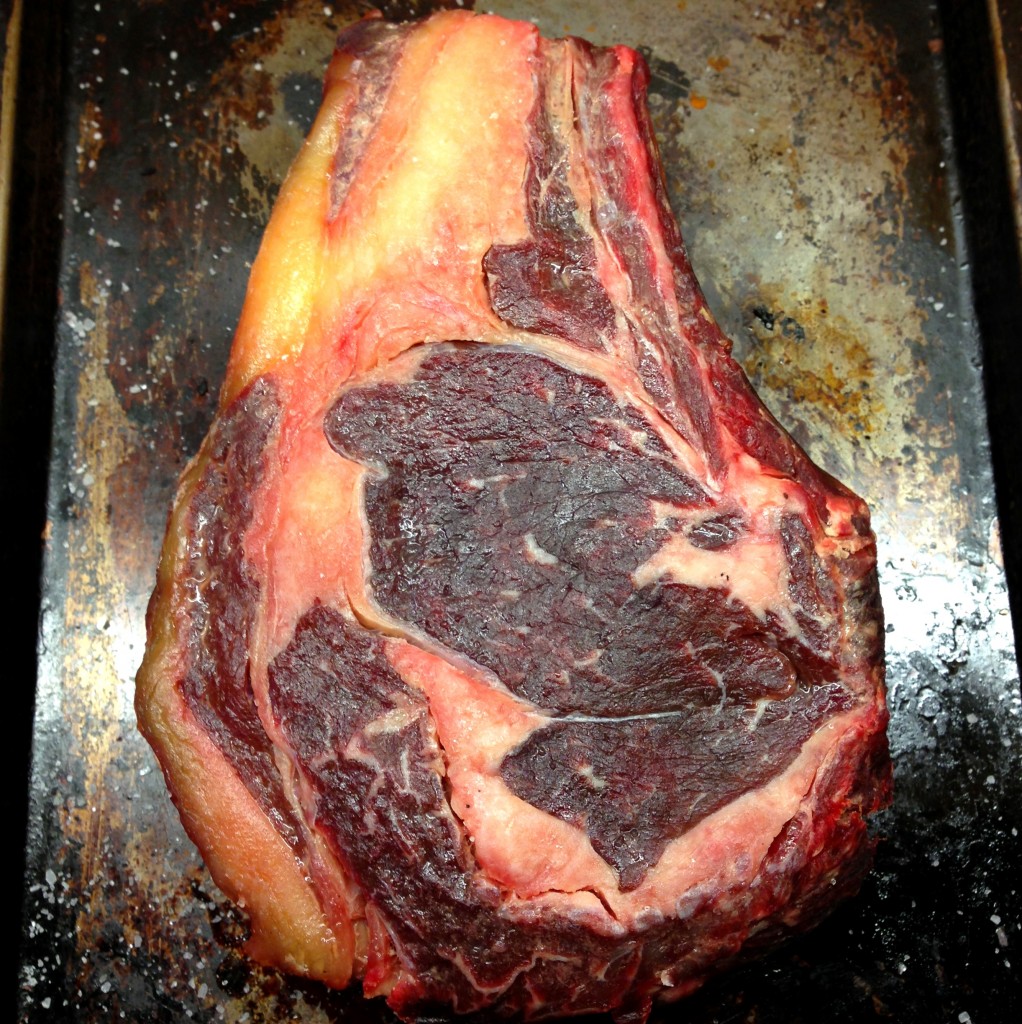
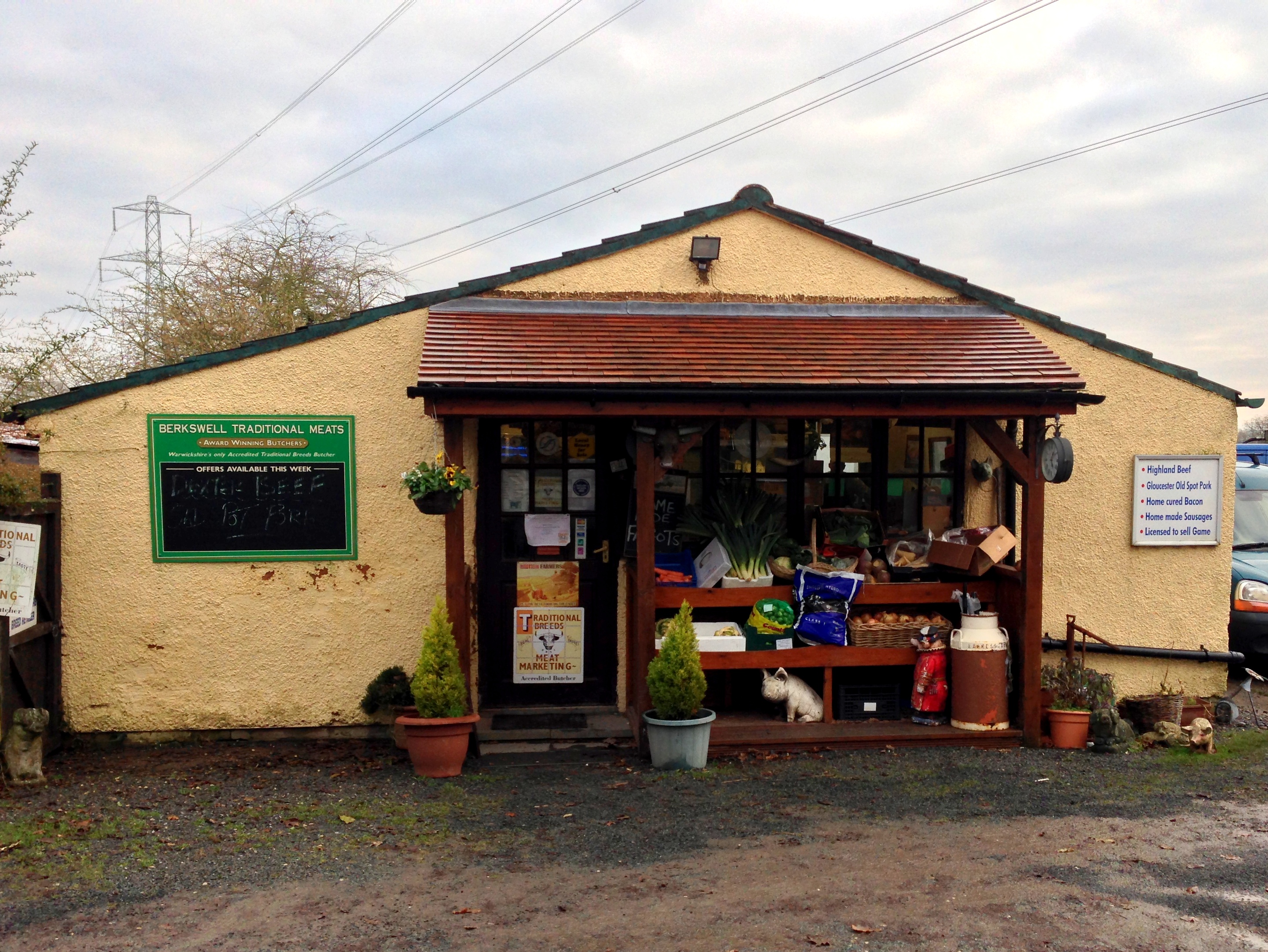
I don’t often cook big beef roasting joints. Big crusty steaks, yes I’m your man. But this Xmas I wanted something other than the usual bird and ham combination so went for bird and beef instead and ordered a standing roast from Berkswell in mid-November. Knowing full well that it would be nicely aged by Xmas day. What I wasn’t expecting was Berkswell delivering in spades with the most amazing joint of beef that I’d ever seen. An untrimmed five rib Dexter aged over 5 weeks. They'd only had one Dexter carcass the whole year so I felt very lucky indeed. Two days before Xmas I trimmed it up and seasoned it, on Xmas day it was put into a 100C over for about 4hrs until the internal temp reached 40C then rested for 2hrs whilst we finished cooking the rest of the meal. A quick sear before slicing resulted in the best roast beef the family had ever eaten, to quote my cousin as she guzzling down another slice: "it's the beef of dreams!"
CANeat
Throughout 2013 I had the pleasure of cooking with Dom Clarke at our CANeat popups in Stirchley. Too many different dishes to list but the grilled mackerel, smoked beef rib and smoked belly pork & squid were personal favourites. Expect more from us in 2014!
In the news today, a man lost his sight in one eye after he'd been stabbed in that eye by a beggar that followed him into a restaurant in Handsworth. I hope that this doesn't stop you from going out to eat in this neighbourhood as there are some really good ethnic restaurants there. Which has been bolstered by the addition of a Turkish one called Istanbul Restaurant.
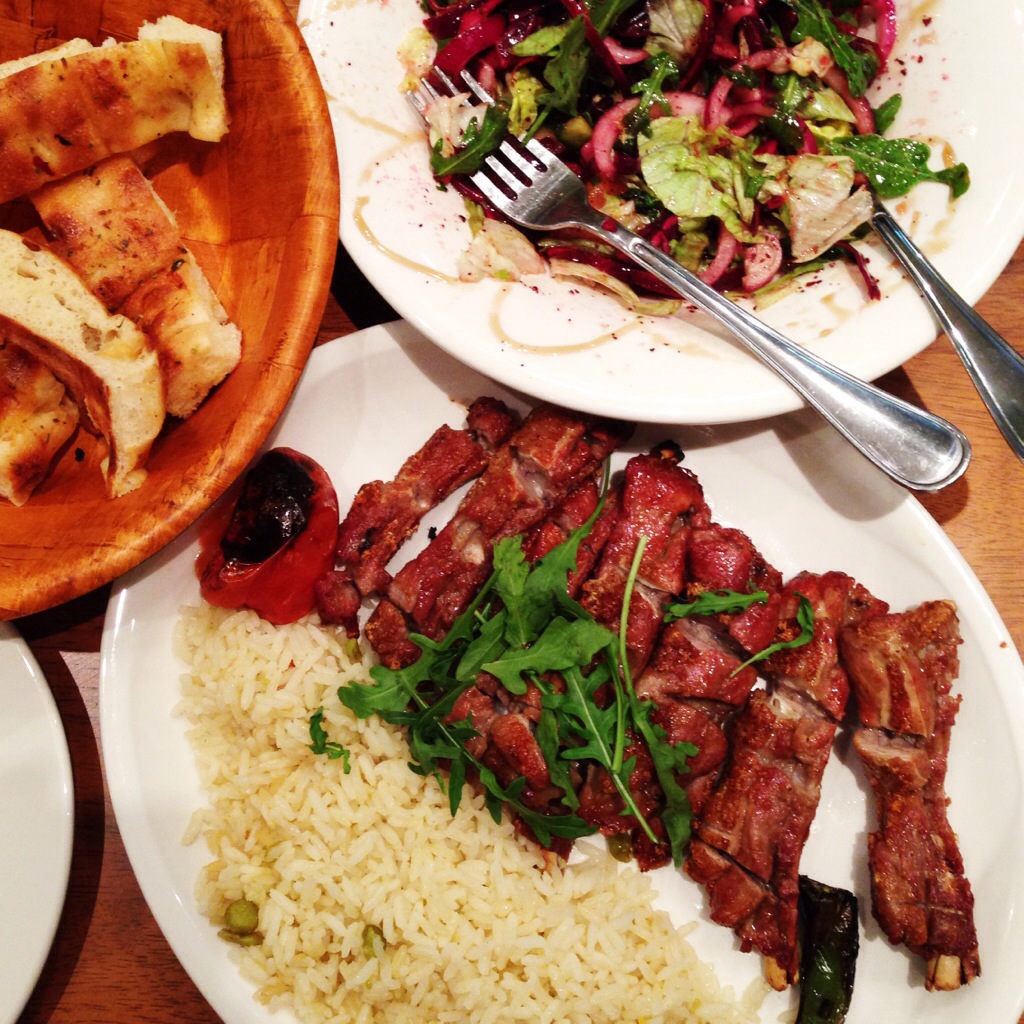
It's been open two months and I only found it by chance driving from The Farcroft to The Grove in my Indian Pub Grill Roundup. It was like a beacon because Turkish food is seriously underrepresented in this city, we have a couple of Persian but aside from the ubiquitous doner kebab you'll be hard pressed to find a freshly char-grilled Adana kebap here. Adana, a city in the south of Turkey is where the owners are from and is also the name of the popular spicy minced lamb skewer. As you enter the restaurant you can see the fresh skewers laid out and might think it's just another kebab shop. But if you hang around you'll see little things that sets them apart. Like the way they prepare bread, grilling and pressing the hot charred lamb fat into it, they know what there doing. It comes warm, heavily scented with that fat and herbs, whilst you wait for your meat to the grilled. The salad that comes with the bread is fresh, vibrant and dripping with pomegranate molasses that puckers your mouth and makes you salivate, getting you ready for the deliciously grilled meat. I've only tried the Adana and Lamb ribs so far and can't wait to go back and try the rest of the menu.
Istanbul is one of the world's culinary capitals and what I had in Handsworth took me right back there. It's real Turkish food and it can now be found in Birmingham.
2 Stockwell Rd, Handsworth, Birmingham B21 9RJ (on the junction of Rookery rd and Oxhill Rd)
Tel: 0121 4485223
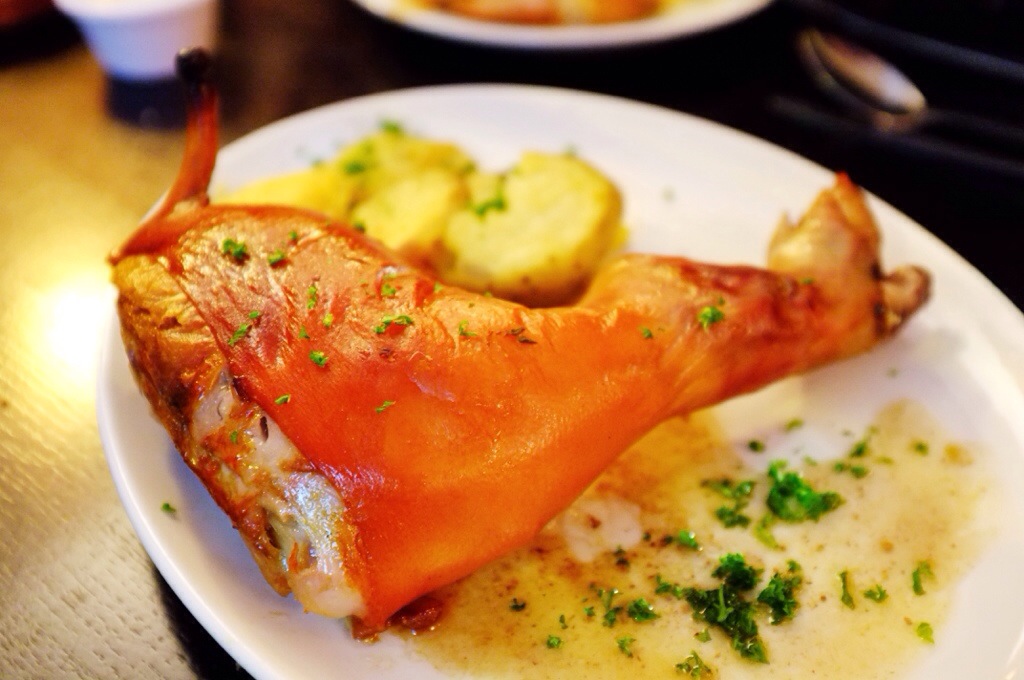
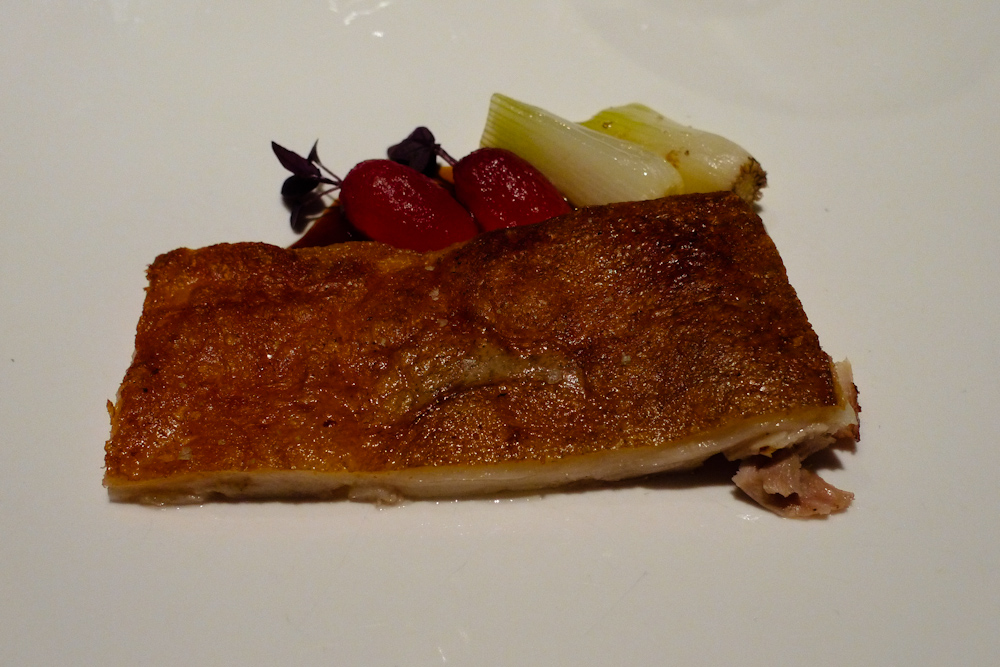
A roast suckling pig leg and a few potatoes for £18, go. I could just end the review there but I'll carry on for a couple more paragraphs to annoy you.
Traditional Spanish food as we know it is not difficult, simple bold flavours with great ingredients. Then why do we get it so wrong so often? Tapas is an excuse to tip a cheap jar/tin of olives/peppers/chorizo/anchovy into a cazuela and charge quadruple for it. Who has actually ordered a paella in a Spanish restaurant in Birmingham and got something even close to what they could cook at home? It's a bit of trick question because there aren't that many Spanish restaurants in Brum and the best paella in town is Argentinian.
So when I heard that Don Diego was actually really good I was doubtful. Not least because it was in Sutton Coldfield, which like Solihull is a bit of a wasteland for good or interesting food (dons tin hat). It's in a lovely double fronted property at the end of the high street and like most Spanish restaurants they've included la cocina sink in decorating it. Paintings of matadors, photos of grizzled peasants working the fields, maracas, flamenco paraphernalia, you get the idea. The food though does that thing of making you forget where you are, everything is cooked just right. Even when it's not cooked like the embutidos you can really tell it's all excellent quality presented with care and attention. The only gripe was the Pulpo a la Gallega, which was bulked out by serving it on sliced potato. That was quickly forgotten about when the the last dish arrived, did I mention the suckling pig leg? Ah I did.
Don Diego
5 Manor Rd, Sutton Coldfield B73 6EJ
Tel: 0121 355 5354
How long should one mourn for something lost? I suppose it depends how dear it was to you, the joy it brought to your life and the sadness it left when it was gone...
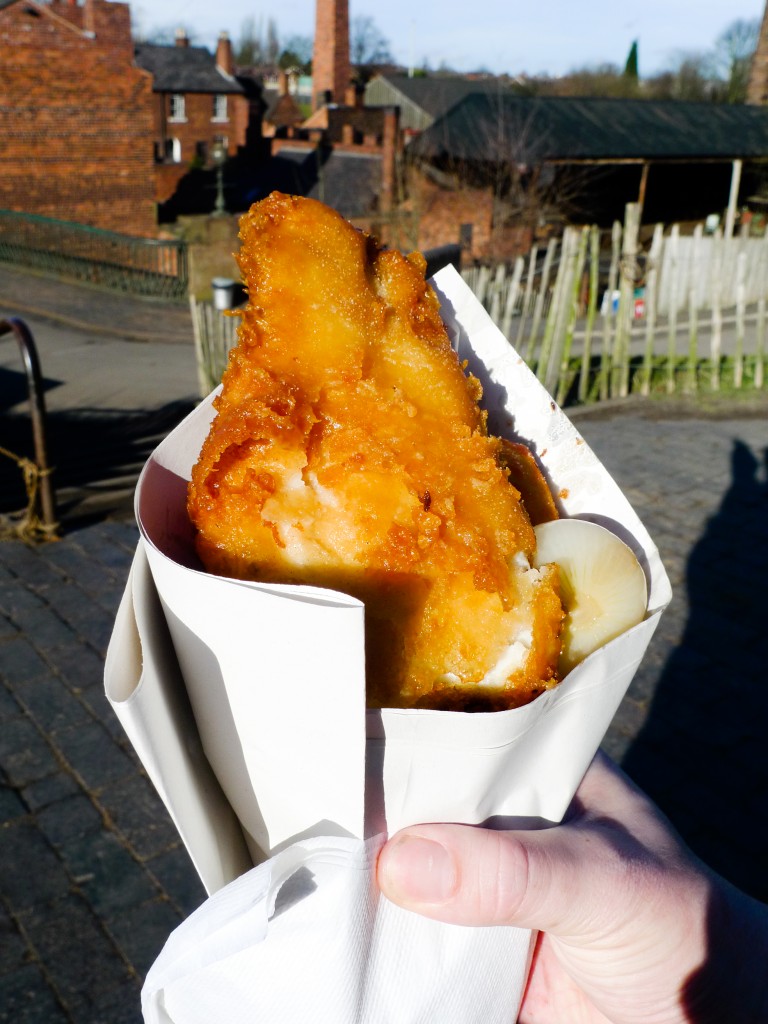
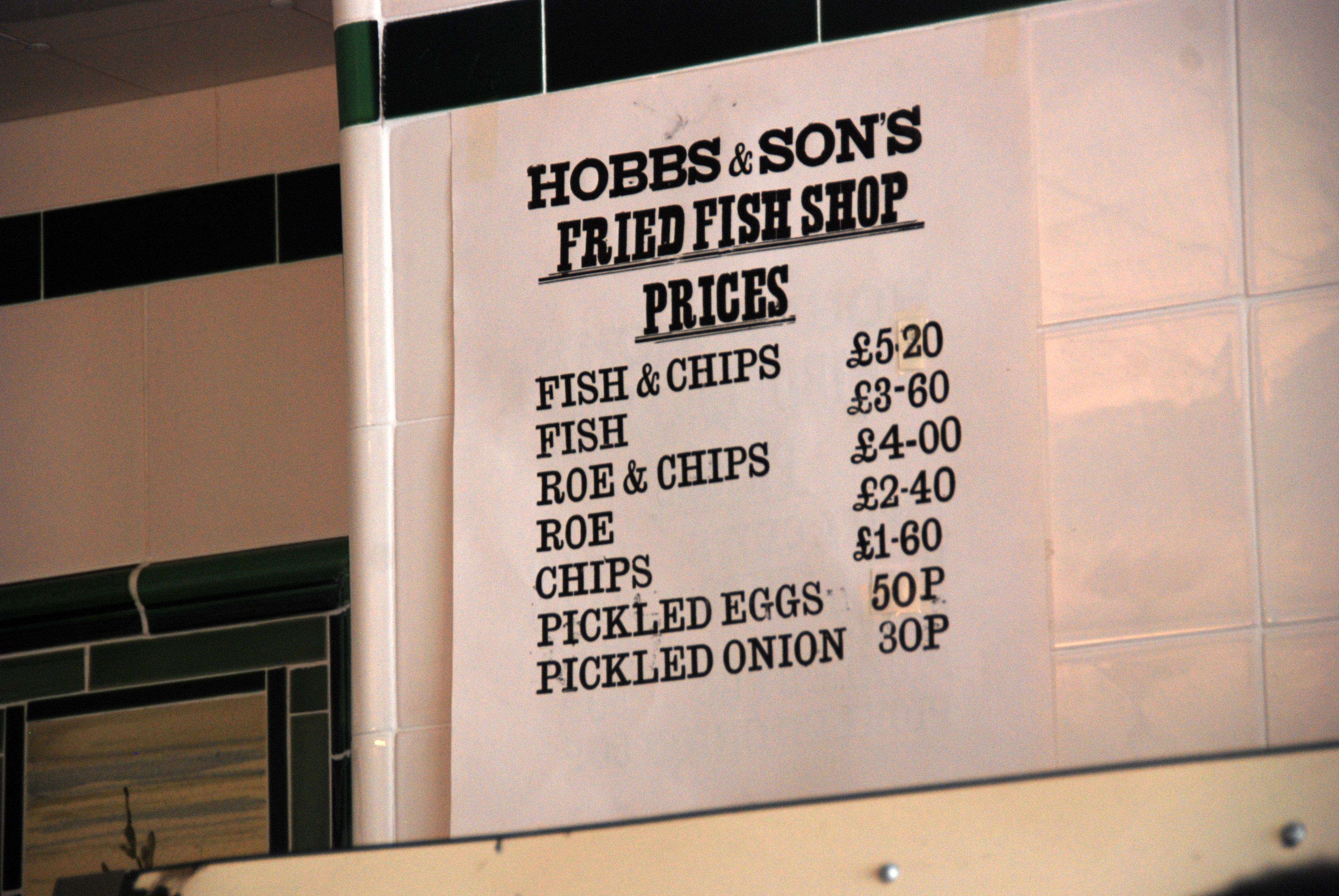
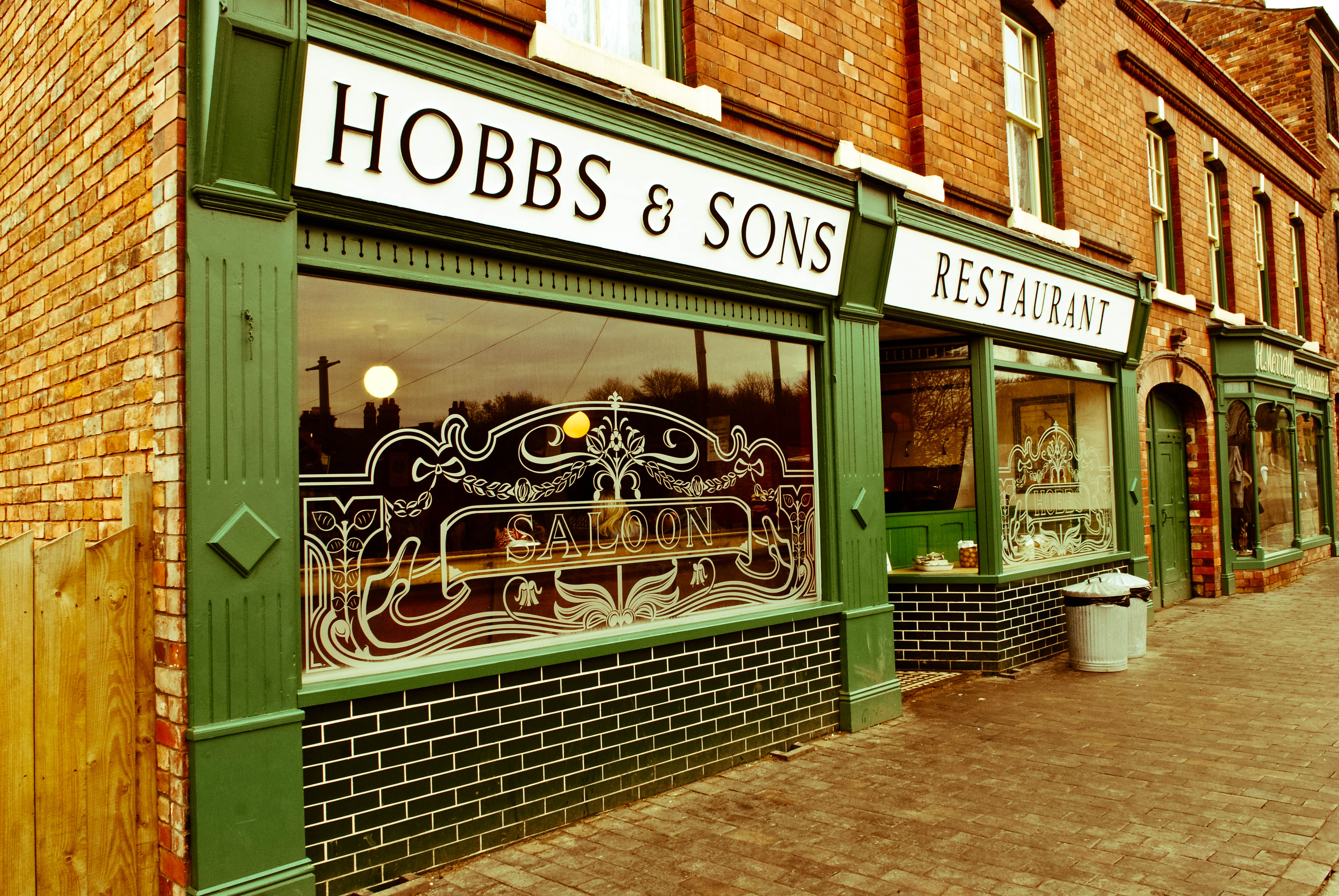
A bit dramatic for a chippy no? But I did mourn the loss of the Great British Eatery, easily the best Brummie fish and chips for a few brief years before its ignominious closure in 2011. I've been moping ever since. The Black Country Museum is too far away and not open in the evenings. There's nowhere else that fries in beef dripping which in my book is a must for best fish and chips. Well that is apart from Chamberlain's but I'd been far from convinced on my early visits there, the chips were flabby and the batter too thick. But out of desperate longing for our national dish* I've gone back to Chamberlain's a few times recently. I can now declare my extended period mourning over! Simpy impeccable cod/haddock and chips cooked in beef dripping, what more do you want? Some nice plain mushy peas would be nice, the minted stuff they have in there is really dull. And the haddock & mackerel scotch egg should be avoided, nice idea but the freshness is dubious. But the sides aside, if you've been missing proper fish and chips then I can't think of a better place to go.
*even in curry capital Brum I still consider Fish and Chips the national dish
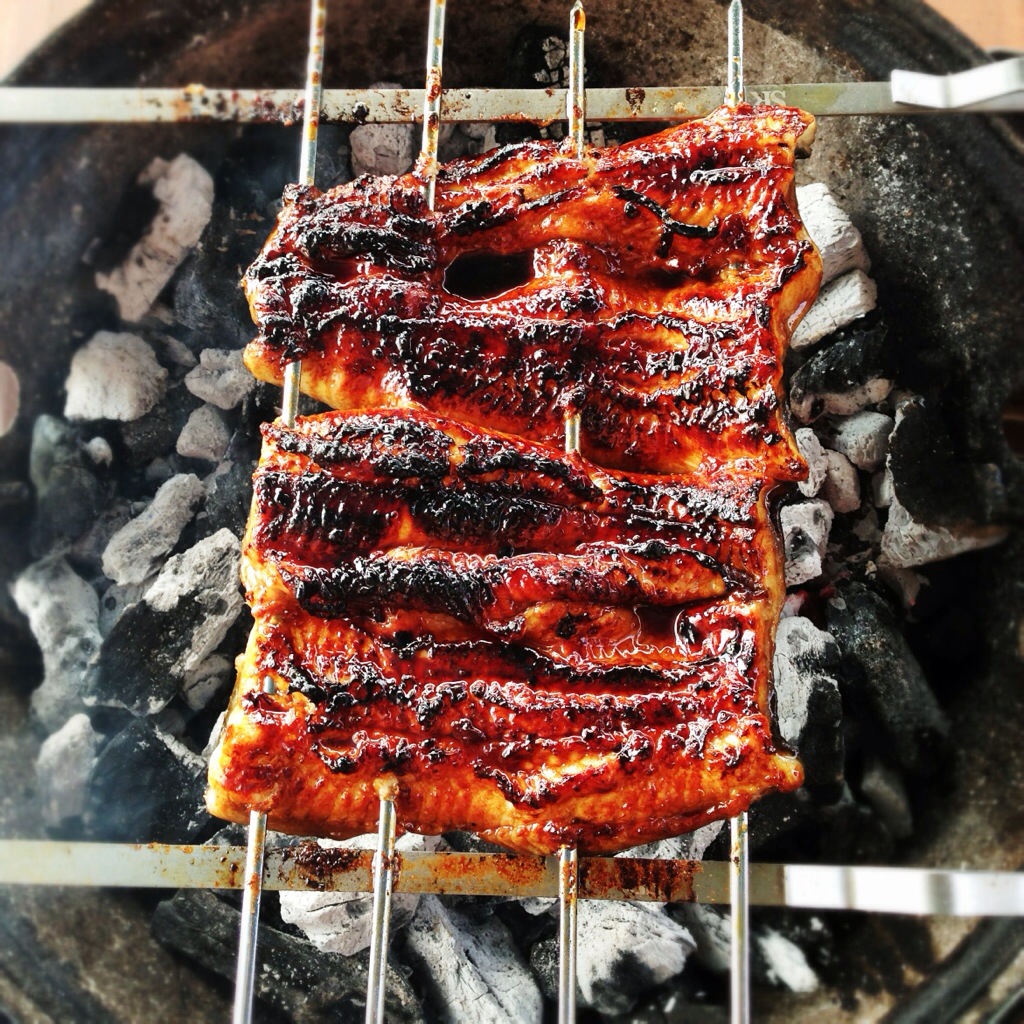
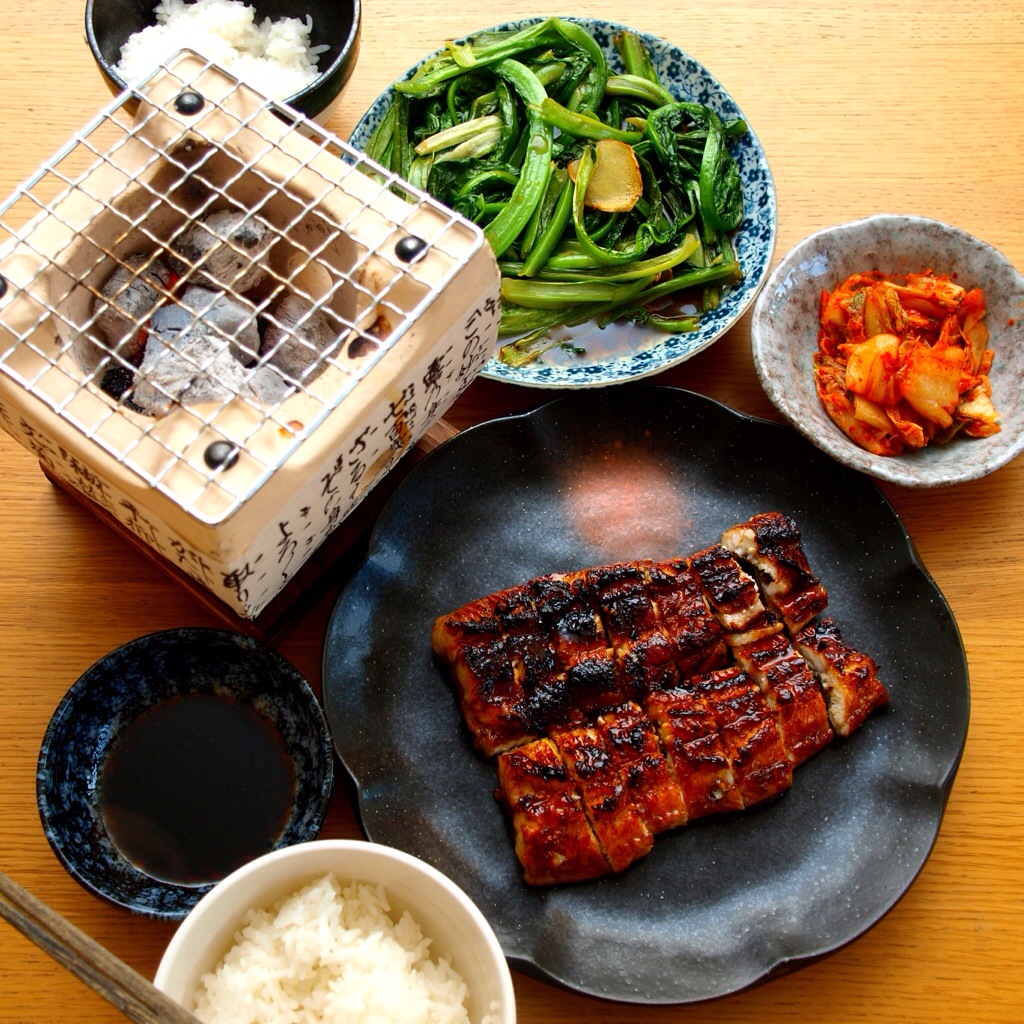
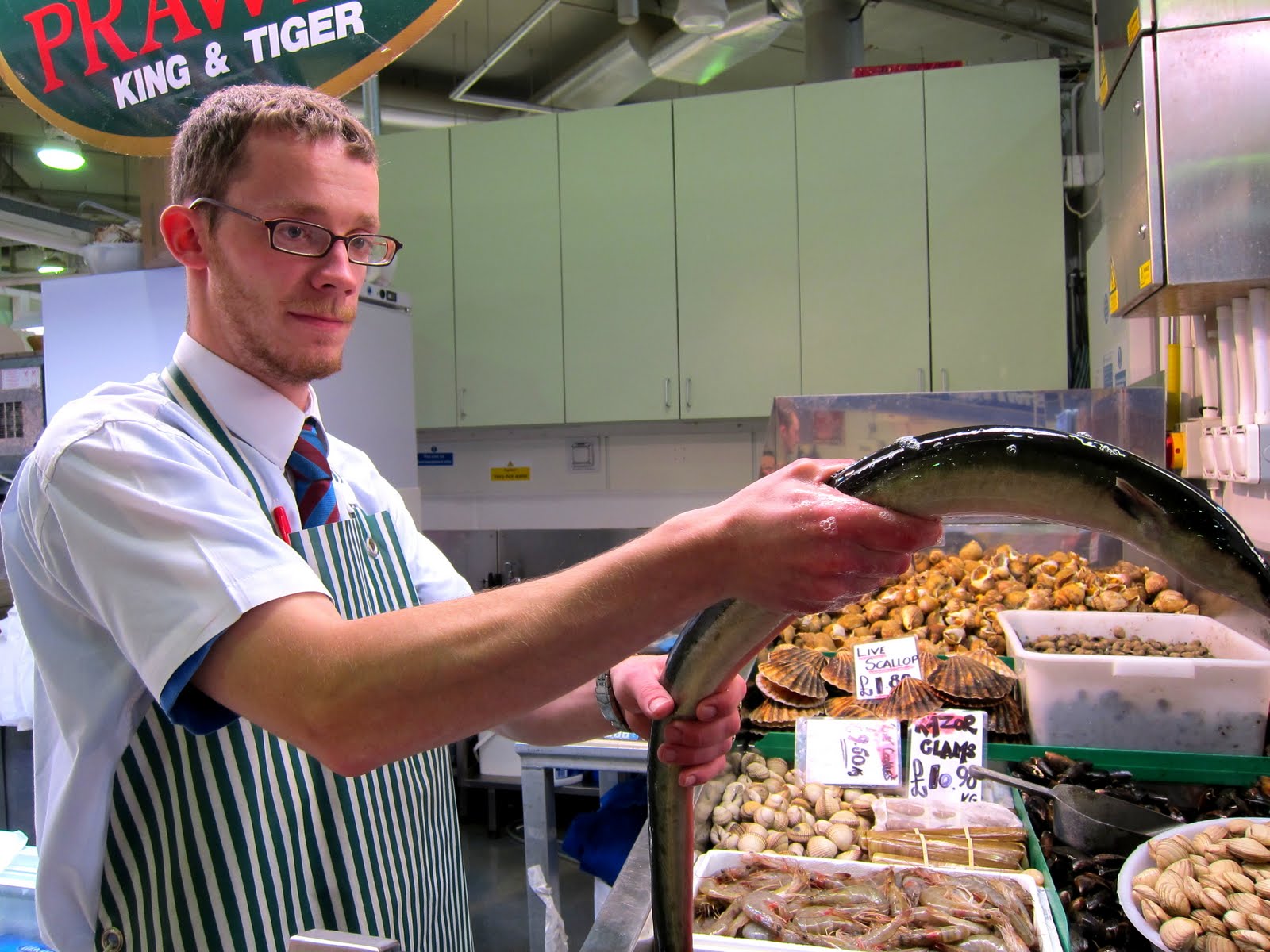
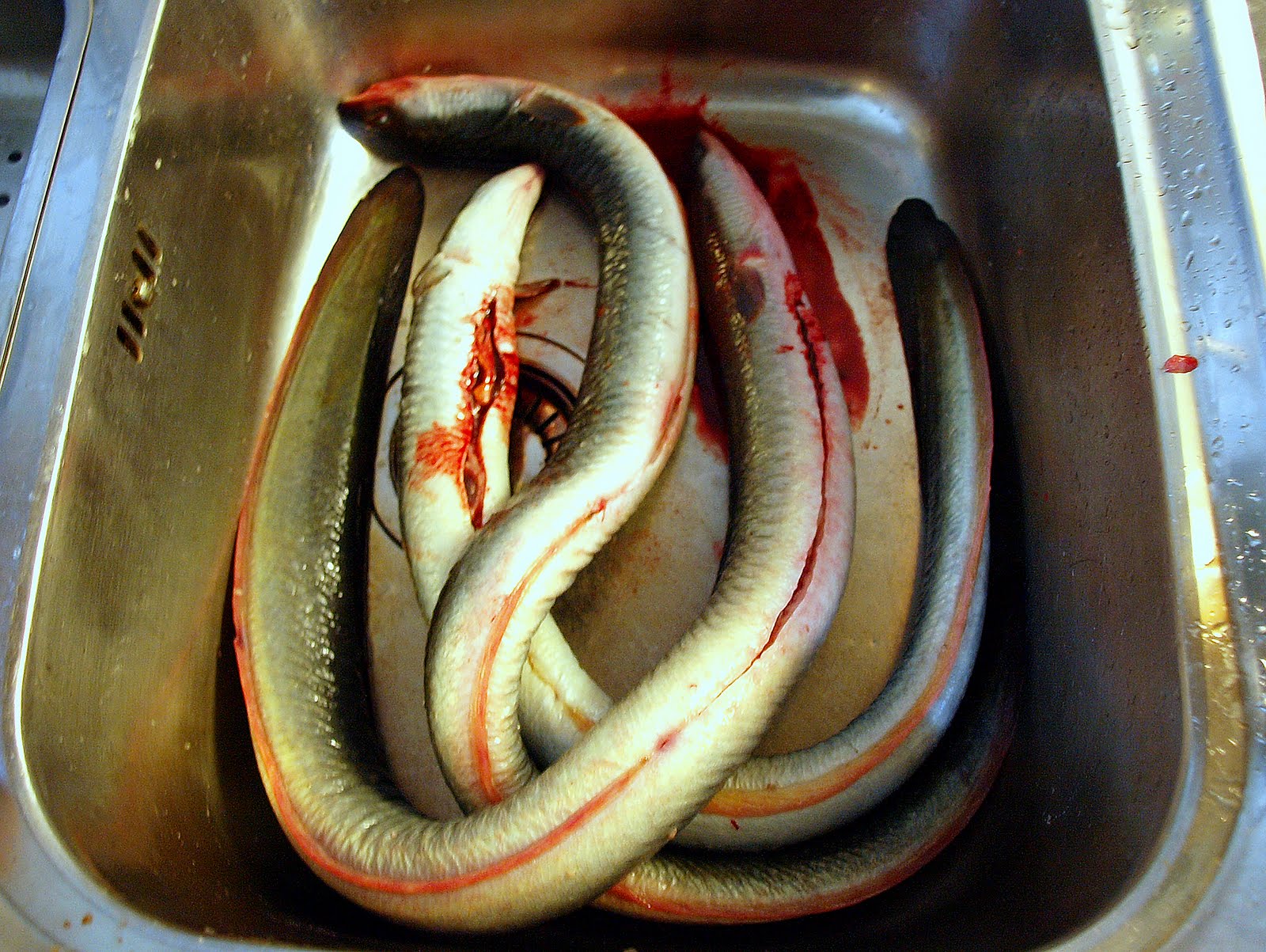
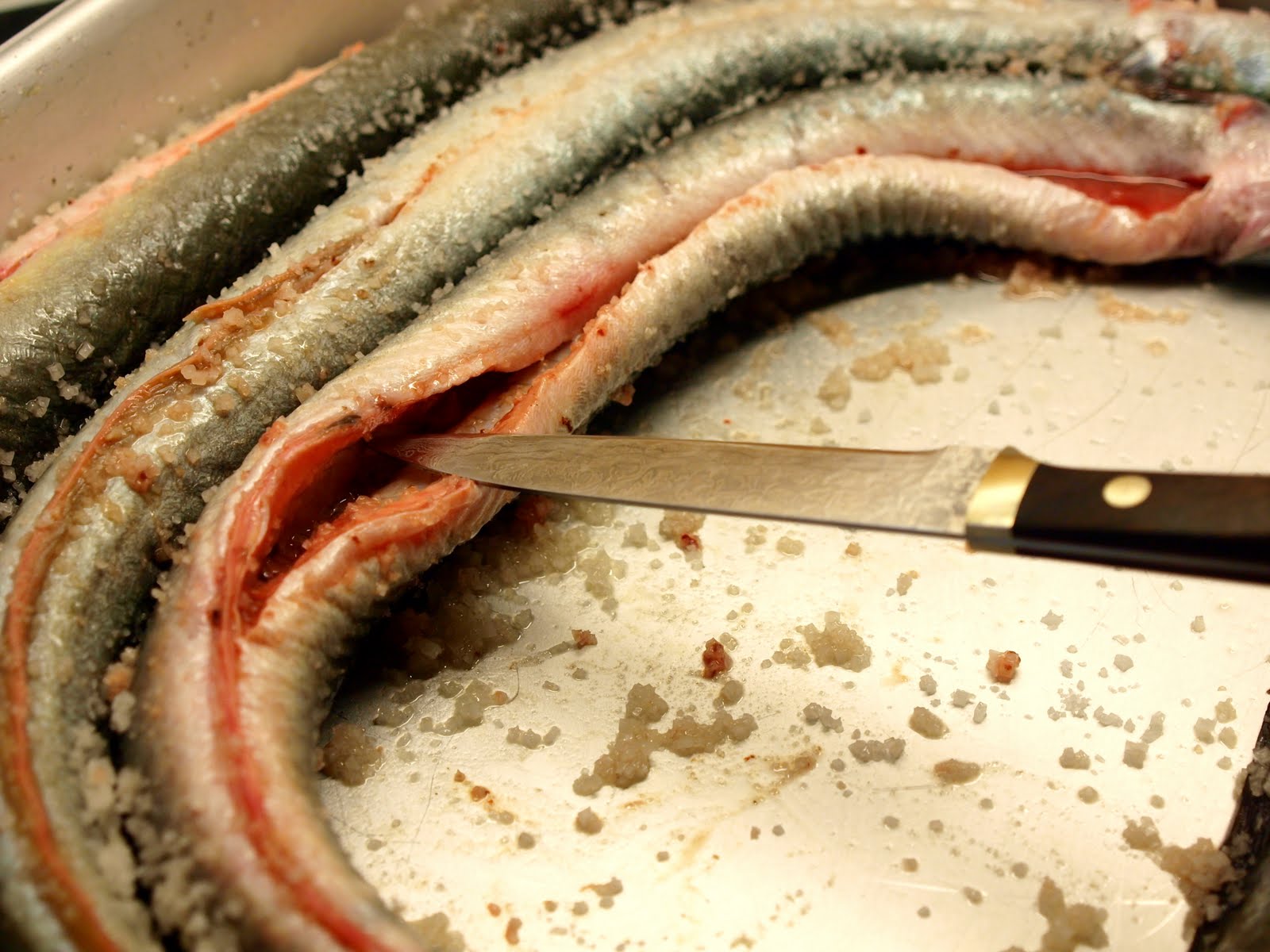
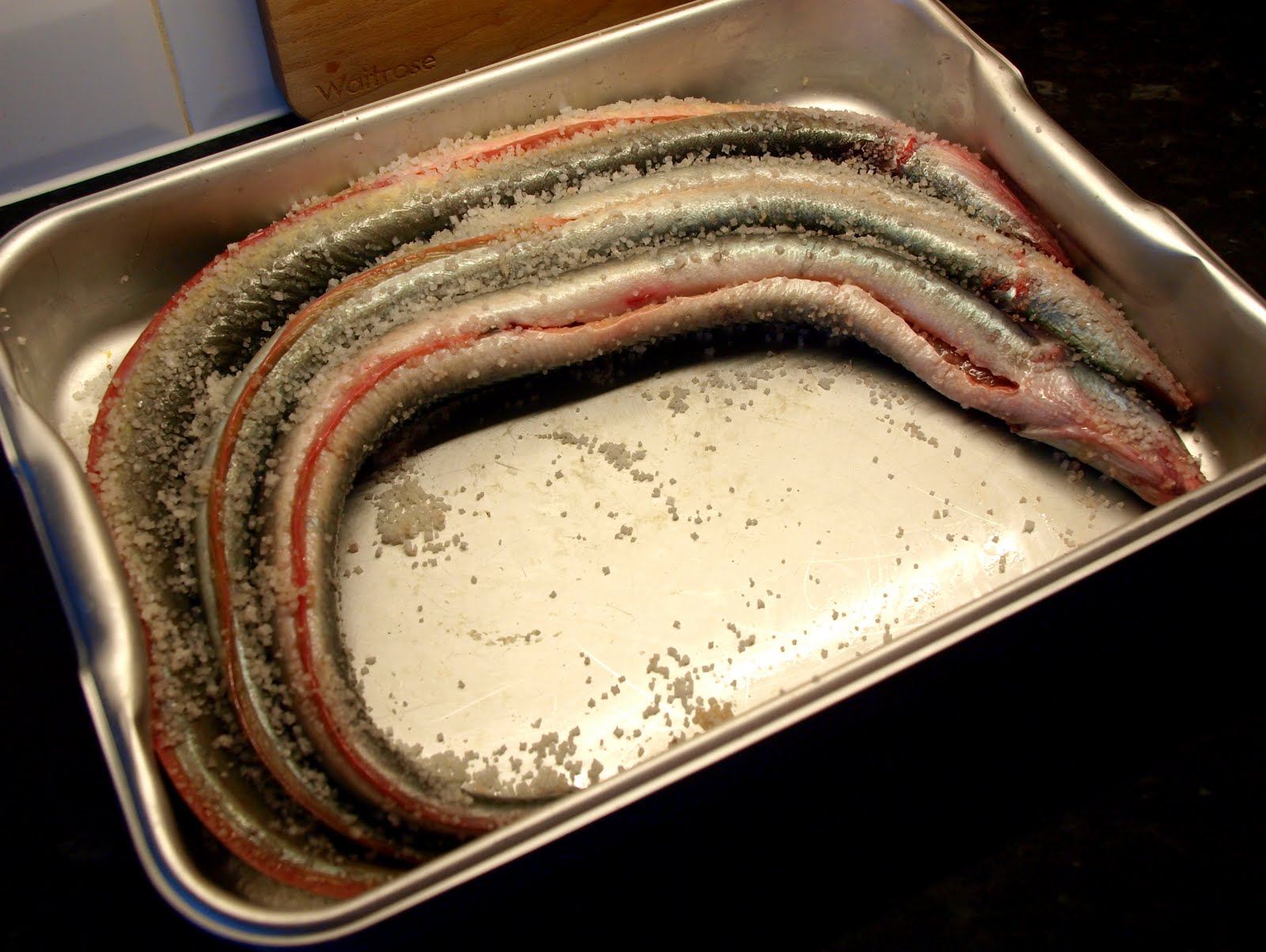
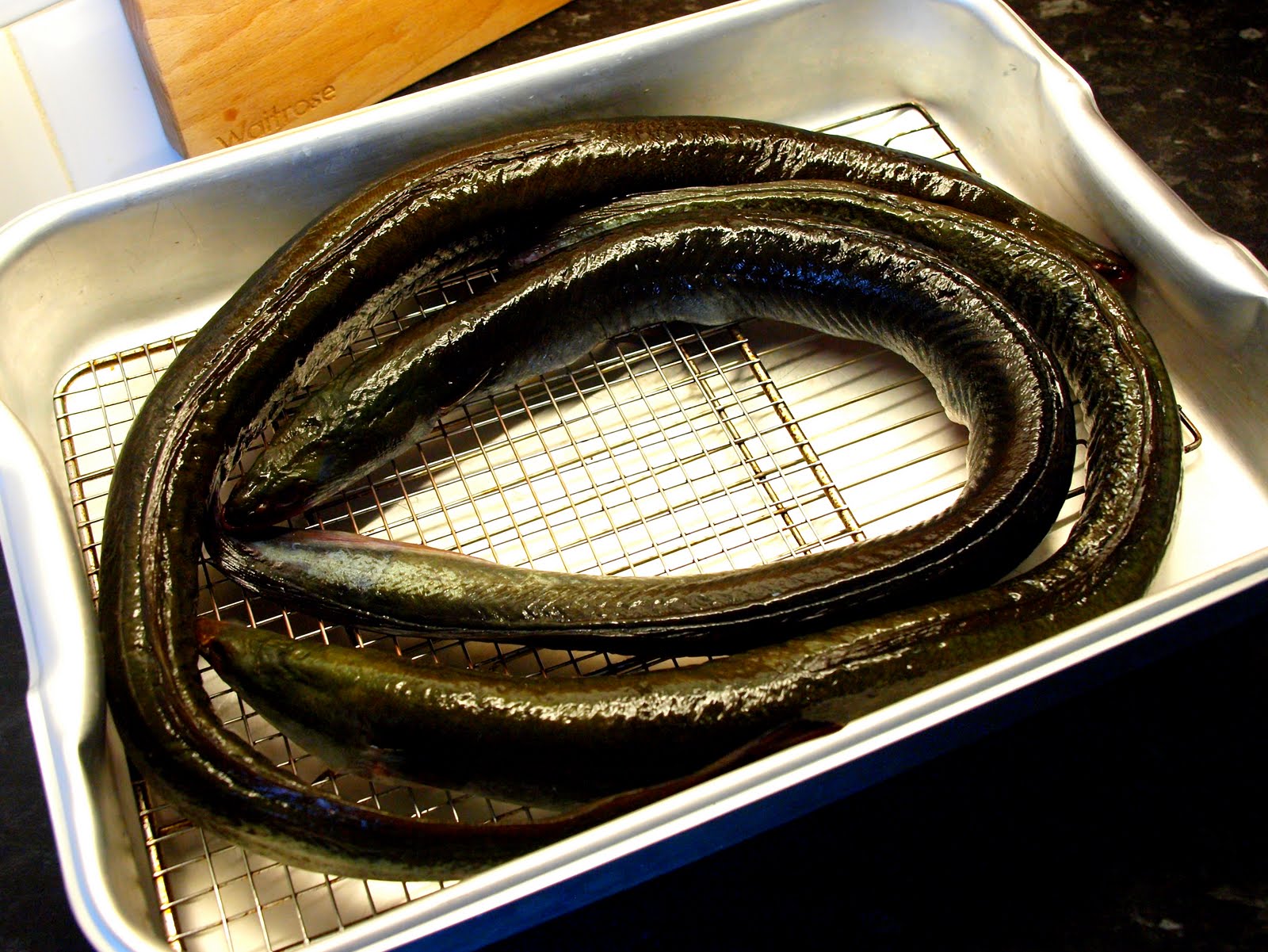
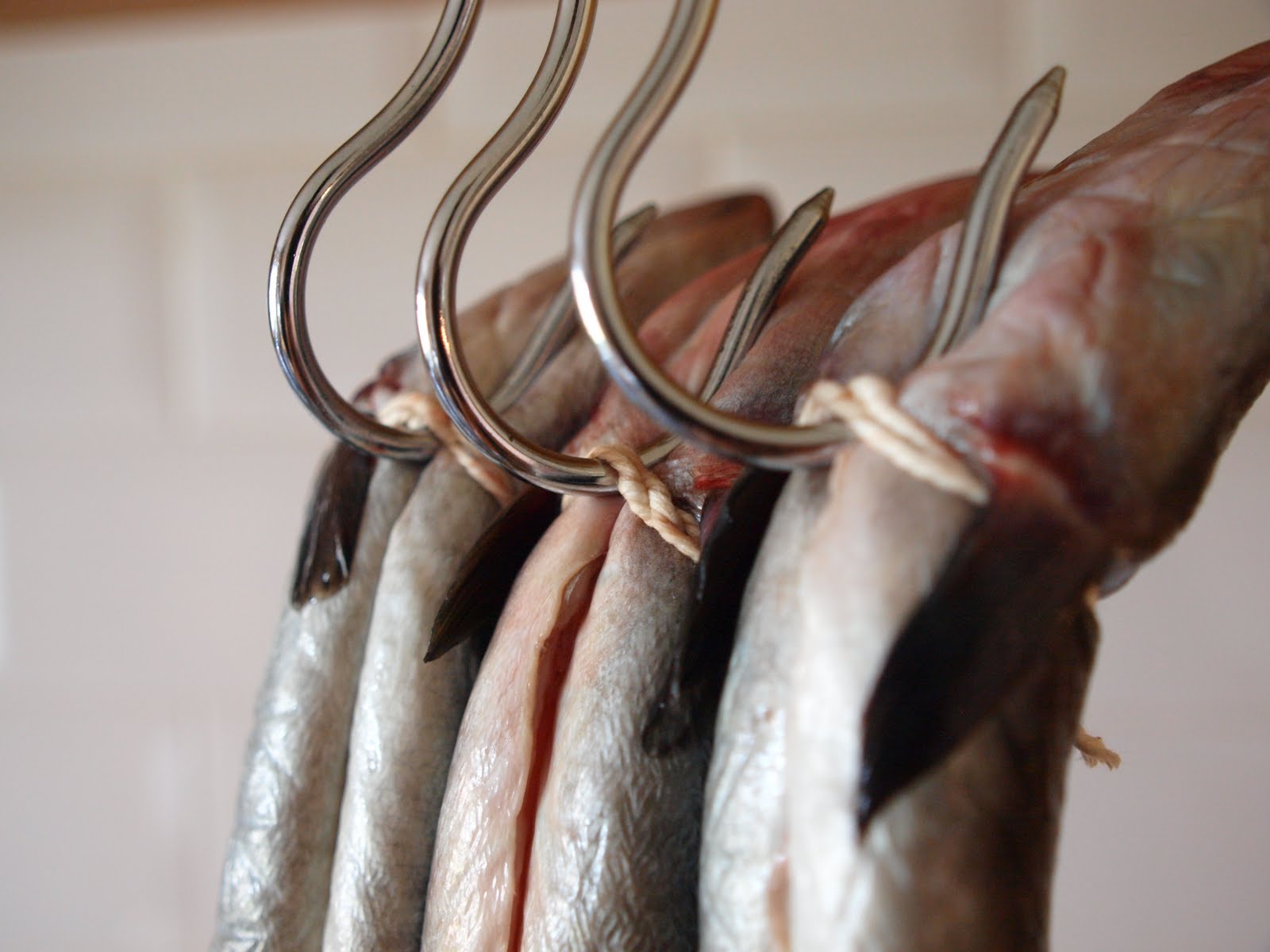
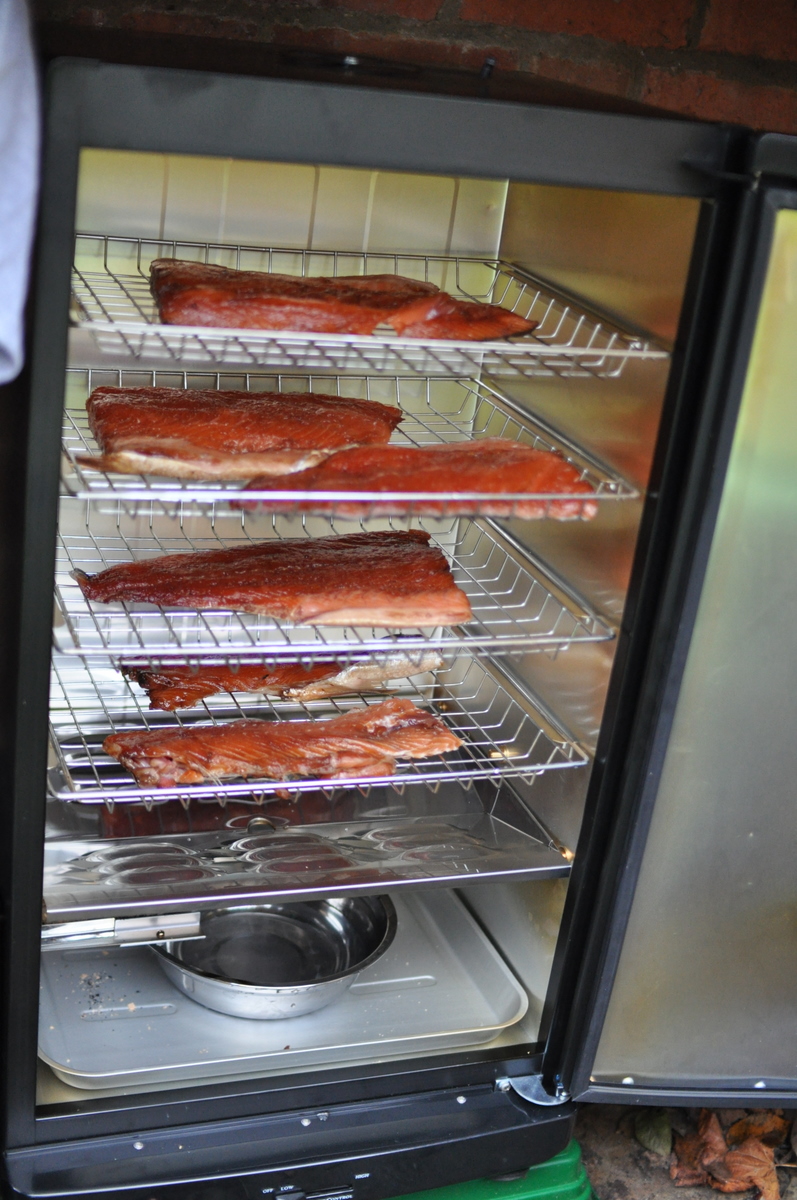
I'm a bit of a fan of eel, you might have read my thoughts on smoking one in an earlier blog. Love eating them but hate having to deal with them. But with anything sometimes you have to do the dirty stuff in order to get to the good stuff. The good stuff in this case being one of my favourite dishes. Simple grilled eel done the Japanese way with a sweet sticky soy based kabayaki sauce. "Oh yeah so what" you murmur "I can get frozen eel from Wing Yip ". Yes you can, it's also the same kind of eel that's on top of everyone's favourite nigiri sushi. It tastes great but you really don't know how great until you've tried the real thing fresh off the coals. Come on, think about that hot eel fat dripping down onto the hot charcoal, igniting, the vaporised lipids bonding with the kabayaki sauce as you lacquer it on. If you like Japanese food, then you owe it to yourself to try kabayaki unagi as soon as possible. It's one of the most beloved dishes in Japan where specialist unagi restaurants exist to perfect it.
But now we come to the crunch! Where can you actually eat this dish? Certainly not in any Yo! Sushi or other high street Japanese restaurant. Even the high end places such as Tetsu, Shiori, Roka or Umu don't do it. From my extensive research the closest is Nodaiwa in Paris, an offshoot of the Michelin starred one in Tokyo! You know I love this dish so much that I recently went to Paris and ate it there. But then I wouldn't be much of a cook if I didn't try to make it myself too. I mean how hard can it be? Well it's not that hard at all except for one caveat. You have to fillet them and eels are the most difficult fish to fillet. But after that it's all downhill!
Dispatch your eel
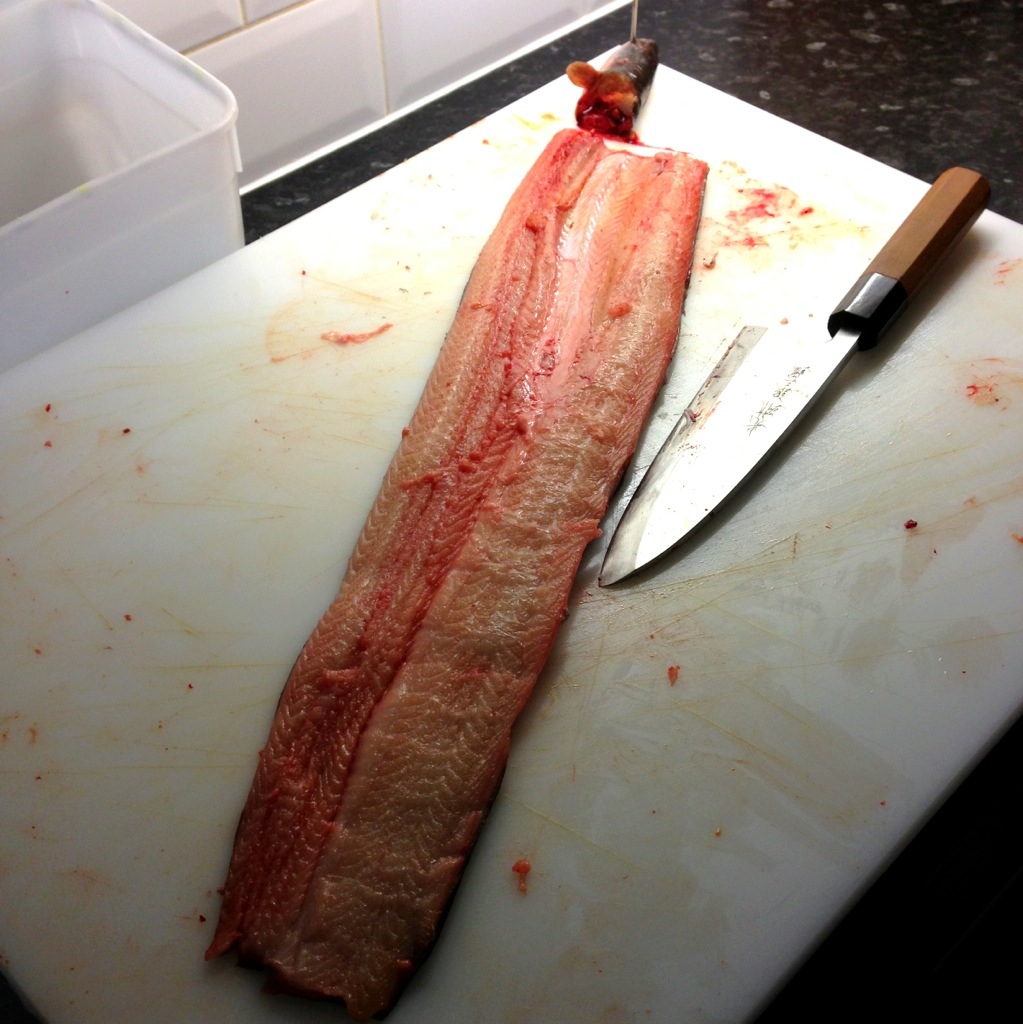
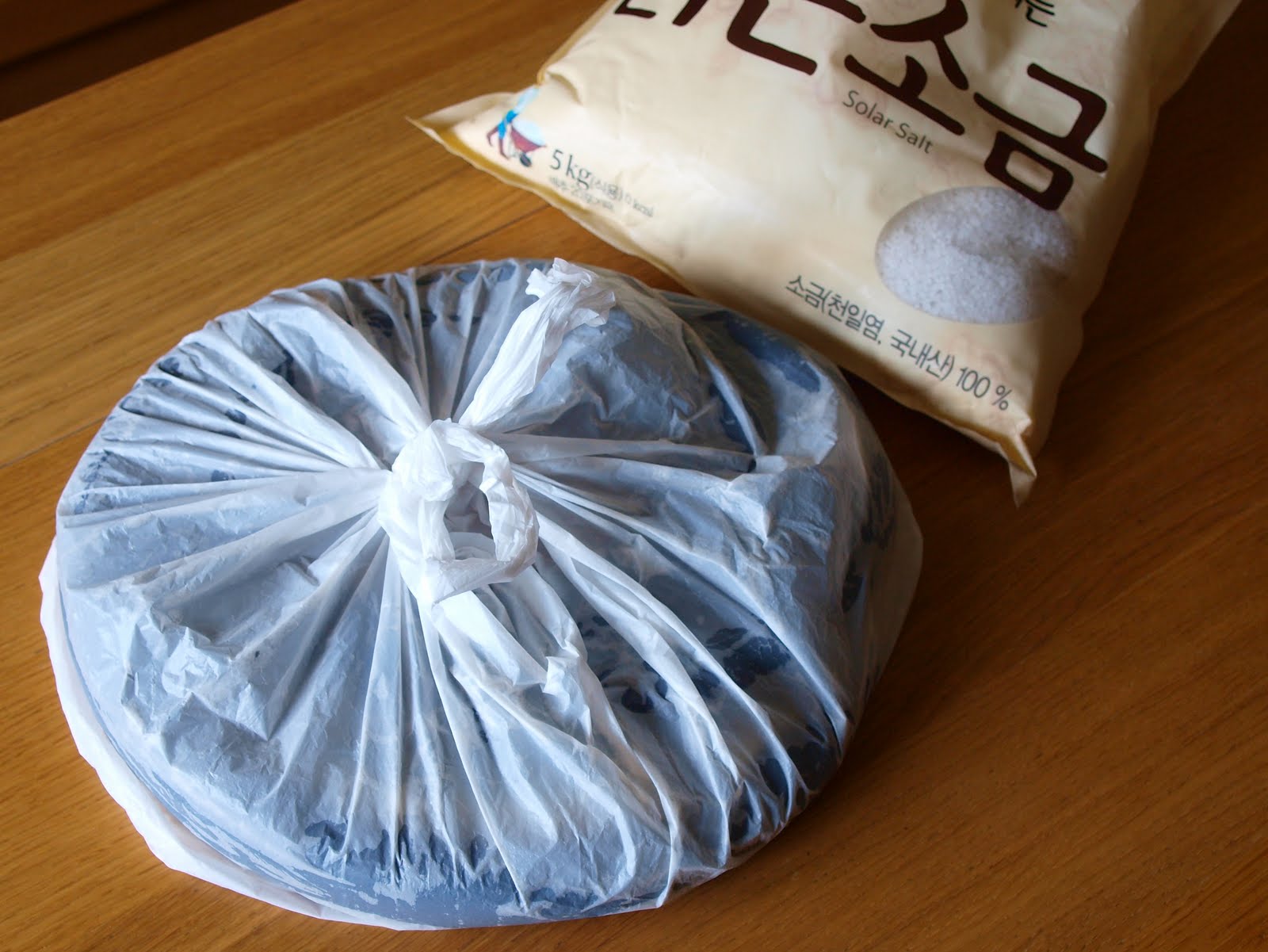
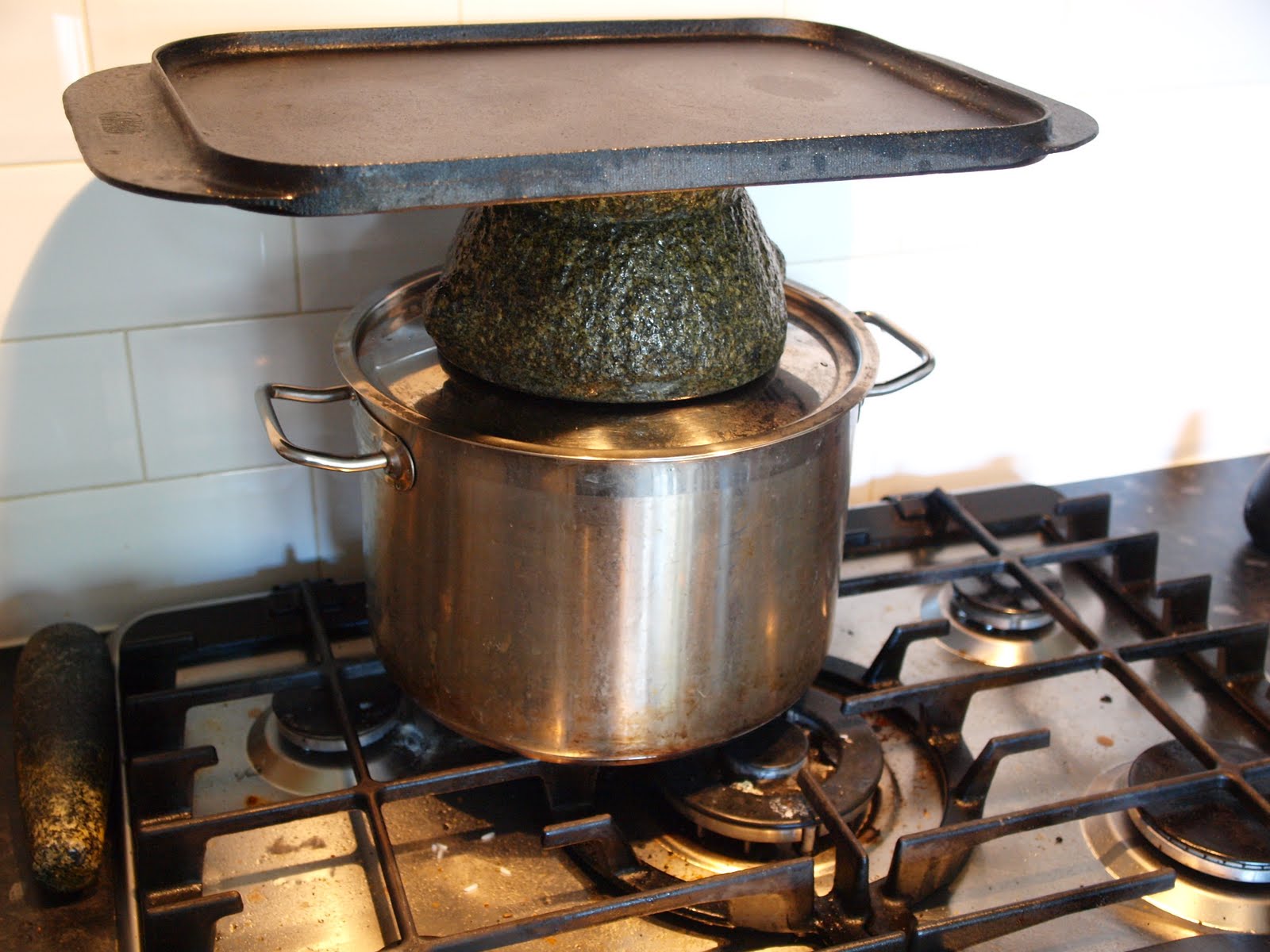
I'm assuming of course that you've bought a live one because what would be the point of buying a dead one? Eels go off very quickly so cook them as soon as possible. My preferred method of dispatch is to lock one up in a pot with a slurry of salt. An hour should do it. Remove the eel and scrape all the slime off its leathery skin. Cut off the long fins that run along the top and bottom.
Fillet
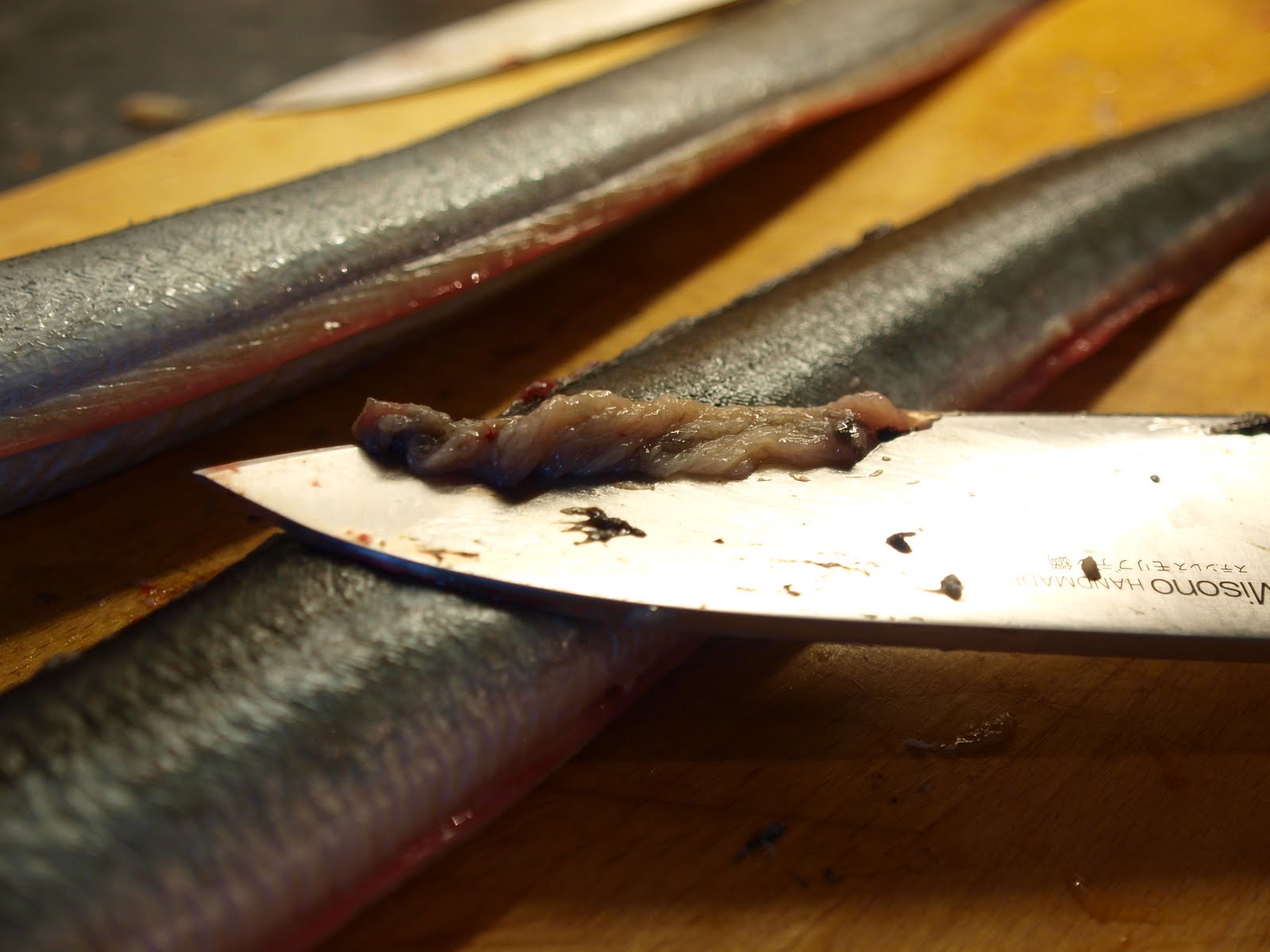
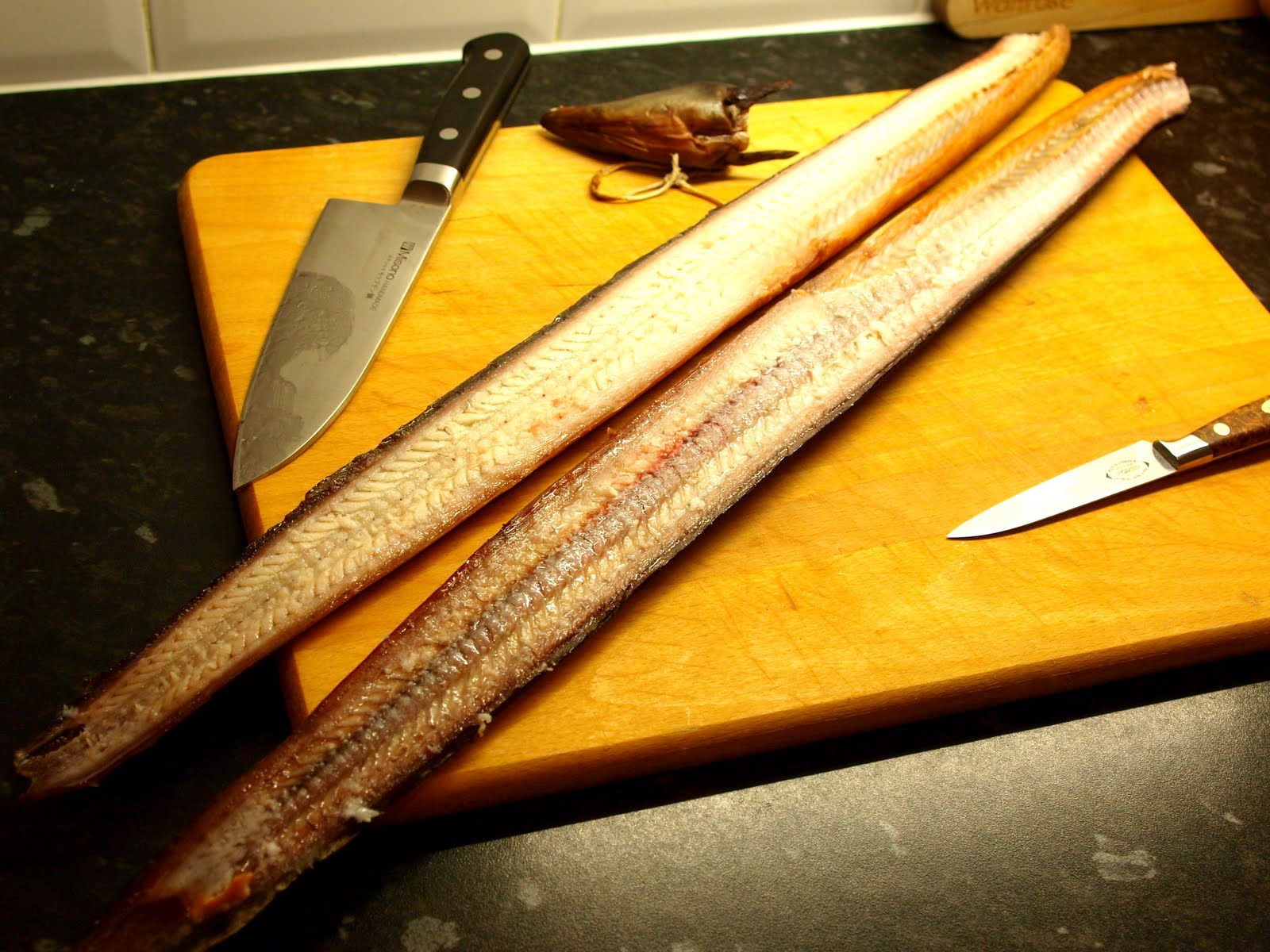
This is the hard part. Because of the shape of them and the tough leathery skin they’re tricky to fillet conventionally. But when you come upon a fish conundrum you just have to ask yourself “what would the Japanese do?” as no doubt they’d have come up with a simple elegant solution. In this case the shape and tough skin has been turned into an advantage. Make a small drill hole in the top right-hand corner of your largest chopping board (if you’re right-handed) and peg the head securely to it with the belly facing away from you. Make an incision behind the side fin and zip your knife along the backbone to release the top fillet and open the eel out like a fishy baguette. Cut out the guts (hardcore unagi eaters skewer these and grill them separately). Snip the backbone near the head and cut out the bone in one long piece starting at the head. The tough skin will make sure the head is still firmly pegged to the board so you can give it some power if the bone is being stubborn. This is a lot easier with a traditional Japanese style single-bevelled deba knife, a useful investment if you eat a lot of fish or have a knife fetish.
Steam and Grill
Cut the fillet in half and thread the two halves onto thin metal skewers so that they are easier to grill. You can grill the eel from raw with just a little salt if you prefer but if you want to brush them with kabayaki sauce then it's better to par-cook the eel first as the the sauce is likely to burn over prolonged grilling. Very gently steam the fillets for 7 to 8 minutes before gently grilling them directly over coals brushing with the sauce:
Kabayaki Sauce 4 parts light soy, 1 part mirin, 1 part sake, 2 parts white caster sugar by volume. This is the basic sauce, simmer until thickened. I like to add star anise and a whole clove of garlic too.
The grilling should not be rushed, take your time, brush as often as you like with the sauce. I like to do it six or seven times on the flesh side only as I like to make sure the skin is nice and crispy and plenty of the fat has rendered off. Give the flesh a final lacquering before cutting into bite sized pieces. That's it, told you it was easy. Just serve over a mound of tender Japanese rice and lashings of the sauce drizzled over the top. Or if you're a real Japanese food nerd, give it another grill over a tabletop Konro before you pop into your mouth. Truly one of the best mouthfuls of food there is.
Classic pub grub, remember that stuff? Not the gastropub fare that you get nowadays. Not the multi Michelin starred gourmet delights of Tom Kerridge’s proper pub food. No I’m talking about the horrors of the 80s and 90s, where if you wanted more than a bag of pork scratchings or piss-stained peanuts you ran the eminent danger of salmonella poisoning from a week-old reheated lasagne. Those were the days, you really didn’t want to see what was going on behind that greasy kitchen door. Some bloke scratching his arse all the while dropping fag ash on your chicken kiev? The least of your problems. When the food came, it was obvious it was nothing more than a cheap sop for desperate binge drinkers. You had to drink more to erase the memory of it.
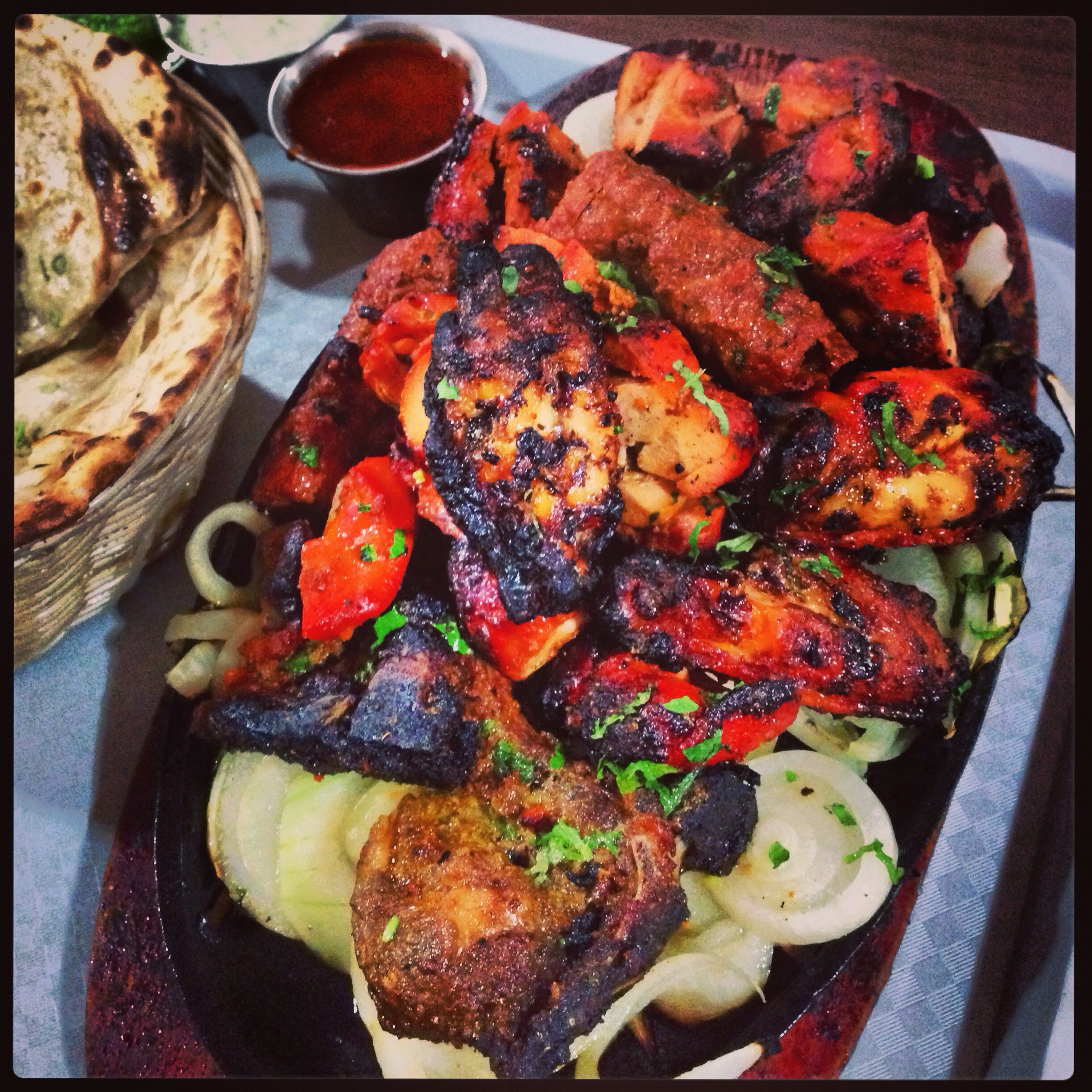
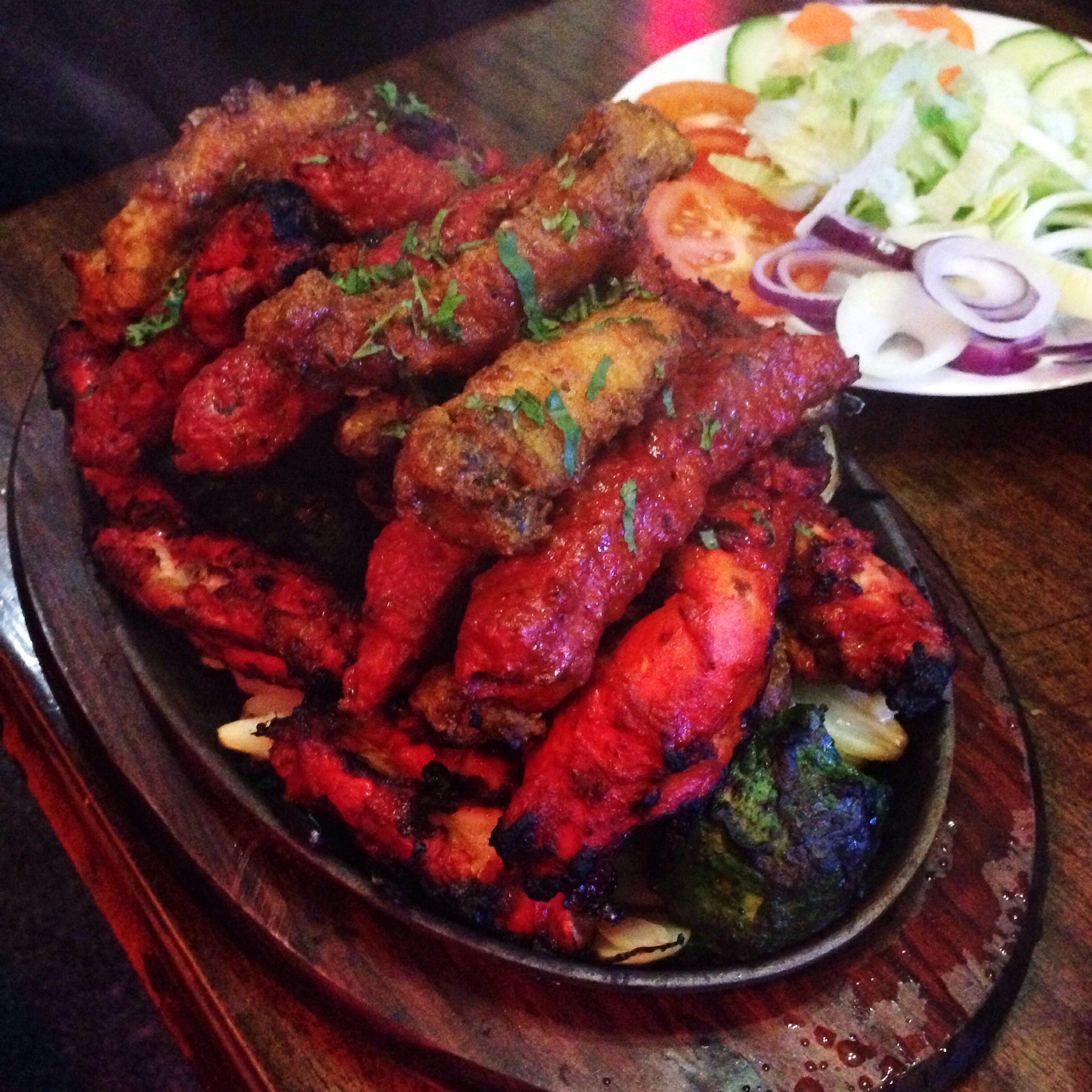
All those old boozers, all those kitchens, all that potential. Well in Brum some of that potential has been realised. In venerable pubs across the city, kitchens have been handed over to people who actually care about cooking good food for a decent price. The Thai chefs at The Bartons Arms being a shining example of this, but also the exception as most of those kitchens have been skewered by the expert grillers of the Punjab. Yes, in back rooms across the metropolis, fingers are being stained red from the smoky spice of a thousand kebabs. Here’s a smoke&umami (i.e. brief) guide to some of them:
The Vine
152 Roebuck St, West Bromwich, West Midlands B70 6RD
0121 553 2866
The daddy, the one everyone thinks of when you talk about Indian BBQ. On an unassuming back road, first left after the big West Brom roundabout, the small traditional frontage gives no indication to the behemoth of a grill room and garden in the back. Order your grilled food from the grill area but order your curries and bread from the bar at the front. The trick is to get them to arrive at the same time. I have no idea how the system works, it's semi-organised chaos, just cross your fingers! Thankfully everything arrives pretty quickly as the kebabs are pre-cooked and finished to order. In all of these places it's always the mixed grill, why would you order anything else? A mountain of grilled meats for not much money where you can assess the strengths and weaknesses of each restaurant. On the plus The Vine does pork steaks and the spicing is pretty much spot on. On the minus the chicken can get a little dry. Curries are good but breads are pretty ordinary.
The Sportsman
13 High St, West Bromwich B70 6PP
0121 553 1353
A stones throw away on West Brom high street is the other one. It's the question that always comes up; The Vine vs The Sportsman, which one is better? The question should be; is there any difference? To me, not really. The grill room at The Sportsman is smaller and still feels like a back room of a regular pub. You can order everything from one hatch so it all comes at the same time. I really can't decide between here and The Vine. The food is identical. Toss a coin if you're in West Brom.
The Grove
279 Grove Lane, Handsworth, B20 2HA
0121 554 3120
It was making me itch a little being in the Black Country. Being a Brummie born and bred it has that effect on me! So it's actually nice to find myself in Handsworth, no lie, actually very pleased because at one end of Grove Lane is where I went to school and at the other is The Grove pub freshly rebranded as a bar and restaurant. Fond memories of underage drinking were not rekindled as the place has been completely refurbed. There is still some semblance of the front bar but out back is now a large spotlessly clean dining room lined with hd TVs showing Sky Sports. The semi-open kitchen and grill is in one corner. This is the best ordering system of all, one hatch where you order, they give you a remote buzzer that vibrates when your order's ready to pick up from a separate adjacent hatch. The kebabs taste a notch above those of the The Vineman (see what I've done there) and despite also being pre-cooked the chicken tikka is some of the juiciest and flavorful I've ever eaten. The seekh kebabs are spicy, thick and meaty. Special praise goes to the bread here, parathas and rotis are excellent. No pork though which is a shame but for me the best of the bunch.
Staying in Handsworth we're now in the fairly rough looking Farcroft, which will please purists who complain about The Vine having been sanitised. If you want grit then this is the place for you. A big pub which has seen better days. You wend your way through the back gate to the BBQ area where you get fairly standard renditions of everything including pork steaks. Strangely the mixed grill is small here, it only includes wings, seekh kebabs and chicken tikka. But, like the surroundings, everything is really cheap so you can order extras to your wallets content. Spicing is really good here but a hard sell for me considering The Grove is just two minutes down the road.
Hen & Chickens
27 Constitution Hill, Birmingham, West Midlands B19 3LE
0121 236 3121
Quite a small corner pub on Constitution Hill a brisk walk from Snow Hill. They've only been serving Indian BBQ for about 6 months and pride themselves on cooking everything from raw. Only problem is that there’s an interminable wait for your food. Compounded by no visible kitchen, always a worry with these kind of places. There’s a primeval buzz to seeing stacks of skewered meat piled high ready for the flames. It's one of the big draws of these pubs. It’s worth the wait though, the large mix grill is good and includes fried chicken, fried fish and green chicken! A kind of green chicken tikka, quite tasty though I could really do without the fried stuff in my mixed grill especially as they sacrifice lamb chops for them. The bread here, a bit thin and crispy, isn't as good as The Grove. There's not much dining space but they have plans to extend out into the beer garden. A good option if you're in town and have craving for mountains of meat.
The Shaftmoor
266 Shaftmoor Lane,Birmingham B28 8ST
07956 879688
Here's one from the southside of town. Yes we have meat lovers down here too though mostly we're catered for by Muslim kebab and curry houses. So it's actually rare, possibly unique, to find a grill in a back of an actual working pub in the south of town. The Shaftmoor, similar to The Farcroft, is a big old pub not far from the Mughal e Azam . Which probably does the best mixed grill anywhere in the city not just in the back of a pub so it has some stiff local competition. The grill is actually called Minesh's BBQ as Minesh has taken over one of the pub's outhouses. He was plying his trade down the road in The Sparkhill Social Club in Sparkbrook but moved because it got a bit rough. I did the same! This is the smallest operation I've come across so far, just your man on the grill and taking orders at the same time. Hygiene is also the most dubious as he cooks everything from raw. Seeing him scoop a big handful of seasoned raw minced lamb, expertly forming seekh kebabs then handing your change covered in lamb gore is certainly keeping it real. Some may be may put off by this, I was a little, especially when I found a rare piece of chicken tikka in my order. The seekh kebabs are delicious though. If you want to get close to the action then this is the place, this has the most backyard feel of all of them.
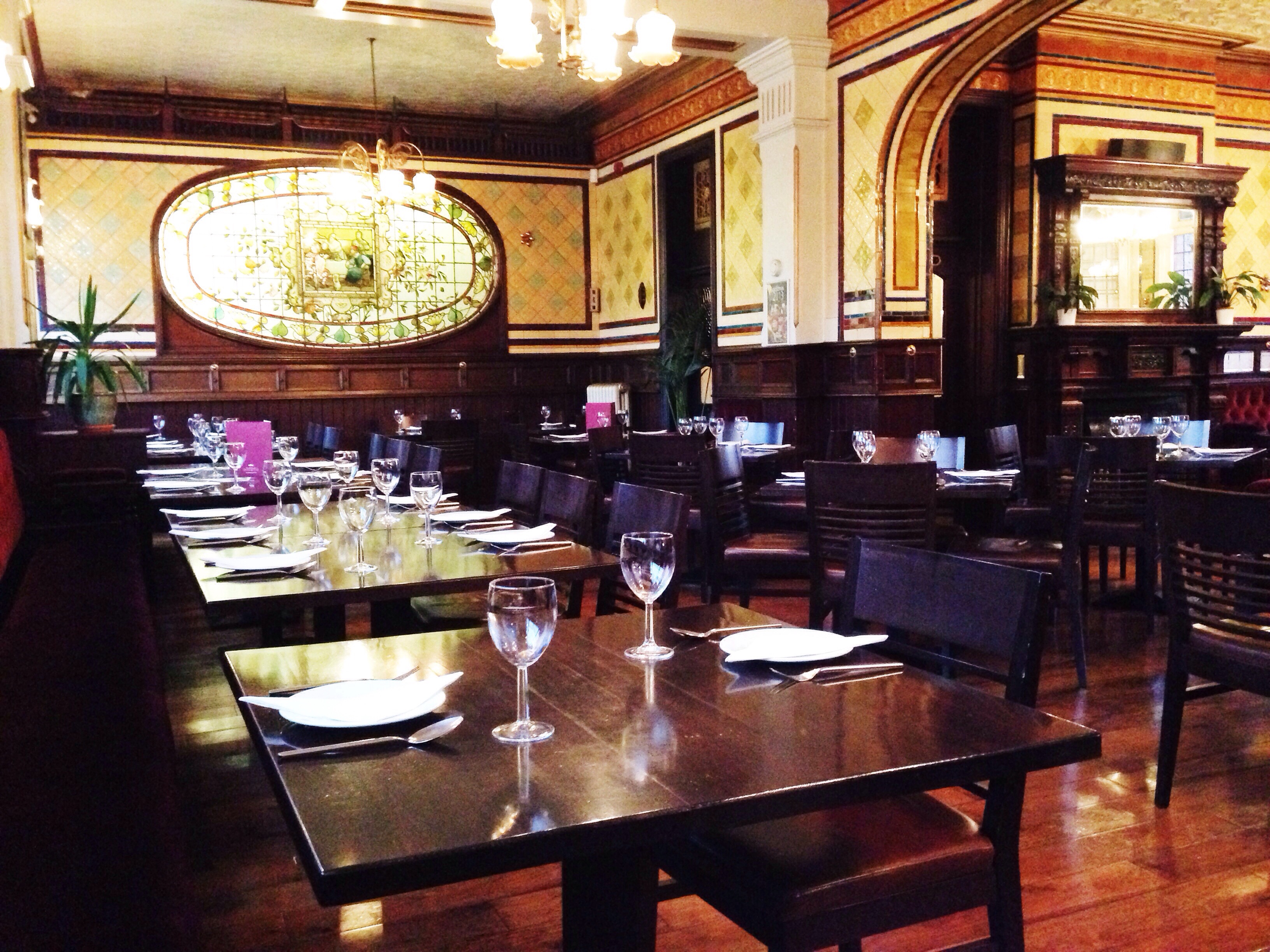
It's quite a modern day phenomenon, Thai food served in very traditional pubs. There are quite a few dotted around down that there London. But the only one in Brum is at The Bartons Arms, a truly gorgeous restored Victorian boozer in a pretty rough corner of town. Sitting in the dining room it's hard not to think that it may be the most beautiful in the city, not as grand or opulent as Mughal e Azam but definitely having more soul, possessing a timeless quality that's been scrubbed clean and looks fresh again.
To be honest I wasn't expecting much from the food. I find most Thai food served in the city to be pretty generic, like the offerings in our Balti houses, choose your gravy then choose the protein to go into it. Which is a shame because great Thai cuisine is so vibrant, pushing the hot-sour-salty-sweet envelope with complex flavours. Like a massaman curry which served here comes close to greatness, better than the roast duck curry with pineapple that should be more sour. Most Thai food in this country is generally too sweet and the food here doesn't escape that syndrome. The juicy well cooked tamarind duck should be both sweet and sour but childishly errs to candy. The hot and salty can be fixed with a little dish of prik nam pla (Thai chillies in fish sauce) at the table but sometimes the sour need to be cooked-in. A gripe, which I happily acknowledge is down to personal preference, that doesn't stop me from enjoying the dishes here. The starters are mixed, nice honey ribs but bland chicken wings and satay. Fishcakes could do with a little more kick but are of a pleasingly irregular handmade shape. Never trust a perfectly round fish cake, they've probably been dropped into the fryer from frozen straight out of the packet. There is the sense of fresh ingredients here, from the Thai basil in the curry to the shredded carrot and cabbage garnish, it's all been cooked with care.
The Bartons Arms
144 High Street, Aston, Birmingham, B6 4UP
Tel: 0121 3335988
There patently aren't enough delis in Birmingham, which I believe is an indicator of the level of homecooking going on. Though supermarkets provide the essentials, you really aren't going to find five types of dried Mexican chillies in them. For that you need places like Lewis's sitting in its prime location between the Fighting Cocks and Bulls Head in Moseley Village. Along with the venerable (and musty) Nima it's one of two whole delis in this suburb.
I wasn’t joking about the dried chillies, Lewis stocks a nice selection of Cool Chile Co’s Mexican stuff from corn husks and masa harina to tomatillos. He’s also got a spiffing line in Mediterranean goods which are the lifeblood of delis like his. Where else would your yummy mummies (and me) go to find Spanish Tapas essentials like Santo Domingo Pimenton De La Vera, Valdespino sherry vinegar, Brindisa chorizo or Perello Gordal olives? Interesting pasta shapes like bucatini and panettone at xmas? Or even Vietnamese summer roll kits.
There’s a limited but good selection of charcuterie and cheeses, some fresh seasonal veg including gorgeous heritage tomatoes. Fresh artisanal bread daily from Lucky 13 Bakehouse and cakes from the Bake Birmingham gents. Service is superbly friendly and best of all there’s seating so you can try everything whilst sipping an excellent Monmouth Coffee Company coffee. Just what every suburb in Birmingham needs, not another flipping Tesco Express. Gets busy on Moseley famers market day (4th Saturday of the month).
Lewis's of Moseley
11 St Mary's Row, Moseley, Birmingham B13 8HW
Tel: 0121 4499933
Tom and Dom from Loaf have been rightly annoyed with me for not having put the fabulous Loaf Community Bakery on the Birmingham Food Map yet. A source of great shame; when we conceived the map project my plan was to post one item per day until we were exhausted of all options. However, it was not to be, due to burn-out from non-blog projects.
Yet, I don't feel that bad, as I figure if you already read this blog, and are therefore an afficionado of the Birmingham food scene, you must know of Loaf already, which serves as a kind of beacon for those interested in food in the City. But anyway, sorry to Tom and Dom and pleased I can correct this wrong now!
So what to say about Loaf Community Bakery - originally a 'bread club', a subscription-based bakery run from Tom's house and domestic oven, he has since harnessed the support of his community to set up a fully-fledged bakery and cookery school in a shop front on Stirchley High Street. Tom has strong ideas about the power of projects such as his, not just to supply great food, but to help communities 'save' their local high streets from shuttering and the inexorable creep of the major supermarkets.
The way I look at it: these guys bake what is easily the best bread in Birmingham, bar absolutely no-one. Properly made, hand-shaped crusty sourdough, part-rye loaves like the 'Maslin' and dark, treacly all-rye tin varieties. Great big bloomin' bloomers, multi-grain loaves and specialty breads like focaccias and brioche. You might also find a sticky bun or two if they haven't sold out.
It's not just bread, there is a (most) weekly Friday lunch club called Stirchley Brewhouse, with a rotating menu of sandwiches and hot food, usually one meat and one vegetarian option, with Sarah Frost's amazing cakes to have afters.
There are occasional pop-ups, including the highly-rated CANeat event which a no-choice set menu of progressive and innovative food (5* review from Paul Fulford).
There is also the cookery school which hosts a variety of interesting events. I have been on the Simply sourdough course which I can highly recommend, there are other bread-making courses, foraging, clay oven building, fish and seafood (run by blog co-writer Lap), pickling and preserves, and many more!
The opening hours are informed by the baking schedule, so it is open 2pm-7pm Tuesday-Friday and then they do an overnight bake on Friday so open 8.15am-2pm on Saturday. But not Sunday or Monday.
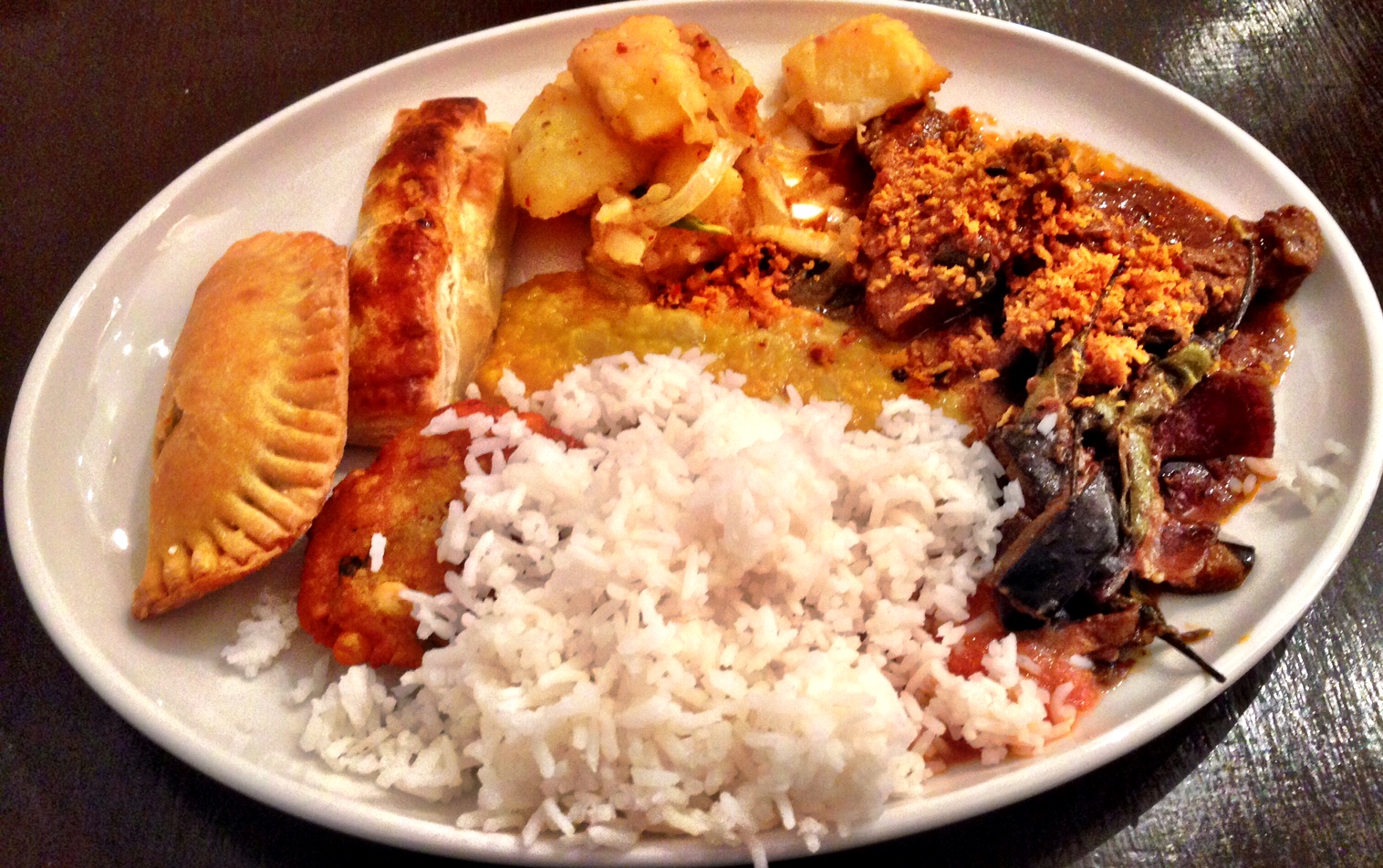
You'd have to try pretty hard to find a worse location for a restaurant than the back of the Costcutter grocery store in Selly Oak. However, on the occasionally true equation that restaurant shabbiness sometimes equals superlative food, I was excited to try the Banana Leaf Cafe. This had previously been recommended to me by a colleague as a Malaysian street food style cafe, run by Birmingham University students. We went in August, only to find that they were closed for the summer holiday. We returned a few weeks ago only to find that rather than a Malaysian restaurant, it was now a Sri Lankan restaurant run by a hugely friendly family. Served buffet-style, they had a phenomenally hot mutton curry, rice, fish-filled patties, a selection of dals and vegetable curries and several sambals. So excited was I by my huge plate of deliciousness I failed to take any specific notes on what exactly I was eating. However all the food was of home-cooked quality, and staggeringly good. Keen that we were enjoying ourselves they brought over a pancake which was cooked like a dosa, but wasn't lentil-based. And to finish off, some chocolate cake. Strange, very lovely, extremely cheap. I am posting this in haste because I suspect you need to get down here and keep these guys open, so completely unlikely is their location. Open 7 days a week, I think just for lunch. I will confirm after our next visit
Banana Leaf Cafe, back of Costcutter supermarket (up from and on same side of Seoul Plaza, down from Aldi), Bristol Road, Birmingham
What's not to love about plucky little Seoul Plaza? For budding David Changs this Korean supermarket is the place to get your gochugaru (red pepper powder) and brine shrimp for making home-made kimchi, and your gochujang and ssamjang for bo ssam. There are also aisles for Chinese and Japanese ingredients, including a reasonable selection of fresh Chinese vegetables. You can pick up a decent Pi-Xian chilli bean paste here for fish-fragrant aubergines or mapo tofu. Those back from Japan with a hankering for Pocari Sweat will find it in the fridge, along with those weird drinks that look like they have frogspawn in (nope, never tried). If you can't be bothered to make your own kimchi, you can also choose from their freshly-made options.
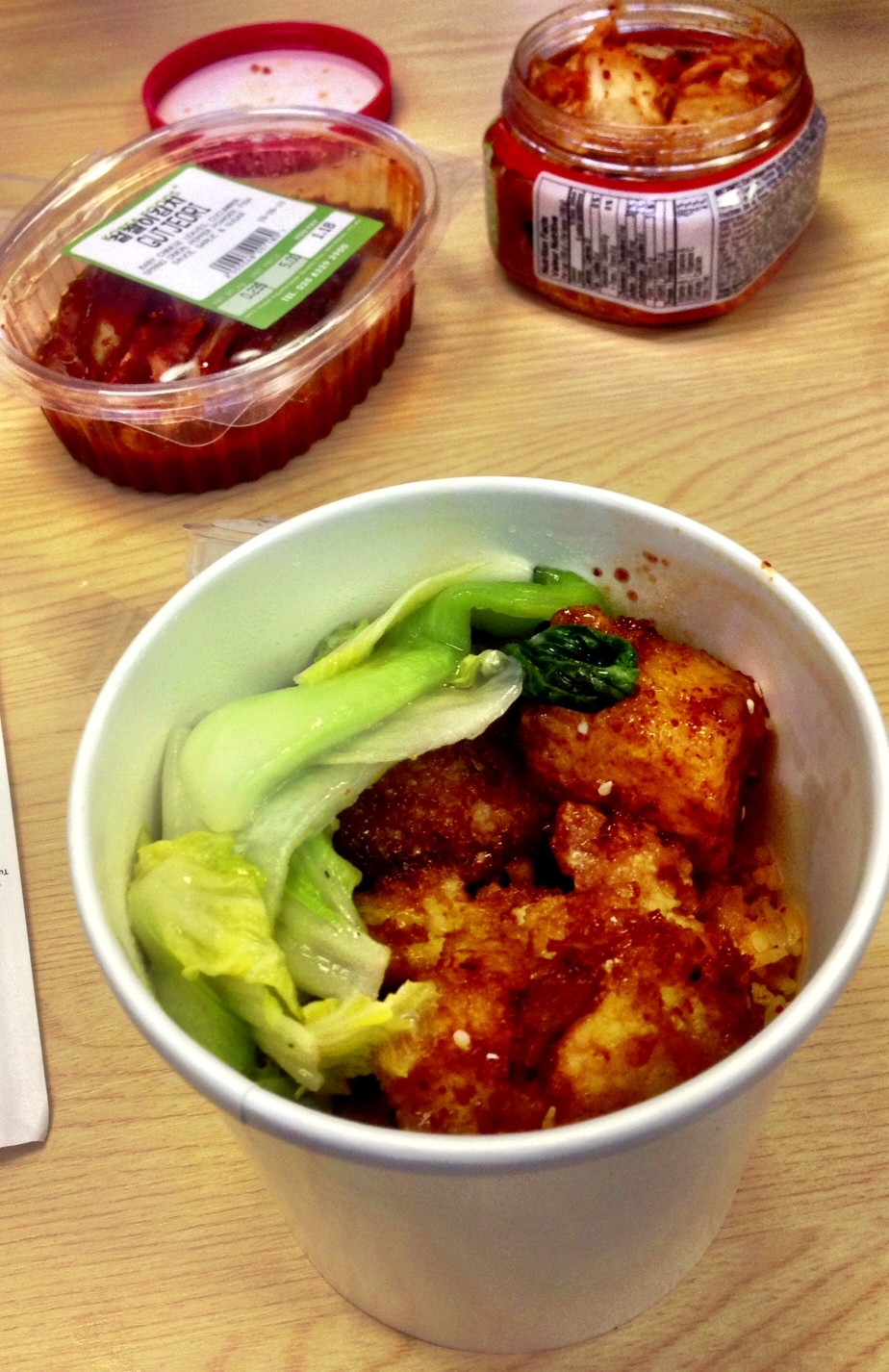
In the past few weeks, perhaps most excitingly for those desperate to find food in Selly Oak, they have started a hot food counter, serving takeaway rice, noodles, Korean fried chicken, fried dumplings, vegetable and pork dishes. The Korean fried chicken has a decent crust and decent sauce. A great deal for under a fiver. This is rapidly becoming our canteen for trips out from University campus.
They even have a small section for crockery and homewares, I got some nice Korean clay rice bowls here, perfect for serving kimchi jiggae. You can even pick up a rice cooker while you are there, or even an authentic Korean dedicated kimchi fridge, a snip at £700.
Seoul Plaza, 536 Bristol Road (down from and opposite Aldi), Birmingham.
Bowl of takeaway goodness from Seoul Plaza! My new lunch!
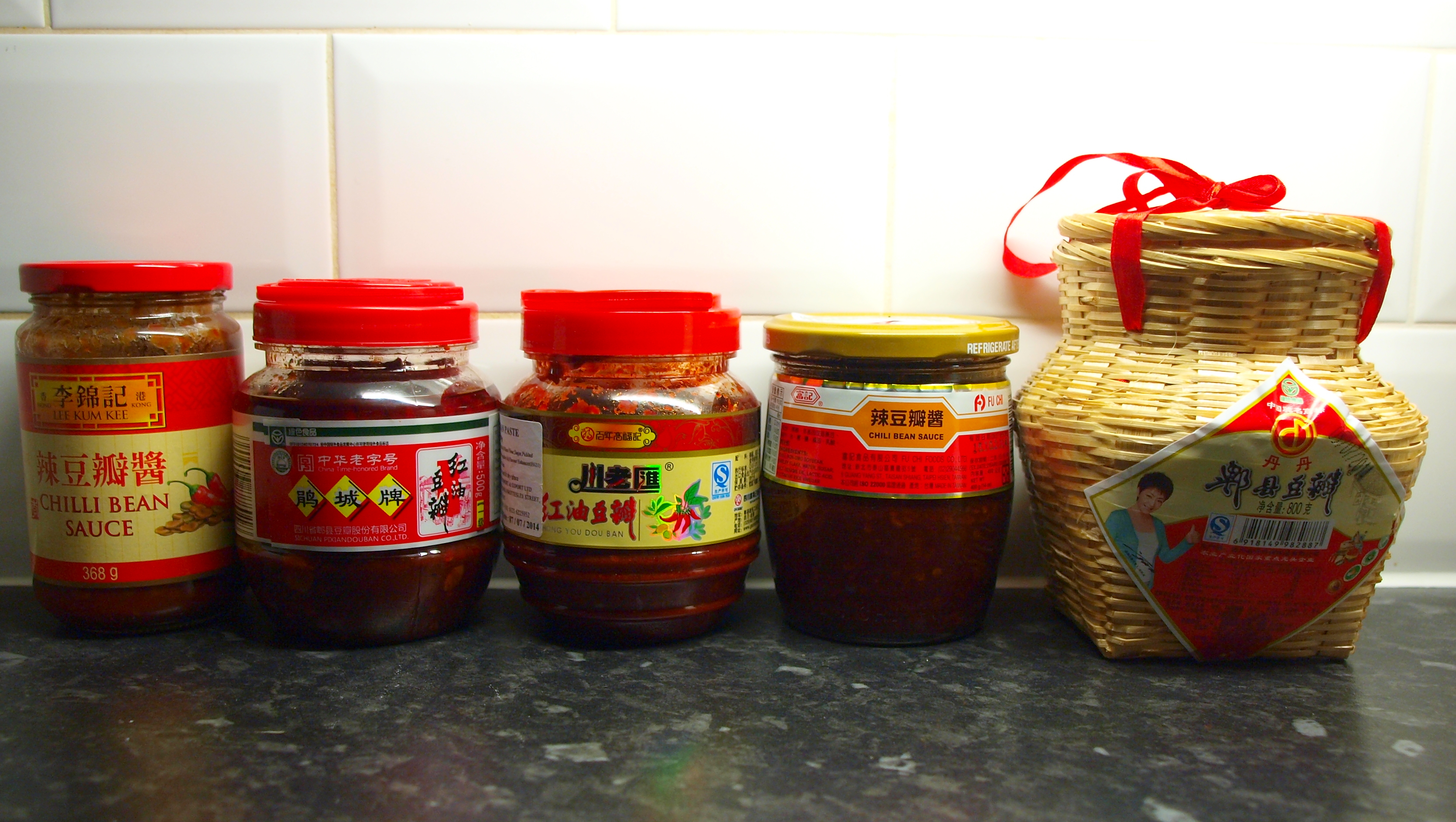
Reorganising my jar and bottle cupboard in the kitchen, you know the one with all the different vinegars (3 types of balsamic, white/red/rice wine, cider, strawberry), I found that I'd accumulated 5 different brands of chilli bean pastes. I don't really know how this has come about but it's a handy opportunity to do a taste test on them!
Chilli bean paste is a Chinese store cupboard essential. A mixture of chilli and bean (broad bean or soy bean) that's been fermented together to give a deep complex umami flavour. It's used in stir-fries, braises, hot-pots or anytime you want that addictive chilli hit. Particularly in Sichuan cookery where the chilli bean paste produced in Pixian county, Chengdu is considered the best. I'm not a Sichuanese expert so can't comment on authenticity but I'm comparing them to chilli bean pastes from other parts of China so each of them is assessed on taste alone.
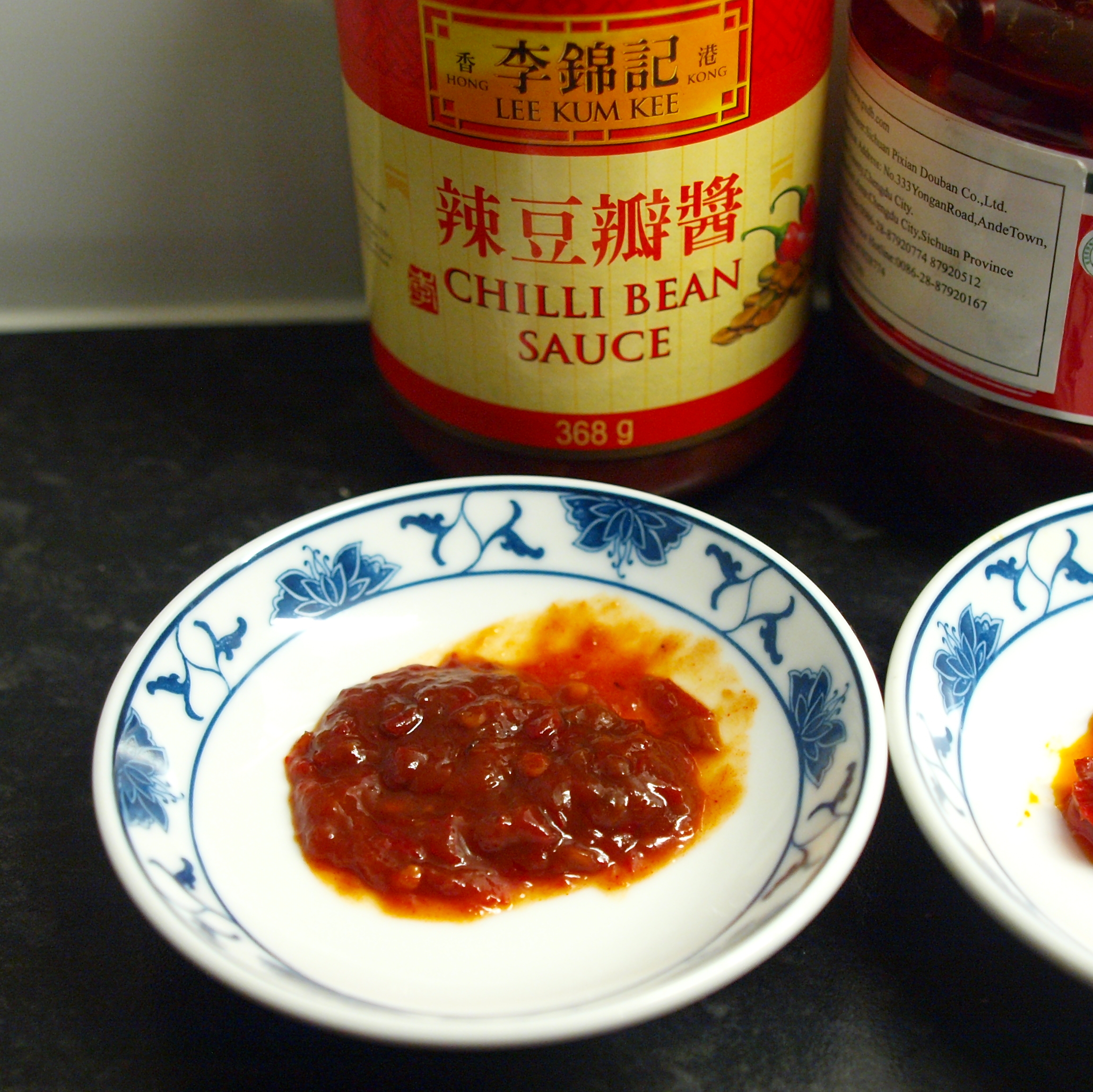
This is the one most people who cook Chinese food at home will have. LKK are a Hong Kong brand so is the most established in Chinese supermarkets here in the UK and in Western shops. Unusually it's the hottest of the lot with a sweet garlicky flavour that doesn't linger long. It doesn't really have that fermented lactic flavour so it's not really suitable for Sichuan dishes. The pale colour gives the game away a bit. I can't imagine big vats of this having been fermented in the open for years at a time. A bit one dimensional, however it is good in stir fried prawns.
2. Juan City Brand 鹃城牌红油豆瓣
Chilli, broad bean, salt, wheat flour, vegetable oil, spices, food additives (potassium sorbate)
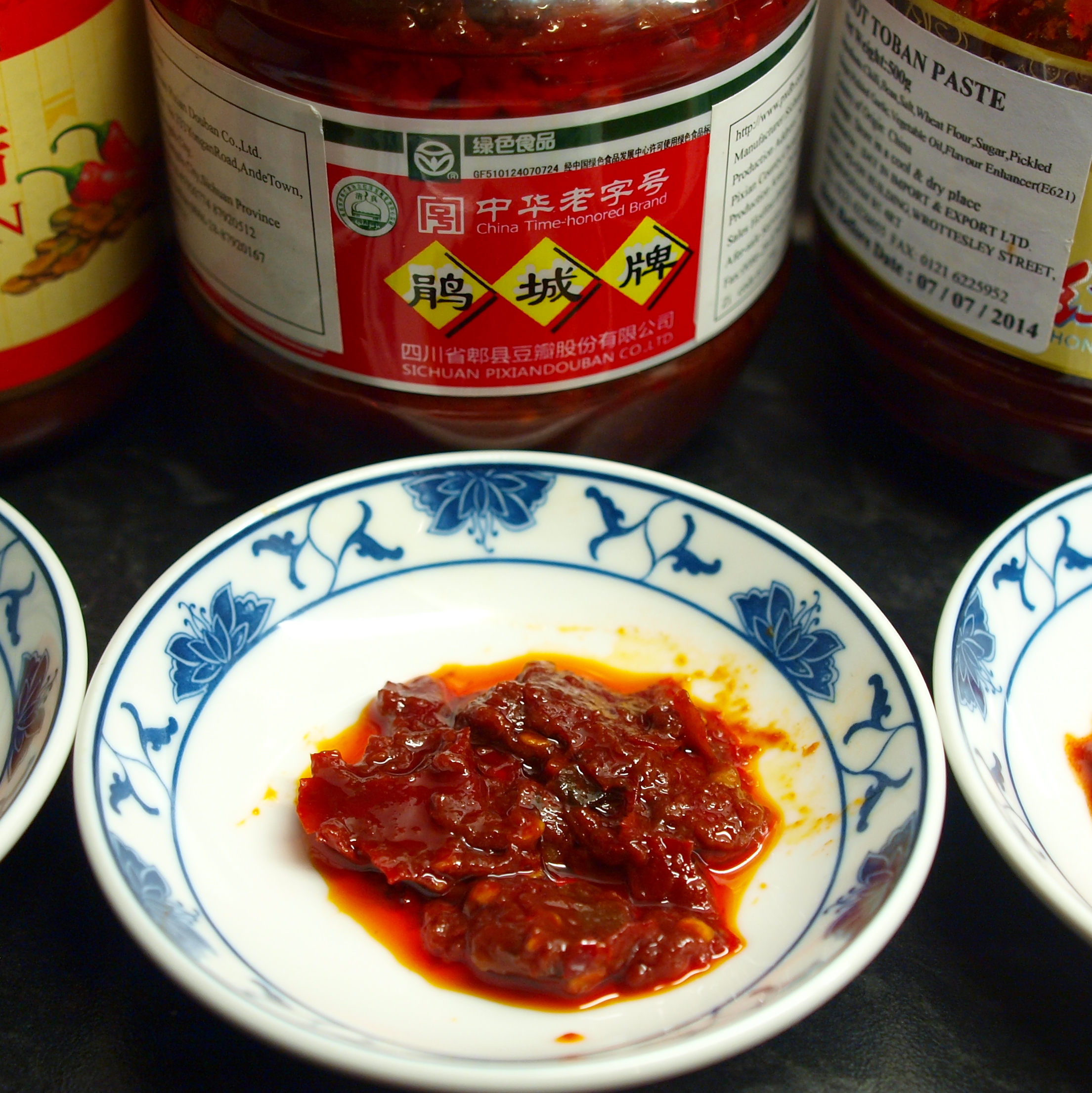
This plastic jar has a handy carry handle but unhandily if you don't read any Chinese then it might be difficult to spot that it's a Pixian style chilli bean paste. Ok there's a clue in the company name in small print Sichuan Pixiandouban Co Ltd otherwise the jar I have has no other indication in English, not even ingredients. Which I'm sure is pretty illegal in this country. The importers need to sort this out. However I'm glad they've smuggled it in because the taste of this red oil 红油 version is fantastic. Rich red colour, well balanced flavour, mild to medium chilli, not too salty, perfect for twice cooked pork, the oily richness is lip-smacking.
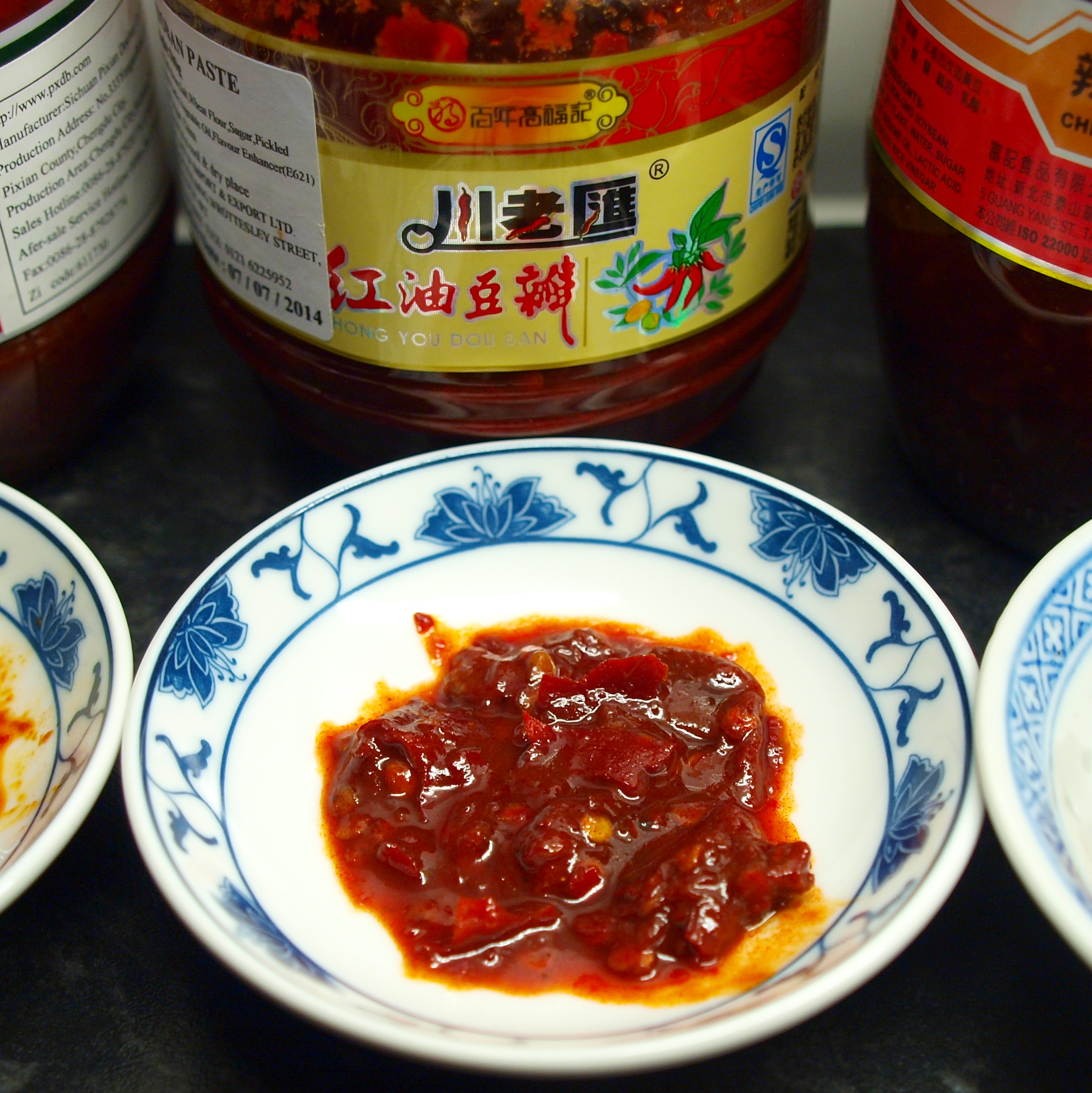
Comes in the same plastic jar with carry handle as the Juan City Brand. I wonder who is copying who? At least this jar has some English stuck on it from the importers Day In. This is also a red oil version of Pixian style chilli bean paste with extras. It has the same deep lip-smacking flavour but, probably due to the pickled ginger and garlic, is really too salty to use in the same quantities as the Juan City Brand. But the less you use the less umami impact you get in your food. I struggled cooking with this until I started using it as a base for hot-pot flavouring lots of chicken stock.
4. Fu Chi - Chilli Bean Sauce 富記辣豆瓣醬
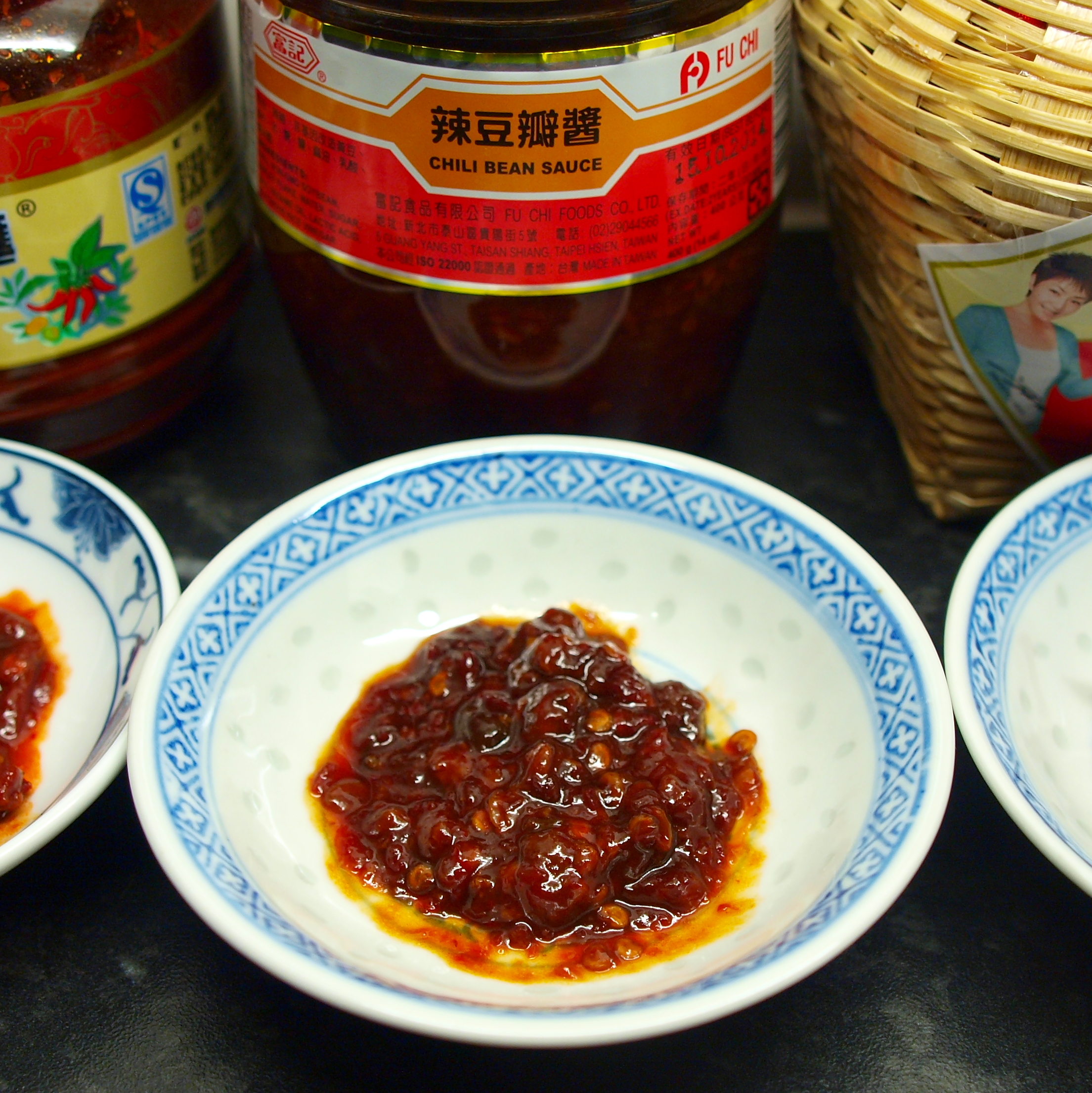
Chilli, soy bean, barley flake, salt, sugar, sesame oil, acidity regulator
Taiwanese brand, the only one not to have any broad beans in but not lacking in deep rich flavour. The mildest of the lot, least salty, sweet round flavour so great to use in larger quantities. My favourite for fish-fragrant aubergines.
5. Sichuan Dan Dan Seasoning Co Ltd - Pi-Xian Fermented Broadbean 丹丹郫县豆瓣
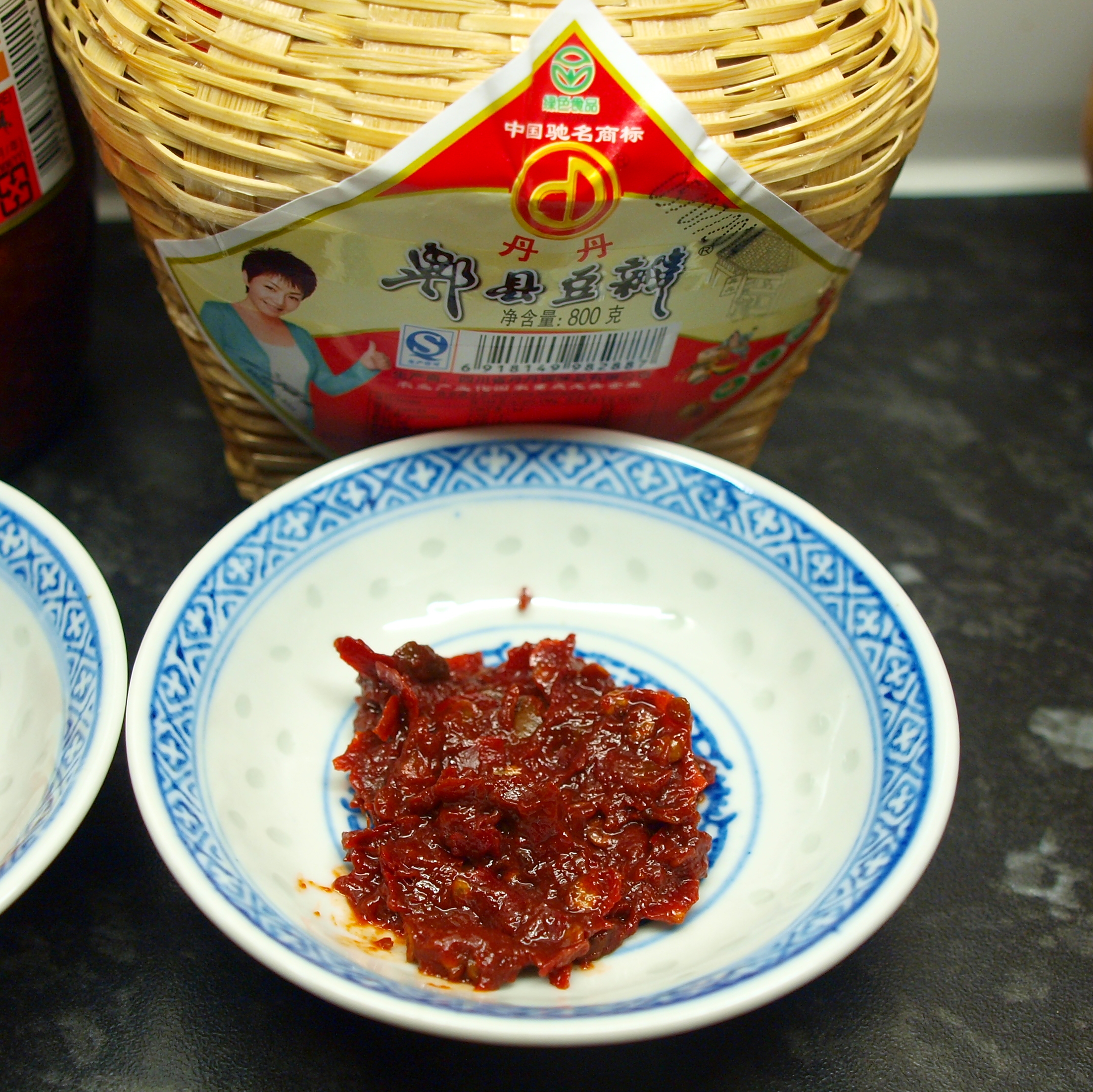
Chilli, broad bean, salt, wheat flour
The purest Pixian chilli bean paste here and it comes in the most darling wicker basket! First saw this on Fuchsia Dunlop's blog but could never find it anywhere so when I spotted it recently on http://www.souschef.co.uk/ I snapped it up. There are two plastic sachets of the chunky paste in the basket that you have to decant elsewhere. This is not a red oil version like the other two Pixian pastes, it's quite dry, slightly saltier than Juan City Brand. Even used sparingly it gives a great hit of flavour. I definitely wouldn't waste this in a hot-pot! Great in braises.
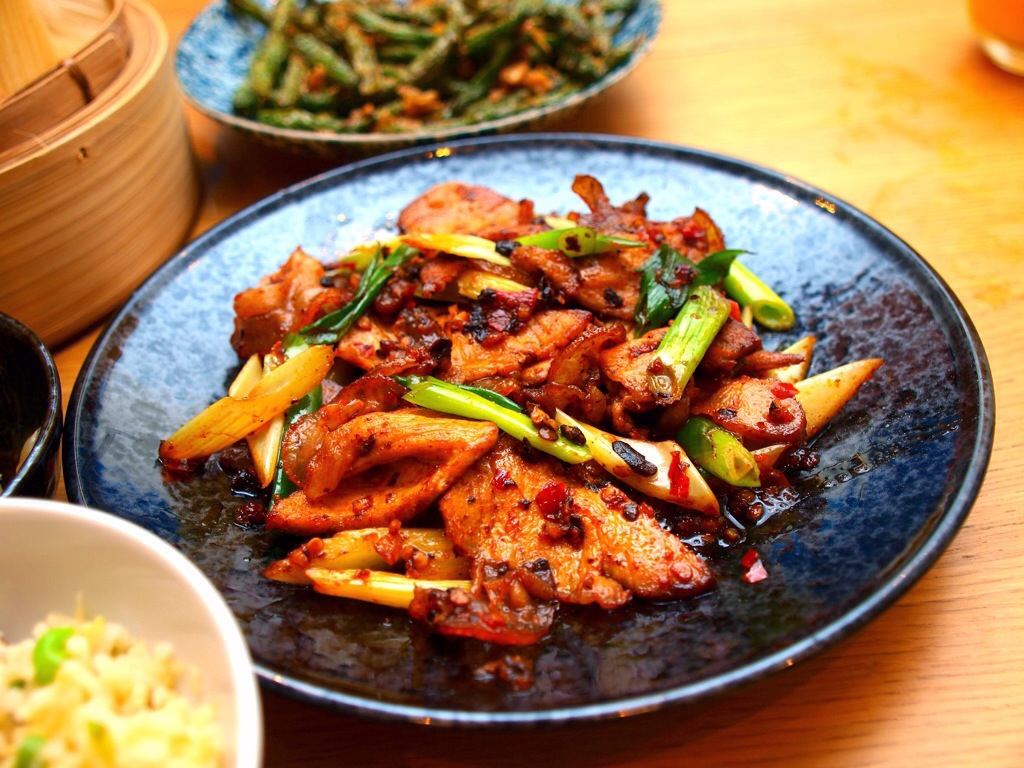
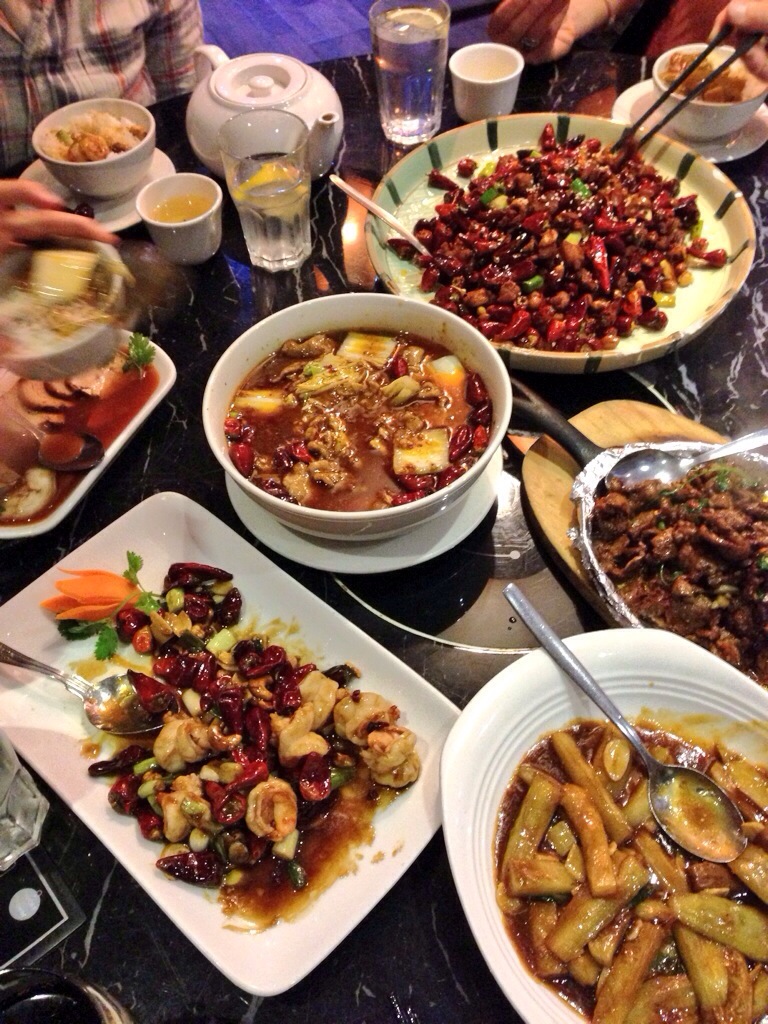
What's in a name? In particular Red n' Hot, what kind of establishment does it sound like? As you're reading a food blog you'll guess it's some kind of restaurant but in other circumstances you might say it's a soft-core porn collection from the days of VHS. Something a bit niche. In some ways it might as well be for all the mainstream attention it gets but it must be doing something right sitting in it's prime Hurst St location next to the the Hippodrome. It's actually a chain of Sichuan restaurants, the other branches in London and Manchester. With the recent demise of BBQ village it's become my go to for that spicy branch of Chinese cuisine. It's pure Sichuan too, no pandering to Cantonese, Shanghainese or Beijing tastes.
Neither seemingly does it pander to Western tastes, the dark frontage looks brooding and the dark beaded blinds prevents passersby from peeking in. If you do get through the door the first thing you see is a little office space, cus that's what it is, a Chinese travel agency. Look beyond this bit and you get the restaurant, all bare black surfaces. The tables have hotpot functionality but I've never had that there, always going for the plated dishes from the phonebook sized menu with its 100+ items. The old menu was a little more concise with photos of every dish listed but this one only illustrates the highlights. The dishes are listed in English but the components are in Chinese, so cryptic names like Husband and Wife Slices can be a little hard to decipher (cold sliced beef tripe and pork tongue). But be brave, order a lot and ask for it spicy because these are flavours you should fully commit to.
Rumour has it that the chef from BBQ Village relocated here and there is evidence in the Dry Fried Chicken with Chillies 辣子雞丁. The outrageous amount of chillies used in the dish is a hallmark. But then the Sliced Pork in Chilli 水煮肉片 is a little underpowered, it should be face-melting but wasn't. It's still delicious but when the waitress issues a warning when you order and it doesn't deliver on maximum numbing 麻 and hot 辣 then you have to be a little disappointed. Nonetheless the flavours of the Sizzling Cumin Lamb 孜然羊肉 and Gong Bao King Prawn 宫保虾球 are excellent and worth going for on their own. Indeed I think dishes taste a lot cleaner than they did at BBQ Village so maybe the chef has cleaned up his act, literally, as the restaurant displays it's 5/5 hygiene rating proudly. Some say it takes away something from the food, but in these more enlightened times maybe a little less MSG and sizzling oil is actually a good thing.
Red n' Hot
Tel: 0121 6666076
35 Hurst Street, Birmingham B5 4BJ
What could be nicer in weather like this? Tropical flavours, a bit of alcohol and freezey cold on your tongue.
I asked Hannah to pick out a recipe from David Lebovitz's peerless ice-cream and sorbet manual, The Perfect Scoop, and this is what she went for.
It couldn't be simpler: a nice large ripe pineapple, 250g sugar, a can of coconut milk (not cream), a decent slug of rum and a squeeze of lime juice. Peel and core the pineapple, cutting off any gnarly bits, chop into chunks and blend with the other ingredients until smooth. I added a sprinkle of salt too, thinking it might sharpen up the flavour a bit. Give it a taste and adjust the rum and line to taste. Finally, churn the mixture in an ice cream maker.
I noticed the Guardian recently posted a buyer's guide to ice-cream makers. If I may add my two pence, I would definitely recommend getting one with its own refrigeration unit - pricey, perhaps - but the ease of use means you will definitely use it more than with a bowl type. I had a Magimix Gelato but it broke almost immediately, and was a bit rubbish when it was working. Now I have a Cuisinart ICE50BCU, and this is a great buy. It has a decent powered freezer unit, doesn't require any alcohol to be added between the freezer and the bowl, and has been rock-solid reliability. The only issues are a slightly fiddly lid fitting, which has resulted in me snapping off a bit of plastic, and the noise. It is sufficiently noisy that I churn the ice cream in another room with the door closed. Can honestly say this is one of the best kitchen investments I've ever made.
I was thinking the other day that I don’t eat enough razor clams. They’re plentiful, cheap and delicious. So to address that I bought a kilo of them and scoffed them all on my own! Almost 30 of the buggers for £8, I was in razor clam heaven for an evening. They don’t take much to prepare either, the six dishes that I tried out only took a couple of hours from start to finish. Seafood is fast food.
The first two dishes require no cooking at all. There is an adage that you should do as little as possible to fresh seafood. All seafood loving cooks know this. So what’s simpler than just eating raw clams? But first you have to clean them, razor clams notoriously can be full of sand. Shuck one open and see how much grit you have in there. It will wriggle a little, you’ll see the main fleshy muscle ‘foot’ where most of the sweet meat is surrounded by the stringy abductor muscles that keep the clam shut. At the top is the siphon, at the centre there’s the digestive tract where half-digested food and most of the sand will be hiding. Check this part carefully with your fingers. If it feels soft then you’ve got a clean batch. If not then soak your clams in cold water for an hour, this will help degrit them. Luckily I bought a clean batch this time so I was ready to go!
Crudo
Shuck open half a dozen clams, take out the prime fleshy muscle ‘foot’ only, butterfly them open, scrape along them to make them curl up like ferns. Dress them with sea salt, lemon, caper, shallot, parsley and olive oil. Eat.
Sashimi
Moving away from the Mediterranean, I hear that the Japanese like to eat raw seafood too. Again using only the fleshy foot, slice it on the bias and return the pieces to the shell on top of finely shredded daikon. Dress with salmon roe, ponzu and very fine Thai basil (I couldn’t get hold of shiso).
Cantonese Steamed Clams
There are two classic variations we have in the Cantonese repertoire; Black Bean Sauce and Ginger Spring Onion. Prepare the clams first by opening them and loosening them from the shell. When cooked most of the clam is good eating, even the half-digested stuff in the sac.
Traditionally the black bean version is stir-fried because the razor clams you get in Asia are quite small. But with bigger clams I like to make an extra rich black bean sauce separately and dress the raw opened clams with this sauce, mild red chillies and steamed for two minutes. The sauce is made by frying garlic, ginger, spring onion and crushed fermented black beans together till aromatic. Add a splash of shaosing then stock, chicken preferably but instant dashi is a good for convenience, simmer for 5 minutes. Season with sugar and soy then thicken with starch. Strain the sauce before using it.
Even simpler is the ginger and spring onion variation. Dress the raw clams with this finely shredded stuff, add salt then steam for two minutes. Add a splash of soy to the clams before sizzling with smoking hot groundnut oil. Finish with some fresh curls of spring onion.
Grilled Clams with Fried Shallot and Sherry Vinegar
Nick was raving about this dish he had at the Quality Chop House in London. Sounded simple enough but I couldn’t quite get my head round the taste combination. So like foodie monkey sees he does… Deep fry the shallot first and season them with a little salt. In a searing hot pan or hotplate place your clams so they open downwards, add a little olive oil, a splash of lemon and clamp a lid on for one minute. Remove the clams right away, slice them and return to the shell, dress with the shallots and a drizzle of the best sherry vinegar you can afford. Any doubts I had about this dish were dismissed with the first bite, it’s a taste sensation. Try it now, I dare say this combination of crispy fried shallot and sherry vinegar would work with a lot of things.
Sautéed Clams with N’duja
I’ve been curing my own n’duja, as you do, that spreadable spicy Calabrian salami. Except I couldn’t find any Calabrian pepper powder so I used the reddest chilli powder I could think of, Korean Gojugaru. The addition of the fish sauce has seen it renamed Kim Doo Ya! But the essence of deep spicy funky pork fat is still there.
Shell your clams first and slice them into chunks. Start frying off the n’duja in a pan, it should melt into a crimson slurry of pork fat, cook it out a little then add garlic and then the clam meat. Cook for one minute, at the end season with lemon juice and smack it with parsley*. That’s it, serve them back in the shell or just as it is with some bread to mop up all those juices.
I think frying some breadcrumbs till crispy in the n’duja first would be a good variation, will try it next time but as it stands clams with n’duja is pretty good eating. Pork and clams eh?
Hopefully you can see that preparing and cooking Razor Clams is actually really simple. Try out these dishes and let me know which is your favourite. I know which are mine.
I love Asian grocers, I particularly love the cheapness. It makes me chuckle every time I see a tiny 25g sachet of coriander leaf in Waitrose for 89p. A two minute drive down the road and for the same price I can get two whole bunches of the stuff. More coriander than I know what to do with (might be an exaggeration). Garlic, ginger, chillies, spices, fresh fruit and veg. I can stuff a carrier bag full and never have to break a bank note. Anyone serious about cooking living in a big city knows their nearest Asian grocer. Springfield (Sparkhill) Parade on Stratford Rd is close to where I live, on it there are 5 big grocers all vying for business. It's a perfect competition scenario as studied in Economics class. Stock is turned over quickly and always fresh.
But A K Superstore is not there. It's on the Coventry Rd in Small Heath. The bit you never go down because that's why the Small Heath Bypass was built. That stretch of the Cov road is teeming with Asian and Middle-eastern businesses. AK Superstore is opposite the park and has the freshest fruit and veg of all the Asian grocers I've ever been in. Whenever I go there is always someone checking over the produce and discarding any that aren't pristine. Worth a detour if you're in the area especially during mango season.
A K Superstore
640-642 Coventry Rd, Birmingham B10 0UT
What do you think of when you think of Chinese food? Sweet and sour chicken, beef in oyster sauce, fried rice, sesame prawn toast or maybe dim sum? You won't find any of that in BBQ Village, or actually you will if they give you the English menu. But why would you go to this Sichuan-Beijing hybrid Chinese restaurant and order the usual westernised derivative Cantonese dishes. I've been a little reticent to put this on the Brumfoodmap because of the recent bad news about it's hygiene rating. But in a way it makes the restaurant authentic because by the standards of food safety in China, if it doesn't kill you then it's considered safe over there... and I haven't died yet. So in the interests of finding the tastiest food in Brum, BBQ Village is up there with the best.
If you're not familiar with this kind of Chinese food then you may be surprised by the flavour of some of the dishes. The name of the restaurant in Chinese 串串香 means tasty or fragrant skewers (see how the simplified character for skewer 串 looks like skewer of meat, it's a simple language really!) Order these to whet your appetite and prepare your tastebuds for the full on assault of spicy flavours about to follow. Skewered morsels of lamb, beef and chicken are encrusted with chilli and cumin, for the more adventurous try the chicken hearts and gizzards or the tripe skewers. Don't miss out on the bread skewers either, toast but not the usual prawn toast. Move on to a cold starter of mouth-watering Chicken 口水雞, the unmistakable tingle of Sichuan pepper dances on your tongue balancing the moreish hot, sweet and vinegary dressing. If you like that then try the fearsome Beef in Chilli Oil 水煮牛肉, my favourite dish, a cauldron of sliced beef that you should pick out of the chilli oil-slick. Do not spoon the oil over your rice! Dry fried chicken with chillies 辣子雞丁 ups the ante on the Sichuan Pepper vs Chilli stakes. By now the Sichuan pepper should have sufficiently numbed your tongue so that you are immune to the chilli heat, perfect then to appreciate the wonderful textures of the classic Mapo Tofu 麻婆豆腐. The silken cubes of bean-curd slipping down your now distended gullet. To balance your meal, the dry fried green beans 四季豆 and garlicky aubergines 燒茄子 are wonderful accompaniments and actually great standalone main dishes in their own right. If you like your food spicier then ask for it so because they will adjust it down to what they perceive as Western tastes.
BBQ Village do not only do prepared dishes but also hotpot where you cook your own food at your table. In fact you'll see a lot of the Chinese clientele hovering over steaming pots of stock poaching raw strips of meat. I've never ordered it myself because I believe hotpot is better done at home and besides I can't get past all those amazing skewers and Sichuan dishes.
BBQ Village
Tel: 0121 643 5723
55 Station St, Birmingham B5 4DY
Sometimes you just want a lamb kebab, simple as that. There's plenty out there on our streets, the kebab shop next door to the Chicken hut, they'll grill you a lamb seekh past the point of well done then some more. So what makes this Arabian grill restaurant different? The kebabs of course, lightly spiced and lacking the garish red colouring that most kebabs shops in Brum insist upon. You can actually taste the meat. What's more they grill on charcoal and they know how to cook so the meat is still juicy. A couple of lamb kofte, big portion of rice, salad and Lebanese flatbread £6.50, simple.
Abu Zayd
412 Coventry Road, Small Heath, Birmingham B10 0UF
I eat a lot of pork, maybe it’s because I’m Chinese – we were the first to domesticate pigs you know. The default word for meat in Chinese means pork. So collectively we’ve eaten a LOT of pork. It’s a wonderfully versatile meat, good thing really because you can’t milk a pig or spin soft wool from it’s bristly hair and don’t even try to plough a field with one. No, pigs are bred for eating and when the sun is out there’s no better way of cooking them than low and slow in a smoky barbeque pit. In particular pork shoulder for pulled pork. Let’s be clear about this, pulled pork means smoked barbequed pulled pork. In fact we say that pulled pork that isn’t barbequed should be banned or at least renamed slow-roast pork. Putting a barbeque sauce on mushy overcooked slow-roast roast pork doesn’t make it pulled pork either. You culprits know who you are!
So where do you start with pulled pork? Well with a pork shoulder of course. Now this is where things can get confused and where this guide can help you. Most BBQ blogs about pulled pork will be American and will talk a lot about Boston butts or picnic hams, cryovacing at Trader Joes or the Duroc crosses at Niman Ranch. None of which mean anything to your average UK butcher. They understand what shoulder, neck, hock and hand are. Most BBQ blogs start with a perfectly trimmed Boston butt but this blog will show you how to get to that stage.
In the photo below is a whole shoulder, it’s basically the front part of the pig called the front primal. Most butchers cut this using the first three spare ribs as a guide. This primal has been taken from the right side of the pig and the head, were it still attached, would be on the left of the photo. At the bottom of the primal you can see that the trotter and hock have been removed, equivalent to removing your arm up to the elbow (yes get over it). The other side has been skinned and a thin layer of fat left on:
You could BBQ this whole of course but much better to take the neck bone off along with the ribs so the spice rub and smoke will penetrate the flesh. Follow the bone around with a thin boning knife and the whole lot should come away easily in one piece. In this next photo you’ll see that I’ve done this and I’ve also separated the top section to show you what British butchers call the neck. If you are BBQing you should not separate it like this, keep it whole, this is for demonstration only:
Butchers like to sell you neck, it’s a common cut. When cured like bacon it’s called collar bacon. Cantonese cooks like it because we make Char Siu from it. It’s a perfectly acceptable cut for pulled pork but it’s a bit small and the loin end tends to dry out a little. What’s the loin end? Follow the neck back down the spine and the next section you’ll get to is the loin where you get the standard pork chop. So this end of the neck will tend to dryness because there’s less inter muscular fat and no connective tissue and it’s this stuff that makes pork shoulder so juicy and well suited to low and slow cooking. When a British butcher has separated the neck out the rest is usually called the shoulder, it’s often boned and rolled and sold as a roasting joint. This is fine for pulled pork too. Just get them to skin it for you first.
Below is a close-up of the neck, where I’m pinching is what competition BBQers call the money muscle. We like to separate this slightly and serve it sliced. This muscle stays really juicy and properly cooked melts in the mouth. A good way to demonstrate to BBQ judges that you know what you’re doing:
Ok now this first shoulder I’ve been demonstrating on is not ideal for BBQ because I’ve separated the neck too much. Good thing it’s being used for carnitas! So here’s another shoulder, this is what’s known as the Boston butt in the US. This is the basically the upper half of the shoulder primal and twice as big as the neck. To get to this piece I’ve sawn straight across the front primal in half through the base of the shoulder blade. The top of the shoulder blade should still be buried in the Boston butt. You can bone it out but I like to leave it in because when it comes away clean after smoking you know your pork is perfectly cooked. The top of the pig is on the right of this photo, you can see that I’ve separated the money muscle out competition style but you don’t need to do this at home.
The Boston butt or upper shoulder is the ideal cut for pulled pork as it’s big enough to stand up to a long slow smoke. The ratio of bark to juicy meat will be perfect. So now you know what you need, go forth and ask for it with confidence at your nearest quality butcher!
Next time you roast a joint of belly pork I would definitely recommend brining it in advance. Brining improves the texture of the meat, keeping it moister, and also seems to help with crackling formation. If you get the brine right you don't have to worry about seasoning the outside. And you can also add some complementary flavourings which will penetrate within the meat- I chose juniper, bay leaf and garlic, mainly because they were to hand but you can express yourself. I cooked a small belly joint around 1.5kg for around 2.5 hours at 130 degrees C and then cranked up the temperature to around 210 degrees C for 20 minutes to finish the crackling.
My continuing campaign is that all brine recipes are expressed in terms of percentage strength, and include the weight of the thing to be brined. So, if you are aiming for an end-result of 5% salt, and you have a 2kg (2000g) piece of pork and cover it in 3 litres (3000g) of water, then you would calculate (2000g+3000g) * (5/100) = 250g of salt.
Again I am struck by the variability in recipes out there. The venerable Fergus Henderson, suggests in his brine recipe 600g of salt to 4 litres of water and does not specify the weight of pork belly. Assuming a 2kg piece, then this would be a 10% brine. He would have you brine for 3 days. I suspect this will result in something unpalatably salty for most people. This recipe from Anna Hansen uses less salt, but unhelpfully does not state how much water to include just to use enough brine "to cover", which doesn't take into account the variability in your pot. As an aside, if whatever I am brining can fit into a Ziploc bag, this is my preferred method. Just be sure to double-bag it in case of any leaks. I can't even work out the brine strength for this New York Times recipe as they use the insane Imperial system (actually the US customary units system, come on Americans get with the programme - yes, that's two m's and a e).
So in conclusion, when brining, consider how salty you would like the result to be, I would suggest a palatable range is between 3 and 5%. I find it neat that sea water is around 3%, a nod to our amphibious past? You can find out what you like through experimentation. However, bear in mind that curing is not particularly efficient and you should consider at least two additional factors: time in the cure, and thickness of the meat. I suspect that explains why some recipes call for such high salt concentrations. There is considerable variability in terms of length of time required to cure and this mainly depends on the thickness of your pork belly. A thin piece should be done in 24 hours, but thicker pieces will require longer.
I am working on a Unified Field Theory of Brining, but still need to figure out some of the formulas involved. Call me Brinestein.
So, a few questions for advanced blog readers:
What is the formula governing brine uptake into meat at a certain temperature by thickness? I.e. can we predict the salt concentration at 1cm, 2cm, etc. after N days at fridge temperature if we know the starting salinity of our brine?
Why does brining improve crackling? One could argue that it is due to dehydration from the salt, but this would not make sense as it makes meat moister due to uptake of brine into the lysed cells. Is it due to a physical effect of breaking down the skin structure, e.g. forming cracks, perhaps similar to the technique of pouring boiling water over the skin?
A Cantonese foodie can only live for so long without blogging about Dim Sum. Since my last post about Chung Ying Garden I've done some extensive research on your behalf.
Wing Wah next to the Chinese hypermarket Wing Yip in Nechells has probably the best Cheung Fun 腸粉 in the whole city and generally the standard of the Dim Sum there is very good indeed. However I don't know if I've been unlucky because everytime I've been I've had the noisiest migraine inducing experience. It's just too popular with the buffet crowd who descend en masse at most lunchtimes. All-you-can-eat-Chinese-food seems to pull in some big noisy families which makes the vibe somewhere between that of a theme park and feeding time at the zoo. A shame for those eating from the Dim Sum menu and looking for a more relaxed meal. But try it out yourself, there's plenty of free parking at least!
No I think I've found the best overall Dim Sum experience a lot closer to Chung Ying Garden, at the original Chung Ying. The ex-chef of my old favourite the Golden Pond has moved there and it shows. Every dish I've tried has been excellent. Har Gau 蝦餃 (pictured) is the litmus test for me. Like good nigiri sushi it looks simple but it's in these apparently simple things that you can really judge the skill and discipline of the kitchen. These I can't fault. Though I still think the steamed chicken feet in black bean sauce 豉汁鳳爪 not as good as they were at GP! Never completely happy am I?
I had high hopes that China Court would surprise me after so many years. But recently eating over 50 items there in one sitting with 12 other Chinese diners, I realised those hopes were completely unfounded. None of us thought it was any good. There was one dish I actually thought was decent, but the rest was poor to middling. The taro puffs 芋頭角 were actively offensive, appearing to have been reheated several times over a considerable length of time. One to avoid!
Shanghai Blues (ex Golden Pond) is decidedly average and for some reason don't do crispy fried squid 魷魚鬚 which is a must amongst my circle of friends. Though some of the Sichuan options can make it a little more diverse, the basic quality of the Dim Sum isn't really up to level of the Chung Yings.
The Dovehouse parade of shops, where Dovehouse Lane meets the Warwick Rd in Solihull, may be the most complete parade of independent businesses in the whole city. From babywear, drycleaners, chemist, rugs, chip-shop, Chinese takeaway and Indian restaurant to hairdressers, off-license, boutiques and funeral directors, all of life’s necessities are covered. There’s even a bakery, Sonya's Bakehouse, but to be honest I don’t much like the bread there. For an independent bakery they don’t half make their bread taste bland and slightly mass-produced. They’re going strong though so their customers must be happy. Maybe bland, safe bread suits the Solihull palate!
The real wonder of this packed parade is that there is an actual fishmonger in amongst it. Yes a fishmonger, you remember those, they’re like a butcher but they sell fish. Vickerstaff fishmonger is tucked into the back of Cornucopia which is an amalgamation of three businesses. The front of the shop is split between a greengrocer/florist (the Cornucopia bit) and Dovehouse Butchers (nice hogroast at the weekends). Vickerstaff never seems to have much fish on display, maybe a few pairs of kipper or some salmon steaks. But it’s one of those places where with some notice they can get you anything you want. So make friends with them because they may be the last fishmonger outside of the Indoor Market (and supermarkets of course). At the time of writing I believe it’s the only one out there, and you thought high street butchers were becoming a rarity.
Someone who’s culinary opinion I respected very much recently declared Miss Korea the best restaurant in Birmingham. Well I don’t know about that, it could well be the best Korean in town, but with a choice of two real Korean restaurants the competition isn’t exactly stiff!
Korean bbq has been around for a few years as an option in a few of the new wave of Chinese restaurants such as BBQ village. But it was only a year ago that Brum got its first wholly Korean restaurant in the form of Miss Korea. Located a couple of doors down from Min Min Noodle Bar, the sleek blackness of the interior and the cooking equipment embedded in the tables leaves you in no doubt that this place means business, Asian business. The charcoal burners can be quite intimidating for newbies. Hell they’re still a little intimidating to me. I’m still never sure which way to flick the switch or turn the flange as the signs are all in Korean. But before you get to all that grilled stuff there is the wonderful array of Banchan, Korean appetisers, to explore. Kimchi, which is slowly taking over the world, comes in cabbage and cucumber forms here and are essential to start off your meal. Also the water spinach, but not so much the seaweed as it’s a bit tough and oddly flavoured and I’m usually all over seaweed like seaweed is all over beaches.
To kick off the meal proper the kimchi fried rice with pork is a winner, a slightly greasy mound of fried shortgrain rice studded with pork accompanied by a seriously snotty fried egg that mixed together makes a wonderfully moreish dish. Or try the various Bibimbap, the most famous Korean rice dish, a hearty melange of fresh ingredients atop plain rice served in a searing hot stone bowl. Asian comfort food at its best, both particularly good when slightly drunk. As is cooking your own meat on the blazing hot charcoal heated hotplate. Thinly sliced marinated beef ribs (galbi) or beef and pork strips (bulgogi) are probably the best options. Quickly seared then wrapped in lettuce with a little ssamjang (sweet Korean chilli sauce) it hits plenty of gastronomic pleasure spots. However, the unmarinated beef ribeye steak would be heavenly if it looked like the nicely marbled piece shown on their menu but the real life offering is clearly sub par and not fit to be grilled in such a way.
Some people are put off by the idea of cooking your own food at a restaurant but I think the whole experience is really rather good fun. Just remember this when your waitress is changing your hotplate regularly because you’re choking the restaurant out with your grilling ineptitude. Don’t worry because you’re in good company, I have at least three changes every meal. It makes them very grumpy indeed. The service can be a little cold which may be a management issue because they also reject requests for tap water. An attitude they should seriously reconsider and the reason why Miss Korea cannot be called the best restaurant in Brum.
Miss Korea
Bromsgrove St, Digbeth, Birmingham B5 6AB
There is the most transcendent joy in eating a beautifully cooked steak at home. Simply cooked, with a crusty charred outside and juicy pink inside. The added satisfaction that it's cost one quarter what you'd pay in a high-end steakhouse. All you need is good beef to begin with and the rest is obvious isn't it? Well no, at least I don't think so because if it was then everyone would be eating top quality steak at home regularly and I don't think they are. Not nearly as regularly as they should be. So here's a guide to cooking and eating the best steak possible at home.
The Beef
When I talk about steak I mean a fat steak at least 4cm thick. A forerib on the bone (the French would call a Cote de Boeuf), a wing rib, sirloin on the bone or a T-bone steak. The T-bone (or Porterhouse) steak is the one made famous by New York steakhouses such as Peter Luger where a steak for 2 can cost up to $100. It’s supposedly the best steak in NY and by extension the world, or at least that’s what NYers would like you to think. Peter Luger has first choice of the USDA Prime beef that comes into the city so eating there is truly a pinnacle of steak eating experiences. The steak there is wonderful; soft, juicy and buttery unlike anything us Brits can produce. But there is a deep dogma in the USDA grading system that means beef is graded purely by the amount of fat marbling apparent in the meat (like in Japan). This has led to decades of breeding animals that react better to the hormones fed to fatten them and to the copious amounts of grain used to finish the cattle in the weeks prior to slaughter. This consistently gives fatty marbled meat that is so visually appealing and tender but has ultimately led to the most important aspect being overlooked, beefy flavour.
In the UK we're unbeholden to grading systems and rely on our senses to judge whether a cut of beef is top quality. I have my favourite cuts of meats; forerib and T-bone. What I look for is properly dry-aged meat at least 4 weeks. The dry-ageing not only improves the flavour of the meat but tenderises too. To my mind it makes all the difference. Good marbling is nice but not as important as breeding and feeding. What do I mean by that? Well take a look at the 6 week dry-aged grass-fed forerib of Dexter beef in these photos. It just screams BEEFY! You will never find this in a supermarket or ordinary high street butcher, that is why specialists like Berkswell Traditional Farmstead Meats and Aubrey Allen are so important.
The Cooking
Everyone knows how to cook steak, right? Put it on bbq and let the flames lick it till it's done. Or stick it in a screaming hot pan to sear the outside and leave the inside pink. Well you could do that with a thin steak but with a really thick one you might get dodgy results. The outside might be too burnt before the inside is perfectly medium rare or you overcompensate and cook it too slowly and get a grey overdone steak. My favourite way of cooking a steak indoors is the Ducasse method. Which has never failed to produce a great crusty steak with the perfect pink centre. I even prefer it to chargrilling which sounds crazy because surely there's nothing better than the chargrilled taste of beef fat atomising onto hot coals then permeating back into the meat? Let me explain the method to you then, named after legendary French chef Alain Ducasse:
- Cook your steak on low to medium heat in clarified butter on one side for ten minutes.
- Flip and cook it on the other side for another ten minutes. All while basting with the clarified butter.
- Let it rest for another 10 minutes before carving into thick slices. Dress the meat with the beefy butter left in the pan. That's it!
It feels counter-intuitive cooking a steak for so long but provided it's thick enough you will get the most awesome buttery crust that's packed with umami-rich Maillard compounds. Let's not forget where most butter comes from, no wonder it has such a wonderful affinity with beef. If you were so inclined you could even add a sprig of rosemary and a couple whole cloves of garlic to the pan. Once you tasted this simple way of cooking steak you will always go back to it. A point to note, if there a fat cap on your steak then gently render that first for 5 minutes. If you like your steak rarer then cook it straight from the fridge. If you like it more well-done then I can't help you at all...
Honestly, I think this method produces a better tasting steak than in any steakhouse restaurant. The high-end places use Josper or Inka grills and make a selling point of these special chargrills. But really I just want someone to stand over a pan basting my steak for 20 minutes! There's not a steak restaurant in the world that will do that so that's why I like to cook steak at home. The result is clear:
Seasoning
When do you season a steak, just before hitting the pan? Ten minutes before? How about ten hours before? I favour the last, the first is acceptable but never ten minutes before. The following three photos shows why:
The first shows the steak freshly sprinkled with salt, when this hits the pan a nice salty crust will form but the meat inside is not really seasoned.
The steak after ten minutes, the salt has drawn out the water from the meat and it's pooled onto the surface. When this meets the pan the meat will tend to stew preventing the formation of the nice flavoursome crust. The meat is not seasoned and it's lost a lot of moisture, bad news all round.
After a few hours the salty water has been drawn back into the meat seasoning it from within. The surface is dry so there's nothing to stop a great crust from forming.
So it's clear, it's best to season on both sides a few hours beforehand. Or if you're in a rush season on one side just before frying that side and season again just before flipping. Never ever do anything in between.
Sesame Miso Sauce
Ketchup, bernaise, pepper, chimichurri? There are a lot of options when it comes to saucing. But here's a recipe for a Japanese style steak sauce that might make you forget all those others. I retro-engineered it from one I had in a steak restaurant in Fukuoka. It should be mixed with freshly ground toasted sesame before dipping your meat into it. In the restaurant we each had a small bowl with grooves etched into it called a suribachi. The sesame seeds are ground in this before the sauce is added. The combination of the sweet deeply savoury and deep nuttiness of the sesame is simply sublime (it's also great with pork):
200ml ichiban dashi made from katsuobushi and kombu
100g brown miso
120g mirin
75g sugar
50g rice wine vinegar
Simmer the above for 15 minutes then add a teaspoon of finely grated ginger and simmer for another 5 minutes. Take off the heat and stir in one tablespoon of yuzu juice (or a mixture of lime and Seville orange). The sauce will keep for a while in the fridge.
Filthy, dirty, dripping - usually adjectives with negative associations to food. That is unless you're cresting the current Streetfood trend. I won't bore you with the Streetfood gospel, no doubt you've heard all about it, this apparently new way of dining is sweeping the nation. Or at least London. But wait. Birmingham is now on the Streetfood charabanc with the Digbeth Dining Club's rota of mobile caterers. Late last year among the atmospheric inner-city train arches of Digbeth at the back of the Spotlight bar, there were intrepid Streetfood vendors doing their thing every Friday evening. Burgers, pizzas, stews, wraps, toasties, baps, buns, cakes, burritos, tacos, hotdogs, that is the canon of Streetfood. Some of the offerings are more successful and tasty than others, and some done with more dedication and care than others. Quite frankly there are some vendors who I think are having laugh. If the new Streetfood is about tasty inventive gourmet handmade food at reasonable prices then they fail on every account. But there is one vendor that always delivers on those promises. The prince of Digbeth Dining Club - The Meatshack.
The Meatshack's burgers are the best in a 100 mile radius. Paul Collis has really studied what makes a good burger. His style of smashed mustard fried patty and semi-steamed bun really makes for a juicy, filthy, dirty but also outrageously tasty burger. The patty is a secret mix of aged local Hereford beef (ask for it pink) and the buns are the finest soft brioche. But he doesn't stop there, there are wonderful specials that change constantly. His candied bacon variations are awesome but personally I think the black pudding variation his best yet, or maybe it was the special special suckling pig burger (pictured). Now if only I can get fries with that...
The Digbeth Dining Club had a winter break and will be back on the 1st March 2013. I will be there, as always, at the front of The Meatshack's queue.
Digbeth Dining Club
Spot*light, Unit 2 (opp. Air Nightclub), Lower Trinity Street, Digbeth, B9 4AG
It was the Becketts Farm Breakfast I ate the other morning that had me thinking about farm shops. It reminded me that I haven't been to Hillers for ages, maybe it's not quite asparagus season yet because when it is you'll find both Nick and me on the trail of those sweet green spears. That's why we come here, during the asparagus season the counters are overflowing with the stuff freshly picked within the locality. As everyone knows the finest asparagus comes from Evesham.
But it's not only asparagus, it is really one of the best farm shops in the region. You'll find Ragley Estate Meats in there, a butchers that rears it's own meat on adjacent Ragley Estate. You want provenance? You got it. Great seasonal veg as well the usual farm shop deli fare. What's more there's also a fishmonger.
It takes about 30 minutes to drive there from the south of Brum, why not stop by The Chef's Dozen on the way?
Ahhh Franky Dosa, sounds like a Bollywood film star but is in fact the star of the menu at Lasan Eatery. I hesitate to call this place a curry house as you would automatically think it another Balti type establishment. This is definitely not that, it's modern and light with a pared back menu from across India. Eatery is the right name for it with casual banquette seating and small open kitchen as you walk in. What curry house can you see your order being skilfully cooked?
Or for that matter in what curry house can you also order a dosa? A South Indian stuffed crêpe made from lightly fermented batter of ground rice and lentils. Served with sambar (a thin flavourful veg curry) and chutney, being southern they're usually veggie and at Lasan Eatery there's the standard dosa stuffed with spicy aloo. But there's also chicken-stuffed and of course the very special mr Franky Dosa stuffed with mutton. They make their dosa crispy here just how I like it. They're quite large for a starter so I tend to have a few sides of tadka dhal, aloo gobi or matter paneer to make up a whole meal. But then I would missing out on the excellent main curries. A classic Bhuna Gosht tickles the tastebuds every time I order it, sadly my favourite Rajastani Laal Maas didn't make the recent menu reshuffle. Maybe I should start a petition to bring it back?
"Is there anything decent to eat in the Bull Ring?"
Was I right people of Birmingham? Were these questions vexing you to your very core?
Thought so. Here's the answer. Rossopomodoro, situated in Birmingham Selfridges food hall. That's the food hall that doesn't really sell any food, but can offer you the delights of Krispy Kreme, Pret a Manger and Mr. Ed's Diner. Yes, that's our Selfridges food hall people of London, don't judge us.
Now I wouldn't pretend Rossopomodoro is perfection. But their pizza is, I think depending on who is shaping the dough and manning the fire, anything from pretty good to excellent. Not a fan of too many toppings on my pizza, I'd go for the Verace - which pimps the mozzarella and adds a slick of decent quality olive oil. Their tomato sauce is pleasingly simple, I think it's just decent quality, well-seasoned, canned Italian plum tomatoes (which you can buy to take home if you want, better than most supermarket brands). I think they also import their flour, which is a bit mad but they end up with a decent tasting crust so whatever works for them.
However, don't expect anything great from the starters which I always skip after a singular disaster with some arancini. Pasta is no better than found at regular Italian chain restaurants (i.e. woeful) and I've never stuck around to find out if their desserts are any good.
But that doesn't take anything away from the pizza! If you are shopping in the Bullring and fancy a sustaining pizza, and who doesn't from time to time, then here's your answer. It's surprisingly unbusy as well. In fact, I wonder how well it is doing, so pop along and support it so I can still eat there in future!
Rossopomodoro, Selfridges Food Hall. They also do takeaway. Pizzas around a tenner.
Oh woe is me! My go to place for Yum Cha or to eat Cantonese dim sum Golden Pond closed late last year. I shed a tear, it had been our family favourite for decades. The Golden Pond has turned into Shanghai Blues, a Cantonese Sichuanese hybrid. But the jury is still out on the quality of the dim sum. It certainly isn't as good as it was before the change. Some of the items at GP, in particular the steamed chicken feet in black bean sauce 豉汁鳳爪 and deep fried squid 炸魷魚鬚, were better than I've eaten in good Hong Kong dim sum places. It was cheap too, no matter how much we ate it was impossible to spend more than tenner!
So from the pool of also-rans in the Birmingham dim sum stakes who will now come out on top? At the moment the front runner is Chung Ying Garden the sister restaurant to the more prominent Chung Ying. It edges out Ken Lo next to the Hippodrome. But more careful sampling of the rest of the competition is required before a winner is declared; a revisit to the once atrocious but now apparently excellent China Court may prove decisive.
Chung Ying Garden have special prawn dumplings in the shape of rabbits! Which makes me think that to address the balance they should make rabbit dumplings in the shape of prawns.
I'm not really a breakfast person. All that early morning mastication is hard work if you ask me. Especially if confronted with the full English. On the rare occasion I have one for brekkie, usually getting my money’s worth in a B&B, I’m guaranteed to be in a drowsy stupor by midday. That’s not to say I don’t like them, I love them! I mean what’s not to like? But more usually I’ll cook myself a full English as the main meal of the day. That way I can be sure that everything I like is on the plate.
When I feel the need to have one cooked for me there's only one place guaranteed to get it right, Becketts Farm Shop & Restaurant. Which handily is next to where I work. This place has been here for years and I'm sure it used to be a farm but any pretense that it sells local farm produce disappeared long ago. But blimey their breakfast is legendary. Every component is good quality. My favourite is actually the Irish breakfast with Clonakilty black and white pudding, soda farl and fried potato. Other options are available. Check them out next time you're heading in or out of Brum on that road.
Becketts Breakfasts are served Monday to Saturday 7.30am-5pm and Sunday 8.30am-11.30am
"Is there anywhere to eat between Walsall and Birmingham?", a Twitter-er (tweeter?) asked t'other day. "Why yes, the Black Country Museum for fish and chips!" I responded, instantly. "Seriously?" came the response.
Yes! Seriously. I've been banging on about the fish and chips at the Black Country Museum for at least five years now, and still people think I'm joking. I'm not! To my mind they easily do the best fish and chips in the West Midlands, whilst laying a strong claim to the best fish and chips in the UK (and by extension the known Universe).
As with all great food experiences, it transcends what on the plate, or in this case in the cone. Ideally you will visit BCLM on a bright, sunny day which is slightly too cold to be completely comfortable. The bitter cold will sharpen the appetite and prime the stomach for its incoming raft of vinegar-soaked fats and carbs. The museum - which is indisputedly the best of the living museums - will have already given you a taste of the appalling conditions of the working class as they mined, chain-made and forged their way through a tough, tough life. The thoughts of such privation will serve to make your first bite of the dripping-fried, perfectly crisp, never greasy batter feel even more luxurious. The flakes of cod (always cod) are soft, thick and not overcooked. The chips have a good heft of dripping about them. Absolute perfection.
A few practical points: The museum isn't particularly cheap to get into at around £12, although worth every penny. This is offset by the fact that you can use your receipt for free entry for the forthcoming year. Think of it as membership to an exclusive fish and chip club. The queues for Hobbs & Son, which was a real fish and chip shop before being moved to the museum from Hall Street, Dudley - brick-by-brick and painstakingly rebuilt and refurbished will probably be long at a weekend and busy periods, although I've never had to wait more than 30 minutes. Bear in mind in busy periods they sometimes run both fish and chip shops and sometimes one shop will be serving fish and chips for non-meat eaters, do not on any circumstances get tricked into eating these!!
I'll leave it to your conscience to decide if you should get a pickled egg.
Two! Count them, two Brazilian restaurants before we get an Argentinian one. But what a one. When I'd heard that the team behind Brum's most famous Indian restaurant Lasan were to open this place, I was a little incredulous. It would be like Alan Yau opening a Mexican eatery. I needn't have worried though because they've delivered (as I'm sure Yau would have too)!
Taking over an old guest house on the Hagley Rd, Fiesta Del Asado oozes warmth and class. The parilla or Argentine grill is at the forefront of the open kitchen. The grill master turning out perfectly grilled cuts of beef as well as lamb and chicken over charcoal and wood. The starters are exemplary; Iberico jamon de bellota served on warmed plates so that the complex flavour is magnified. Morcilla is rich and deeply seasoned, empanadas moreish, whitebait often disappointing elsewhere are as you hope they'll always be, crispy and fresh. Piglet belly main is tender and juicy but the skin should be crispier and the chimichurri could do with more punch but these are minor gripes. Especially as the postres are so wonderful. The Santiago tart on my last visit was wolfed down so quickly that I must have inhaled it.
Fiesta Del Asado is quite pricey but this is superior cooking without unnecessary high-end flourishes. It's food you want to eat, just how it should be.
Right I know you think I've lost it. Charcoal flipping Chicken?! Yes get the timing right and you've basically got the best fast food imaginable. Seriously! Who doesn't like chargrilled chicken, it's like a universal language. From Japan to Mexico a nicely grilled bit of chicken equals a good meal.
Charcoal Chicken have their own patented charcoal rotisserie (no photos allowed) in which several whole flattened chicken smothered in tandoori spices rotate slowly till they're slightly overdone. Now there's the rub, they're not cooked to order, which means you could get one that's been drying out even more in the holding cabinet. But if you can get one fresh off the grill then it's truly delicious. I mean who else is actually chargrilling fresh chicken? Answer: no one, they're all using gas.
Whole chicken, naan, fries & salad. Enough for two people £7.99. Stick that Nandos. They like to bill themselves as healthy do Charcoal Chicken, if you took away the fries then er maybe. Other things on the menu include chicken wings and jerk chicken wraps. But I only go for the charcoal chicken, the clue is in the name.
Hall Green Branch (the only I can vouch for): 1158 Stratford Rd, Birmingham B28 8AF
Alum Rock: 710 Alum Rock Road, Birmingham B8 3PP
Kings Heath: Deceased
Carters of Moseley is your perfect neighbourhood restaurant, particularly if you live in Moseley. After a particularly bruising week at work, this is where I want head to. The food is reassuringly comforting, featuring favourite ingredients like quail, pigeon, ox cheek or a decent tranche of fish, and cooked with rock-solid technique. It's not just classic bistro though, there are enough little touches of flair; maybe some modernist technique here, or a scattering of foraged ingredients there, enough to show that chef Brad Carter has got real talent and style. But he never ruins things by showing off. It's delivering a 21st-century hug on a plate, not an ego-driven descent into brick-licking moss in a flower pot madness. There are no shouty swearies going on back in the kitchen I suspect. Holly runs her front of house with real warmth and they are both real foodies, spending the small amount of free time they have checking out openings in London for inspiration. They have a beer menu with proper beers. They have decent wines by the glass. You can buy a good bottle for between £20-30.
They will also likely have a Michelin star before long, but I'm selfishly hoping it won't be for a while, lest it ruin this little gem.
It's not cheap, go for the set lunch menu if you are on a budget. Saturday lunch would be a good idea, straight after Moseley Farmers market. They also do afternoon tea. Bookings are advised, and definitely required for busy periods like Friday evenings and weekends. They also don't cater for children, which has meant we haven't gone for a while, but just as soon as I can convince Hannah to let us get a baby-sitter, this is the first place I'll head ...
Min Min Noodle Bar opposite the Arcadian car park entrance offers something a little different to the rest of Chinatown. And not just in terms of decor which can only be described as funky fresh lime green. The menu noodles its way around Asia. From classic Chinese stir-fried noodles to Japanese soup noodles. Their flavours are always clean, they eschew the heavy sauces and chemical enhancements that is so common with this kind of food. It's part of their philosophy.
My favourite noodle dish is a Hong Kong classic, beef brisket hor fun (pictured). The appetisers are fun and varied. Vietnamese cheung fun and special skewers are particularly good. They've got an evening menu too, dishes more for sharing like soft shell crab, Thai style fried fish and pigs trotters. Some dishes are more successful than others but there's always something interesting on the menu. I can't wait till they actually get that ramen machine though. That broth and pork deserve better noodles!
Vietnamese cuisine, simple, fresh, vibrant and delicious but overlooked in our city. It's to our detriment, I can think of few foods more comforting than a bowl of Pho. We had our first proper Vietnamese restaurant open a couple of years ago opposite the magistrates courts, Viet An, but I think that's gone now. Then there's Viet Moon on the other edge the Jewellery Quarter, so including Nom Nom that makes two but that's all. And no if you think Cafe Soya is Vietnamese then you need to get out more.
Nom Nom Noodles opened with little fanfare late 2012. Situated on the ring road next to the massive Tesco in Spring Hill it's an unlikely location. The interior is basic, functional and clean. But the food is wonderful. Deeply rich yet clean tasting bowls of Pho Bo and tender morsels of grilled pork with vermicelli are the highlight of the small menu. Wash it down with some strong Vietnamese drip coffee sweetened with evaporated milk or try one of fluorescent dessert jellies.
Due to their location they're finding business tough and have recently decided to close on Sundays. Please support them and help reverse the trend. Soon there may be nowhere you can get this lovely cuisine in our city.
Wah gwan bredren?! Everyone loves Caribbean food right? Curry goat, jerk chicken, rice and peas, saltfish and ackee, fried fish, festivals, curry patties. The canon of West Indian food is like comfort food for spice lovers. But I had big issues with curry patties though, for some reason the bright yellow patties from the likes of Island Delight never cut it with me. They were well rarted! The pastry is crumbly and dry and the filling is like some kinda slop, give me a Ginsters any day.
Fenky Janes Caribbean Patties are a local treasure. Find them in discerning West Indian outlets or better still get them from the small factory unit in Hockley. Buy them by the dozen because they freeze really well and you can bake them from frozen. The flaky pastry is perfection and all the fillings are great but my fave is the Ackee & Saltfish. Quite simply you have not eaten a curry pattie until you have tried one of these. They are proppa!
(Some people say that Russells in Lozells make the best patties but not to start a turf war or anything, them people are damnfool)
Fenky Janes
Unit 6, Park Trading Estate, Birmingham B18 5HB
0121 507 0660
Look into the window of this Harborne High Street pensioners favourite, and the display of bright red beef untroubled by marbling, pre-marinated meat and the frankly terrifying/hilarious lamb "long-boat" might make you wonder why I have sent you here ....
Don't be scared dear reader, such off-putting wares are to protect the shop from any influx of foodies/food bloggers/hipsters/Southern shandy drinkers from getting to the prize on offer: the legendary Walter Smith Pork Pie.
It's like the bit at the end of Indiana Jones and the Holy Grail.
If you have braved the display and have come inside, elbow past the trolley-wielders waiting to blow their still warm post office cheque on half a pound of stewing steak and a couple of kidneys and fight your way to the cooked meat counter.
Try not to worry too much about corned beef and haslet. Instead, in your best Brummie - ask for a large pork pie. Those are the ones adorned with a 'Great Taste Award' sticker, and for once the judges are bloody spot-on.
Before eating, take a good look at your treasure. Marvel at its reassuring dark, burnished exterior of perfectly baked short-crust pastry. Cut into quarters, or simply sink your teeth in. Note how the filling is made of just the right proportions of pork meat and fat. Enjoy the hit of black pepper and spice at the back of your throat. Delight in the correctly judged jelly component which hardly ever reminds of dog food.
So then, truly a king of pork pies, and certainly better than any I have tried in the East Midlands (Yes, I am trying to start a second civil war in the Midlands, bring it on Melton Mowbray!).
Whilst you are there, you may wish to note the availability of plentiful ham hocks, usually at giveaway prices. Their pork sausages are also way above average, and if you are in the mood to BBQ they can usually rustle you up a few racks of pork ribs or a whole pork shoulder on the bone.
Just don't get between the elderly and their tea.
There are other branches of Walter Smith across the midlands, check their website for details.
Birmingham, Birmingham, Birmingham. Balti, UB40, Ozzy Osborne, a thousand trades, curry, concrete, balti, canals, carbuncles, balti, spaghetti junction, second city, did I mention balti? We're blessed with a thousand curry houses here in Brum and the invention or at least the innovation of our own form of curry. We're not short on choices and every Brummie is an expert on "Indian" food, start a conversation with us on it and we'll talk your back leg off. But sometimes familiarity breeds contempt, maybe we have too many, maybe our dining choices have narrowed in our splendid City because we love curry TOO much. No matter where you are you can find at least ten curry houses within a 5 minute drive. Is it possible to fall out of love with curry?
The answer to that seemingly hypothetical question is... maybe, almost. Until Mughal e Azam opened just around the corner the possibility for me was very close. Most of the city's offerings were becoming very generic, especially in the suburbs, there wasn't any distinction between them. The menu would read meat/chicken/prawn/other in korma/bhuna/dopiaza/madras/vindaloo a few tandoori specialties and that would be that. It had become standardised and familiar and boring. But curries should never be boring! They should ignite the tastebuds and delight the palate. The curries at Mughal E Azam do this but not before your other senses are dazzled first. The old church that it is housed in on the border of Hall Green and Sparkhill was in a sorry state. The multi-million pound renovation is simply stunning, it is without doubt the most splendid curry house in the city.
The food is pure Pakistani, there's no pandering here to English tastes or sensibilities. The dishes are dry, sticky and rich. Spicing is fervent and bold. I have a Pakistani friend who swears by the authenticity of the spicing, he's convinced they must import their masala directly from Pakistan weekly. He also introduced me to the joys of simmered lamb brains, soft and delicate like curried scrambled eggs. Fitting, as over there it's a breakfast dish. The Tandoori mixed grill is pound for pound surely the best meat dish in the city. A sizzling platter of chicken seekh, lamb seekh, chicken wings, chicken tikka, lamb tikka, lamb chops and salmon tikka. All are succulent and feisty but be warned if you share this with less than two other people you will not have enough room for anything else. My favourite curry is the lamb kerela, or lamb with bitter gourd. An unusual vegetable with an incredibly bitter taste that makes an utterly mouthwatering curry. The lacha paratha is the best I've ever had, proper buttery layers of freshly made chapati. All the main dishes have that deep home-cooked flavour of long simmering and generous spicing. Not just simply meat covered in sauce that you find most average curry houses. So if like me your love of curry was waning, have it reignited here.
This Church of Curry does not have an alcohol license so bring your own or quench the spice with a soothing mango lassi.
On a back lane (literally) somewhere between Solihull and Coventry in the Warwickshire countryside is our favourite butcher shop; Berkswell Traditional Farmstead Meats. Or simply Berkswell. You drive down the short gravel path to what can only be described as a hut with some other out-buildings. In that unprepossessing hut Phil Tuckey and his son Richard work their socks off to sell the best meat from farmers across the region and beyond. Phil has a deep passion for proper meat, that's why he champions meat from rare-breed or heritage breed animals. Beef from Dexter and White Park cows. Pork from Berkshire and Tamworth pigs. Mutton from far away North Ronaldsay in the northernmost tip of Orkney Islands. These old British breeds are slower growing than the commercial mass produced meat you find in most butchers and supermarkets. They're also generally smaller and lower yielding so it's only really artisan butchers like Phil who deal in these meats. But once you've tasted a sweet Tamworth pork chop then there's no going back to that flaccid Tesco offering.
The difference between the pork that the supermarket/high street butchers have been fobbing off on us for so many years and what Berkswell offer is striking. See the pork chops in the photos below? The first set are from a Berkshire pig, the fat is almost 4cm thick on it! When was the last time you saw anything like that on a supermarket chop? That's because these pigs have been grown slowly and allowed to get as fat as possible before slaughter. Closer to a year old than the few hormone boosted months of that other pork. On a properly fattened pig there should be slight marbling of intramuscular fat that makes every morsel succulent and delicious.
But it's not only pork. Properly dry-aged beef is a speciality of Berkswell. The 60 day aged Dexter t-bone I've had for my tea tonight could not be bettered by any steakhouse in the land. Dexters are getting more and more popular, they're small but easy to grow and produce very high quality meat. Hereford and Longhorn beef is more the staple of the shop but sometimes Phil will have something very special like a White Park carcass. When they come in you can be sure that I'm not too far away.
So please get yourself over there and support them. There's no one else doing what they do in the area. Sure you have Aubrey Allen in Leamington, their beef and lamb is consistently excellent but don't have the variety of breeds and personal service of Berkswell. They're a small business in what is still a very niche market in this part of the country so need all the custom they can get as their location receives no footfall at all.
Being a small business I always call ahead to ask what they have in stock. So make sure you do that too to avoid disappointment (01676 522409). Their address is:
The Farm Shop/Larges Farm/Back Lane, Coventry CV7 7LD
I had a gentle introduction to persian cuisine via Sally Butcher's rather nice book Veggiestan. But it wasn't until Hannah came home with a copy of Pomegranates and Roses that I got a real thing about cooking some "authentic" persian. But where to start? The choice was problematic for me, having no real frame of reference for Persian food, coupled with the use of unfamiliar ingredients, plus the fact that all the pictures just look kind of brown and unappetising.
So as always, Twitter to the rescue:
OK! I figured the aubergine and whey one was kashgeh bademjan, a dish containing aubergine, caramelised onions and kashk. The kashk, judging from Internet searches is a bit hard to pin down exactly, but it seems to me to be a cultured, salted whey product which comes either fresh or dried. Needless to say, having tasted it, neither yoghurt nor buttermilk would be an appropriate substitution. This would be served as an appetiser, with some lavashk or nan bread.
Fesenjoon seems to be something like the persian national dish, being a stew made from freshly ground walnuts, pomegranate molasses (Ariana specifies only Iranian brands will do here) and in modern times chicken, but more traditionally duck with the optional addition of little lamb meatballs. This is a real banquet dish in Iran, served at celebrations.
For pudding, I figured a sour cherry and almond ice-cream would be in keeping with the theme not relishing my chances of getting hold of any selap - wild orchid - powder.
So, the next challenge was to get hold of some of the ingredients; specifically kashk and pomegranate molasses . This time Twitter didn't come to the recipe, but a little site called Iranian Birmingham did. I spotted two Persian supermarkets, one in Smethwick called Yaas and one on the Hagley Road called Pars, probably not coincidentally near the Persian restaurant Shiraz.
Wasting no time, I headed down to Pars and was delighted to find the owner very friendly, and interested to hear I was cooking fesenjoon. I found the pomegranate molasses, the kashk and was delighted to see all manner of other strange ingredients. Even better, they operate a bakery with a tandoor at the back and will cook fresh to order nan breads (4 for a £1) during their opening hours Tuesday - Sunday! A great find. I love the way that the simple act of wanting to cook something different opens up a whole new world previously hidden. They also have a decent selection of biscuits and baclava, and I picked up some excellent frozen sour cherries for my ice cream. Result!
So to the cooking - I found a few recipes for kashke bademjan, including this one which is informative on the subject of kashk. In the end I used the one by Sabrina Ghayour, as it was her version that was recommended to me on Twitter. All I would add to this recipe is that I chose to let the dish cool down to room temperature which brought the flavours together compared to a taste straight out of the pan, and that I needed a bit of salt in addition to the kashk.
For Fesenjoon (or Fesenjan) I had a quick look at Ariana's recipe, but was surprised to see that a slow cooked dish like this called for chicken breasts, as well as some other esoteric ingredients including lavashak (persian fruit roll) and gold leaf for finishing. Now I don't know about you, but my experience with slow-cooking chicken breast without fail will result in tough, dry meat. So I had a quick word on Twitter with Sabrina who reassured me that chicken thighs were the way to go here. Makes sense, so I decided to go with her recipe. I figured chicken thighs will both slow cook nicely and add some decent flavour to the dish without having to use chicken stock. I also thought I'd throw in the little lamb meatballs as well, using the recipe at Turmeric and Saffron.
On the side, I tried to make rice with a decent tahdik (the brown bit on the bottom of the pan) by using yoghurt and beaten egg and saffron in the first layer. However, our guests decided they would turn up a few hours late, so it kind of burnt to the pan. Oh well.
The ice cream is just the regular ice cream recipe, with chopped almonds added to the milk and sugar at the start (drained) and then sour cherries in syrup added after churning the ice cream.
How did it all work out? Well it's pointless me describing it all except to say this is a completely different style of cuisine-- the fesenjoon was dark and rich and complex but cut nicely by the sour pomegranate. Although there are no spices in the dish, one of my co-eaters was convinced there must be. The kashk aubergine had a complex, very grown-up flavour which encouraged huge wads of bread to be stuffed down. And obviously the ice cream was nice.
I hope you will be inspired to give this style of cooking a try, I certainly will be trying more persian dishes now!
Fesenjan with meatballs - OK maybe still a little brown but bloody delivious
The obsession was growing already, but a recent trip to San Francisco and it's awesome Mission District has sealed my love for "proper" mexican food, and particularly tacos. So I have been experimenting with different fillings and toppings, and wanted to keep track of them on this page. There's absolutely no point doing this unless you make your own tortillas, in which case you just need a tortilla press (cast iron are good) and some masa harina.
Meats
Pork carnitas -- as more than adequately explained by Lap on this page here.
Cochinita pibil -- good page on Helen Graves' blog here (http://helengraves.co.uk/2011/11/pork-knuckle-pibil/)
Carne asada -- trying this one out today, http://norecipes.com/blog/carne-asada-recipe/
Guajillo braised short ribs -- a la http://singleguycooks.blogspot.co.uk/2010/03/braised-short-rib-tacos.html - I did this in the pressure cooker for speed
Smoked Texan beef clod -- something Lap has tried
Grilled lobster -- and why not!
Salsa
Pico de gallo - tomatoes, onions, coriander, lime, sugar, salt
Pickled pink onions - red onions, lime juice, salt
Pineapple salsa - tomatoes, pineapple, coriander, cucumber, lime, sugar, salt
Scotch bonnets and orange juice -- http://helengraves.co.uk/2011/11/pork-knuckle-pibil/
Guacamole (of course) -- avocado, salt, olive oil, minced garlic, red onion, salt. Diana Kennedy rather controversially eschews lime juice here.
Roasted tomato salsa -- http://lizzieeatslondon.blogspot.co.uk/2011/08/smoked-pork-with-black-beans-roasted.html or http://helengraves.co.uk/2010/06/mexican-wave/
Blimey, 30 quid a kilo that's how much silver eels are nowadays. Around 8 months ago they were 22 quid, and I thought then that they were dear. So this maybe the last time I get to prepare and cook them before they price themselves out of my reach. Or before they become extinct. Nick and I smoke a lot of things on this blog, from ice cream to brisket, there are a lot of food that's enhanced by the magic of wood smoke. In particular oily fish are great for smoking. There's something about the complex flavours of smoke that's amplified by the oiliness of fish like salmon, mackerel, herring and of course the oiliest of them all, eel. If you've never eaten smoked eel then it's hard to describe how rich and oily it really is, a little goes a long way. If, like me, you think the taste of smoked eel is astounding then you really need to try one hot out of the smoker. It has to be the greatest smoked food ever, EVER [*]!
So why am I not eating this amazing food every day? Well aside from the price, anyone who has ever handled live eels knows they are horrible to prepare. First thing that is obvious is their snakelike appearance, they wriggle and thrash a lot, produce a lot of sticky slime and due to their many vertebrae are really difficult to kill. A dead eel will still twitch and judder long after any sensible animal has, literally, given up the ghost. This enduring quality is seen as virile in many cultures and that's why, coupled with their deliciousness, they're prized as food - you are what you eat. But it is for those reasons that I really don't like handling them, I'll only pluck up the courage to do it a couple times a year. This time you have the pleasure of accompanying me in this step by step guide in how to smoke an eel.
Step 1 - Buy and kill
Get your fishmonger to choose the most lively eels, 1 kilo in size is just right. Any smaller and the yield is poor, much bigger and they're difficult to handle in a normal kitchen. I get mine from Pearce's in the Indoor Market, they won't kill them for you but if your fishmonger does then get them to do it and clean them too, making sure they leave the head on. Some people just go for it, whack them over the head and gut them whilst they're still thrashing but I like to handle them as little as possible. So in a suitably sized pot with a lid scatter three or four big handfuls of coarse salt all over the bottom and pour in a little water to make a grainy slush. Tip the eels into the pot and clamp the lid down tight. Leave for an hour, the eels will thrash around for a while but the salt will eventually kill them and help to deslime. You can tell they're dead when the eyes go blank, they usually go belly up too.
Step 2 - Clean and Gut
Remove the eels and rinse them under plenty of cold running water. A lot of the slime will be left in the pot but there will still be some on the eel. You have a choice here, you can rub this off with some more coarse salt or scrape it off with a sharp sturdy knife. It's a messy job either way. When the eel has been fully deslimed, gut it from it's anal vent to it's jaw and remove all it's innards making sure to clean the bloodline. Most other fish are quite easy to gut but eel guts are particularly tenacious, you may need sturdy fish tweezers or pliers to make a really clean job of it. Most importantly when gutting eels you need slice a couple of inches towards the tail to get the kidney out. The tip of my knife in the last photo is where the anal vent was located, you can see how far to cut in that direction.
Step 3 - Salt and Dry
For every kilo of eel rub 50g of salt into the cavity and all over the outside. Place covered in the fridge overnight, preferably 24 hours, redistributing the salty brine at least once in that time. The next day rinse the eels off and dry them quickly with a clean cloth inside and out. Place the eels on a rack uncovered in the fridge overnight for a sticky pellicle to form on the skin and in the cavity. A pellicle allows smoke to adhere better to food so make sure that the eel is as exposed as possible while it's in the fridge, that's why a rack is useful. The resting in the fridge also helps to redistribute the saltiness throughout the eel.
Step 4 - Smoke
You're ready to smoke your eel. Prepare your hot smoker for a 80-90C burn for up to 90 minutes. It's very important that you don't smoke them too hot or they will split and all the oil will burst out. If you're using a horizontal smoker, lay the eels carefully belly up, you may need a small skewer to stop the eels from turning over. More commonly eels are smoked vertically, tie some string or twine around the throat just below the side fins and use this to hang them head up. If you don't do this and simply insert a hook straight into the jaw then as the eel cooks it softens and will fall off the hook - a complete disaster! I like to use oak chips, it's a classic flavour with fish, robust and sweet but really you can use any smoking wood. Check your eels after an hour, they should be nicely smoked, leave for up to half an hour longer if you've got particularly fat ones.
For posterity, a 987g eel at the market weighed 751g after smoking and produced 482g of pure meat. Enjoy, it's worth it.
[*] Yes really, above smoked ribs, chicken, sausage, salmon, pastrami etc. The only thing that comes close is Nick's Wagyu Brisket burnt ends.
We've been remiss here on SmokeandUmami, a Birmingham food blog and no mention of two of our most precious resources. Except for a short hiatus whilst the Bull Ring was being redeveloped, the Indoor Market has always been there to serve the city with fresh fish and meat. Down the road is its ugly sister the Wholesale market, threatened with extinction but hanging on for salvation. Both markets hold some wonderful fresh produce, the only thing they ask of you is to be brave and get stuck in. So to help you out here's a guide to some of my favourite stalls in both markets, what's good to buy and what to avoid. All opinions are my own, a Brummie who has been using the markets for over 30 years. Let's start with the INDOOR MARKET:
SHELLFISH
George Smith and Pearce's
These two have been here since the old days when the market was in the dank basement of the old Bull Ring. The rivalry between them has pretty much stayed the same too, which is a good thing because between them Birmingham is served with some great shellfish. You can buy fresh (by which I mean live) shellfish such as lobsters, crabs, scallops, mussels, oysters and clams six days a week Monday to Saturday. Out of habit I prefer George Smith's to Pearce's because I think they're friendlier. But really the quality is about the same. I love buying live brown crabs, I think they're the most delicious shellfish of all. The folks at Smith will let you handle and choose the one you want, they always seem to have more 'in the back' too. Pearce's are a bit funny about you handling their critters. Both have beautiful native lobsters when in season, which I urge you to buy in preference to the dark shelled Canadian lobsters. The flesh of our blue native lobster are denser and sweeter. Both shops have an eat-in shellfish bar that serve prepared crabs, lobsters, oysters, whelks, mussels, cockles and even jellied eels. Though only Pearce's sell live eels when in season.
FISH
H Satchwell* Possibly the most unassuming fishmongers in the whole market. A small unit next door to George Smith's, with only ever half a dozen fresh fish on display singly. Each fish is draped in a clear film, all in all a very sparse looking fish counter. But if you look closer, every fish is the best example of its kind and very fresh. If I were to open a sushi bar in the market I would make Mr Satchwell my very best friend. He always has wonderful flatfish such as brill, dover and lemon sole, large chunks of halibut and tuna. Again he only displays his fish singly but has more in the back. What's more he has the best selection of kippers, smoked haddock and mackerel. I love kippers, try the Craster type if you're a kipper fan. They're fatter and juicier than the Manx kippers.
*not to be confused with W Satchwell, a new stall run by a cousin AJ Barlows
In the centre of the market, this large three sided unit is half poultry and half fish. But that fish half consistently has the largest selection of fish in the whole market and is always bustling with activity on busy market days. I often buy their trays of farmed sea bass or gilt-head bream, usually 4 for a tenner, which makes them cheaper than the wholesale market. The turbot is always good here too, possibly my favourite fish much prized by Cantonese cooks for its firm white flesh and thick gelatinous skin. All Seasons Fishmongers
Specialist in exotic fish from warmer waters, mostly previously frozen but impressive all the same. Especially the freshwater Rau a monstrously big river-fish from India, which one day I will pluck up the courage to buy. They only thing I do buy here regularly is octopus. These are the meaty twin sucker kind that taste much better than the single sucker variety that the rest of the market sells.
MEAT
I don't buy much meat at the market. The quality in general is middling at best but cheap! So here's a very short list of what to look out for: Walter Smiths
Greatest Pork Pie you will ever eat, that is all you need to know. Ok maybe one more thing; point to the one you want otherwise they'll pick out the oldest one for you. All market butchers are inately crafty. Enochs Usually a bit of bun fight at this pork specialist, if you can cut a swathe through the Chinese folk then the pork isn't bad here. Though not all their pork is British, you have been warned. Hong Keen New kid on the block, a Chinese butchers with some decent cuts of beef and pork. Nice line in beef and pork offal, if you're into that sort of thing.
GROCERIES
China Mini Market
This place is the literal meaning of the word gem, something tiny and precious. Here you will find all you will ever need to make any Oriental (far Eastern) dish. From its awkwardly shaped frontage you will find fresh produce ranging from tofu, fish balls and noodles to Thai basil, banana leaves and galangal through to durian, mangosteen and rambutan past gai lan, choi sum and tong ho. Peek at the back wall and it's crammed with every Oriental cupboard staple; soy sauce, chilli sauces, coconut cream, spices... Shout up here, the ladies that run it don’t stand on ceremony and don’t like to waste time. Essential one stop shop for all your Oriental needs. Global Produce
Run by the same lot as the China Mini Market. Some of the produce here is replicated but sells more Western groceries. Apples, pears, oranges, leeks and celery replace pak choy and green mangos. However this shop has a slower turnaround and the produce is a little more tired than its Asian counterpart so choose carefully. Occassionally you will find something extraordinary here, a golden tamarillo anyone?
OTHER There are numerous West Indian stalls in the market, two near the Dudley St doors African Foods and Claras back onto each other and basically sell the same goods. Look out for the city's finest patties Fenky Janes on sale at African Foods.
There are Halal butchers at the market too and I've bought the occasional mutton from them, the quality is variable though. Mr Fish specialises mostly in game! But don't fall for their patter, a lot of their stuff is very tired looking indeed.
WHOLESALE MARKET
100 metres down the road out of town is the concrete carbunkel of the Wholesale Market, the largest of its kind in the whole country. The market is split into four blocks: Meat, Fish & Poultry, Fruit & Veg and Horticulture. It's open from 4am onward Monday to Saturday and is accessible to the public. For a few years there was a guard on the gate that stopped public vehicles from entering, you had to be in a trade vehicle or have a permit to drive in. So there was no choice for members of the public but to walk in. But I've noticed this year that the guard has disappeared so you can drive in now, just be careful of the forklifts and where you park. Of course as with any wholesale market in the world you need to get there early. I usually go around 7:30am to make sure there's still plenty of fresh fish available, because seafood is the primary reason I get up early on either a Wednesday or Thursday (these are the best days for fresh fish). The fish & poultry section is to the right of the complex as you enter, follow the fork right and it's the large building on the left. It used to house a dozen or so wholesalers but now it's only half that and dominated by two large companies J.Vickerstaff and Caterfish.
Vickerstaff has more variety, stocking African and Asian species and salted dried fish from around the world. See if you can spot the box of red herrings that always seems to be there. To my eye though the quality of the fish at Caterfish is consistently better and they always have lots of good looking salmon, bass and bream. Caterfish also have 3 live lobster tanks in their cold storage room, if you are a lobster fan then ask to be shown inside where you can dunk your hands into the chilly waters and pull out your own fresh lobsters.
But my favourite fish wholesaler is WS Scott, a smaller operation nestled between the two big boys. Fresh prawns galore from little ones to banana sized ones from Africa. Always the best turbot here, usually two sorts wild and farmed. I prefer the farmed, from icy cold clean Norweigian waters they taste wonderfully clean. Dover soles, lemon soles, live crabs, lobsters, scallops, razor clams all usually very good quality. They are the only stall where I've bought live sea urchin. For that reason alone they will always be my favourite!
The poultry and egg section is adjacent to the fish market. H Bellingham sell Label Rouge French chickens which is essential for one of my ultimate dishes Hainan Chicken Rice. They also sell duck, game and around xmas time whole lobes of foie gras.
The wholesale fruit and veg market is enormous and there's not a lot that the average punter can buy here except if like me you are a mango fanatic. Get your boxes of Indian or Pakistani mangoes from Bidwalla when they are in season.
Usain Bolt is a legend, and one of the world's greatest sprinters. Usain Bolt is also officially Birmingham's favourite adopted son. He and the Jamaican team trained at the University of Birmingham, and he bigged us up not once, but twice during his post-race interviews with the BBC.
Sadly Usain Bolt didn't make it round our house for tea when he was in Birmingham but if he had, this is what I would have cooked him.
Pecan-smoked Jerk Pork Ribs
I didn't think I was a big fan of jerk seasoning until I tried Lap's pecan-smoked jerk chicken which were a revelation. Good jerk, as in Thai cooking, has it all; sweetness from molasses, acid from lime juice, spice from pimento seeds, searing heat from Scotch bonnets, umami from the meat and smoke - in this case from pecan wood, which goes fantastically well with jerk seasonings (hickory would also work).
But Lap's jerk chicken had something different, undefinable, kicking it up another level. He wouldn't tell me for ages, just occasionally wafting his seasoning under my nose - taunting me. Eventually, with electrodes wired to his nipples and the threat of water-boarding hanging in the air, he finally confessed his dirtiest of dirty secrets; he adds Malibu to his jerk seasoning.
OMG.
Now this jerk seasoning works great with chicken (although curiously, the judges at Grillstock didn't much care for it), but it is something else entirely with ribs. I used baby back ribs, and here comes another dirty secret; they were from Costco. And they were actually very good. More importantly you can actually go and buy 8 racks (or whatever) of ribs there, something many butchers struggle to be able to provide.
As with all such things, exact recipes are both difficult to record and somewhat inappropriate as they are so personal. Lap says you have to feel such things. Certainly you will feel the Scotch bonnets as their juice sprays into your eyes, so be mighty careful.
My rub has the following ingredients: garlic, ginger, allspice, molasses sugar, Scotch bonnets, lime, Malibu, thyme, salt, black pepper and for some additional savouriness, Dunn's all-purpose seasoning.
A few guidelines:
Use a blender to make a paste of garlic and ginger
Use approximately equal amounts of garlic and ginger.
One lime per Scotch bonnet.
You'll want to remove the seeds from the Scotch bonnets or you will likely die.
Make sure the final result is well-balanced, it should be sweet, hot, sour and salty. You want plenty of sugar in there.
You want LOTS of all-spice. This is the dominant flavour.
Thin it out with rum to make a wet rub.
Once made, liberally rub your pork ribs which you ideally would have removed the paper-thin membrane from the backs of. Use more rub on the front than the backs of the ribs.
Marinade in the fridge overnight to let the flavours permeate.
Light up your smoker and smoke at 200 degrees fahrenheit for at least four hours to get a good smoke. Remove from the smoker, and apply the pineapple glaze:
Pineapple Glaze
1 cup pineapple juice
molasses sugar
cider vinegar
salt
pepper
75g butter
I actually didn't have any pineapple juice so I used some Levi Root's mango and pineapple drink instead, which I reduced first. That is not a recommendation.
Again this is to taste. Combine all the ingredients, bring to the boil and allow to reduce into a sticky glaze. Again it should be sweet, acidic and thick enough to coat the ribs.
Liberally paint over the ribs and return to the smoker until they are cooked (they should bend easily and you should be able to pull the ribs apart by hand, but they should not be falling apart). If this is taking too long and the glaze is burning then wrap in foil until finished.
Red Stripe would probably be the correct accompaniment, and perhaps some sweet sweet soca music.
To di world!
If you are interested in trying some of Usain Bolt's** Pecan-smoked Jerk Ribs then you should think about coming along on Saturday 18th August to "SDS FIRE" where the Backyard Brummies have teamed up with Soul Food Project to provide some meaty treats. There are still tickets available and the price includes more meat than you can handle as well as drinks.
So far I have tried his vanilla ice-cream recipe (superb), his turron ice-cream recipe (not universally loved due to excess of orange peel) and his frozen yoghurt (good and easy). On the list to try include his "tin roof" ice cream, coconut ice cream, green tea (matcha) ice cream and of course the king of ice creams, salted butter caramel.
Most recently I have been addicted to his recipe for malted milk ice cream which you know will be brilliant even before you've made it. Everyone loves malted milkshakes but they are often let down by the quality of the ice cream that goes in them. This combines a rich, thick, smooth custard with the nostalgic flavour of malt (well, nostalgic for 50s Americana things that British kids only experienced vicariously through things like Happy Days and Back to the Future, and ersatz British versions of US diners - think Wimpy and Ed's Easy Diner).
Anyway, I've adapted Lebovitz's recipe a little. A curious thing in The Perfect Scoop is that although the author expresses his preference for ice creams made with a ratio of 2:1 double cream and full-fat milk, quite often the recipes instead call for 2:1 double cream and single cream. If you use malt powder like Horlicks (which contains wheat so this isn't gluten-free) this causes the recipe to become rather thick, and so I think milk is a better bet.
I made this yesterday and it was thought to be a little too sweet, so perhaps dial down the sugar a little. I would like to substitute the Horlicks for malt syrup or maltose powder in future to see how it affects the texture. A great tip in the book is to add salt to sharpen up the flavours, which really is miraculous.
Malted milk ice cream
250ml full-fat milk
500ml double cream
150g sugar (try 125g)
3/4 teaspoon vanilla essence
good pinch of salt
6 yolks from large eggs
90g malt powder (Horlicks)
Put most of the cream and the malt powder in a separate bowl, whisk thoroughly and place a wire mesh sieve on top. Combine the milk, a little of the cream, sugar, salt and vanilla essence in a heavy-bottomed pan and bring to the boil. Separate the eggs and whisk until well mixed in a separate bowl. Allow the milk mixture to cool for a minute or two and add to the whisked eggs, keeping the mixture moving so you don't accidentally make scrambled eggs. Add the mixture back to the pan and on a medium heat until you have made a thick custard (the mixture should cling to your spatula), stirring all the time so bits don't form. It's really important that you make a thick, "custardy" tasting custard and don't quit too early otherwise the ice cream won't have the flavour you want. In my experience being a bit wimpy and pulling the mixture off too early during this stage is the main reason for less than stellar ice cream. Quickly add the custard to the bowl of cream-malt mixture and stir until well mixed.
If you have an ice cream maker with a refrigerated unit like I do, there's no reason not to add the mixture straight into the machine and churn until set (takes about 50 minutes from warm on the Cuisinart). If you don't have one you need to chill the mixture down first.
Been doing a lot of big BBQs recently and trying to mix up the menus, as to be honest I am getting a little bit bored of the American BBQ classics. Not that there's anything wrong with them, but I am not a fan of cooking the same thing over and over.
Getting the menu right for a BBQ is just as important as the individual dishes. I am constantly trying to figure out harmonious menus, to the point where a Saturday morning reverie on the topic is often interrupted by a frustrated "CAN YOU HOLD THE BABY PLEASE FOR A MINUTE". I'm looking for the elusive trade-off; when entertaining I want the appropriate amount of wow-factor, but practical issues of makeability (is that a word) and the likely impact on the state of the kitchen are also to the fore. Thus you need a mix of things that can be prepared in advance, low and slow cooking that can be left, and a few a la minute bits and bobs. Of course the menu should generally jel, and ideally should be the kind of thing that will get your guests juices flowing when you tell them what's coming up. I guess we're prone to overindulgence when catering, but ideally everyone should be left full but not stuffed to the gills.
My best advice when planning a BBQ is to try and move as much of the cooking on the day out into the garden, so you can be with your guests and relaxed, rather than running between the kitchen and garden.
"Less is more" I reckon with such menus. It's kind of daunting to go to a BBQ and be presented with 10 or 15 cold side dishes, and it means people tend to load up with the "wrong" stuff. Serve less, but put more effort into each part.
Picture the scene, you've turned a few corners in the maze of Venice's back streets and find yourself lost. You turn a few more corners and stumble onto a bacaro, a small Venetian restaurant bar. It's a real find, there's not a tourist in sight and you sit down and order what the locals are eating, mostly fresh seafood cooked simply but with robust flavours that reflect the centuries of culinary excellence of the great city-state of Venice. There are crispy yet moist bacala croquettes filled with moreish salt cod, and fresh grilled sardines served on crusty bruschetta adorned with sun-ripened tomatoes and punchy capers. You look around and see a gleaming tranche of pearly white fish seared to perfection, it flakes into soft juicy petals when prodded with an eager fork. All the dishes are small, Venetian tapas you could say or dim sum, a little something with which to touch the heart. In Venice the small dishes served in bacaro are called Cicchetti and this is also what is served at Fumo, the sister restaurant of that Birmingham favourite San Carlo.
Let's snap back to reality, I was in a party of seven recently and ordered what seemed at the time half of Fumo's lengthy menu. Olives, bread, bacala, octopus stew, octopus salad, crab salad, gnocchi with gorgonzola, porchetta, lamb osso bucco, sardines, halibut, scampi ravioli, sea bass ravioli, tuna tartare, baked ricotta, soft-shell crab, aubergine parmagiana, smoked salmon, buffalo mozarella... and a selection of desserts. Small plates mean more choice and more chance of landing a great dish. The real standout dish for me was the octopus stew, these were soft baby octopodi in a deep tomato based sauce with a good hit of chilli. I could have eaten a big bowl of it with the good bread. Shame it was one of the specials of the day as I would come back just for that dish. In the main though most of the dishes were fairly ordinary. The octopus salad lacked any distinctive vinaigrette and hence flavour. Porchetta tasted good but only two thin processed ham-like slices is pretty mean. Lamb osso bucco was tender and tasty but was the knuckle end, if you're going to call it osso bucco then please make it the bone with a hole and plenty of marrow. The ravioli were well made, the sheets of pasta thin and delicate but the fillings were underwhelming. A generous portion of gnocchi was smothered with a pungent creamy Gorgonzola sauce but was marred by the Parmesan basket it was served in. I assume it was a basket but by the time it reached us it was as flat as a pancake. It had also been overcooked by a fair degree, the acrid tang of burnt cheese did no favours to the well made gnocchi.
Then there were the less than enjoyable dishes. The bacala came as three thin croquettes, the cod had not been soaked for long enough and it gave them a chewy mealy consistency coupled with blandness that made eating them a chore. The sardines on bruschetta were buried under a mountain of cherry tomatoes. The tomatoes were good, maybe that's the reason for sheer volume of them, to hide the rank piece of sardine. The kitchen would have done better to open a tin of sardines and served them instead. There was a thin halibut steak that had been seared past the point of well-done and then some more. It didn't taste fresh at all and stuck your teeth together with it's dryness. The worst dish was the Honey Smoked salmon. This was a finger sized tranche that was unpleasantly salty and had a strange fishy bitterness. Worse it wasn't skinned, worst the skin wasn't scaled! Who in their right mind serves smoked salmon like this?! The kitchen needs to sort this out right away, it's embarrassingly incompetent.
The service is typically Italian, that mixture of rushed and slow at the same time. If you're not too demanding a customer it can be quite entertaining having up to six different servers getting your order mixed up. Some of the staff were very good but some clearly were there for decoration and should not be handling orders. We arrived around 7pm on a Friday and got a table right away. By 8pm the room was packed and there was definitely an enjoyable buzz about the place. The bar is elegant and the dining area comfortable. Which is why it's such a shame the food was so hit and miss. With such a long menu I think it's possible to have good meal there if you choose well. But on the other hand if you'd ordered the bacala, halibut, sardines and smoked salmon you would be close to having the worst meal of your life.
San Carlo have recently opened Cichetti in Piccadilly, if the food is twice as good as Fumo then it won't be half as good as Polpo around the corner in Soho. Now there's Venetian small plates to lose yourself in.
Spag bol has enjoyed a recent renaissance in the smoke&umami household due to Hannah's current insatiable appetite for meat .. which she claims is a result of breast-feeding. But we can't eat steak for every meal, even though she'd like to, so spag bol is making a regular appearance in our weekly roster.
In recent times I'd all but stopped making spaghetti bolognaise. Partly because Hannah claimed it gave her heartburn. But shamefully, I think it might be because it got a bit naff. What with all these purists like Carluccio telling us it doesn't even exist in Italy. I guess everyone knows now it's *correctly* a meat ragu, shouldn't have tomatoes in it, and should be served with flat noodles - never spaghetti.
GET OUT! I'm sick of Italian food purists, especially as you can't ever be right in Italy anyway, with disputes over recipes carried out with fierce localism. Two villages 5km apart will happily wage a bloody vendetta over whether it's permitted to put a splosh of cream in a carbonara sauce (er, probably).
But, to be fair, I did find that I was getting bored with my usual, "traditional" recipe which was essentially onions, red wine, mince and tomatoes.
I've made it much more ragu-y by dialling down the tomatoes and adding beef stock.
But the thing that really makes this dish sexy again is the liberal addition of chicken livers, which gives it a proper grown-up taste that kids presumably would hate.
The other thing that's rekindled my love of this dish is being able to make it in my pressure cooker (just like people did in the 70s/80s!). This means you can get it done in under an hour from start to finish and the results are as good, if not better than slow cooking.
And of course, this dish when done properly can serve up a huge whack of umami. Meat is a good source of umami, as are tomatoes and of course the obligatory parmesan on top. But there are plenty of ways to boost umami further; I use Worcestershire sauce (bet they don't use that in Emilia-Romagna) and tomato paste. Some use fish sauce. A judicious splurt of umami paste wouldn't necessarily be a bad call. And the Waitrose beef stock that's branded Heston has konbu in it as well. No wonder it tastes so good!
And, to be fair to the Italians - serving this with a thick ribbon pasta like papardelle or tagliatelle is probably more appropriate than spaghetti. Don't forget to add a a good knob of butter at the end.
The brave Felicity Cloake tackled spag blog on her "Perfection" series on the Guardian website - I don't really agree with her conclusions, but it's worth a read!
I reckon most readers of this blog have got their own recipe for spaghetti bolognaise. Here's mine.
Ingredients
1kg beef mince, fatty
200-400g chicken livers, preferably organic (it's nice to know what your offal has been up to) - the amount will depend on how much you like the taste of chicken liver!
1/2 bottle of full-bodied red wine
2 onions, chopped
2 small carrots, finely chopped
1 stick of celery, finely chopped
bundle of fresh thyme
2 fresh bay leaves
500ml beef stock (Heston's cheaty Waitrose stuff is excellent)
2 tablespoons tomato paste (umami!)
1 x 400g can plum tomatoes
good sploosh of worcestershire sauce (more umami!!)
And if you want even more umami, add some umami paste / umami powder
papardelle/tagliatelle/spaghetti to serve - always dried, ideally a decent brand, never supermarket fresh crap
The way I do this is to sweat off the onions, carrots, celery and garlic - as I chop them - in that order - in the pressure cooker with a little vegetable oil. When softened, remove from the pan and into a bowl. Next, fry off the mince in stages over a very high heat, trying to get as much colour on the mince as possible. Remove from pan. Deglaze the pan with the red wine and reduce by half. Then add all the cooked ingredients and the rest of the ingredients to the pressure cooker, cover, bring to high pressure and cook for 30 minutes. If the sauce is too runny, strain the liquid into a smaller pan and boil rapidly until the sauce reaches the desired consistency, and add back to the meat. Pick out the bay leaves and thyme if you are posh.
As with all such things this is better the next day, and even better the day after. This will make enough for at least 10 servings, so I like to freeze what I don't use.
I am a fan of the small, independently-run Mount Fuji which somehow survives as a small oasis in the culinary desert of the Bull Ring complex. The restaurant is squeezed on all sides by low quality chain offerings. Note how Jamie's Italian and Wagamama are always full on a Saturday afternoon, but Mount Fuji is usually half-empty. You can eat fairly well here if you stick to the small plate options; I like a little plate of sushi, usually some eel, the dashi tofu, chicken karage, tempura vegetables and a miso soup. But the sushi is not great, it's not really even good by standards of anyone who's eaten at a half-decent Japanese restaurant. But I mention it simply because little independent places like this desperately need some support in Birmingham.
Yo! Sushi = No! Fuck Off! Sushi.
There's also Ocean Dragon which YSL has been to, and thinks is OK. But Lap hates it, I think.
So where to head for good sushi? Your closest option is Ebi Sushi - in Derby! - which Lap blogged about way back in 2008. Sushi in Derby? The explanation is that Derby has a Toyota factory, and this restaurant caters to the Japanese managers. If you have a sushi craving, point your vehicle East (!!) for an hours drive and Mr. Ebi will see you right with some spanking fresh fish served in a very traditional style, including cuts of the fatty belly tuna, toro.
After that, you need to head further afield. We like Sushi of Shiori very much. OK it's in London, but Sushi of Shiori is but a chopstick's throw from London Euston. You could get there, have a meal and get back to Birmingham in just over four hours, if you timed it right.
A new place - Sushi Tetsu has just opened in Clerkenwell and we are keen to check it out soon as the early reports are very good.
Update 6th July 2012: There's a new sushi joint in the Birmingham Indoor Market called Sushi Passion - needs to be checked out!
What's your favourite sandwich? It's the eternal question with an infinite number of answers. If you can eat it then you can put it atop or between pieces of bread. A sandwich can be anything your heart desires; a Bánh mì bursting with savoury pork and fresh coriander in a crisp light airy Vietnamese baguette, a beef burger crusty on the outside but pink in the middle with it's juices soaking into a toasted light brioche bun, or for me the mighty Reuben Sandwich. That combination of corned or pastrami beef, melted cheese, sauerkraut, russian or thousand island dressing and rye bread. It's a combination that's hard to find in the UK, where are you going to get good corned beef or pastrami from huh? No, the first Reuben sandwich I ever ate was in the near legendary Katz's Deli on East Houston St in New York City. Giant slabs of the softest juiciest pastrami topped with sauerkraut and melted Swiss cheese. The bread is a side note just there to fool you that it is a sandwich, honest! These are the mythological sky-high NY deli-style sandwiches that your friends have told you about in their holiday stories. Their expressions become manic as they describe to you the heft and wonder of these beasts.
A pastrami Reuben from katz's
At Katz's the server slices the freshly steamed pastrami thickly in front of you before laying on a piece of rye with sauerkraut, russian dressing and swiss cheese. He microwaves it to make sure the cheese is nice and melty before topping it off with another slice of rye smeared with mustard. There's no doubt here that the pastrami is the star of the show. The bread is there to keep your fingers clean initially but at the end of the sandwich you're just shovelling slabs of savoury cured beef into your gob with careless abandon. That's why napkins were invented.
So coming back to Blighty after that first trip to New York I just had to try and smoke my own pastrami. It's quite a straightforward process really, buy brisket, brine it, smoke it, steam it. But achieving the level of pastrami excellence that you find at Katz's is not simple at all. The biggest barrier is the meat, you just can't get the heavily marbled stuff here unless you really look for it. An epic grail quest that Nick has been on and returned triumphant! Myself? After a number of less than satisfying attempts at smoking brisket I gave up trying to recreate that Katz's sandwich though the yearning for it never left me.
When Mishkin's in Covent Garden opened to rave reviews I couldn't help noticing that they had Reuben on their menu too. It's very different to the Katz's version as you can see.
A Mishkins's Reuben Sandwich
This one is much slimmer, the pastrami has been sliced thinly and the whole lot looks to have been put in a panini press. But the revelation is that I actually enjoyed this more than Katz's version. Mishkin's Reuben is a grilled cheese sandwich, all the component parts are in balance and fused together. Although the thinly sliced pastrami looked less impressive it still tasted wonderful, every bite had a little bread, sauerkraut, cheese, dressing and a hint of caraway seed. It was just a completely different eating experience to the mile-high sandwich at Katz's. I knew that I had to try and recreate this. Luckily a Reuben topic cropped up on egullet at around the same. Apparently to real Reuben aficionados the mile-high offerings are abominations, Reuben purists insist that it should be a thin grilled cheese sandwich made with corned beef not pastrami. Well, I wouldn't call myself a purist but I'm certainly a grilled Reuben convert and so with a freezer full of beef cheeks I decided to make pastrami with them so I could feed my craving. Why have corned beef when you can make pastrami with it?
Here's my brine recipe, heat all the ingredients together so that the salt is dissolved. When the brine has cooled put 4kg of trimmed beef cheeks in it and fridge it for 3 days:
7 litres Water
780g Salt
175g Sugar
44g Pink Salt (#1 cure)
4 Cloves Garlic minced, 6 pieces Mace , 15g Coriander Seeds, 20g Whole Black Peppercorns, 6 Fresh Bay Leaves, 1 tsp Ground Ginger, 1 Cinnamon Stick, 6 Cloves, 1 Star Anise
After 3 days rinse and dry the cheeks. Grind equal quantities of black peppercorns and coriander seeds enough to cover the cheeks evenly. Let the cheeks rest uncovered on a rack overnight for a pellicle to form, this will help the smoke to adhere to the meat. Set up your smoker and hot smoke the cheeks at around 100C for 3 hours. I like quite a heavy smoking as I think beef can take it. Also, a heavy smoke is preferable because after 3 hours the cheeks are wrapped in several layers of foil and steamed in a 130C oven till they are tender, test it after 3 hours - a knife should slip straight in.
Beef Cheek Pastrami
The cheeks are a lot easier to slice thinly when it's cool and you want to slice them as thinly as possible for the perfect Reuben sandwich. But not only that you have to squeeze dry your sauerkraut first before gently frying in a dry pan with some caraway seeds. This will cook out the sauerkraut, if you use it uncooked then it can be wet and stringy. You are now ready to make your Reuben sandwich.
Generously butter the outside of your bread before assembling, preferably rye but sourdough is a great alternative. Lay the pastrami on first then the sauerkraut, Russian dressing next and finally the Swiss cheese. Remember balance is the key, no one component should overpower the other, though I will forgive you if you lay the pastrami on just a little thicker. You are only human after all. Griddle (grill) the whole lot in a frying pan pressing it down till it's all crispy and the cheese and pastrami is hot and melted together.
My Reuben Sandwich
Beef cheeks make a lot of sense for the home cook, they're easy to handle and portion. Half a cheek is usually enough for one sandwich. But above all else beef cheeks give an extra sticky juicy quality to the sandwich giving it another dimension of awesomeness. I'm proud to say that it's the best Reuben I've ever eaten and it's my perfect sandwich.
Just like a child waiting for Christmas (so I've been told), the anticipation builds up months prior to the season of sweetness and joy. I'm talking about Mango season of course, which I love above all other foodie times of the year. You can keep your asparagus, wild garlic, mushroom and Seville orange seasons, there's only one food item that has me actually drooling at the thought of eating them. Yeah, but, you can get mangoes all year round, like I've seen them in Waitrose you may say. Quite frankly I don't count those green-red Kent varieties from Israel/Cuba/Brazil/Kenya/etc as mangoes, they're monstrosities. If they're not from Asia then they just don't cut it. No, in particular I mean Indian mangoes, the most famous of all being the divine Alphonso. If you've never eaten a ripe Alphonso (or Alfonso) at the peak of the season then you've never eaten perfection. Nothing can really describe the heady perfume and the juicy sweetness of it. No wonder it's called the King of Fruit. But it's not only Alphonso you should seek out, for every King has his Queen, and in the case of Indian Mangoes it's the most beautiful Kesar. Then there's Rajpuri mangoes and the most amazingly sweet Badami too.
The photo below shows from left to right; Badami, Alphonso and Kesar. The Badami is much larger and flatter then the other two. Alphonso is usually the smallest. Kesar more elongated with a very distinctive beak:
Three more Kesar mangoes, see how beautiful they are? Gorgeous blushing from the Queen on the right, you can see the profile of her beak:
A Badami alongside an Alphonso, the flesh of the Badami is much paler and firmer than the bright orange of the Alphonso:
This season started on Wednesday for me when I bought my first box of Alphonso and Badami from the usually trustworthy Sujal of Mumbai. At least that's what they were labelled as, I only gave them a quick inspection at the market to check for rottenness. But upon closer examination at home they were all Badami! Looks like they're trying to pass them off as their more illustrious little brother. Which actually I didn't mind because the Badami last season were a lot better quality. That's one reason for writing this guide so that you can tell them apart. Another is that I love Indian mangoes, like the fruit themselves the season is so short and intense, you must make the most of them!
Who knew that the dining scene in Reykjavik was so brilliant? Certainly not me, I went to Iceland hoping to see the Aurora Borealis and incredible geological wonders. It turned out to be a bonus four day gastronomic adventure of exciting dishes in some fantastic restaurants too.
The holiday was booked months ago by the wife and duly put on the back burner by me, I'd not researched any of the dining options until a few days before the start of the holiday. I really wasn't expecting a long list of options but the more I looked into it the more it dawned on me that Reykjavik was bursting with great restaurants with some tasty looking websites. So I hurriedly made bookings at a handful of restaurants: Fish Company, Fish Market, Grill Market, Seafood Grill - notice the theme running through here? What's more the city's top restaurants were participating in the annual Food & Fun festival. For the week we were there, guest chefs from around the world would be taking over the kitchen and celebrating the local produce by creating adventurous tasting menus.
The first night we had a Food & Fun tasting menu in Grill Market sheltering from the Arctic blizzard that had descended without warning. This is an ultra-cool spacious contempory dining space split between two levels. The open kitchen greets you as you enter at the ground floor with the flaming grill foremost. There's a bar on this floor but we were lead to the lower level to the main dining area that exuded Nordic chic, warm wood merging with natural volcanic rock with industral metal flourishes. The menu started simply with potatoes boiled in seawater that was well matched with a smear of seaweed butter. Cabbage wrapped langoustine with mussels showed off the freshness of the main ingredients but the cabbage was oddly tough. A perfectly flame grilled slab of Arctic Char with roe, beetroot and cucumber continued to emphasis the quality of the local seafood. The meat course was a crusty chewy (in a good way) wood-fired beef ribeye, oxtail, potato skins and truffled gnocchi. This was a fantastically flavoured piece of meat, with a nice smoky flavour from the grill that is the heart the restaurant. A dessert of crunchy chocolate, caramel mousse and frozen skyr finished the meal in comforting fashion. The food menu was 6900Kr, around £35. It was the most expensive meal of the holiday so all those horror stories you've heard about the cost of eating in Iceland are completely untrue.
Cafe Loki serves up traditional Icelandic grub next to the main landmark in Reykjavik, Hallgrímskirkja; the monolithic futurist looking church. The only thing I knew of Icelandic cuisine before this holiday was the infamous putrified shark, Hákarl, which by all accounts reeks of old Victorian public toilets. Basking shark is inedible you see, the flesh is poisonous, but the locals over the centuries have found a way to make it at least safe to eat. They bury the sharks in the sand for six months, the rotting flesh is rendered non-toxic but of course is now utterly foul smelling. Hardcore TV chefs like Ramsay and Bourdain have wilted in the presence of this stuff. Cafe Loki serves up little cubes of the 'delicacy' as part of an Icelandic platter with arctic char, smoked lamb, mashed fish, dried cod and rye bread. It isn't nearly as bad as it's made to be, just merely like someone's pissed on your Camembert. All our group of nine tried it, none of us gagged but then we are Chinese and pretty hardcore eaters! But seriously the other items were delicious, the best marinated herrings I'd ever eaten and a very moreish rye bread ice-cream which is a speciality of the cafe.
Icelandic Fish & Chips and The Sea Baron are both in the old harbour. They're part of a small cluster of little eateries that includes sushi, tapas and a Haitian Cafe. Icelandic Fish & Chips is not a takeaway in the traditional British seaside way. It quite a spacious comfortable restaurant with very warm and friendly service. They serve various deep fried fish in their special recipe batter made from spelt and barley. The chips are actually sautéed potatoes and they have vast selection of skyr based dips. We tried Red Fish and Haddock, both were really fresh and the batter crispy and light. Best of all though we ordered a big bowl of garlicky langoustine to share between us. We had langoustine at almost every meal, they're ubiquitous in Reykjavik and that is no bad thing at all. The langoustine trail continued at The Sea Baron which has the most famous lobster soup in the whole country. Deep fishy broth with a generous amount of lobster (langoustine) tails submerged within. The soup is delicious, a nice hint of curry in there, though the bread supplied to mop it up with was disappointingly pappy. The Sea Baron is shack-like and does grilled fish and even minke whale but we were too stuffed to try anything other than an oversized grilled lemon-sole, which was merely ok.
Fish Company is at the forefront of Icelandic cuisine, particularly championing the concept of Nordic Sushi. Which isn't as preposterous as it first sounds because if you have fish as plentiful and fresh as you do in Iceland then applying Japanese concepts to eating it makes perfect sense. It helps too if your culture deeply respects fish and it really shows at Fish Company, another gorgeous restaurant in the heart of Reykjavik city centre. The restaurant was participating in the Food & Fun festival too but we had lunch when only the regular menu was available. The wife was smitten with the bread here in particular the combination of creamy skyr, butter and apple jam that accompanied it. We asked about the apple jam having never come across it before, we were told it was a speciality of the restaurant and couldn't buy it but will see if the kitchen could spare us some. Apple jam was quickly forgotten about when the starters of fish soup with lobster tails, and minke whale arrived. The fish soup had little cubes of coconut jelly and seaweed, there was a Thai red curry flavour to it and all in all it's probably the best fish soup I've ever tasted. The flavours were so deep, I can only imagine the amount of lobster tails that went into it. The dish of minke whale was very peculiar though, virtually raw there was a very strong livery flavour to the meat and a lingering mineral after-taste that was very interesting, like sucking on a freshly minted coin. The shredded cucumber helped to cleanse the palate a little but I couldn't help thinking a good splash of something acidic would have done wonders. So to our mains of Nordic Sushi and Arctic Char, both wonderful dishes. The sushi was presented on a wide wooden platter overflowing with varied preparations of char, roe, maki rolls and the most savoury of marinated shark. The plated Arctic Char dish again featured langoustine and was highlighted with smoked apple. This is fine cooking and after our meal one of the chefs presented us with a little jar of apple jam to take home, we were delighted!
Just over the road from Fish Company is Tapas Barinn. It was displaying its Iceland Gourmet Fiest menu outside and we couldn't resist the look of it. I mean how can you resist any 7 course menu that starts with smoked puffin and costs only 5890Kr? We shared one menu between two and it came with a shot of the local firewater Brennivin. It's like aquavit and goes down very easily. Smoked puffin is a cross between duck and pigeon and went very well with the sharp and slightly sweet blueberry sauce. The rest of the menu was spot on too but especially the minke whale, which this time was served grilled in steak like fashion. It was delicious with no hint of peculiar after-taste. The restaurant is in the basement of one of the old buildings, the low ceilings suit the traditional tapas bar vibe. We got there quite early around 6pm and by the time we left around 9 it was packed with big groups of locals eating and being merry.
The restaurants in Reykjavik cater for large groups and certainly we found the service to be uniformly friendly, helpful and welcoming. In Grill Market we asked one of our servers whether the bill included a service charge, she said that all servers were well paid in Iceland so it's up to you whether you wanted to leave genuine tip. We had to cancel some reservations in the end, regular holiday sightseeing stuff like Geysirs, Lagoons and Northern Lights got in the way of eating at Fish Market and the Seafood Grill. These will have to wait until we return along with Vox, Perlan, Lobster House and revisiting Grill Market and Fish Company of course. We'll have to get a week off next time.
Lobster Noodle is one of the classic Cantonese celebration dishes and there's much to celebrate this week in smokeandumamiland! The deep red colour of lobster is considered lucky and they also symbolise wealth. Though the latter maybe because a decent Cantonese restaurant will charge you about £40. That's why I like cooking it at home. I can buy a 1.5lb lobster from the market for about £12 and feel slightly wealthier through some pseudo-thriftiness. The choice of noodles is up to you; crispy or soft, short or long, narrow or wide. They are usually egg noodles though, I don't think I've ever come across rice noodles used in this dish. At home it's easier to cook soft noodles, long Yee Mein are good and symbolise longevity (I told you this was a classic celebration dish!). But I find that a lot of Chinese egg noodles are dyed yellow and aren't all that great to eat. Instead I like to use Italian egg pasta, the De Cecco brand Taglierini all'uovo is particularly suited to this dish.
Ingredients - Serves 2
Lobster - 1.5lb
Taglierini - 250g
Shang Tang - 500ml*
Ginger - 7 thin slices
Garlic - 4 cloves halved lengthwise
Spring Onion - 5 medium stalks cut into 5cm batons, keep the green and white parts separate
Shaosing Wine - 50ml
Soy Sauce
Cornflour (cornstarch)
Oil for deep frying
Oyster Sauce (optional)
*Shang Tang is superior stock used in fine Cantonese dishes. I make a cheat's version with pressure-cooked chicken wings, pork and Iberico ham bones. Chinese chicken stock will do.
Dispatching and chopping your Lobster the Cantonese way.
Insert a long thin chopstick or blunt skewer up it's anal vent all the way up through the body. When the skewer is removed the lobster will release some unwanted by-product that Cantonese cooks believe causes off-flavours. Rinse your lobster under a cold running tap after you've done this and place on a sturdy chopping board. Locate the weak point at the top of the shell near the front and chop the head off across the body at a slight angle following the natural seam of the shell (see photo). Cantonese cooks do it this way as we like to present the head whole*. Remove the claws, separate the knuckles and crack the shells slightly. Now you can split the lobster in half lengthwise. Discard the instestinal tract but reserve any tomally or roe in a separate bowl. Chop each half of tail into three chunks. You are now left with two body halves with the legs attached. In total you will have 15 pieces of lobster; 1 head, 2 body, 6 tail, 2 claw & 4 knuckle.
*this is how you know a proper Cantonese cook has prepared this dish. Most cooks will have just split the whole lobster in half.
That's the difficult part done, the rest is simple:
1. Sprinkle the cut sides of lobster with a little cornflour then deep fry in hot oil till the shell has just turned red. Do this in batches, the claws will take longer. Drain and set aside.
2. Clean out your wok, add a little fresh oil and gently fry the garlic, ginger and onion whites to release the flavour. Add the lobster, crank the heat up, sizzle the wine around the side of the wok then add the stock and the reserved lobster innards. Stir-fry everything together for a couple of minutes and season to taste with soy sauce. Add the green onion near the end of cooking. If you've used a light stock you may wish to add a little oyster sauce. There should be plenty of sauce, thicken it with some slaked cornflour.
3. During step 2 you can cook your noodles, drain and plate them up ready for the lobster.
4. Pick out the lobster pieces and arrange them on top of the noodles. Pour over the sauce so that everything is coated.
5. Eat and celebrate.
The whole calendar has been hijacked by various causes, some worthier than others. You've missed "Farmhouse Breakfast Week" (22-28th January) and already in February there's been "Safer Internet Day" (wear a condom whilst browsing?). Next week there's the quite thrilling "Fair Trade Fortnight" which should sort lots of things out no doubt.
Do I care? Not normally - and I also wouldn't care about National Chip Week, even though I like chips and I encourage them in my own special way, were it not for the fact that my favourite fish and chip venue - the Black Country Living Museum - tweeted rather enigmatically that they were frying "red-battered chips" this week in celebration.
What are red-battered chips and more importantly why haven't I heard of them until now? Google is no help. But a bit of incidental conversation on Twitter about West Midlands specialties (balti, pork pies, pork scratchings, faggots & peas, groaty pudding, Fenky Jane's caribbean patties since you ask) also threw up orange battered chips. Sounds very similar. Apparently these are a Black Country specialty, the origins of which are a source of great controversy.
But - what are they? Well they are simply battered chips. Etymologists amongst you will not be surprised to find out that they are orange. Those who have eaten food, or observed teenagers in the Black Country won't be surprised to find out this is achieved by adding tartrazine to the batter.
So what of the red battered chips? Well, with today's beautiful spring-like weather I decided to go and find out for myself. Turns out Black Country museum on a weekday in February isn't very busy, and I was first in line at Hobbs & Son.
"Why are they called red-battered chips not orange?" I enquired, trying to sound like I didn't really have a middle-class Southern accent. "Because they are red". Mystery solved. In they went to the fryer with a hunk of cod and I waited outside in the glorious winter-into-spring sun for them to be ready ...
They were blimming lovely. Bostin'. Black Country museum fish and chips are already the best ever, cooked to order in beef dripping with quite the best crispy flavourful batter and perfectly steamed fish within. So adding some extra batter to the chips as well as a generous helping of crispies tucked in the bottom of the cone just serves to make the whole experience more decadent.
National Chip week runs until 26th February - in case you give a shit.
The response was immediate: "Chicken Rice!", when I asked her indoors what she wanted to eat for Valentine's Day. Simple poached chicken and chicken flavoured rice. Yet as every good cook knows it's the care in preparing these simple dishes that really sets them apart from other cooks.
So what sets my Chicken Rice apart? Well, only using the best chicken I can find is a good start and years of refinement also helps. If you make chicken rice with a hormone-fed-2-for-£5-special from T*sco then you're going to get an insipidly bad result. When poaching a chicken it's important to start with a good one because you're not adding any roasting Maillard flavours or marinating it with herbs or spices. I'm a fan of the French Label Rouge chicken, they taste fantastic and have a firm toothsome texture. The French know how to breed chicken for flavour above all else. I would love to make Chicken Rice with a Poulet de Bresse one day - the ultimate French chicken. The other thing about the Label Rouge chicken is that they have a big plug of fat in the cavity. Trust the French to know that this is an essential ingredient, it's a shame I've never found this is any chicken processed in the UK. You see, if you've ever tried cooking Chicken Rice at home and was disappointed with the rice, the reason is your stock was weak. It's only one lightly poached chicken after all, unlike in a specialist shop where they are poaching dozens of chicken and producing deeply flavoured stocks. So it's the chicken fat that helps the home cook to really bring back the flavour of chicken to the rice. The chicken itself should be moist, the meat just cooked through, the thigh bones still rosy pink. In Hong Kong, they poach their chickens so that the leg bones are still bloody inside. So when they chop the legs you can see the bloody bone-marrow spraying over the pearly white flesh.
Here's my recipe for Chicken Rice, which a Malaysian friend once proclaimed "Luxury Chicken Rice" because of the way I've pimped it!
Serves 3-4
For the Chicken
1 Chicken - medium sized about 1.5kg
Ginger - peeled thumb sized lightly bashed
Spring Onion - 3 stalks
Salt
In a pan that is just larger than the chicken, boil enough water to submerge it. Add the ginger, spring onion and salt. Taste the water for saltiness as this will eventually be used to cook the rice. Lower the chicken gently into the boiling water, dipping it several times breast side down so the skin tightens and won't split during cooking. Lay the chicken breast side up in the pan and bring the water back up to a simmer. Simmer gently for 10 mins covered, turn the heat off and let it finish cooking in the residual heat of the stockpot for another 50 mins. To stop the cooking plunge the bird into iced water for 10 mins, hang the bird upside down for at least an hour, preferably more, at room temperature for the flavour to fully develop.
For the rice
40g Chicken Fat
150g Shallot, finely sliced
1 Garlic Clove Large, finely minced
450g Jasmine Rice, rinsed
4 Dried Scallops (conpoy) soaked till soft
2 Pandan Leaves, shredded and tied into a knot
1/2 Sheet Kombu
Whilst the bird is hanging, render the chicken fat and slowly fry the shallots for 15 mins till they are brown, add the garlic and cook briefly before adding the washed rice. Toast the rice in the aromatics before adding the chicken stock and the water used to soak the scallops. Shred the scallops into the rice, add the pandan and kombu and cook the rice in your usual way (I transfer the whole lot to a rice cooker).
Once the rice is cooked serve the chicken neatly chopped up in the Chinese way and devour with the non-optional ginger-scallion oil and the optional sweet chilli sauce as accompaniments.
Ginger-Scallion Oil
70g Ginger, finely grated
35g Spring Onion (Scallions), equal amount of white and green parts finely chopped
15g Coriander, mostly stalks finely minced
1 tsp Salt
75ml Groundnut or Vegetable Oil
Soy Sauce
Combine the ginger, spring onion, coriander and salt in a heat proof bowl. Heat the oil in a small pan till it is smoking. Make little wells with a chopstick in your ginger mixture and pour the smoking oil all over it. It will sizzle, lots, the little wells will ensure the hot oil reaches all the nooks. The mixture should be a runny oily paste consistency. If it isn't sizzle some more oil into it. Finish with a merest dash of soy sauce to round the flavour off.
Sweet Chilli Sauce
8 Large Red Chillis - medium hot
3 Cloves garlic
30g Sugar
Fish Sauce
Squeeze of Lime
Blitz the chillis and garlic with enough water to make a loose mixture. Pour it into a small pan, add the sugar and simmer gently for 20 mins. Add more water if getting too thick, add more sugar to taste. Take off the heat and add fish sauce and lime to taste. Let it cool, this tastes better the next day.
I've been really enjoying using my pressure cooker of late. Slow cooked dishes which have previously been out of reach of work-night dinners are now in reach. The pressure cooker miraculously transforms tough cuts like brisket, pork and lamb shoulder into melting goodness in a manner of minutes rather than hours. I made a cracking lamb and spinach curry in about twenty minutes the other day. Lap uses his for pork carnitas and beef rendang. I thought I'd use this trick to make one of my favourites - Lancashire hotpot. Often meaty neck bones are suggested for this dish but I find these a bit hard to get hold of, but I can get lamb shoulder which has the requisite properties to render gelatinous goodness into the sauce. So I figured I'd cook down the shoulder in the pressure cooker, shred the meat from the bone and then assemble the hotpot. This brings the total cooking time for this dish down to a realistic two hours. I reckon it'd be double with a conventional braise.
1/2 lamb shoulder
1 glass red wine
1 onion, sliced
2 carrots, chunked
1 tablespoon flour
400ml good beef stock (I tend to use the Heston stuff from Waitrose)
bay leaf, sprig of rosemary and thyme
floury maincrop potatoes (Maris Piper, King Edwards* see comments) - number will depend on the area of your cooking pot
good slug of anchovy essence
Brown lamb shoulder in a hot pan (my pressure cooker isn't big enough for a shoulder).
In the open pressure cooker fry the onion and carrots in some oil until giving. Add the herbs and flour. Add wine and reduce by half. Add the stock and anchovy essence, reduce a little. Add the lamb shoulder whole. Cook in pressure cooker for about 35-40 minutes at 15 psi (high pressure) and use the slow release method. Check the lamb is tender, otherwise go again for 10 more minutes. Remove the shoulder from the sauce and leave until it's cooled enough to handle. Use your hands to rip it into shreds, it should be tender enough (gloves are handy here). Pour the sauce into a bowl and let the fat settle on the top. Skim the fat off but reserve it for later. Season the sauce (careful as the anchovy essence is quite salty). Cut potatoes into thickish slices (about one pound coin thickness) for the base. Add some lamb dripping to a nice oven-proof pot. Then layer the thickly sliced potatoes on the bottom of the pot. Make a couple of layers if you like lots of potatoes in your hotpot. Layer over the shredded lamb shoulder and pour over the sauce so it just covers the meat (removing the herbs at the same time). Cut more potatoes into very thin slices for the top. I use a mandoline. Overlap them neatly in several layers. Add a little more lamb dripping to serve as a glaze. Cook in oven at 200 degrees covered loosely with foil for 1 hour and then remove foil and brown the top until it looks really appetising.
Serve with pickled vegetables. Red cabbage is traditional, but I used turnips and carrots which worked well.
Documenting my ongoing attempt to make an authentic Kimchi a la this sterling guide. I got most of the authentic Korean ingredients from the excellent Seoul Plaza (9 branches in UK including one in Selly Oak).
Soul Food is the cooking of the poor American South, the food of slaves, with its roots in Africa and its branches now covering many US regional cuisines. Collard greens, cornbread, gumbo, jambalaya you get the picture. Now when I say Cantonese roast meat is Soul Food I don't mean it in that respect. What I mean is the other definition; simple food that represents the very heart of your food culture. Food that above all others you keep turning back to because it's food that you know will satisfy your soul. 三 燒 飯 Triple Roast Rice - a plate of sweet slightly charred char-siu, crispy tender pork belly, a succulent roasted duck leg sitting atop perfectly steamed Jasmine rice. A few greens, a drizzle of sweet gravy, some spiky chilli oil to dip your meat into and a cup of tea - that is the food of my soul. Huh, get down!
Most Cantonese people would never roast their own meat as a) they don't have ovens and b) it will never be as good as they can buy it. Now I do have an oven and I've practised enough that actually yes my roast meat is as nice as they make in Chinatown. But I can only roast one duck at a time so if I want a Triple Roast Rice then I do what every Cantonese person does and visit the specialist roast meat shop to get my fix. For years, I've been going to Peach Garden in the little alley behind China Court restaurant. They know me, I know them, their duck is always good, their pork can be temperamental. The place itself is a little cramped and grubby but authentic in that Hong Kong back street way. But I thought it was time to test my loyalty, I was going to be in Chinatown for three lunches in a row. I will ask for a Triple Roast Rice at The Village Café, Peach Garden and New Sum Ye and see who wins my mini Birmingham Chinatown Roast Meat Battle!
The Village Café, 6 Ladywell walk
First up is The Village Café on the main road next to Malaysian Delight. Years ago these two units used to be one shop, the only roast meat joint in the whole city, run by the rudest, angriest old Chinese lady you would ever likely to meet. So there's an attachment to this location, a link to a time before the Arcadian centre opposite was built, when Chinatown consisted of just the Chung Ying restaurant and here. In all three cafés I asked for the triple roast rice with a duck leg and was I pleasantly surprised that they didn't charge extra for the leg here. You see if you don't specifically ask for a leg or a breast then you may get a very bony portion of duck. As the legs are the most popular cut, most places will charge extra if you ask for it. In all three places the duck leg is very good, succulent, tender, slipping off the bone easily. The fat fully rendered, the skin thin and melting. The Char Siu (bbq roast pork) is also good here, the balance of sweet and savoury just right with a proper charred glaze covering the moist meat and unusually a little of the glaze was smeared on the meat after chopping. Siu Yuk (crispy belly pork) was sadly very tired and tough, the crackling not at all crispy. The rice I found to be a little claggy and the Chinese leaf hiding under the meat was but a token gesture. Not enough of the sweet gravy had been poured over the meat..
Char Siu - 4 (out of 5), Siu Yuk - 2.5, Duck - 4.5, Other - 3,
Overall 14 (out of 20) Cost £6.50 (free tea)
Peach Garden, Unit 3 Wrottesley Street
In the grubby little alley behind the China Court building there is a hairdresser and three cafés. It would be the dankest smelliest alley in the whole city if it wasn't for the perfume of roasting duck and pork that lingers in the air. Peach Garden hang their wares in the window, like in Amsterdam you can see the flesh before you buy it, glistening carcasses of roasted duck and sides of belly pork dripping their juicy goodness onto trays of offal. It is somewhat of an institution as it's the only place I know where you can order a whole roasted suckling pig for celebrations. In that respect it's held dear by the Chinese community in Birmingham. I sit near the front and order my usual triple roast and ask for a duck leg which is an extra £1. They chop up the meat neatly and efficiently, lay it on the rice with a generous amount of Chinese leaf. Then shock, horror, they microwave the whole plate. I wonder why they have done this at lunch when the meat should have been freshly roasted, have they always done this? The duck leg survives this treatment the best, it's still juicy but the crackling on the belly pork is not crispy at all now. I've always found the char siu to be poor here and this portion lived up to expectation. Scrappy pieces of over-dyed meat with not much flavour. Nice sauce and the rice was good. They've had another bad pork day though.
Char Siu - 2, Siu Yuk - 2.5, Duck - 4, Other - 4,
Overall 12.5 Cost £7.30 (free tea)
New Sum Ye, B105 Arcadian Centre
The New Sum Ye has had another refurbishment, the signage juts out now in parabolic tribute. The interior has been jiggled, there's a lot more room and the counter position makes more sense. Like Peach Garden, the burnished duck breasts press against the glass luring you inside. I don't come here often, maybe once every couple of years, I've been pretty faithful to Peach Garden. But everytime I walk past I've been tempted, the meat looks delectable. It always looks busy which is a good thing as holding meat at these temperatures dries them out. I order the holy trinity, again the duck leg adds £1 to the price of the dish. This is the most generous portion of the three, each meat has been chopped with great skill and care. They've been laid at a jaunty angle across the biggest mound of perfectly cooked rice. Draped across the meat are two small heads of pak choy and everything is well dressed with the sweet savoury gravy. The char siu is wonderfully tender with a great sweetly charred exterior, it's meaty too, they've roasted larger strips of pork neck. The duck leg is in top condition and slips down easily. But above all else it's the Siu Yuk that is the revelation. It's perfect, the crackling is so thin and crispy, the meat solid but moist. The chilli oil here is different from the other two places. It has a deeper flavour from the dried shrimp. I wolf this dish down.
Char Siu - 4, Siu Yuk - 5, Duck - 4.5, Other - 4.5,
Overall 18 Cost £7.30 (tea is £1)
Verdict
So it's pretty obvious which one wins my BCRMB - New Sum Ye. I've been back half a dozen times, the excellent quality is consistent, the place is clean and spacious. The Peach Garden could tempt me back with their special Pi-Pa roast duck if I'm in the mood but after thinking for so many years that it was the best, I have now seen the light - New Sum Ye has saved my soul.
Where's the last place you'd expect to find a great restaurant? Obviously anywhere with a spectacular vantage point - almost always a sign that the restaurant will be relying on you being distracted by the view out of the window to notice that you've paid £20 for a plate of soggy pasta. And obviously don't go looking for great eats in a municipal shopping centre (or leisure centre), or a Travelodge, or at motorway services (with the honorable exception of Tebay on J38 of the M6).
Until today I'd also have said don't try and eat at one of those weird little converted barn shopping villages. These strange little places usually house a selection of unrelated and mainly unneeded shops - bridal ware, a pet clothes shop, a children's photographer, maybe a weird little arts and crafts shop specialising in art deco ceramic sun-dials. These are not natural bed-fellows for haute cuisine.
So how did we find ourselves at Longbarn Village, near the pretty historic town of Alcester to eat lunch at The Chefs' Dozen today, despite the threat of 10cm of snow this afternoon? Well, as with most tips these days, I heard about this place from Twitter. Richard, the chef-owner's Twitter profile describes himself as 'chef and general food geek', a promising biog. The menu on their website read very nicely. Chef has an interesting pedigree, most recently working at The Tasting Room at Le Quartier Francais, one of the 50 restaurants in that rather silly but nevertheless prestigious San Pellegrino list. He'd also spent a bit of time at the Kingham Plough, the local gastro-boozer for "massive food knob-end" Alex James (quote courtesy me) featuring ex-Fat Duck chef Emily Watkins (although not everyone who works at the Fat Duck necessarily does much cooking, I refer you to the brilliant Down and Out in London and Padstow).
The Chef's dozen refers to the menu - 12 dishes of roughly similar sizes and not explicitly designated as a main, starter or dessert. During the week you can order as few as two courses for £15, at weekends it's either four (£28) or six (£40). So in theory you could order a starter and three puddings (good idea!).
It's a curious concept and I suspect most people will naturally break it down into a traditional four-course meal format, but I like the flexibility although I bet it confuses the hell out of those coming to buy a sun-dial, a dog jumper and a wedding dress and who have popped in for a spot of lunch. These aren't sharing plates though, or tasting plates - they are still pretty substantial. As there were three of us, we decided to make life easy and order one of everything on the menu. And I'm glad we did, because we weren't served a single duff morsel. An amuse of silky smooth chicken liver with damson (particularly appreciated by my pregnant partner who hasn't been allowed liver for 8 months) and crushed ginger biscuits preceded the appearance of very good bread, which came with a little pot of whipped pork dripping mixed with something green, as well as butter. Pork dripping!!
Then came the starters which aren't starters, if you see what I mean. I got given the beetroot dish - golden beetroot with a goat's cheese beignet and goat's curd and Solanche (co-owner) must have seen my micro-expression because she asked if I wanted to swap my plate for a rather meatier looking one that had been given to Sarah. Actually perhaps it wasn't a micro-expression because she said it looked like I was going to cry. Plates swapped and I was most relieved to get the lion's share of the brawn dish - a very fine (in both senses of the word) terrine, which worked perfectly with a prettily pale yellow piccalilli mousse, subtle and refined. There was also a small mackerel fillet which was superfluous but not unwelcome.
The next wave of dishes brought me an ox heart tartare with a smoked egg yolk, not unlike the dish at Roganic served with salt beef. There was a little bit of bone marrow tucked in there too. A proper man's dish. Butternut squash came with a cute and very delicious little cheese souffle.
The mains were stand-out - the Cotswold pheasant breast was wonderful and soft, but even better was a little cottage pie of pheasant leg confit, topped with soft mash served in an attractive Mr Whippee-like formation. Sarah loved the combination of a nicely flaking and chunky cod fillet with a lick of lemon curd, which worked much better than the description suggests.
My dessert (could be starter remember!) of warm pear with Oxford blue cheese was wonderfully creamy, salty and melty. The chocolate dish - a melting centred choc sponge sitting on a peanut swoosh, a cube of rich dense chocolate accompanied by a banana mousse of heavenly texture - was excellent as was the super smooth egg-custard tart, which was the highlight of a plate described as rhubarb and custard.
Even the petit fours were imaginative and fresh - a departure from the usual blobs of over-rich sweetness - pineapple cubes served as dumplings (think miniature pineapple fritters), acetone rich and juicy, quince jellies, light-as-clouds peach marshmallow and tiny chocolate brownie cubes.
A lovely, leisurely lunch served by people obviously passionate about what they are doing and who love cooking and eating food - and incredible value.
One of my favourite restaurants is Moro. We used to go regularly after it opened, back when it wasn't quite so popular. After the first Moro cookbook came out, it quickly attained legendary status. You could never get a table, although sometimes you could sit at the bar. Luckily the cookbook was so good that you could replicate most of their dishes at home and look dead clever at the same time. We left London in 2004 and haven't been back to the restaurant, not sure what it's like any more. But I keep a wistful eye on the London restaurant scene via the blogs and was excited to see they have opened a tapas place called Morito just down the street. The reviews have been mixed - hispanophiles Dos Hermanos didn't rate it - but online reports almost universallyrave about a tapa they serve called beetroot borani.
I absolutely love beetroot, I just think it's got such a sophisticated flavour - tasting of freshly dug earth (in a good way) as well as sweet and acidic. I love it paired with dill or caraway seeds - and it loves lactic flavours like yoghurt and sour cream. It's obviously very good with oily smoked fish, particularly salmon and eel.
So I was keen to try out the beetroot borani which is essentially a yoghurt and beetroot puree. There is a recipe in Moro East (probably the least satisfying of the three Moro cookbooks, but still well worth owning). The dish they serve at Morito has been augmented by the addition of some salty feta crumbled over the top and walnuts. The recipe calls for the beetroot to be boiled, but I find that roasting the beetroot gives a better result, although it takes longer.
This was the surprise hit of Hannah's little party yesterday (can't bring myself to write the yukky words baby shower).
Beetroot borani
Beetroot borani, canape style
500g beetroot
400g yoghurt (preferably a creamy, full-fat yoghurt like Total)
3tbps olive oil
1 tsp Sugar
1 clove of garlic, crushed to a paste
small bunch of dill
1/2 pack feta cheese
Take whole beetroot, top and tail and and scrub clean. Place the beetroot on a sheet of foil. Sprinkle over some salt and olive oil and wrap into a tight parcel. Place the foil package into an oven-proof dish and into a 180 degree C oven and cook until tender, this could take between 1-3 hours depending on the size of the beetroot.
Remove and allow to cool. Peel the beetroot. Very roughly chop the beetroot and blend in the food processor. Add yoghurt, olive oil, garlic, half the dill and sugar and process until desired consistency (you may like it smooth or chunkier). Season to taste with salt and pepper and more sugar if you want it.
Spoon the mixture into a bowl. Chop the rest of the dill and sprinkle over. Crumble over the feta cheese and some walnuts if you like.
This is nice served as a meze or tapas, or alternatively as little canapes over crisp flatbreads. It would probably also be a good accompaniment to roast lamb or chicken dishes.
What's your favourite curry? Maybe it's a rich and spicy Rogan Josh or a hot and sour Vindaloo? Thinking further east, there are wonderfully aromatic Thai curries, fragrant with lemongrass and lime tempered by luscious coconut. Japanese curries are sweet and fruity, and of course us Brits claim a whole subcontinent of curry as our own. Curries are exciting, full of spice and flavour, you must have a palate of cardboard not to love a good curry! Now if you were to ask me what my favourite curry is I would have no hesitation in saying Rendang. The incredible concoction of flavours from Indonesia/Malaysia, it's an explosive mix of the earthy, warm tones of the Indian sub-continent and the high fragrant notes of SE Asia. Both tempered and enriched by lashings of coconut. It's most commonly made with tough cuts beef (Rendang Daging) but it's also great with shoulder of lamb. I've never heard of a pork rendang and I see no reason why it wouldn't taste great but it's like having a pork biryani, just sounds wrong doesn't it? Over the years I've tried cooking it with many different cuts of beef; blade, shin, oxtail and brisket. But there's one cut above all others that makes my perfect Rendang; cheek. Imagine big chunks of wobbly beef that appear solid but when you put it into your mouth melts into a flood of beefy rendang goodness. Well imagine no more, because here is my recipe.
Rendang recipes change from cook to cook. Please feel free to alter any component of this dish, add cumin and coriander if you want a more Indian vibe, add belachan (shrimp paste) or fish sauce for a deep salty tang. The only thing you musn't change is the method. Rendang must be dry. It must not be swimming in sauce, if it is then you've not cooked it properly and the flavours would not have been fully developed. This recipe makes a lot of Rendang, halve it should you wish.
Ingredients for the Spice Paste
Dried Long Red Chillies (Kashmiri Style) - 20
Shallots - 300g
Ginger - 50g
Galangal - 50g
Turmeric Root - 20g
Garlic - 50g
Nutmeg - 2, yes two whole nutmeg
Cloves - 10
Cinnamon - 1 tbl
Candle Nuts (macadamia nuts if unavailable) - 12 and the rest
Beef Cheeks - 2.5kg cut into large golfball sized chunks
Lemongrass - 3 stalks lightly bashed and tied into knots
Kaffir Lime Leaves - 10
Curry Leaves from 2 stalks
Coconut cream - 2 cans (600ml)
Dessicated coconut - 80g (optional)
Make the paste
Tear off the stalks of the dried chillies and shake out the seeds before softening them in warm water. When they're soft blitz them in a food processor with the shallots, ginger, galangal, turmeric and garlic. If you need to loosen this mixture to help the blending then use a little of the soaking water. Make sure that everything is well blended.
Grind the nutmeg, cloves and candlenuts as fine as possible in a big mortar with a heavy pestle. Add the blended mixture and the cinnamon to the freshly ground spices and use your pestle to amalgamate everything together into a bright red-orange paste.
You could of course make the whole paste the old-fashioned way from scratch in the mortar and pestle, if you like to punish yourself.
Make the Curry
In the widest non-stick pan you have (a deep sauté pan is best) fry the curry leaves in a little vegetable oil till their aroma is released. Then add the beef, coconut cream, spice paste, lemongrass, lime leaves and a good smattering of salt. Stir well and let it come to a gentle simmer. Turn the heat down to as low as possible and cook it uncovered for about 3 hours.
After a few hours the meat should be nice and tender and most of the liquid will have evaporated. This is when the rendang magic starts. If you taste it now it will be under-powered even insipid. You see, to cook a rendang properly you need to do the opposite of braising and brown the meat at the end.
Crank the heat up to medium so that the meat and aromatics start to fry gently in the fat and the oil released by the meat and coconut cream. Remove the lime leaves at this point as they will become bitter when fried. Turn the meat carefully when it browns on the bottom, this is why you needed to cut big chunks of beef as small pieces will turn to mush.
For an extra coconut hit, toast the dessicated coconut till light brown, blend it to a fine powder before adding it to the rendang near the end of the cooking.
When the meat has been well browned and is dark all over your rendang is done. You can eat it now with a fresh chiffonade of lime leaves sprinkled over it but cruelly it tastes much better the next day. So make it the day before you want to eat it and make too much because it freezes really well too.
Pressure Cooker variation: To cut the cooking time use your PC to cook the meat in the coconut cream and spice paste till just tender, drain off the meat and fast reduce the gravy in a wide non-stick pan. Put the meat back into the reduced gravy to brown all over and finish making the rendang in the regular way. Tip: Less coconut cream is needed, just enough to coat the meat and spices. Use only three lime leaves, the regular amount will produce too bitter taste when pressure cooked.
"Why don't you write about those Carnitas on my blog, I made an account for you" said mr smokeandumami enthusiastically. But I wasn't sure, this blog is like a diary isn't it? If not a diary then it's Nick's personal expression of his love of good food. So at best I'm going to feel I'm doodling over another man's thoughts. At worse it could be even more personal, it could feel like playing with another man's todger! I know in these enlightened times that that's kinda ok, but you know I've just never been that way inclined. After a few days though I've warmed to the idea, maybe it's more like he's thrown me the keys to his Ferrari and I'd be foolish to turn down the opportunity to give it a blast around the block. So here goes, wheelspinning away on the first proper collaborative contribution to smokeandumami.
Last Saturday there was Popstrami reunion round at Nick and Hannah's where we had a nice casual dinner with a San Francisco cookoff theme. This had been brewing for a few months and originally the main course was supposed to be Mission-district Burritos, massive tortillas overfilled with rice, refried beans and meat. Truly a meal (or two) in itself. I've had these from a Mexican street cart in New York and to be honest, they weren't that great. What are great are Carnitas, and as I'd volunteered to do the main then that's what I'm going to cook! Carnitas translate to little meats, these are little open tortilla parcels filled with highly spiced shredded pork, a little salsa (pico de gallo usually) and guacamole. Here's how I made them the other day, it was enough to feed ten hungry people - about 30 portions. Although there were only 7 of us!
Cut up one whole pork shoulder butt into big chunks and season them liberally with salt. Whilst the pork is salting, gently toast 3 pasilla, 4 ancho and 8 chipotle chillis in a dry pan till they are soft and malleable. Don't overdo them, they shouldn't be too dry or brittle. Remove the stalks and seeds and cut the chillis up into small pieces. Cover with boiling water and let it soak for 15 minutes until the chillis are soft enough to blend into a smooth puree. Whilst they are blending add 6 fat cloves of garlic and a tablespoon each of cinnamon and cumin. That's the mole made.
Brown the pork chunks all over in a shallow wide pan so that the meat is in one layer. Add the mole and enough water to just cover the pork, stir well then stick the whole lot in a 150C oven uncovered for about 3 to 4 hours. You will need to turn the pork occasionally when the top browns, maybe once an hour.
The pork is done when 80% of the liquid has evaporated and the meat is fork tender. If too much liquid has gone before the meat is tender then simply add some more water. Remove from the heat and when cool enough shred the pork with your hands. The mixture should be moist and sloppy, ready for your carnitas!
Some people like their meat drier, you can after shredding put the meat back into a hot oven to crisp up but I like mine nice and sloppy!
Slap some meat on your tortilla (I prefer corn tortillas), add salsa and guacamole. Eat and repeat till well stuffed.
No parmesan in the house yesterday or indeed much of anything (how could this happen?), so I cooked this. Crispy fried breadcrumbs actually work much better than cheese in this dish, giving some textural contrast. I'm absolutely mad about the linguine I've discovered from Cav. Giuseppe Cocco, the bronze die cut gives it a rough surface which improves the taste and permits the pasta to pick up more sauce.
Ingredients
Serves 2
200g linguine, use a bronze die cut pasta such as Cav. Giuseppe Cocco
250g purple sprouting broccoli
4 tbsp olive oil
2 cloves garlic, roughly chopped
3 anchovy fillets, whole
2 tbsp dry white wine
squeeze of lemon
50g breadcrumbs
chilli flakes
Cook linguine in the standard way (1 litre water per 100g pasta, at least 10g salt per litre of water). Meanwhile, rinse and roughly chop the purple sprouting broccoli. Cook garlic, anchovies and half the olive oil for a couple of minutes in a large frying pan or saucepan, without letting the garlic brown. Add purple sprouting broccoli and white wine and increase the heat. Cover and let the broccoli cook down well until very soft. Fry off the breadcrumbs in another pan with the rest of the olive oil. Drain the pasta well and add to the broccoli with a bit of the cooking water. Remove from heat, mix well and add salt and black pepper to taste and a squeeze of lemon. Dish up, sprinkling over the toasted breadcrumbs and chilli.
Paste makes the rub wet so difficult to apply. Also it's too hot for Hannah! Too much black pepper (or not ground enough).
Smoke two hours over maple. Put in dish with apple juice and cook tightly covered in very low oven (110C) until done (meat tender but still on the bone).
I tried this BBQ sauce recipe subbing liquid smoke for the smokey juices drained from the meat. This recipe has too much tomato ketchup in. Glaze the ribs in sauce and finish in hot oven.
Slaw
Putting the carrots, onion and cabbage in very well salted boiling water for five minutes, before draining improves the texture and flavour. Dressing is simply yellow mustard seeds and rice wine vinegar. Refrigeration before serving improves the flavour.
A round-up of recipes that I have cooked recently, or caught my eye and get added to the "must make" list. I increasingly find myself referring back to my blog for notes and inspiration, so this is an attempt to be a bit more systematic.
Cooked recently:
Chicken broth with matzo balls
Matzo ball soup: good recipe for matzo balls. They do need cooking for a long time to ensure they are cooked through and you don't end up with a stodgy centre. I use my standard recipe for chicken soup (cooked low and slow).
Ox cheek goulash
Beef brisket goulash: I used ox cheeks instead of brisket (900g - 2 cheeks), only 1 1/2 onions and 2 peppers. Probably could have used another onion for more body. Sherry vinegar instead of red wine vinegar. Needed reducing quite a lot. Very nice, Hannah liked this a great deal! The sour cream, chives and lemon zest take this dish to another level, bringing it alive. "It's It" (Ice Cream Sandwiches): Made for our San Francisco supper-club (of which more later), these really was a massive faff to make. Crab linguine: My recipe for a very successful crab linguine. Simon Hopkinson's chocolate pots with ginger: Lovely, replaced ginger with cinnamon and no stem ginger as didn't have any!
Wild sea bass, lentils and spinach: does not need a recipe, but a nice combination. Although must try to remember that Hannah HATES lentils (memories of communal living). Janssen's temptation: I used my regular recipe, but cut the potatoes and celeriac into flatter strips on a mandolin, which worked very well. Pork ribs with slaw
By now most of the newspapers have picked up on the New York Times' choice of Birmingham as a "place to visit in 2012". Generally stories plough the same tired furrow. After covering off the obligatory line of 'Birmingham!? Really? Yeah, I know I bet you thought it was a shit-hole.' will go on to point out the regenerated Bull Ring and Selfridges, mention our three Michelin-starred restaurants, and perhaps the Balti Triangle (it's got loads of curry restaurants!). Maybe a mention of the canals, of defunct industry and if you are lucky a little dig at the accent too. And Cup-a-Soup. And Tizer.
To many, this is all old news at this point.
So I was very happy to get the opportunity this week to speak to Nick Wyke from the Times and give him my (opinionated) view of the cities food offerings and perhaps help represent a more interesting view of Birmingham's offerings.
And I was absolutely delighted yesterday when I read his piece that that he'd managed to get so many of my suggestions into the piece. Of course he mentioned the great Turners, Simpsons and Purnells but he also covered:
my favourite farmers markets, Harborne (2nd Saturday of the month) and Moseley (4th Saturday of the month), and a few local producers including Lightwood Cheese
the incredible Birmingham Wholesale Market (save our markets!!) - mentioning sea urchins and alphonso mangoes, two seasonal imports available at this fantastic place
the Chinese quarter, including the Golden Pond where we like to have dim sum
alternative (and superior) options to the Balti Triangle: Lasan and Jyoti's as well as stalwarts Al Frash and Al Faisals
my favourite meal of all: the dripping-cooked fish and chips at the Black Country Museum
I also re-iterated my thoughts that Birmingham has great high-end options and decent cheap eats (mainly Indian and Chinese) but very little in the middle bracket, with the exception of the awesome Carters of Moseley.
So now we have risen above the cliches, I am hoping this article (and this blog) will show the city council that there are other options than reflexively granting permission for new Nando's, Pizza Express or Cafe Rouge when they sit down to plan.
In the long run, as demonstrated by the interest from the New York Times, this could do a great deal for Birmingham's tourism industry as well as our own enjoyment of the city.
Hannah said she wanted crab linguine, but she wanted a creamy version, not oily. Most web recipes for crab linguine are for the tried and tested olive oil, garlic, chili, lemon and parsley combo and there's certainly nothing wrong with that. But there aren't so many creamy versions, so I decided to make my own up.
As with all crab recipes it's best when made with freshly cooked crab. But this recipe can be knocked up much more with the pasteurised crab meat you can find in the supermarket, which seems more practical for an after-work dinner. I like the "Seafood and Eat It" range as they do a half-and-half white and brown pack. The taste is fine. Lap introduced me to the idea of serving the brown crab meat as a loose pate, enriched with clarified butter, served on toast (sourdough would be good) alongside the pasta, and it's a jolly good idea. And of course you should be generous with the crab meat which should be present in goodly amounts clinging to each strand, not searched for hopefully at the bottom of the plate.
Another recent pasta revelation is that I much prefer the Giuseppe Cocco linguine to de Cecco (too thick) or Waitrose's own brand stuff, it's narrower and so more sauce can adhere to the pasta, yet still keeps its texture.
Creamy Crab Linguine
Serves 2
200g linguine (Giuseppe Cocco)
150g white crab meat
50g brown crab meat
50g brown shrimps (crevette grise)
70g butter
1 large shallot, finely chopped / minced
50ml white wine
150ml fish stock
2 tbps double cream
Half a lemon
Small bunch of parsley, finely chopped
Clarify the butter or - even better - if you have Morecombe Bay shrimps already in butter use that. Cook the shallot in about half the clarified butter until soft in a decent sized pan which will take the pasta later.
To make the brown crab pate:
Put half the softened shallot, the rest of the clarified butter and the brown crab meat in another saucepan and combine over a low heat. Season with salt, pepper and lemon juice to taste. Set aside. Add a drop of Pernod if you like.
To make the crab linguine:
Cook your pasta until al dente. While doing this add the white wine to the pan and cook until reduce by at least half. Add the fish stock and reduce by half. Add the white crab meat and brown shrimps and stir and remove from heat. Add the drained pasta and stir well. Add half the chopped parseley. Season to taste with salt (important!), pepper and lemon juice. Finish by stirring in the cream, still off the heat. Plate up and add the rest of the parsley.
Serve the brown crab pate on a piece of toast with the crab linguine.
I've been writing this post for a couple of weeks, better post it before it's 2012!
Hannah, my co-eater lady* and I have enjoyed many cracking meals this year and it was quite good fun arguing about ranking them. And literally about three people have asked me recently - "Nick, what were your best meals of 2011?". So I hope you don't mind this rather self-indulgent post ...
And also, I suspect 2012 won't be much like 2011 eating wise, as our lives are set to be turned upside down at the end of February with a new arrival ...
Before we get into the list proper:
A few places which might have seemed shoe-ins for this list didn't end up featuring. Perhaps most notably El Celler de Can Roca. Given its ranking of "2nd best restaurant in the world" our expectations were consequently sky high. But the experience left us a bit cold, mainly down to the sterile and unrelaxing "international dining" experience on offer, which didn't tally with the experimental "emotional cuisine" which was always interesting but only rarely pushed any emotional buttons for us.
Another place which had bloggers and eGulleters in a tizzy this year was Hedone, the project of ex-blogger turned professional chef Mikael Jonsson. Whilst a few dishes were genuinely amazing (the slow-cooked egg with girolles being the stand-out) the meal didn't live up to expectations, with a few dud courses and some inconsistent cooking.
The award for absolute turkey of a meal this year goes to Kenny Atkinson at Rockliffe Hall which served up generally banal food in an excruciatingly awkward setting. A serious disappointment.
On with the list!
10) Turner's (Harborne, Birmingham, UK)
We ate here several times during the year and I regret it wasn't more - it's on our local high street for god's sake. Turners remains my tip for best restaurant in Birmingham if anyone asks. The meal we enjoyed most was the full-on tasting experience, written up by Lap here.
9) Roganic / MEATliquor, London, UK
A bit cheeky to lump these two together but a truly excellent day of eating saw us take the tasting menu at Roganic and follow it up hours later with cheeseburgers, deep-fried pickles and chilli cheese fries as well as copious lageritas at MEATliquor. A very memorable double-act.
8 ) The Black Country Museum, Dudley, UK
I was genuinely sad to hear that the best chippie in Birmingham - the Great British Eatery had closed down this year. The guys were genuinely passionate about their project, but got caught out with a bad location and a bad egg business partner. But I'm pretty sure they'll be back with something soon. However GBE was only the second best place for fish and chips in the West Midlands - first place honours belong to the Black Country Living Museum. This also happens to be the best museum, probably anywhere in the world. An open wrap of fish and chips, a pickled egg and lashings of vinegar, eaten on a cold day around a coal braizer, followed by a pint in the Bottle and Glass Inn is one of the UK's great food experiences. We've been countless times since we moved to Birmingham. If you haven't been, go now!
7) Cochon Butcher, New Orleans, LA
I had to pick somewhere in New Orleans, an awesome place for eating (and drinking, and dancing). In the end I couldn't decide between Cochon Butcher and a couple of other places, all introduced to me by the very generous Rebecca Penton. The Joint served up some outrageous BBQ ribs in a downhome setting, and Elizabeth's served one of the most heart-stopping starters of all day - maple praline bacon. In the end I went for Cochon Butcher for their outrageously rich boudin sausage, stuffed with liver, spice and rice ... followed by duck sliders.
6) The Cajun Cook-off
Inspired by the food in New Orleans we got the Popstrami gang back together for a Cajun cook-off on a glorious summer's day. Everyone brought their A-game that day including Tom's boudin balls, Lap's BBQ ribs and andouille, Yen's wop salad and dirty rice. And I have to say my wagyu brisket turned out better than I could have imagined. Hannah's apple pie with smoked ice cream was a brilliant way to finish this awesome eating fest. Oh, and some picklebacks.
5) Sea Urchins for Breakfast
Eating spanking fresh seafood isn't usually a West Midlands experience. An early trip to the Birmingham Wholesale market was rewarded by the rare treat of some spanking-fresh sea urchins which were opened gingerly by Lap and spooned onto some sourdough toast for a breakfast of champions. A market experience on par with Tsukiji. The Birmingham wholesale markets are currently under threat - this would be a real loss to the City. Write to your MP.
For sheer theatricality I don't think you could do better than Tickets. We enjoyed this all tremendously, particularly the miniairbags and the "sparking" rabbit ribs. I'm sorry to say you have virtually no chance of ever getting a reservation.
2) Maeemo, Oslo, Norway
Oslo was a food paradox. The locals seem to live off cheap hot-dogs and pizza by the slice from the ubiquitous Deli De Luca. They splurge sweet pink toothpaste on Ryvita for breakfast. You don't see change from £20 if you order a couple of coffees and a cake. But at the high end of dining, they had some very good restaurants. We loved our meal at the excellent Hanami. But one place is head and shoulders above the rest in Oslo, and that place is Maeemo. Clearly inspired by NOMA, I suspect you'll hear about this place more in 2012. I've been rather remiss in not blogging this meal (yet) but Nordic Nibbler did it much better than I could, including decent pictures. As we were both having the same menu at the same time, just pretend I wrote it. The oyster dish was simply legendary.
1) Restaurant Nathan Outlaw, Rock, UK
Another meal I shamefully didn't blog about, but lives long in the memory. The short tasting menu was an absolute masterclass in fish cooking, benefiting from subtle applications of curing and smoking (my favourite things as you may know by now). The service was wonderful, from the proferred reading glasses (available in several prescriptions) to the inspired wine pairings. Not the fanciest of experiences but just genuinely enjoyable from start to finish. Even the death defying drive through thick fog with rather sketchy direction finding to get back to our B&B didn't manage to dampen the spirits.
A vegetarian friend was to come to dinner, which coincided with Paulo lending me his copy of the first Ottolenghi cookbook. Well you can see where this is going. I've previously had mixed results cooking Ottolenghi recipes. I enjoyed his chermoula aubergine with bulghar and yoghurt, which I think I improved by giving the aubergine a little bit of a smoke in the Bradley. I also liked his recipe for the chicken sofrito, a classic Sephardic dish. However I do find his recipes a little fiddly, and rather demanding of the designated washer-upper (Hannah) usually requiring plenty of bowls, dishes and pans. There are plenty of separate steps for each recipe and it can be quite hectic trying to cook a bunch of them simultaneously for the first time. I'd contrast this with Moro which achieves at least as delicious results, but which doesn't manage to make you quite as sweaty and stressy in the process.
So I picked out a few interesting looking recipes, hoping to expand my repertoire of vegetable dishes. My starting point was a loaf of lovely sourdough, and basing a meal around some good bread really feels right, the sort of thing the Spanish (or French, or Italians) might do without thinking, helped no doubt by the panaderia open all hours just around the corner (we have a Spar, it's not the same).
So I chose butter bean puree with dukka as a starter. The butter bean puree was lovely and smooth, mainly because I passed it through a sieve to get rid of any tough bits of skin remaining. It tasted good, but with four cloves of quite pungent garlic it was too garlicky, and so this dish won't help your love life. In fact I was forced to sleep on my left side that night to avoid choking my partner. I'd advise more like a single clove if you make this. The "dukka" is a nice idea, adding spice and crunch to the smooth paste, but it's a bit of a hassle to go to for a single dish. Ottolenghi suggests you keep some in tupperware, but I know how that plan would end (Hannah chucking it out in about a year).
For main I tried the beetroot and saffron rice cake. This came out very pretty looking but a little dry, and there really wasn't much flavour. It probably needs more salt and lemon zest, but frankly I wouldn't bother making this again. I also tried the Jerusalem artichokes with manouri and basil oil, substituting manouri with halloumi as there are no Greek supermarkets in Birmingham which might stock this soft cheese. This dish didn't really work, the drizzling of basil oil wasn't sufficient to bring the dry and fried ingredients together into a proper salad. Now I read it back, I don't really understand this recipe or my decision to cook it.
So, really only one qualified success out of three. Luckily Ottolenghi didn't completely let me down as I cooked his chocolate fudge cake. I can't be bothered to transcribe the recipe, but luckily it has been replicated on the Lemonpi blog. I can't recommend this cake enough. It's absolutely unapologetically rich, and it's genius is that you have two layers, a more solid (flourless) cake-like base, topped with an undercooked layer which comes out like mousse. Your fork slides through the top layer and the bottom layer offers resistance. Served with some whipped cream it is absolutely superb. I'd like to vary this with some flavourings, Hannah thinks orange would work well. You could even do a Christmassy version with cassis and cranberries.
An early Christmas celebration saw us make the 3 hour journey from Birmingham to the Curlew on the outskirts of Bodiam, a part of the world most famous for the French getting all arsey with the British in 1066, so rather topical in these times of Euro summit meltdown. Another sign of the times was that the restaurant was all but empty for Saturday lunch, a massive surprise given the conviviality of the setting and the quality of the food we encountered. This is a great place to take the cold edge off a winter's day. And the spirit of Christmas is definitely in the air at the Curlew - helped by a "mince pie Bellini", an inspired aperitif which successfully paired prosecco with candied fruit and spices. Bread was lovely, served with thyme butter. The less adventurous diners in our party were very happy with their langoustine prawn cocktails (piquant sauce with tiny tender prawns and refreshing tiny chunks of melon, crunchy against the softness of the seafood) which came with a little tempura'd nugget of langoustine. I enjoyed my soft, squidgy veal tongue which was served with pickled beetroot. The Don had the cutest looking game pie, served with foie gras, nice goose ham and a beetroot chutney.
The head waitress was friendly although occasionally let the service show and we were mindful of being the last diners in for lunch. She steered us towards the duck dish which featured lovely soft confit, of duck leg, some pickled cabbage but unfortunately quite underpar chips, nicely crunchy on the outside but dry and powdery in the middle. Much better was the "leg of fallow deer" which came with a tart cranberry sauce, braised chicory and some of the cutest little Brussels sprouts you've ever seen. I really liked my pork cheeks which fell apart with a touch of the fork and came with some PX-sherry raisins and some very thinly sliced cauliflower. Partridge with cabbage was another solid dish. Presentation as you can see in the photos was very clean and inviting.
Jollities were temporarily put on hold when my mum began to feel a little unwell (not related to the food!) - but desserts were still enjoyable despite this setback. After lamenting that clafoutis is so often disappointing both in restaurants and during home experimentation the Don was delighted with the Curlew's version, all soft and sweet with "tutti frutti" flavours served with brandy ice cream. Junket, a dessert of heated and set milk is not to everyone's taste but I enjoyed mine which came with hot and sticky eccles cakes.
Some mince pie petit fours came with coffee and reinforced that those little bits of detail are what make the difference at this level, and also made it doubly surprising that the restaurant wasn't packed out. Support this little gem.
I'm not going to subject you to a dish-by-dish account of our 10 (well, 11) course lunch at Roganic. It's been reviewed to death, see for example here and here. But it's too good not to report back on.
When we went to L'enclume in April we were blown away by Simon Rogan's hyper-local approach, making stars out of neglected vegetables and herbs, supplied from his farm and team of foragers. We were also seduced by the paradise village of Cartmel, replete with treats including the cheese shop, bakery and village shop - home of the sticky toffee pudding. We wondered at the time how the newly announced Roganic, a "2 year pop-up" in Marylebone would be able to reproduce the feelings of la belle vie evoked by the clean air, stone cottages, plants and flowers and slower pace of life in the village.
Well, inevitably Roganic couldn't hope to reproduce those conditions. In fact the fairly pokey little space with ill-judged low light fittings (resulting in numerous entertaining head-clonkings) was pretty far away from the idyll of Cartmel. But it didn't matter because Roganic has its own charms. The service was uniformly lovely and friendly, with informative but unobstrusive descriptions of dishes, and good steers through the wine list. And the food managed to hit the same heights as the mothership (perhaps even better?!). So if you've got to be in dirty old London on a Saturday, I can't think of many places nicer to be.
What's curious about the food at both Roganic and L'enclume is that the food philosophy is deliberately gentle. It is not about flavours exploding in the mouth, or generous portions of protein which sate you into sleepiness. It's finely-judged. The 10-course menu leaves you with some residual energy. You don't stagger out, holding your stomach desperate to lie down on the pavement (although we achieved this state a bit later on, at MEATliquor, but that's another story).
This I think is a good thing, but I can see how others, after shelling out their £80 per head may prefer a more visceral experience. For me each and every dish was a joy, nothing was served which wasn't interesting, and all dishes were distinct pleasures. Some dishes hit the real heights: a smoked, slow-cooked egg yolk with shavings of salt beef - right up my street. A small but perfectly formed roast langoustine with soft but tender cured Arctic char. The classic L'enclume dehydrated and roasted cauliflower, singing with sweet and earthy flavour (even cauliflower-hater Lap might enjoy this). And how can you not love a heritage potato cooked in chicken fat, served with chicken skin? Bilberries with dried caramel, yoghurt and iced lemon thyme was miraculous. And a special bonus course paired spiced brioche with smoked ice-cream and tart sea-buckthorn.
We left over four hours later - just as Ben Spalding and his team were having a well-deserved sit-down and a takeaway pizza before cracking on with their evening service.
Sometimes you make a dinner where the flavour combinations come together better than you dare expect, and you end up making a menu that you know you will return to again and again.
Yesterday was one of those dinners. I made:
Slow-braised leg of mutton
Smoked roseval potatoes
Roast crown prince squash
followed by
Orange-baked quince
The mutton recipe I used was derived from this recipe from the Blackface Meat Company although I had a smaller joint of meat so it only needed about 3.5 hours in all.
I really like Roseval potatoes and always pick them up when I spot them in the supermarket. They are a waxy, salad potato with a thick pink-purple skin which I usually peel off, leaving a pink middle layer. To prepare smoked potatoes you boil the unpeeled potatoes in salted water until tender and leave to cool. Peel the potato, trying not to remove too much of the layer immediately under the skin. I cool-smoked the potatoes for about an hour using oak and apple. Then reheat the potatoes in butter when you are ready to serve.
I won't patronise you with a recipe for roast squash, but I strongly recommend seeking out the Crown Prince, this variety has a light blue-green skin and a lovely delicate flavoured orange flesh. Charbel sells them at Harborne and Moseley markets at the moment.
Baked quince is easy. This is another recipe from Sarah Raven's Garden Cookbook. Wash the skin of the quince and then wrap each quince in foil. Sit them upright in an oven dish and bake in a hot oven until quite tender (say 1 hour). Remove, and let cool. To make the orange syrup dissolve 275g caster sugar in 250ml water, add 5 tablespoons orange juice and 1/2 tsp orange-flower water. Remember not to stir the syrup after it has come to the boil so it doesn't crystallise. Then, halve each quince removing the core as you go. Place the quince flesh-side down in an oven dish and pour over the syrup. Bake until the quince are very soft and "treacly". Serve with creme fraiche.
Fun things to do with quince. Membrillo is the obvious one. I did also try HFW's lamb and quince salad recipe but it didn't go down very well with the missus (it was quite honestly a bit weird).
Anyway, this cake is well worth a try.
Windfall cake
3 large apples (I used Bramley)
1 large quince or 2 small ones
175g butter plus extra for greasing
2 eggs
180g soft brown sugar
100g blanched almonds, processed to breadcrumb texture
2 lemons
85g self-raising flour
1/2 tsp baking powder
50g almond flakes
This is a great use of quince and very autumnal. It produces a very soft, unctuous textured cake with a lovely flavour of quince and lemon. This recipe is from Sarah Raven's fantastic (really) Garden Cookbook, but she credits the original to Monty Don. So I feel justified in reproducing it here!
1) Peel, core and roughly chop the apples and quince. Make sure you get all the quince core out because this can be very hard. Put the fruit into an oven-proof dish and cover with 50g of brown sugar as well as the zest and juice of a lemon. Bake at 180oC until the pieces are soft but not quite broken down (20-30 minutes).
2) Cream together 150g of butter with 150g of soft brown sugar in a food processor. Transfer to a bowl and beat in 2 eggs, one at a time. Add the processed almonds and flour and baking powder and fold into the mixture. Mix the fruit in.
3) Transfer the mixture to a greased, lined baking dish. I used a 19cm dish with good success (original recipe asks for 26cm so that will probably also work).
4) Bake for 30 minutes. In the meantime melt 30g of butter with 25g of brown sugar in a pan, plus juice of a second lemon. Add almond flakes. Remove cake from the oven and spread mixture over top of the cake. Put back in oven and bake for 15-20 minutes longer, until brown.
5) Leave to cool in tin.
Serve with some creme fraiche, or yoghurt, or ice-cream! In fact I tried that Heston salted caramel popcorn ice cream and it was quite good.
I wanted to cook something special with the lovely tiger prawns I picked up at Eddie's Seafood Market on a recent trip to Edinburgh. And so I reached out to Lap who really knows his shit, not least when it comes to Asian recipes. Here's what he came back with:
I'm assuming about four to five prawns per person. So for four people this will make up to 20 medium sized prawns.
Prepare Prawns: cut legs off, slit down back of shell and remove vein. People will not appreciate the effort involved in doing this but you will!
Prepare Sambal Paste: soak ten to fifteen dried red chillies (the kashmiri style ones, mild to medium heat, very red, seeds discarded), when softened blitz with two cloves garlic, an equal measure of ginger and galangal (so in total the same as garlic), three small shallots and a thumbnail size of toasted shrimp paste (optional, you can use fish sauce later). You should have nice vibrant red paste. Use the soaking liquid to loosen it if required.
Prepare other stuff: Make some tamarind water. Lightly bash one stalk of lemongrass and tie into knot.
Cook: Heat up some oil, and gently fry some curry leaves, when fragrant add the sambal and gently fry that till aromatic. Add prawns and lemongrass. When almost cooked, season with salt (or fish sauce), tamarind and sugar. The final dish should not be wet but the sambal should stick to the prawns shell and have permeated where you've slit it. Dress it up how you like!
It was darned good with the spanking fresh prawns. However it was rather hot, so if you are a wuss you might want to cut down on the number of chillies a little.
Summer is not over! Even though it's nearly October, we still managed to sit out until 10pm and have a BBQ. You can knock all this up in less than an hour after work.
Kentish cobnuts - lovely, milky and sweet at this time of year
Padron peppers (still available in Waitrose, don't think I've ever seen them in any other supermarkets) - cooked on a frying pan on the BBQ in olive oil. Be liberal with the Maldon salt.
--
Butterflied leg of lamb, Moro's muslim mediterranean marinade (see below)
Moro aubergine and tomato pilav
Moro chickepea salad
Mint and cucumber yoghurt
--
English strawberries, raspberries, meringue and yoghurt (we didn't have any cream!!)
Moro Muslim Mediterranean Marinade
In my opinion, this is one of the best things you can do with a butterflied leg of lamb. The cumin and coriander comes through beautifully.
Juice of one lemon
Handful of coriander, roughly chopped
Two large cloves of garlic, crushed to a paste with salt
Two teaspoons of cumin, freshly ground
Red onion, grated
Black pepper
Olive oil
Butterfly the lamb and give it a good slashing on both sides to encourage the marinade in. Combine all ingredients and rub over lamb. Marinade for as long as you've got (I only had an hour and it was fine, but I didn't put it in the fridge so as to encourage it along a bit).
Chickpea salad - ideally you'd cook your own chick peas but I didn't have time. I've found that I much prefer the East End tinned chickpeas as they are plumper than the standard supermarket brand ones.
I've already complained on this blog about the lack of decent food in Selfridges, Birmingham.
So it was with some trepidation we stepped across the threshold of Rossopomodoro, a new pizza-pasta chain with some pretentions of authenticity in Selfridges Food Hall.
There is some expectation it might be decent. They name check Slow Food (not my thing but recognisably not a bad thing), and DOP and DOC (not the rapper) on their website and import both their flour and their mineral water from Italy. This is not actually very cool because both flour and water are abundantly available in England (someone let them know), but at least they are trying I guess.
Service is impressively nonchalant/horizontal, which is certainly authentic when I remember our holiday in Rome, the one where we ate about as badly as we could in England. But actually, bring the drinks over yeah?
Starter was burrata. This mozzarella "pouch" filled with cream and mozzarella scraps (thanks Wikipedia) is lovely and creamy. But presumably they didn't make it themselves and it was £7. It was served with crap tomatoes and stale bread and a couple of anchovies.
By now I was beginning to despair of the meal entirely.
But - hang on.
The pizzas were ... actually extremely nice.
A light, soft dough with a bit of char on the crust from the wood-fired oven. A tomato sauce that was zingy and light and tomato-ey (idiom copyright John Lanchester). Decent mozzarella in the correct proportions. It was ... REALLY QUITE GOOD INDEED. Certainly the best pizza I've had in the West Midlands.
In the end I was so impressed that I forgot the bad things and we skipped away happily into the sunset.
I got excited that I had invented a recipe, and a search for "smoked potato dauphinoise" is a GoogleWhack. However I cannot stake my claim as a genuine food inventor, as there are hits for "smoked dauphinoise". Damn.
Anyway, smoked dauphinoise - it came to me as I considered a partner for a brace of roast grouse. We know that smoked potatoes are nice, as is smoked mash. And indeed smoked ice-cream is very nice too. So why not smoked dauphinoise?
Listen carefully for I will impart two useful secrets now. One is for the best potato dauphinoise recipe - courtesy of Simon Hopkinson's "Week In, Week Out" and the second is for the smoking modification. Naturally I did this on the Bradley Smoker.
Smoked dauphinoise
300ml double cream
150ml semi-skimmed milk
600g potatoes (I used Desiree, Maris Piper also work great)
One clove of garlic, bashed
Salt to taste
Ground white pepper
Ground nutmeg
Small knob of butter
Simon Hopkinson has a very canny way with this dish which takes all the pain out of it. Instead of waiting for it to cook from raw in the oven and ending up with uncooked bits of potato you start it off on the hob.
Firstly, peel and slice your potatoes about £1 thickness. Wash the slices under a cold tap to remove some of the starch. Dry thoroughly in a tea towel (this is important so the cream mixture sticks to the potato surface rather than being repelled by the water).
Mix the other ingredients except for butter (salt, to taste) together and add sliced potatoes in a flat dish. Make sure that the potatoes are all separated and coated in some cream mixture. Allow to infuse for a bit.
For smoked potatoes:
Put the dish of cream and potatoes into the pre-heated Bradley smoker, and hot-smoke on maximum temperature over oak for about an hour. Allow to sit around for an hour or two for the smoke to penetrate completely. Quite honestly the mixture won't taste great at this stage.
For both types:
Then, add the mixture to a large frying pan or casserole and put over the heat until the cream has thickened significantly and the potatoes are nearly tender. If your hot smoker is very hot then you may be able to skip or foreshorten this stage.
Add back to a buttered baking dish and cook for 30-40 minutes in an 180C oven until golden on top and nice and wobbly.
I'm forever forgetting and trying to reconstruct this recipe, so this is another aide memoire blog post. I use Bryn Williams' base recipe but have been steadily dialing down the gelatine to help give it a lovely wibble. I would also advise less sugar than he recommends.
Buttermilk panna cotta
284g buttermilk (1 St. Ivel carton, available at Waitrose)
284g double cream
100g caster sugar (too much, try 50-75g to taste)
1 vanilla pod
2 leaves gelatine (specifically, Costa fine leaf gelatine - in the blue pack)
Scrape out vanilla pod and add seeds and pod to pan with double cream. Bring to boil. Remove from heat.
Whisk in soaked gelatine leaves ensuring they are completely dissolved.
Put buttermilk in bowl and pour hot cream mixture over, removing vanilla pod. Mix.
Pour mixture into small Pyrex bowl, cover with cling-film and refrigerate until set (~4 hours).
Turn out onto plate and serve with berries, poached rhubarb, etc.
Update 25 Nov 2011
OK, I've nailed this recipe now. I genuinely can't see how it can be improved. Here's the updated quantities:
Buttermilk panna cotta
284g buttermilk (1 St. Ivel carton, available at Waitrose)
284g double cream
75g caster sugar
1 vanilla pod
1 + 2/3 leaves gelatine (specifically, Costa fine leaf gelatine - in the blue pack)
The only remaining problem with this recipe is that if you make one large one, as I do, it will tend to spread out a little when turned onto a plate. Doesn't really matter though.
A solo dinner at the bar at Ondine, Edinburgh. Highlights were a few Loch Ryan native oysters - small but packing a decent iodine punch, so much more interesting than pacific oysters. Good smoked salmon, dense texture, quite mildly smoked but with some nice flavours in the cure (juniper, I think) could have been even more thickly sliced but there was plenty to go with good bread and the horseradish cream. Grilled langoustines were great, super sweet and coming with chips tasting distinctly of beef dripping (a good thing). I probably wouldn't have bothered with the dill myself, but can't complain really. Cheese was a bit dull. By no means cheap, at least you can see that money has been spent on sourcing excellent ingredients. Overall a really enjoyable meal made even more fun by getting chatting to an American couple who's favourite TV show is also "The Wire".
I love Jyoti's - a vegetarian indian restaurant in Hall Green, Birmingham. The food is cheap, filling, carefully spiced and very satisfying. Despite it being vegetarian, and despite not using ghee this food is not necessarily healthy - because you WILL over-indulge, straining your pancreas and giving you starch terrors. This is a good thing obviously.
However, the menu is long and the dishes vary from sublime to rather ordinary. I am going to keep this blog post as a guide to dishes I have really enjoyed, because I always forget which ones I like!
And if you have been yourself, please leave comments about dishes you have enjoyed or not.
Starting from last night's takeaway.
Starters
Dahi puri - eat-in only, little puris, filled with a mixture like bhel puri, with a tamarind sauce to pour in. Always a fun starter.
Mogo chips - cassava chips served with hot chilli to dust over. These are great but never eat more than a handful for a starter as they expand in your stomach and you'll never eat your mains.
Bhel puri - always good. Comes dry if you take-away, remember to add the sauce.
Mains
Plain dosa - the Jyoti dosas are lovely, served with a very thin daal. However they don't take-away very well as they don't benefit from sitting around.
Masala dosa - as per the plain dosa but with a large filling of potato. Prefer the plain.
Mattar methi malai - probably my favourite dish on the menu, peas and fenugreek. This is always great.
Sev and tomato - a lightly spiced tomato curry, but I don't think I like sev very much.
Palak + chana - spinach and chickpeas, not very exciting.
Jeera rice - cumin-rice, very nice.
Bengan masala - a very good aubergine curry.
Vegetable biryani - nice rice, with a fairly plain vegetable curry accompaniment
Malai kofta - vegetable koftas, I think containing paneer, in a very tasty sauce. Always worth a go.
I just returned from a brief work trip to Hamburg, and had hoped to squeeze in a bit of hot food action for you little schweinfleische lovers.
From what I saw of Hamburg, it seems like a very nice city. It is the third largest port in Europe according to Wikipedia, you can even go on a port tour by boat. In fact this is what the local suggest tourists do!
Despite being 100km from the sea, it is famous for its fish and has a huge fish market, and this is where prostitutes from the Rieperbahn will go for breakfast (no jokes about fish smells please).
We were stationed in the posh Hamburg suburb of Eppendorf, home to the medical school and hospital - and the epicentre of the recent E. coli O104 outbreak (which is why we were visiting). At its peak they had over 5 wards devoted to infected patients, and the hospital was closed to any other admissions. They had over 200 people on dialysis, all machines working 24 hours a day.
Anyway, what about the food?
We had lunch at the hospital staff canteen - which was very nice, the building styled a bit like a sexy sci-fi colony complete with staff working in white figure-hugging cotton uniforms. But - we'd come on vegetarischen Donnerstag! Bummer. They did have some nice saukerkraut though.
We were taken to a very nice restaurant for dinner called Schauermann which was in the modern european style. There was a choice of rottfish (actually ocean perch) or lamb. We also had a great bottle of German wine which I will try and seek out. We finished with a glass of Vogelbeere schnapps - which I have now translated as rowan berry! All very jolly.
Anyway this morning I slept in and that left only 3 hours to find some sausages. The excellent Florian Siepert wrote me a handy little guide to foodie Hamburg. But as our flight back was at lunchtime, most of those were not going to work. But I did set off determinedly by foot to find some sausages, aiming to get to the exciting sounding Bioland Frisch-Fleische.
But in the event, I didn't make it. By great coincidence there was a lovely little market along the Isestrasse, under the railway line. I had a lovely hour pottering around. There was an abundance of fresh and smoked fish. One stall was selling grey shrimp by the kilo. I bought some smoked eel, and noticed they were doing little filled rolls with glistening pickled herring with some lovely sweet onion. A great little breakfast treat.
I picked up a few interesting looking sausages along the market, and before long it was time to make my way to the airport.
So I guess I failed you - dear reader - this time in Hamburg. But I think it won't be too long before we go back and do the place justice, it definitely seems like a great food destination.
This tea room is at Avoncroft Museum of Buildings. I have to say I didn't think Avoncroft was quite as exciting as the Black Country Living Museum, but it is probably worth going for the collection of phone boxes and a fully working electro-mechanical telephone exchange (complete with demonstrator).
Anyway, on to the cream tea.
Scone: small, satisfyingly short, plump fruit (7/10)
Cream: a small pot of Rodda's clotted cream per scone. I always find that's slightly too little. (7/10)
Jam: a locally sourced strawberry jam packed with caramel flavours, from a local supplier - can buy it in the tea room (9/10)
Tea: a very good selection of leaf teas, I had oolong (8/10)
Presentation: the cream tea served with lovely china plates and cups (9/10).
Setting: a reconstructed Edwardian tea room looks just the picture, nice views of Worcestershire country side and a good wind-mill (8/10)
A can of tuna, a couple of decent eggs (I like those Burford Brown ones) - cooked somewhere between soft and hard-boiled, ideally with a slightly runny yolk. some green beans from the market/garden/allotment - briefly blanched in salty water. A nice lettuce, perhaps some ruby little gem, cut into quarters. A few piquant provencal olives. A couple of warm, waxy salad potatoes - perhaps Charlotte or Roseval. A few thin slices of red onion. Some sweet, British summer cherry tomatoes. Simply arrange artfully on the plate and cover with a dressing made from a neutral oil, a good red wine vinegar, Dijon mustard, garlic crushed in salt, whisked so it is emulsified and becomes a little thick. Drape a couple of decent anchovies on top if you like.
-- How I, and I imagine a French person might make a nicoise salad
A whiffy old piece of tuna fillet steak, nuked to oblivion on the stove with cartilage left on. A huge mound of flavourless, tough curly lettuce, outnumbering other ingredients 3:1. Back of the fridge-cold eggs, boiled to within an inch of their lives. Aim for the yolk to go greyish. Green beans, ideally picked and shipped from Kenya some weeks back - cooked without salt and refrigerated hard. Huge, flavourless Dutch tomatoes, cut into large segments. Cold potatoes, cooked - without salt - until not quite soft. Combine that lot into a large bowled plate and pour an ungenerous amount of thick dressing tasting of nothing except oil and perhaps an artificial thickener.
-- How Maison Mayci in Harborne makes their nicoise salad
Deeply disappointing, especially as I know the (French) owners would do it much better than this if they were manning the stoves. I still like this chain in Moseley but the Harborne branch has not hit the same levels.
Also the patisserie in all branches is no way as good as it used to be, is it all bought in now?
A shame because Harborne could really use a decent cafe and bakery.
She's not told me the details of her methods yet - but I can say there's plenty of butter and T-Rex in the pastry, again taken from Donald Link's book.
Here it is, in all it's glory. To be served with either buttermilk or smoked ice cream!
Oh, it's getting serious now! Over to our SE Birmingham correspondent ...
Light a chimney of briquettes, when they are lit tip them over some unlit ones. This will give a good 5-6hr burn.Today were smoking with Hickory and PecanHmmm, after two hoursGive the pork ribs a spray of apple juice now and thenIn the meantime, make the BBQ sauce to finish the ribs with... In time for the Cook-Off!Andouille is done after another half an hourRibs will sit for another couple of hoursNice!
Time for a guest post from another cook-off participant: Lap!
He's making pork ribs, it looks like he's snuck in some beef ribs too and - joy of joys - some andouille sausage too!
I'll let him do the explaining ...
Take some pork,and trim it up.With the trimmings and some extra bit of shoulder meat make some AndouilleGrind meatGrind your spices for the dry rub;Black Pepper, Salt, Sugar...If you have them throw in some beef ribs too,Apply rub and vac pack them overnight. Ready for smoking tomorrow morning.Nutmeg, Cloves, Salt, Garlic, Shallot, Mustard, Allspice, Thyme, ChilliMix thoroughly,Andouille ready for the smokerand stuff in casings
This particularly piece of insanity is from Extebarri - a restaurant rapidly developing legendary status. The owner, Victor cooks virtually everything over charcoal, using specially made adjustable height grills. Of course the charcoal is home-made. I can't really think of anything greater than this.
If you are watching Rick Stein's latest program on Spain you will have seen it featured in episode #2. Rick also seems quite happy with the concept.
The ice cream recipe is actually fairly standard. The difference is that before you make the custard, you hot-smoke the cream, milk and in this case glucose mixture over oak for about an hour.
Having just made it I can tell you the resulting milk is absolutely delicious. I was drinking it direct from my Pyrex jug. I could even see this being served on its own - maybe as a posh dessert course, or perhaps set into a clever take on burnt custard (you heard it hear first, ok?).
If you fancy trying it, here's the recipe, lifted and adapted from the brilliant book Planet Barbecue! by Steve Raichlen. I reckon it's easier to do with a Bradley Smoker but you could do it on the BBQ, probably for less time.
2 parts double cream to 1 part whole milk (the higher the fat content the better IMO)
3/4 part glucose
1/4 part sugar
5 egg yolks per litre of ice cream
Combined cream, whole milk and glucose. Smoke over oak chips at 250 degrees F (120 degree C) for an hour or until it has developed a rich smoke flavour.
Whisk egg yolks and sugar until creamy.
Add hot milk in steady stream while whisking (don't allow to curdle).
Add mixture back to pan and cook whilst stirring until thick enough to coat the back of a wooden spoon (again don't let it curdle).
Cool down over night and then churn in an ice cream maker.
Brisket, it could drive a man to the brink of madness. A fickle mistress - some days she will offer herself up willingly, others you must plead for hours and be rewarded only with gristle.
What I'm saying is: cooking BBQ brisket is tricky. I think that's probably why BBQers like it. It takes a bit of skill, a lot of experience, and some luck.
Now unlike most Internet posts on the subject of BBQ I will not pretend to have all the answers on how to do proper Southern Texan BBQ. After all I am based in a quiet, residential area of Birmingham (West Midlands, not AL).
But I do feel through bitter experience I now know a few things which I will relate to you now!
Assuming - like me, your ideal brisket will have a lovely pink smoke ring, an appetising crust and a moist interior, I have one major tip for you.
Get the right brisket.
This is rule one. You cannot make a silk purse out of a sow's ear, and you can't make great brisket with crap meat.
Other than the usual rules (not from ASDA) you are looking for something specific. Fat.
Lots and lots of fat, specifically intramuscular fat - marbling. I don't think it's possible to have enough.
This gives most living in the UK an instant headache - getting well marbled beef is tricky. You genuinely won't find it in the supermarket. Even most butchers will struggle.
Even your super-expensive butcher - identified by tens of badly parked 4x4s outside - may not do it.
Indeed, even the most lovingly raised, organic rare breed beef - think of Longhorn and Shorthorn, White Park and Dexter won't necessarily fit the bill.
My solution is to buy some of Ifor's Welsh Wagyu, supplied by Alternative Meats (that sounds like an advert, it isn't!) which is down the road in Shropshire. This isn't the same as Kobe beef - that distinction is reserved for Wagyu cattle raised in certain Japanese prefectures, meeting certain standards. But like the Japanese stuff, it is hella marbled.
I had a fun time trying to explain the exact cut of brisket I wanted with Rachel over the phone early this week. And what she sent me on Wednesday was absolutely amazing, a 7kg monster which looked very well aged and had a great covering of fat.
OK. That's my tip over. I'll blog the recipe in stages, as I do them.
First stage is, paradoxically, to trim a little of that surface fat off and trim out the thick ribbon of fat. Fat is very good but I need my dry rub to get somewhere near the meat surface. I'll save the fat to make some dripping for roast potatoes.
Next step: the dry rub
It actually seemed a bit of a shame to rub such a lovely bit of meat, but I tried to be restrained. It's not really Southern BBQ without an intensely flavoured crust.
My improvised dry rub consists of paprika, salt, pepper, brown sugar, celery salt, garlic powder, some dried oregano from the garden and some ground mulato peppers (as that's what I had in the cupboard).
After rubbing, it gets wrapped in clingfilm to sit in the fridge overnight.
After a night in the fridge, I take it out and let the brisket come to room temperature. This takes quite a few hours because it's so big.
Smoker goes on about 5pm - bring it up to 250 degrees F.
I decided to smoke with a mixture of mesquite, apple and maple. I find that mesquite - although the definitive Southern flavour - can be overpowering used on its own. The maple adds a sweetness that I think goes very well with beef and the apple has a kind of floral quality.
Into the smoker and I try to monitor the temperature (with an oven thermometer, not the Bradley built-in thermometer which is rather inaccurate due to its location). I'll try and keep it around 220-250F.
Rotate the brisket rack once in between cooking.
I waited until about 11:30pm and took the brisket out. Into an foil tray, add some apple juice and tightly cover with multiple layers of foil. Into the domestic oven at 93 degrees C / 200 degrees F overnight.
The next morning I wake to the rich aroma of smoked meat. Downstairs in my dressing gown to check it - a fork or skewer should go through the thickest part with little to no resistance. It's perfect!
Let it cool a little and then wrap the brisket tightly in several layers of foil, then a tea towel and then into an insulated cool box (I had a polystyrene container that the brisket originally shipped in).
It will still be warm when you come to eat it - in our case about 6 hours later.
YSL asked if we were having pickle backs at Sunday's BBQ cook-off and I initially had no plans. But this insidious question has eaten away at me all day and I decided in fact we WERE to have them.
But a problem; how do you make something that you've never tried before and you have no recipe for? A problem - but surely not an insurmountable one?
What's a Pickle Back exactly? It's a shot of whiskey (yes, with an 'e') with a pickle juice chaser. Simple. It sounds amazing (to me) but Hannah didn't sound very keen. I doubt Alan Partridge would order one.
It's an American thing - clearly - but has come to my attention by the excellent sounding Pitt Cue BBQ pop-up in London.
The whiskey bit is easy enough - and for my Southern BBQ quite clearly it should be rye, something like a Sazerac.
But the pickle juice. Now quite clearly to me that needs to be home-made and not from a jar. The idea of drinking Mrs. Hamisha's by-water is too disgusting to contemplate. Not that people don't use jarred juice - this impressive blog tried out 4 different "pickle juices" including the juice from a jar of pickled eggs. That's quite an extraordinary effort.
Their conclusion was that Claussen half-sours had good pickle juice.
But really making my own pickles and juice is necessary. My first thought was that I should just make my normal dill half-sours. But then I thought; would dill-flavoured lactic acid water really be correct. I don't mind admitting I got my confused face on about now.
Perhaps vinegar pickles are more appropriate?
YKL suggested I should ask for some help from the Twitter account of PittCueCo, they suggested:
"Indeed vinegar is in the brine. Almost 50/50 vinegar / sugar. Not quite. Long live the pickleback."
Long live the pickleback indeed.
Are they really suggesting a brine of 50% vinegar and 50% sugar? I suppose it's possible, I don't really make vinegar pickles usually.
I clarified if water was replied. They replied.
"use some of the extract from the salted cucumbers. Tasty water!!"
Right!
OK, so here's an entirely off-the-cuff pickle back recipe which I will now try out.
Cucumbers
Enough salt to liberally cover them
500ml vinegar (white wine would be a good choice)
400g sugar
A couple of cloves of garlic, bashed
pickling spice
Salt cucumbers (Whole pickling cucumbers or sliced large cucumbers), reserve the water.
Bring vinegar, sugar and pickling spice to the boil.
Wait for it to cool.
Add cucumbers to brine in a Ziploc bag. Add the cucumber water. Refrigerate.
Then after a few days, drain and reserve the pickle water and serve with rye whiskey!
Don't do this yourselves until I've tried it first.
Any suggestions welcome.
Update: I just tried this and it seems terribly sweet. Perhaps the salt from the cucumbers will balance this, if not I will add some more vinegar.
The problem with having a load of food obsessives as buddies is that everyone wants to do the cooking! What's the solution? A cook-off! And even better if everyone documents the preparation of their dishes so we can recreate them in future. And give you, dear reader, some nice pictures to look at!
Since returning from Nawlins I've been craving both creole cooking and Southern BBQ. I still have a strong taste memory of the awesome ribs at The Joint, down in the Bywater. This was a real downhome shack with a scrubby little back garden, a huge-ass smoker and a bunch of very happy punters munching their ribs, pulled pork and brisket - all liberally doused with vinegar sauce. I also can't quite shake the taste of fresh boudin sausage from Cochon, and those little duck ham sliders. Oh gosh.
So cook-off #1 is gonna be Southern 'que, Louisianan style. We probably can't recreate the swamps, the humidity, the flies and the edgy neighbourhoods - but this is Birmingham and we've got crap rainy weather, slightly dodgy neighbourhoods (well Quinton is 5 minutes walk) and the occasional moth. And a huge ass smoker. Good enough.
BBQ is in vogue right now. There's the Pitt Cue pop-up that YSL has been to which sounds pretty good (I like the idea of pickle back shots even better than the pulled pork). The Guardian, guardians of food trends, have done a load of articles recently including Tim Hayward on pulled pork (not a bad guide) and Felicity Cloake on ribs (sacriligous nonsense - we had to get involved in the comments).
Unfortunately with any trend there's a load of chancers waiting to jump on the wagon, including the crappy sounding Red Dog Saloon that Jay Rayner reviewed and the Adam Perry Lang/Jamie Oliver abomination that is Barbecoa.
Anyhoo -
Here's the draft menu. I'll link up blogs for each dish as they get prepared. I should say my new bible for Cajun cooking is Donald Link's fabulous book Real Cajun.
The few times we've been to the Selfridges restaurant - usually on a Sunday lunchtime - it's been the same story. A half-empty restaurant. Glacially slow service. Warm Coke, with too little ice served from the always-disappointingly small 250ml bottle (that's a mixer size in my view). Burgers are bought-in, evidenced by their regular shape and harsh onion flavour which you know will linger all afternoon. Chips are limp and too thick. Hannah's tomato soup has the rasping acidity which comes from tedious and unripe glasshouse tomatoes. The chef doesn't even the sense to roast them to give sweetness. Red mullet was, in the words of Alan Partridge, "burnt to a crisp - so it can only be identified from its dental records". And the long, lingering "can we get the bill", "now can we pay the bill" stalemate usually involves the walk of shame to the cash register. Like you don't know the procedure for paying in a restaurant.
The food hall is no better. Yo Sushi! (!!) has turned into a grim vision of a future without fish. So infrequently now does anything containing fish pass along the conveyor belt you could give it 50 points in I-Spy. Your protein options are the ubiquitous tofu and chicken tonkatsu. The worst sushi in the world - the hideous Californian roll - waves past every 30 seconds. This hides a crab-flavoured stick (again, thanks Alan). When you do spot tuna it's buried as a near invisible sliver, deep in a maki roll.
The Tiffinbites concession is worse still, a Pakistani friend still winces at the memory of eating their sad, reheated curries which have the lifeless colour of having sat around for a day or two and taste only of what Harold McGee would describe as "leftover flavours". I remember the early Tiffinbites near Liverpool Street which served reasonably cheap, lively, vibrant curries. That's not what you get here.
I've never tried the noodle counter which is always packed. But my friend Lap says that the laksa is "pretty good" but it's the "only thing he'll order there".
Pret A Manger is a good option if you can fight your way over the mums wielding toddlers and prams like an offensive weapon.
The sad Selfridges diner concept which can't decide if it's American or not and is a similar story to the main restaurant. The burgers are sad and £5 too expensive.
The rest of the food hall is little better. They used to have a cheese counter with overpriced, poorly affineured cheese. That's gone now. Fresh food options are virtually nil. They used to sell the estimable Walter Smith's pork pies, albeit for a large premium over the same pie from Walter Smith in the indoor market. His pies are both great-tasting and locally made - so this couldn't last and they swapped them out for the inferior *East* Midlands Mrs. King pie (they are OK but not a patch on Walter's).
The biltong counter does an inexplicable trade.
There's no fresh meat or fish or veg. London Selfridges has Jack O'Shea's fine meat counter, with a range of aged beef that brings tears to the eyes. Here the best option for umami is marmite chocolate.
It's sad that this icon of Birmingham, still the place we take visitors to first for its fabulous exterior has such poor eating options.
Moro muslim mediterranean marinade butterfly lamb shoulder cooked on wood BBQ (aka MMMM lamb)
Dill & broad bean pilav (will cook with some lamb stock from the deboned shoulder)
Cauliflower, pine nuts, saffron and raisins
Chickpea salad
Yoghurt & zatar
Mango buttermilk panna cotta
Rice pudding with BBQ mango
All the main course recipes are from Moro book 1, mango buttermilk panna cotta will be my regular buttermilk panna cotta recipe with mango puree (2.5 leaves gelatine, 250ml double cream, 100g caster sugar, 1 vanilla pod, 250ml buttermilk)
Rice pudding will be Simon Hopkinson recipe from his famous book - slow cook for 4 hours with 1:10 ratio of rice to creamy milk!!
Dill and broad beans come from the garden!
Mangos are getting on for last of the season alphonso and kesar
Lamb will get cooked on a charcoal grill with some additional wood chips added for flavour - not decided what wood to use yet
Tonight - the night before: marinate the lamb, make the lamb stock, put chickpeas on to soak, make the buttermilk panna cotta and perhaps make the rice pudding too
The best, and strangest dish I ate yesterday was at the Magpie Cafe; a dish of "cullen kipper" - some of Fortune's lovely smoked kippers done in the style of cullen skink, all creamy with chunks of potato. This was served with the most luscious, strawberry jam, rich with toffee notes. "Do you know how to operate this, love?" I was asked. Turns out the jam and bread was "to take away the smokiness in the mouth, so you are ready for the next course". It also filled me up a fair bit, before the Magpie Cafe's deservedly-famous haddock and chips arrived, with batter tasting richly of beef drippings.
Lunch at the Star Inn, Harome. Just pictures really because I'm feeling a bit lazy. Stand-out dish was probably the duck egg with shrimps, "little crab sandwich". All lovely and buttery and eggy and dill-y and mace-y. Andrew Pern's recent Great British Menu dish of rhubarb twenty-seven ways (approximately) was most notable for its Yorkshire Puddings (two each!), filled with rhubarb compote and pistachio custard. A little pot of venison cottage pie which went with roe deer was also rather toothsome. Hannah was on the whole a little less impressed with her fish dishes. But she's crap at ordering I've come to realise. Generally speaking it was "all good baby".
Nick, where are all the pictures of food and stuff recently, I hear you ask? (I think that’s what you were saying…)
Well it’s all been very hectic recently what with various travels and travails and such like. But I’m back in the saddle now. What’s getting my juices going at the moment? It’s a competition between Southern BBQ, Cajun and Spanish, reflecting my recent trips. But Spanish is winning right now - what with a couple of recent trips to Barcelona and a refreshed appreciation for what must be my favourite cuisine (well, cuisines technically, depending on which part of Spain we speak of. I like them all). Hannah bought me a copy of Rick Stein’s spain and although it doesn’t add much to the path already well-trodden by the Moro trilogy it does have some nice recipes and being Rick Stein they usually work well.
A visit to the Birmingham wholesale market on Thursday yielded some spanking fresh sea bream, all scarlet gills and shiny eyes. So I thought I’d try out Rick’s recipe for salt-baked bream with salpicon, making use of a jar of roasted red peppers sitting in the fridge. I added a some alioli as an additional touch (as I needed some egg whites to mix with the salt to form the crust anyway). A few asparagus spears complete the dish - sadly the asparagus season is just finishing and this is the last we will get at the farmers’ market.
Cooking fish in salt is much less stressful than most fish recipes as the timings are much less critical and the moisture is sealed in by the salt crust. Aim for a temp of 58 degrees C for doneness.
Also at the market I picked up some alphonso mangos which are in their very short season now, and some Badami mangos which are just as nice. Look out for these please before it’s too late.
I wasn't as hungover as I deserved to be this morning as I grabbed my morning coffee and made my way to the conference centre. A decent morning session. The conference is made more fun by the fact there are several other people tweeting the talks, and so there is feedback about the good, noteworthy and sometimes bad in each session.
Food highlight of the day was no doubt a visit to Cochon Butchery with my new friends Rebecca and Chris. This place cures and smokes their own meat and is rammed at lunchtimes. The menu read like an absolute dream - sandwiches including one with pork belly and mint, the cured-meat heavy "Gambino" and Cubanos. Pancetta mac-n-cheese, marinated brussels sprouts, brisket sliders are all options. Great stuff, a drying cabinet on the wall shows off their hanging proscuitto and sausages.
In the end I settled for boudin blanc, the duck pastrami sliders and a BBQ pulled pork sandwich. That's a light lunch by New Orleans standards. The duck pastrami was fantastic - I have to try to make this when I get home - made even richer by a slice of melted cheese. The boudin was even better, soft and creamy with a little texture from the rice and fine pink sausage meat with proper flavour. It shows that they buy their meat from local farms, something so unusual in the US with its centralised meat production system. Dipped into the local Abita beer grain mustard it was sublime (I need to take some of this home).
The afternoon session was uneventful - I became rather tired and I was very glad to slip away from the conference and have a quick swim in the hotel's outdoor pool. A pre-dinner Sazerac (or Mint Julep's for the ladies) with Jackie, Annie, Jennifer and some of the Vancouver crew proceeded dinner at Brennan's with Mark and George Weinstock. Brennan's is a real throwback to the 70s with dishes named in the Escoffier style like "Shrimp Samantha" and "Trout Kottwitz". Of course they flambe suzettes at the table for pudding. It's all very jolly, the highlight was a waiter accidentally tipping a whole dish over another diner's shirt.
But now just glad to be going to bed without the effects of a couple of Hurricanes sloshing around my system.
Oh shit my vision has gone like a badly tuned TV I'm so hammered. It's taken like 10 minutes to even get to this wordpress admin page. ohhh.
New Orleans pulls off the trick of being like every other tourist hell-hole in the Universe .. but manages to stay classy, somehow. I love the fact we can watch stuff like "Treme" and peer behind the curtain of the "real New Orleans".
Wow this blog post is effortful, I can barely type the keys.
So what did I do today. Well I managed to sleep in until 8am with the aid of my melatonin. I spent an hour or so checking my talk, got a coffee, registered for the confernce and then sped off to the "Bywater" by way of a taxon to meet up with Jasprit's friend Rebecca from New Orleans.
I have to admit to feeling somewhat out of sorts - a little jet-lagged and anxious about giving my presentation later in the afternoon. Rebecca took me to Elizabeth's - a very cool joint with a flying pig on the ign. We had praline bacon to start off with. Wait, can I say this blog post is fucking hard work, none of the letter are coming out right - something to do with the several Hurricanes I have drunk tonight. Anyway the praline bacon was amazing - you take bacon and add butter and sugar and pralines to it. It must be the only way of improving bacon.
We both had "shrimps' n grits" for our main course.. Wow this was pretty amazing - I love grits anyway and these were cooked in some kind of pork stock .The shrimps were OK. But the combination of jetlag and nerves were stopping me fully enjoying the experience.
A pudding of "Ooey Gooey" cake was pretty much as described. I joked to our waitress that I would go home and "get diabetes" but she didn't think that was much of an idea. Wow there are some fucking big asses in New Orleans. Yikes.
Back to the conference centre. My talk was after Mark's and it went pretty OK although my subject was not my favourite. ASM is a serious conference, there are 12000 delegates and it was standing room only during my talk. The whole session was pretty good though, I think
After the workshop we followed @madthemikebiol to a cafe where we feasted on various New Orleans classic dishes including oysters (bit of a worry, given the missisippi being the last place for the whole of the US to take a shit - and the entirely fucked-up Gulf), "blackened" alligator - actually very nice, like a kind of fishy-flavored (US spellin) chicken, covered in a very spicy Cajun rub, and fried crawfish tails. The basic rule in New Orleans is to deep-fry everything, and if you have the time to coat it in butter and sugar so much the better.
After that we went to a jazz club - "Maison Bourbon" on the ever-insane Bourbon St where I am staying. Despite the "one drink per person per table" and "no taping" rules it was pretty good value, band leader Jamil producing a succession of crowd-pleasing jazz/blues numbers. I was tapping my foot like a mo'fucker. "Yeah you right". A whole family of Japanese tourists - replete with Mardi Gras beads were similarily getting into it.
The Rotary club are also in town - there is a competition between the ASM and these guys as to who is least exciting. I spoke to some young Rotarians - they call themselves "Rotawrags" or something. It's not clear what it's all about really.
OK I go now, I'm about to pass out. "Hurricanes" - they mainly rum yes?
[gallery columns="1" size="large"]
Hey campers, a quick note from New Orleans. An eventful day of travelling which started with a rude awakening at 6am. I'm too tired to write a proper update, but some highlights
* The Fighter on the inflight entertainment. What a film! In fact I spent the whole film going "this film is great .. this film is great .. this film is great" whilst watching it, which rather distracted me from the film in fact. But it's good. Like Rocky crossed with a better film.
* An uneventful flight ruined by a 90 minute queue at Houston immigration. The amount of good old British whingeing going on (including by me) would be enough to fill an entire season of "Airline". I didn't kick up a fuss like those Mallorca-bound idiots though because they have guns in airport security here.
* Knock on effect of missing my connection to New Orleans. Started making elaborate plans to get to the other airport but in the end got on the next flight so there by 6pm.
* A Fox News shop in Houston airport
* Bourbon St! "The most visited street in America." My hotel balcony opens up onto it. It's loud, very very loud. Right now they are playing Sweet Home Alabama. A procession went past, Treme style, with big tubas and everything.
* It's a cross between Broad Street in Birmingham and Vegas - lots of tacky adult entertainment, pissed-up yankees on their holidays, hen parties, that kind of thing.
* Mothers; I checked this joint out and had the seafood gumbo. Very good it was too, I will be back for a debris po'boy soon. I hooked up with some random ASM people from Harvard.
* The Rapture. It didn't happen. Or at least "Not yet" according to the episcopalian I sat next to on the flight.
* The mississippi - a huge, filthy river from the air, and I saw the Bonnet Carre spillway opened up, quite a sight. The amount of heavy industry on the river is quite unbelievable.
* Wow its humid here.
* Melatonin time, night night
Cartmel must be the ultimate foodie village, kind of a mini-Padstow or micro-Ludlow. Apart from the Michelin-starred L'Enclume there is also a superb cheese shop, a cute little bakery, a wine shop and the famous village shop - selling the full range of Cartmel brand desserts (available in Waitrose and worth seeking out). At the mothership you can buy not only their excellent sticky toffee pudding, but also banana pudding, summer pudding, ginger pudding, damson and apple crumble and top-up jars of sticky toffee sauce. They even sell a sticky toffee ice-cream which we sampled in rather too close proximity to a full English breakfast this morning. So for a lovely picnic you need do no more than buy some cheese (tips: St James, Doddington), some potted shrimps (from Flookburgh down the road) and some bread. And in fact we did that both days we were there and very fine it was.
To L'Enclume: chef-proprietor Simon Rogan is apparently working on expanding his empire which includes L'Enclume, 12 rooms in Cartmel, a research kitchen and the informal eaterie Rogan & Company to open "Roganics" in London. Sitting in Cartmelin the full sunshine a stone's throw from the river resplendent with wild garlic, the Lake District to the North and Morecambe Bay to the South, it is difficult to imagine what allure such a move would hold.
We were capably looked after by Franck who I was excited to see was the same French maitre d' who served Coogan and Brydon in Episode 2 of The Trip (which I thought was brilliant). I said to the waitress "you must get a lot of people coming in and doing Al Pacino impressions now". She said "We don't actually. You could be the first".
No time, we cracked on with the 12 course tasting menu. This was beautifully judged - we had nearly sworn ourselves off long tasting menus after some slightly unpleasant experiences overseas. But recently we had come back on track after a great meal at Nathan Outlaw. (Read the latest Bourdain book for a better description of the terror of a too-long tasting menu than I can manage). At L'Enclume Simon Rogan never put a foot wrong.
A few highlights.
We started with a glass of Billecart-Salmon champagne on the terrace, overlooking a wily old pear tree in blossom and accompanied by an unhappy looking family group, plus our fellow guests at the L'Enclume rooms - a group of retired doctors. An amuse of salty tapioca crisps that melted in the mouth. Overhead thrushes and blackbirds darted, in the higher skies, swallows circled.
The first course of 'carrot sacks' was not - as Hannah thought - a fancy name for carrot tops, but a ham hock terrine in delicious crystal clear jelly, with a carrot mousse and tiny baby leaves, served in a miniature ceramic 'sack' (see picture). It looked like a tiny garden served to us on a ridged tile. One thing about the restaurant as a whole is the real thoughtfulness that has gone into the crockery; every plate a picture and perfectly pitched for each dish, bringing to mind Japanese Kaiseki-style dining. In fact I am developing a fetish for these plates and would like to start collecting them (Doki is a good place).
A "cod yolk" served with a vibrant, light garlicky mayonnaise and "salt and vinegar crispy rice".
Vintage potatoes - in this case pink fur - were richly flavoured nuggets. Lovage, a flavour so pungent you would think impossible to cook with successfully worked in this case with the lemony taste of foraged wood sorrel.
A sweet+++ Dublin Bay prawn "wrapped in pigs' skin", which has to be the only thing you could do to a prawn to improve it. Someone should work on genetically engineering such a creature. The accompanying purslane and grilled wild leeks were perfect counterpoint. A dish where every forkful (progressively smaller and smaller, to eke out the experience) sung out.
I was surprised not to see wild garlic when I read the menu, it being abundant in Cartmel, but it was there under the moniker "chenopodiums", served with a tender hunk of local shoulder of hogget.
Cracking then, and I would say excellent value at £89/head for the 12 course menu. There is also a £69/head shorter menu and a vegetarian menu (which looked great from the descriptions).
If I was going to fault anything, it would be our second night's meal at Rogan & Company. The menu sounded very appealing but an appetiser of "crispy pigs ears" was nothing of the sort and one of the worst things I've had the misfortune of eating. And I like pigs' ears. Hannah's crab & apple mayonnaisse tasted only of lemon (and Jif, at that). The meal was patchy from then on, a fish pie being tasty but served nuclear hot - potentially a new source of energy - with the fish resultingly overcooked. I'd imagine the dish is still too hot to wash up 24 hours later. Pork belly was nice but inexplicably served with a chunk of foie gras (it was nice, but not requested nor required). Only a cracking cheese board from Cartmel cheeses made up for matters.
Our friend Lap is a great cook. We were lucky enough to have him cook us up a feast for lunch yesterday which was so pretty I had to share. Hainanese chicken rice was fantastic, the rice definitely being the star of the show. I already knew he boosts the flavour with chicken stock and a big plug of rendered fat from the chicken’s cavity. But a new trick to me were the little chunks of dried scallop, a luxurious addition. His red-braised pork belly was fantastic, despite running out of Shaoxing rice wine he subbed cleverly with cognac. Melting fat I could munch on all day. Also a lovely, subtly balanced ox cheek rendang, quite different from my version which tastes mainly of coconut and ginger. Finally, a classic cantonese prawn dish, replete with lovingly rendered carrot flowers. I’ll let you know if I can convince Lap to do a pop-up restaurant so you can try it too :)
An idea I’m working on. Is it possible to give a reasonably objective ranking to a cream tea? I believe so:
Scone - probably the most important element. Should be freshly baked, large, crumbly with fat, light rather than stodgy. If there’s fruit it should be plump and flavourful. Extra points for a regional variation (c.f. Betty’s “Fat Rascals” or a Cornish “split”). Nothing can save a cream tea if the scone is crap.
Cream - must be clotted, ideally served in lashings rather than in mean plastic pots. Double, single or whipped cream is an instant failure. The yellower the better.
Jam - ideally homemade, but if not then a high quality make like Wilkin & Sons. Strawberry or raspberry is traditional but not essential. Minus points for being served in plastic wrapping. Also should be plentiful.
Tea - a good pot, good cups, hot, milk in a jug, sugar in a bowl. A second pot of boiling water. If being fussy about it, tea should be loose and cups should be china.
Presentation - should not be served from a plate covered in cling film.
Setting - probably the most subjective. Ideally a bucolic setting, but a quality attraction such as a transport museum, full of irascible eccentrics would also be good. Extra points for being served “on the move”, e.g. on a steam train. The serving of the cream tea should be taken seriously, smartly dressed waitresses a bonus.
To me it seems these minimum requirements for a cream tea are reasonably easy to satisfy. You could easily do it at home (especially if you live on a steam train). But the “perfect storm” of components is hardly seen. Any thoughts?
We (like almost everyone else) failed to get a reservation for the last season at El Bulli. But during our trip we have felt many connections to this giant of a restaurant. In Figueres, the birth- and resting-place of Dali we were both geographically and spiritually close. South in Girona, Wednesday's dinner at El Celler De Can Roca had clear El Bulli influences - an amuse of anchovy skeletons apparently bonded to a quaver and a bonsai olive tree with tuggable caramelised olives both felt touched by Ferran. In fact this mad little corner of Catalonia seems to encourage mad and crazy ventures.
We got closer still to Ferran Adria by securing an early booking at "Tickets". This is a terrible name for a restaurant, being virtually impenetrable by Google. It is located in the Paral-el, a residential district in Barcelona. The idea as I understood it was to combine "greatest hits" El Bulli dishes with a classic tapas bar.
The entrance is guarded by an Harpo Marx lookalike in what can only be described as "circus bellboy" outfit who, after mild persuasion, parted the velvet rope to let us in - since we were on the list and all. To the left of the entrance is a kind of 'holding station'; empty when we arrived but as we were leaving, filled with classic Catalonians decked out in shades of brown and beige. The restaurant has several different areas, a clean white/green/pink region; a Bordello coloured bar, a dessert showcase, kitsch and pretty; there is more than a shade of the burlesque here.
It being 7pm we were one of the first seated, most Catalonians still digesting their lunch at this stage.
You are handed a piece of folded ochre coloured A3 paper - like a map - which contains several thematically divided menus, and were seated at one of the stationsmock cast iron chairs painted pink and white only added to the circus appearance; our table was a long white eccentrically shaped melamine bar showing influences of that other great local hero, Gaudi. Fortunately we were facing the seafood bar which gave us a very good view of proceedings, the chefs seriously engaged in the tiny delicacies they were creating. Every item weighed, sized, contemplated with intensity. An expeditor at the end of the bar kept a controlling eye on the madness that ensues when you have around 100 people ordering different tiny items at random intervals.
The whole menu is tapas and quite reasonably priced. A glass of cava is 6 euro and Lustau manzanilla (same stuff as the Waitrose own-brand dontchaknow) is 4 euro.
We ordered Cava and our first salvo of dishes ...
Olives were presented in a Kilner jar and served on individual spoons. Hannah couldn't understand why they wobbled so much until I pointed out they weren't actually olives but the famous "spherical green olive" served at El Bulli. Olive puree is held together by sodium alignate. When popped in your mouth the briney liquid has all the flavour of an actual olive and bursts with a freshness and total olive flavour that you feel would be impossible to replicate.
Our Spanish is bad and our Catalan is worse but even so it was easy to order "Miniairbags". A dish of pillowy ultra crisp shells were filled with olive oil and topped with the thinnest slices of cured iberico ham fat. The fat when held in the mouth simply vanished. Wowsers.
Four meaty cantabrian anchovies tasted of fish and were enhanced by the strange metal tweezers used to eat them. We had this with some completely traditional but delicious Catalonian pan con tomate which had been griddled. Not, of course, the thick baguette style bread usually used for this dish, but an incredibly light bubbly, crispy shell of thin dough dotted with vibrantly red tomato.
Relaxed now. Round two ...
Tuna belly with sea urchin and "apple air bread". The theatre here was provided by a polystyrene box containing the lightest meringues - the air bread. The box was to protect the meringues from the humidity. You load the meringue with tuna and sea urchin and let it all fall away in your mouth. Sweetness from the meringue and tuna, tartness from the apple and the massive "wave in the face" from sea urchin.
We both agreed that "peas from Meresne" would have to be some pretty bloody amazing peas at 16.50 Euro. Predictably these were some pretty bloody amazing peas. A nod to seasonality the waiter told us these are at their peak right now. This dish was served in a plastic bag bulging with steam. A snip to the top and pea aroma wafts everywhere. Every pea was sweeter than the sweetest pea you've ever tried. The preparation is simple; sofrito, stock, pork fat, peas and 2 minutes of boiling.
Getting into our stride now ..
Smoked artichokes "with cured ham's powder" had to be tried. Arriving in a beautifully crafted artichoke shaped ceramicdish, a waft of smoke and the faintest hint of smoke in the artichokes offset the salty ham perfectly. The artichokes themselves were firm and meaty, no flab here.
Star dish of the evening was "Rabbit ribs with sparking garlic mayonnaise sauce". In reality these were deep-fried rabbit rib portions in the most glorious greaseless batter, served with a whipped alioli. I couldn't stop shoving these into my mouth. Tiny little rabbit bones remained.
Time for dessert?
An iced orange, filled with anisette-flavoured orange sorbet, mint and chunks of orange was a nice palette cleanser.
A tree of cotton candy, each bundle flavoured differently. Yes, a tree. Branches on which sat little clouds of candy floss, some decorated with mint leaves, others with sprinkles of orange or pink powder (flavoured although I can't say with what). The most fun you can have with an old branch and some sugar.
Two scoops of helados; cinnamon (called here Canilla and resulting in a strange pantomine description by the waiter) for her and chocolate for me. These arrived in a traditional ice cream trolley complete with bell - rung by the waiter as he drives it through the restaurant. I don't think our waiter was particularly impressed by having to do this.
A glass of Pedro Ximenez. For Hannah, the Angeles de Amaren, a fresh but powerful Rioja.
The damage; 150 euros. A bargain for several hours of surprise and delight, and just great tasting food.
Hannah told the waiter she wanted to work here, wheeling round the helados cart and ringing the bell. He said she was welcome to his job.
More wild garlic action! The wild garlic I picked the other night got processed and stored in the fridge in olive oil. First up, a wild garlic tart. A very short short-crust pastry (3 parts butter to 5 parts flour) is blind-baked and then lightly brushed with Dijon mustard (Sarah Raven’s idea). A filling of 2 eggs plus 2 more yolks, single cream, salt, pepper and wild garlic, with goats cheese crumbled on the top. Next up, wild garlic mash. Make your mash as usual and add the wild garlic. Thirdly, slow-braised lamb shoulder (add some water, wine or stock, onions and some kombu to a pot and cook at 150c for about 4 hours). Serve with wild garlic mash and top with wild garlic pesto. Yeah bwoy!
Got a new laptop. Samsung RF510. 8Gb RAM, 640Gb HDD and dual-core 2.5Ghz i5. Good ports: 4 USB of which 2 are USB3, HDMI, card reader, DVD writer etc. so the specs are good. Screen is nice. But it feels flimsy, light-weight. I particularly don’t like the design of the power cord which goes in the left side rather than the back and thus gets pulled round, and also doesn’t lock tightly into position. It also has that nasty Mac separated keyboard design, plus the tilde key is in a totally retarded place, both will take a while to get used to. They wouldn’t take this thing into space. Still, not terrible for £650 (less than half my Thinkpad T60 cost me). First things I installed were:
Chrome
Microsoft Security Essentials (remember to remove Norton and all the other crapware)
Thunderbird
Cygwin (vim, subversion, wget)
Picasa
Office
iTunes :(((
Update: 4th July 2011 - Well the USB3 ports have not worked properly since I got this laptop. I finally dug into the problem and found Samsung are distributing very old versions of the USB3 drivers -2 .0.4.0. I have upgraded to the latest version I could find which is 2.1.16.0 (http://www.station-drivers.com/page/nec.htm) and hope this fixed the problem.
We hit the wild garlic motherlode - in B29 - thanks @smellycabbage for the tip-off. I’ve zizzed it all up and stored it in olive oil for later. Tonight, wild garlic pesto linguine with toasted panko breadcrumbs and wild garlic bread. Tomorrow, shoulder of lamb with wild garlic mash.
Drinks selection for Sunday’s popstrami. Courtesy of americansoda.co.uk and Stirchley Wines and all gen-u-ine US imports. I’ve just tried them all and nearly slipped into a diabetic coma. Cheers!
In response to some polite (and not so polite) requests for NON-MEAT options at Popstrami, we’ve put a couple new dishes on the menu for Sunday’s Popstrami.
Salmon pastrami filled bialy, with cream cheese, capers and red onion.
Smoked shiitake Reuben “Wise Sons”, with sauerkraut, Swiss cheese and Russian dressing.
Holy moly!
I had to call the last dish “Wise Sons” because it was so wholesale ripped off from the Wise Sons Deli – thanks Leo & Evan (and sorry). I’m smoking the shiitakes myself and then will marinate them in soy sauce and mirin. OK, it’s not exactly kosher but you’d have to be meshuga to not eat brisket.
A bialy is just a low-rent bagel, in case you were wondering. Stuffed with poppy seeds and onions they are very delicious.
So, salmon pastrami, what the hell is that? It’s basically smoked salmon with a pastrami crust. But not any smoked salmon, a home-cured, home-smoked creation of my own.
The salmon is from Loch Fyne Oysters, who in turn get theirs from Wester Ross (they also use Loch Duart), an independent producer in Scotland. This is RSPCA Freedom Food-approved salmon so you don’t have to feel too guilty about it. They will post you a whole salmon and it will arrive in a cool box the next day. I did try and get some from Birmingham wholesale market but all that was available was Norweigan stuff. One trader when asked about Loch Duart fish said "that organic stuff tastes like f**king rubber”. But he’s clearly an idiot.
My reward for being slightly inept at filleting is to eat the offcuts sashimi style, beautifully fresh and tasting just of the sea (or Loch, or whatever).
I digress – salmon gets an overnight cure in a sea salt and molasses sugar cure (around 70:30 ratio).
Tomorrow it will get a pastrami-style crust (black pepper and coriander) and the cold-smoking of its little life.
notnowjez: @jayrayner1 loved that, a friend went last week and described it as the real life online kids sensation habbo hotel restaurant.
manlyartichokes: @jayrayner1 is it not disingenuous to complain about a resto 'trying too hard'? Would you prefer they didn't try enough?
sandman1600: @loafonline: RT @jayrayner1: Dinner. Birmingham. Feel my pain.” Wow. Bitter. A little dumb at times too. Pity he had to choose Opus though
winewchristina: @jayrayner1 I feel it Jay. A completely underwhelming meal for me last night too..
edibleornamenta: RT @jayrayner1 Dinner. Birmingham. Feel my pain.http://bit.ly/gq3f5q (expand) / oh dear. Glad I don't own this place.
PRBloke: @marvovox @jayrayner1 I ate at Opus recently. It's not a 'destination', but brilliant for business. Allows you to get the job done nicely!
HERMANOPRIMERO: @Mcmoop @jayrayner1 I don't mind places trying too hard - better than not trying at all. And there's a lot of *that* around.
Marvovox: @PRBloke @jayrayner1's review was v bleak. Granted I haven't eaten there, but that didn't stop me from shedding a tear :-(
PRBloke: @marvovox sounds like @jayrayner1 was either stood up or got dumped at Opus. Review makes it sound bleak. In my experience it's perfectly ok
the_bald_man: @jayrayner1 Couldn't agree more about Opus, the most over priced experience ever. Give me Simpsons any day.
HardensBites: @jayrayner1 Think your tweet is a bit unfair to Brum - city which has become surprisingly strong at top end (only) in recent years.
ChickswKnives: Sigh. Lesson here: When in B'Ham, stick with Indian food. RT @jayrayner1: Dinner. Birmingham. Feel my pain. http://bit.ly/gq3f5q (expand)
Debbiegreeneyes: @jayrayner1 oh gawd! Off to B'ham for culinary delights later this year. Fortunately to Purnell's!
NathalieFindlay: @jayrayner1 They'll have to rename it 'Oups'!
It's hard to disagree with the substance of Jay's review - the menu at Opus does play it safe. Dishes can come a little underseasoned and flavour pairings can be uninspired. The quality of the meat is not always as good as the advertised provenance suggests. The room is huge and uncomfortable, and usually fairly empty which gives it a soulless quality. And it is expensive, very hard to get out for under £100 for 2.
But, but, BUT! The sad thing is that Opus is actually one of the better Birmingham "mid-range" options - which are usually dire. Despite the above caveats we've eaten there at least 7 times in 4 years.
The first part of the review about women owners feels like a non-seqitur, I've not noticed a strong feminine presence at Opus and the head chef is a man - David Colcombe.
David does take time to put on themed events, highlights suppliers, and offers a market menu with slightly more interesting options than trad beef or fish. I wonder if menu choices reflect the business clientele that must keep this place afloat.
Sigh, Birmingham, what are we to do with you. We're brilliantly catered for at the top end (Turners, Purnells, Simpsons, Loves, Edmunds) and there are also decent cheap eats options, usually Indian (Jyoti's being my absolute favourite).
But in the mid-range the options are dire: I'd rather stab my eyes out before going back to places like Bank, Piccolino or Cielo.
And that just leaves the chains: Jamie's Italian (poor), Cafe Rouge (best restaurant in Brum according to the Retail Birmingham Awards http://www.stylebirmingham.com/awards/), and all the others that I can't be bothered to even name.
I would have much preferred to read a skewering of Bank - for instance - than Opus, which genuinely is "not trying hard enough". However, I think after the initial shock for the Opus owners (man and woman) wears off, I know they will resolve to pull their socks up a little and continue to improve their offering.
The weather was bitter again this week so what better than a warming bowl of Vietnamese pho (pronounced fur) after work?
Viet An has been open 2 months, and cleverly, has built an early customer base with an initial offering via Groupon. For some reason I only tend to get sent offers for waxing and day spas on Groupon and I didn't spot this offer.
Viet An has taken the place of a huge old pub opposite the magistrates court in this seldom-visited part of Birmingham (for me), near the children's hospital.
Brightly coloured signs welcome you in, and the effect inside is psychadelic. The room has been cheaply decorated but has great charm. You are given a very warm welcome - proceeedings are run by a lovely Vietnamese grandmother, who speaks little English but bounds over to tell you how each dish should be eaten.
In fact the effect is so charming that I would be hard pressed to slag Viet An off even if the food was terrible.
Luckily it was pretty good. The menu is minimalist, usually a good sign, and kitschly illustrated. The usual Vietnamese staples are there, minus Banh Mi, a slight disappointment.
We fairly ordered the entire menu. Beer is a carry-over from the previous pub, being mainly crap brands on tap - hopefully they will import some Vietnamese beer soon.
Starters of Vietnamese spring rolls were great - crisply fried batter with a decent amount of pork filling.
Lotus salad had authentic flavouring with decent hits of mint, lime, fish sauce, chilli, garlic and peanut coming through.
The third dish of Banh Xeo was my favourite - the silky pancake batter could have been mistaken for an omelette. Slightly underseasoned, when added to the dipping sauce this was perfection.
Sizzling beef was unremarkable.
Just as we were getting full, the signature dish of pho bo arrived, a huge bowl with a decent amount of beef in it, as well as some little balls which were probably unmentionables. Chilli sauce and tuong (bean sauce) was supplied to pep it up a bit. A small plate of garnishes including some Thai basil could be added.
I could pick plenty of holes in Viet An if I was inclined - the pho stock wasn't meaty enough, ideally it would be thick with gelatin from big old beef bones. The lettuce and carrot garnishes looked a little bit sad. The ingredients could be of better quality, and more Vietnamese herbs wouldn't go amiss.
But Viet An is charming and authentic and also very cheap. Places like this should be encouraged.
Oh, and one final word of warning - it was absolutely freezing in the dining room so either go on a warm day or keep your jacket on!
Half-sours: Quite honestly I was near to giving up on the possibility of doing our own pickles for Popstrami. Previous attempts had not gone well, and I’d put that down to the rather sad, floppy cucumber specimens I had found in ethnic supermarkets. Clearly cucumbers are not in season right now and they don’t take well to sitting around. Salvation has come in the unlikeliest of places - Costco. I’ve never been to this gigantic food wholesaler/cash and carry before (and perhaps won’t again) but it really is quite impressive, even if you don’t much like the idea. Cut a long story short, they had pickling cucumbers and they were impressively firm. When I got them home I was relieved to find they weren’t bitter either, so I have high hopes of getting some decent half-sours out of them.
There are various recipes for pickles - the idea here is that they ferment in a cool but not cold environment until you are happy with the taste, and then they go in the fridge to store. I’m using a variation on this recipe - approximately a 4% brine, but I have omitted the bay leaves as I find these are such a dominating flavour (particularly as my bay tree produces huge, flavoursome leaves). I like my pickles to taste mainly of dill and garlic. Michael Ruhlman also has a couple of useful blog posts here and here. I’m a beginner here so I don’t have much more to add. Oh, except to say I like to add more fresh dill to the brine as the process of boiling the brine tends to turn that to a rather dull green colour.
Well, if you want to know how they turned out, turn up next Sunday 13th!
It's been a troubling few days behind the scenes at Popstrami as we realised that our intended venue wasn't going to be nearly big enough to satisfy the apparently huge pent-up demand for massive meat sandwiches in the West Midlands area.
Luckily, the legend that is Paul Leverton has come to the rescue and offered us the use of Leverton and Halls' deli for the whole of Sunday 13th March.
So, that's Leverton and Halls on Sunday 13th March 11:30 - 18:00. Not Saturday!
We're opening earlier to satisfy those meat-brunch cravings, and the increased space means we might even put a few new bonus items on the menu.
Leverton and Halls is in Bournville, very near to the previous location, and a short walk to Bournville Railway Station (3 stops from New Street).
If you are not available on the Sunday and were planning to come on Saturday, we're sorry and hope you can forgive us. If the date change means you can come now, that's great!
In other news - we've also expanded the Popstrami team - we're very pleased to have the help of Lap-Fei Lee who is on authentic NYC cheesecake duty and 'Evil' Gordon who will be helping man the good ship Popstrami and cooking up a few Bournville babkas!
And finally should say a massive thank you to the team at INHABIT who offered us the use of the pop-up tearoom in the first place and kick-started this mad venture.
So, see you on the 13th! Keep an eye out for updates here.
Our delivery of beautiful Shorthorn briskets arrived from the East London Steak Company and so I’ve been brining all weekend in preparation for Popstrami!
Firstly, look at these chappies!
And I couldn't resist posting this picture of a bonus White Park brisket, sourced from Berkswell Traditional Meats (near Berkswell - where the cheese comes from).
Beautiful. Check out the marbling! Fat is a crucial ingredient for a high-quality meaty sandwich. The briskets are also well-aged, at least 28 days which improves the flavour no end.
So, I set to brining. For brine afficionados I am using a 7.5% concentration brine which gives a nicely salted end-result. We are doing the brine old-school which means a nice long immersion, none of that fangled injection cure nonsense.
Flavourings come from sugar, bay leaf, garlic, pepper (lots of pepper), coriander, yellow mustard seed, allspice, juniper, cloves, star anise, ginger, cinnamon, dried red chilli and mace. Plus a touch of pink curing salt to ensure the meat is lovely and red in colour.
I filled three 28 litre plastic tubs with briskets (plus the occasional ox cheek). Getting the tubs involved a drive to Smethwick, but I’ll spare you the gory details. I also had to buy another fridge.
I managed somehow to heft the full tubs into the fridge – it took a lot of effort, and I got brine all over me.
These babies are going to get 14 days of curing at around 3 degrees C.
If you are excited by all that – and how could you not be? Get to Popstrami!
There’s more than just meat - there’s amazing rye bread, desserts, and traditional NYC soft drinks!
Even after 4 years in Birmingham I’m still finding hidden treasures. In this case, it was Lap who introduced me to Berkswell Traditional Meats (http://farmsteadmeats.co.uk/) which is so off the beaten track you wouldn’t find it even if you got lost in Berkswell. Turning into the drive you pass happy (at the moment) free-range geese and chickens. Inside it’s an Aladdin’s cave of meaty joy - Richard is cutting an amazing looking sirloin which came from a member of the 14-strong (well, 13 now) herd of Dexter cattle in Preston Bagot. A phenomenal side of White Park brisket already had my name on it, as marbled as anything I’ve seen. But the real reason to get down here is for the North Ronaldsay “seaweed eating” mutton. The shoulder I had was from a small animal but had fat galore and a beautiful dark colour. It slow-roasted up an absolute treat with some braised vegetables. For those thinking “ugh, muttony” I would counter “what lamb is supposed to taste like”. The leftovers will make a cracking shepherds pie. There’s also beef dripping and Berkswell cheese in the fridge. My new favourite butcher in the Midlands.
Some nice birthday book presents! Charcuterie by Ruhlman & Polcyn, Eating Korean by Ceciliar Hae-Jin Lee and Home Smoking and Curing by Keith Erlandson.
A tale of two briskets: Excited was not the word when Mike strolled into the office clutching a bag from Schwartz’s legendary deli in Montreal. Beyond my wildest expectations he’d smuggled a demi-brisket of their legendary smoked meat in his luggage. Smoked meat belongs to the pastrami family, but it is distinctly not pastrami. Cutting it open I think I can see one reason why it’s legendary. Look at the fat on this mother!!! I’ve never seen a brisket with such a huge fat streak along it. It smells sweet, garlicky and mustardy but not particularly smokey. I know it’s going to be insane. However, I am not despondent, because I have a secret weapon - a Welsh wagyu brisket, which I’m hoping that will give it a run for its money!
Turner’s of Harborne: I still can’t believe this place is on our local high street. We had a terrific meal last night. As always the meal is an unhurried affair, with plenty of extra courses thrown in. I thought Richard Turner was quite brave sending out veal tongue with parsnip espuma as an amuse, but I enjoyed it. Standout dish of the night was the Anjou pigeon which came with the softest, silkiest ravioli of foie gras. Another highlight was Hannah’s rhubarb tasting, and particularly the rhubarb and elderflower cheesecake component. And my starter of confit pork belly with crayfish risotto and wild garlic was spot on.
The first Popstrami is just 4 weekends away! It's getting serious.
We've been busy with the planning. Hannah had to go and buy a new sewing machine in order to make some appropriate themed bunting!
Tom has been exploring recipes for lacto-fermented sauerkraut.
I have been playing with various brine recipes and strengths. In a moment of madness I even ordered some Welsh Wagyu brisket to test out later in the week. This probably won't be on the menu at Popstrami #1 but if it's good perhaps at the next one (it's £16/kg though!).
The biggest issue we are wrestling with is how much meat to order! We initially figured on about 75 people turning up to Popstrami #1 - but the huge response has made us think maybe that's an underestimate.
Getting quantities right is a critical question to answer because we are about to place our meat order at the East London Steak Company. Right now we're looking at 40kg of brisket. That's a lot of brining and smoking! I'm going to need a bigger bucket ...
Evan and Leo at Wise Sons Deli - they can now call themselves the "original deli pop-up" - took the time to talk us through their logistics. They sold an amazing 140 sandwiches - that's 75kg of fresh brisket within 2 hours of opening. Of course that is in San Francisco, which we can perhaps agreee is "not Stirchley". These guys are an inspiration. Check out how they make their borscht!
We don't want to let you guys down who make the journey to us, so I am going to err on the side of over-provisioning!
Next weekend will be even more serious when the meat arrives and we get to brining!
At a bright and sunny Harborne farmers market yesterday (every 2nd Saturday of the month) Phil Hulland and I were lamenting the lack of publicity for good farmers markets. I love my local market and want to support it. Rick Stein really helped small producers with his Food Heroes book and series back in 2005, but I am not aware of any campaign since then.
So, I thought I would help draw attention to the excellent producers we have attending Harborne by writing a little report each time. I can also "mark the seasons" by way of available produce.
It being February the market wasn't at its very best, but there was still plenty to keep me interested. Phil from Lightwood Cheese returned after a months absence and had some lovely fat Chasers on display (a soft, full-fat cow's milk cheese). Unfortunately no butter (his churn had broken) or our favourite goat's cheese. Talking of which I mentioned that I'd seen his "Bewdley Blue" in the deli at Bewdley and wondered what it was. Turns out this is just a cutting size Rhapsody - rebranded to keep the Severn Valley railway-goers happy!
Charbel's biodynamic stall reflected the time of year - with just cabbage, beetroot, potatoes, leeks and carrots on display. The cabbage hearts were tender enough to eat raw but I know Charbel will be desperate for this new year's growing season to start.
They tend to sell out very early so I had to rush to the top end to see if Lyon Farm had anything left. The lamb is older now and more flavourful, not quite hogget but much more interesting than the "spring lamb" that gets people excited around Easter time. I snaffled the last pack of lamb cutlets meaning there was just a solitary breast of lamb remaining. I'd quite like to attempt breast of lamb Ste Ménéhould one day but I left that pleasure to someone else.
Wenlock Edge Farm continue to impress with their range of home-made charcuterie. I've tried their coppa, proscuito, braesola and chorizo (all very good) in the past. This time I picked up half a salami. They also do good sausages, bacon and faggots. They also had pork roasting joints - I picked up some leg with a decent covering of fat for today's roast.
I picked up some potted ham and some smoked mackerel pate from Karen at the Homemade Pate Company. It's a running joke that her husband will offer to "change your life" with his homemade tarts - although they've never done anything for me. She seems stoic, having to listen to his unchanging schtick at every market.
I finished off at Woodhouse Farm who usually have some interesting pork cuts - in this case a piece of belly pork as long as my fridge is wide. I'll brine one half as a roasting joint and turn the other half into pancetta.
All in all, not bad for February. But bring on spring!
Roast quail with lentils. Definitely recommend getting your grubby hands on some quail, they are delicious when simply roasted and require much less precise cooking than other game birds (although quail is mainly farmed not wild-caught). In fact they love being cooked well done. I’ve started cooking lentils much more frequently now I have discovered Castelluccio lentils from Umbria (I got them at Carluccio’s). Unlike what they write on the packets of other lentils these genuinely do cook to an edible form in about 35 minutes. My experiences with Puy have mainly been uneasy kitchen stand-offs waiting for them to soften and cursing my late dinner. As always with pulses you are best to season right at the end (and they do take a lot of salt!). I added some celeriac to the mirepoix which resulted in no significant issue.
A picture of my Bradley smoker setup - an early birthday present from Hannah means I am now the proud owner of the official cold smoker accessory. The extension tube permits genuine cold smoking between 20-30 degrees. Thanks to the efforts of stepfather-in-law Andy I have a much more ergonomic outdoor setup. To celebrate I am hot-smoking some pheasant breasts over cherry for lunch and then later we will have a proper cold-smoking session with 4 sides of salmon and an entire truckle of Keen’s cheddar (for Mr. Capeling), to be smoked over oak and apple.
Market breakfast: My first visit to Birmingham’s cavernous wholesale market was a real treat. A 6am alarm clock was necessary to meet Lap at 6:45am (needless to say, I was late). Our first bleary-eyed stop was to the poultry supplier, who was laden with posh French corn-fed chicken and game. The chickens have a big yellow plug of fat, ideal for rendering some schmaltz.
The main spectacle at the market is the fish: particular highlights were spanking fresh mackerel, wild seabass, live lobsters and a stonking piece of halibut. The friendly stallholders are happy for you to pick them up to assess liveliness. I picked up two whole Loch Duart salmon for smoking for a bargainous £30 plus a bundle of razor clams. Lap was more adventurous and snagged some sea urchins which made for a lovely breakfast back at home - simply served on sourdough with a sprinkling of salt and olive oil.
I have been in Birmingham for 4 years and have often lamented the lack of decent places to buy fish - turns out I just haven’t been getting up early enough!
DJ Food’s Strictly Kev has put up a crackin’ hip-hop mix - ‘88 was great but ‘89 is mine. I’ll let the man himself explain…
“I was recently asked to play a night called Classic Material in London. The idea for the club is to give each month over to a year from Hip Hop’s past and only play…
Smoked lamb chops, roasted jerusalem artichokes, creamed spinach and mash. I cold-smoked the lamb at the weekend, but I think I overdid it a bit - it was a bit overwhelming.
Jay Rayner offers up this interesting video on how to make miso soup, with the head chef of Roka (side note - must make a visit to this place!). A few things struck me, armed with my limited knowledge of Japanese cuisine. Firstly that the chef makes his dashi using bonito flakes and shiitake. I had always understood that konbu (kombu) - kelp seaweed - was the standard ingredient of dashi and a key source of umami in the finished dish. Secondly the chef states that kezurikatsuo (flakes of katsuobushi - made from dried, smoked bonito) are widely available. However I’ve yet to find a decent source of bags the size he has in his kitchen. Can anyone help?
Home-made taramasalata: fresh cod roe cured over night, fridge dried, smoked over oak and alder for just under 4 hours. Combine in blender with soaked stale sourdough, lemon juice, a little onion, olive and sunflower oil to make home-made taramasalata. Chill before serving. And very nice it was too!
Once you have a Bradley smoker, you are indoctrinated into a secret society of home smoking. Turns out two of the stall holders at Harborne market swear by theirs. It’s like joining the masons (I’d imagine). We can recognise each other from the insidious smell of oak smoke on our fingers and the far-away look in the eyes. Mr Holly and the Ivy who runs a chutney stall is a massive Bradley fan. He smokes garlic, chillies and ginger for his stall. He also gave a tip for smoked pineapples (peel them and hot-smoke). He warned me to ensure the bisquette dispenser was kept nice and clean as he’d burnt out four motors due to tar build-up on his. The nice chap from ARK Game also had a Bradley and said all his game could be smoked, but recommended I tried some venison fillets. But he warned me not to smoke these over oak as it would be too strong, instead I should try a milder wood such as cherry or apple - so I have put these in the freezer in anticipation of a delivery of bisquettes from Great Fire of Nantwich.
I went to the market with Tom Baker from Loaf Online who had brought a few things round to smoke. We cold-smoked his home-cured streaky bacon, some pheasant fillets, some Keen’s cheddar (very nice!), some Maldon salt and some of Charbel’s garlic. This was all done over oak for a couple of hours. I did find the cabinet temperature would rise up to 40 degrees unless the door was opened to cool it down, so I think I will need to invest in the cold smoker accessory sooner rather than later. We even tried cold-smoking some eggs (at about 35 degrees) and I risked a major food poisoning incident by making a smoked garlic mayonnaise to go with a dish of poached chicken with mash. I can’t say the smoke flavour came through that strongly, but we at least didn’t die (yet).
For lunch we hot-smoked some scallops (60 degrees for 30 minutes) and quickly finished them in a frying pan. They had good texture but perhaps would have suited a milder wood than oak for a subtler smoke. More successful were some pigeon breasts which had about an hour at the same temperature - rare inside but with a fantastic background umami smoke flavour. A definite success - will do this again (and thankfully, pigeon is available year round unlike other game birds). It might even be worth curing the fillets in advance to keep them soft and give them some juniper flavour. I also did some sea trout which I should make some lovely pate.
I am obsessed with my smoker now. I need a lie down.
What does a food obsessive as far gone as me want for Christmas? Only a Bradley smoker. Thanks Mum and Dad!
This has been at the top of my most-wanted list for some time now. I'm the happy owner of a stovetop smoker (favourite trick: smoked potatoes for mash), but have been frustrated by the inability to cold smoke food.
The Bradley solves that, and opens a whole world of new food possibilities.
It's a cabinet the size of a small fridge with a separate smoke generation device. This is bolted to the side, or optionally can be moved away from the cabinet, resulting in cooler smoke. It burns bespoke puck-shaped "bisquettes" also made by Bradley, which come in a variety of flavours including oak, apple, maple and cherry. Each bisquette burns for 20 minutes before being dumped into a bowl of cold water to extinquish it.
The Bradley is an outdoor unit and I have a perfect space for it near our shed, sheltered from the elements.
As far as I can see, you could cold-smoke most things. The obvious beneficiaries are oily fish like salmon, trout and eel. I plan to smoke pretty much anything that might benefit; scallops, chicken (Momofuku cold-smoke wings before turning them into fried chicken), ham, bacon, cheddar, duck, game, joints of beef, lamb. Even a homemade curry will benefit from a bit of smoke (according to Lasan's freely-available cookbook).
The Bradley has an inbuilt heating element if you want to warm or hot-smoke also, so you could roast a leg of lamb and smoke it at the same time!
According to The Flavour Thesauraus, a great foodie Christmas present from Hannah's Dad:
"Smoked flavour is imparted by compounds including guaiacol, which has an aromatic, sweet, smoked-sausage taste, and eugenol, the main flavour component in clove."
I can't think of many things that wouldn't be improved by those flavours!
After seasoning the smoker, I got started on my first smoking experiment.
Ribeye on the bone
I had frozen a 1.5kg piece of Jack O'Shea's Irish ribeye on the bone, just waiting for the right moment. This was it. A piece of meat this special needs some extra special treatment, so what better than to try and add some oak smoke to it? I salted the joint and let it come to room temperature. An hour of warm smoking at 60 degrees centigrade did not appreciably cook the joint but gave it a pungent bonfire smell. I then subjected it to a hot charcoal barbecue, resulting in a lovely dark crust. I love to use the barbecue like this to get a lovely charred crust, but you can't cook it this way, you have to then move it to the oven to cook the inside. 20 minutes in a hot oven and it was done rare; about 50 degrees centigrade. Another 20 minutes to rest and it was ready to eat with some mashed potatoes and creamed spinach. The smoking was subtle, but appreciable, and added a bit of definite extra umami bacon flavour. A legendary steak dinner.
Smoked salmon "Harborne" cure
The great Mark Hix smokes his own salmon in his garden using a Bradley and supplies the results to his restaurants as well as Selfridges. Being a big fan, I thought I would start my salmon smoking experiments by ripping off his "Hix Cure". I managed to source a whole organic Loch Duart farmed salmon weighing 3.5kg from my local Loch Fyne restaurant at short notice (thanks guys!). This came whole, but already gutted and scaled. Once filleted (rather amateurishly, I'm afraid), a simple salt and sugar cure was applied - 500g of molasses sugar and 160g of Maldon salt. This cured for around 16 hours in the fridge. The next day I drained the liquid that had accumulated, washed the cure off and made some slashes in the skin so that the smoke would permeate the fillets better. I popped in 12 oak bisquettes and left the salmon to its devices while we went to the Jewellery Quarter and looked around the great Birmingham Pen Museum. When I came back the cabinet temperature was at an alarming 50 degrees C despite the heating element being off. I was initially worried I might have accidentally cooked the fish, but although the fat had been drawn towards the surface, this settled after refrigeration.
The end result was excellent. The smokiness is intense. The slightest handling of the pieces gives you fingers like a 50-a-day man. The molasses cure lent it a full-bodied sweetness but it was not overwhelmingly "treacle-y". This really was nothing like supermarket smoked salmon.
We enjoyed some on its own, and then on blinis with cream cheese. For New Year's Eve dinner, I made the following concoction.
Smoked salmon with beetroot
The idea for this salad is stolen from Fergus Henderson's second book Beyond Nose To Tail (not quite as good as his first effort, IMO) where grated beetroot is teamed with finely sliced red cabbage and red onion. This is combined with an oil, balsamic vinegar and caper dressing. On the plate a decent nudjule of creme fraiche is spooned on top and sprigs of chervil are draped over it. I substituted tarragon for chervil, and sherry vinegar for balsamic (I hate balsamic vinegar!). The major innovation was to place a few choice slices of smoked salmon on top. As Fergus suggests, the ingredients like to be messed up on the plate.
For New Year's Day breakfast I made sourdough muffins according to Tom Baker's recipe. Despite my hangover (or because of it), kneading the wet dough mixture was less stressful than usual.
Later I will try making some smoked salmon fish cakes from the fatty offcuts, with a very garlicky mayonnaise.
I am very cross with the BBC for disabling the indispensable (to me) iplayer-dl which allowed you to rip radio programmes on Iplayer to MP3 format. I used this a lot, most notably for re-runs of programmes on 6 music. There seems to be no viable alternative (update: Radio Downloader still works). For example today I really wanted to listen to Adam and Joe’s Christmas programme. It wasn’t possible to download via iplayer-dl. I downloaded it on my iPhone and tried to play in the car but it wouldn’t cache the file. I tried to stream it over 3G whilst travelling but this is not permitted by iPlayer. I tried to download the podcast but you cannot download anything over 20Mb on 3G.
Giving up on the whole programme, I decided to get the podcast instead. Stopping at a service station I logged into “The Cloud” Wifi, free for O2 customers. This wouldn’t let me download MP3s from “The Cloud”. Switching to free Wifi offered by the services let me stream MP3s but there’s no option to download podcasts for offline listening. I did have a good wee at the services though.
The best I can do now is download the podcast via my PC and sync it to my iPod. Or find a torrent of the Adam and Joe MP3 and do the same. While I’m on the subject, why do iPlayer only keep programmes for 2 weeks? This seems unnecessarily restrictive.
I do fear that the future is less open, trapped by a three-way lock-in of media providers like the BBC, desperate control freaks like Apple and the increasingly squeezed Internet providers. Considering we pay for the BBC’s output through the license fee, this does all seem unnecessary. And just let the bloody iPhone have a file system so we can offline stuff with ease.
Z+G came round for dinner last night. We’d had our work Xmas party at lunchtime so I was pleasantly squiffy. Cooking a bit drunk is enjoyable and the results seem improved. All the dishes were from Moro, my favourite cookbook. I have neglected it in recent past but have fallen in love with it over again.
To whet the appetite:
Roast almonds with paprika and salt. We got the East End variety with skins on, and these were nice.
Arbequina olives. These are my favourite olives these days, tiny brown ones with bags of flavour. Got them from Capling & Co.
Berkswell with membrillo. The quince jelly works as well, or even better with our local ewes milk cheese than manchego.
Followed by:
Tortilla. One of the best ones I have made, with deeply caramelised onions. I cooked the omelette longer than I would normally so it was quite firm. It had a nice fluffy texture (I use Maris Pipers which are briefly rinsed, rather than a waxy variety).
Braised chicory with gorgonzola. Moro recommend Picos cheese but that’s a bit hard to find. It worked very well with a decent gorgonzola piccante from Waitrose, the bit of nutmeg in the sauce gives this an unusual and interesting lift and the bitter chicory and lemon juice cuts through the richness.
Followed by:
Crab brik. This is a classic Moro recipe that I’ve never tried before. Crab meat is mixed with coriander, mint, parsley, lemon, chilli and cumin and the resulting filling is delicious. Warka pastry is available ready made. Unfortunately the parcels split open towards the end of cooking, which was disappointing although not a disaster. I think this was a combination of starting with too-cool oil and filling the parcels in advance which may have made the pastry a little wet and fragile. Perhaps three layers of warka would be useful too.
And then:
Garbanzos con espinacas. I had some old sourdough which made this nicer. I don’t understand why the recipe specifically calls for red wine vinegar instead of sherry vinegar, I will use the latter next time. I soaked my chickpeas overnight and cooked for 90 minutes but they were still slightly al dente.
Turlu turlu (aubergine and peppers). Despite the snow I cracked open the BBQ to roast the aubergines and peppers, and why not? Topped with caramelised butter (essentially beurre noisette).
Pickled turnips. This involves “hot pickling” in red wine vinegar and garlic. The turnips were very turnippy!
And, finally:
Tarta de santiago - Hannah’s contribution and am amazing bit of baking. Beautiful sweet butter pastry, topped with membrillo for sweetness and almonds.
We served the dishes over about 4 hours taking breaks between courses and we were satisfied but not overfull at the end. Clearly a civilised way to eat.
Through one of Hannah’s friends from work we were very fortunate to be invited to a Burmese Food Fair this weekend. The fair was held at the Dhammatalaka Peace Pagoda, apparently the largest Burmese temple in Europe. There we sampled some of the diverse cuisine which is representative of Burma, incorporating influences from bordering India, China and Thailand. Dishes we sampled included a lovely, thick restorative vermicelli chicken soup which had dried fungus, strips of tofu and lily flowers in. Just the thing to build strength up when getting over a fluey cold. A very sweet dessert had tapioca balls, a dark sugary sauce made from muscovado sugar topped with grated coconut. But the highlight dish was mohinga, comprising a fish broth made from fish paste and catfish with a deep sweet-sour flavour (familiar from Thai food) with vermicelli noodles, a hard-boiled egg, deep fried marrow fritters and something I couldn’t identify at the time but which might have been banana stem. This was topped with more fish sauce, lemon juice, coriander and chilli. Just the thing to clear the sinuses. We took away an excellent, spicy chicken biryani cooked with whole chicken pieces in to have for our tea. Thank you very much to the Kyi family for inviting us to this special event!
Marinated hanger steak - I managed to source 1kg of hanger steak from Aubrey Allen in Leamington Spa for a tenner. They also threw in about 5 ox knees for my soup for free. After being marinated and cooked rare on the BBQ (over oak chips) it is very tender. It’s the new pork belly! I didn’t bother with David Chang’s “ghetto sous vide” method and I don’t think it would add much.
Pureed kimchi - I got some kimchi from Sing Fat in Birmingham, it tasted a bit artificial but I didn’t have time to ferment my own. Made on an industrial estate in Taiwan no less. I pureed this up.
Ramen broth - one sheet konbu, shiitakes, 1kg of beef shin, 5kg of ox knees (elbows would also work), 500g smoked black ham, onions, carrots, leeks, spring onions, ramen noodles, flavoured with tare.
Pickled shiitakes, made from the mushrooms which went into the stock - soy, sherry vinegar, sugar
I was generally quite happy with the results. It certainly tasted “authentic” like some of the food we had in Korea. Next time I will make my own kimchi and some more banchan as per Paulo.
Woodcock are a highly-prized game bird. Despite this, I picked one up at Moseley Market for £7 after a tip-off from Lap, a fellow gastronaut. They are delicious - with deeply-flavoured, dense, breast meat ideally served very rare. But they are less rich and gamey than grouse. Apparently woodcock defecate before flying - this means they do not spoil as quickly from the inside and do not need plucking before cooking. The innards are then traditionally served on toast. Whoever prepared this woodcock didn’t get the memo as it’s cavity was sadly void. Another woodcock treat is to split open the skull and eat the brains which are delicious. Unfortunately my woodcock had taken a shell in the back of the head - presumably by some kind of Sopranos watching psycho farmer. Luckily I had some duck liver and heart left over from Sunday’s lunch, so I could approximate the dish - the offal was treated to a glug of oloroso and served on toast.
Well, I guess as the 21st century rolls on we will all be bitten by Wikipedia eventually. Miraculously, I only just had my first experience. Luckily it wasn’t fatal.
In trying to figure out why my recent attempts at pastrami and salt beef yielded not an appetising pink, but rather a grey-coloured meat, I focused my attention on the recipe I was following which calls for 30g of Prague Powder #1 (aka “pink curing salt”).
I had made my own Prague Powder #1 using the proportions suggested by the Wikipedia page on curing salt. This states PP#1 is 93.75% table salt and 6.25% sodium nitrite OR sodium nitrate.
So 30g of PP1 would contain just 1.825g of nitrate or nitrite.
Didn’t seem like a lot. Perhaps that was the problem?
Yes, indeed I checked some other recipes and saw that Hugh Fearnley-Whittingstall, for example, suggests 50g of saltpetre. Saltpetre can be sodium or potassium nitrate, and I had always understood they were interchangeable in recipes. I figured that would be 800g of PP#1! Quite a discrepancy.
So I rather confusedly asked Tim Hayward who wrote the original recipe if he could figure out why things weren’t working out. It eventually became clear from our discussion and by reference to Google Books, that sodium nitrate is not, and never has been a component of PP#1.
The red colour in meat is formed when nitric oxide reacts with myoglobin. This is a multi-step process. Sodium nitrate (NaNO3) must be reduced to nitrite (NaNO2), a step dependent on bacteria. The resulting nitrite is reduced further to nitrous acid which goes on to form nitric oxide. This explains why you need much more sodium nitrate than you do sodium nitrite (presumably the reaction is slow, particularly with bacteria not wanting to grow in the acutely saline environment of a brine).
In this case, my mistake was fairly benign - sodium nitrate is much less potent than sodium nitrite and the end-result is simply grey meat. But it’s certainly made me think about other potential disasters which might result from an over-reliance on Wikipedia.
How did the mistake on Wikipedia happen?
It’s really not clear from the text. Wikipedia quotes two references for its claim:
The first is a broken link to a file entitled “USA Dry curing salt composition for meat products 2828212” on a server which doesn’t seem to be associated with any reputable food standards authority. Googling is no help tracking this article down.
The second reference is an article which doesn’t even mention prague powder #1 from the Jamaican Gleaner. The Gleaner was, incidentally, Bond and Fleming’s preferred Caribbean newspaper.
Who made the original edit?
The text was inserted first by RjwilmsiBot and that edit simply referenced the baseless Gleaner story. A bot! So, this information wasn’t even added by a careless human. Little shit.
Anyway, lesson well and truly learnt. Sodium nitrate is not the same as sodium nitrite, and sodium nitrate is not a constituent of PP#1. And don’t get your chemistry lessons off Wikipedia, or at least, not without consulting an independent reference.
Thanks Tim Hayward for the help! Next time I’ll just buy the pre-made cure from sausagemaking.org.
And I guess I should update the Wikipedia page, right?
Here’s another lovely dish for winter; Jansson’s temptation. Most recipes use anchovies, although according to Wikipedia sprats are traditional. I watched an episode of Hugh where he used tinned sardines instead. In the spirit of experimentation I’ve modified the recipe further. Using smoked pilchards (I like the tins from the Pilchard Works) adds extra depth to the final dish. I also used a mixture of celeriac as well as potatoes, this seems to work well. Panko breadcrumbs on top make it lovely and crunchy. You can probably figure out the recipe from the pictures, otherwise you can follow Simon Hopkinson’s.
Last weekend I picked up a beautiful looking Crown Prince squash at Harborne Market from Akiki Organics that I wasn’t sure what to do with.
Flicking through Simon Hopkinson’s excellent book the Vegetarian Option I found an interesting looking recipe for Pumpkin Paul Bocuse, inspired by a recipe by the legendary Lyon-based French chef.
It couldn’t be simpler - infuse double cream with a garlic clove, season. Slice the top off the squash, remove the seeds and fibrous inside and strain the cream into the cavity. Add a couple of handfuls of Gruyere (the cave-aged stuff Waitrose sell is lovely). Stir it, replace the lid and cook in a hot oven until the pumpkin flesh has gone nice and soft.
To serve, bring the whole thing to the table and scoop the soft flesh into the thick creamy mixture before spooning into bowls.
Very, very good. I served a main course afterwards but it was hardly necessary.
I’m going back to my roots, so that means salt beef, pastrami, pickles, rye bread, all that good shit. I’ll keep a little diary of my home-curing experiments here.
Attempt #1: Mainly inspired by Tim Hayward’s recent recipe. 2.5kg flat brisket from Jack O’Shea, divided in half. Brine: 4l water, 400g fine table salt, 150g white sugar, 30g prague powder #1, 20g pickling spice (Schwartz), 5g juniper berries, 3 bay leaves. NO garlic. 75g honey. 5 days in fridge. Briefly rinsed. Coated with coarsely ground black peppercorns and coriander seed. An unsupervised smoking over soaked maple chips on the BBQ using 1 bag of coals. When I got back home the internal temperature was 70 degrees (may have gotten hotter). Steamed at 120 degrees for 4 hours in oven using improvised foil steamer but did not work well - became dry, I suspect steam was not circulating properly and was being cooked by dry heat instead. In the end, rescued by steaming over stove in cast iron pan for several more hours. End-result: good flavour, good saltiness, nice understated smoke flavour from the maple - but could be smokier. Texture a little dry. More grey than pink. Here’s a picture of the piece I gave to Tom Baker.
Next time: more prague powder, add garlic to cure, smoke for longer (but cooler) and steam correctly. Perhaps tenderise the meat, and use a fattier cut?
This was eaten, correctly, with Tom Baker’s rye bread, 40% rye - with caraway seeds and some Taylor’s english mustard.
Next up, we do pastrami again, and make heimishe pickles!
I signed up to Boingo’s $59/month global roaming plan for Korea & Japan because I’d heard that getting Internet access was troublesome, and 3G data is an eye-bleeding £6/megabyte on O2. I needn’t have bothered; in S. Korea there is free Wi-Fi on virtually every street corner. In both Korea and Japan every hotel we stayed in, bar one, had free, unlimited CAT5. Japan had surprisingly few Wi-Fi hotspots, free or otherwise. To locate Boingo hotspots you can use the iPhone app - this requires data roaming to be turned on and a bandwidth-sucking Google Maps interface to be used. The nearest hotspots were invariably a long walk from where we were, despite us being in popular tourist centres. Most hotspots seemed to be in branches of MacDonalds which are often smoke-filled. On the few occasions I made it to a hotspot location the access point didn’t exist or I couldn’t connect. Verdict: don’t bother with Boingo when travelling in Asia.
We spent most of the day at Shinsengae, the world’s largest department store - certified by Norris McWhirter’s eternal spirit. This place makes the Bull Ring look like a Spar. Packed into 14 floors was; a 3-storey golf driving range, a roof-top park, an ice rink, art gallery and SpaLand - one of Asia’s biggest hot spring spas. After we’d hit a few hundred golf balls we went to the spa. The male-only section was quite alarming as you have to bath naked and I was fairly nervous I might accidentally brush up against someone’s winky. Luckily no international incidents occurred and we spent over 5 happy hours here, including a very nice session in the relaxation room watching the F1, drinking beer and eating smoked eggs. For the privilege we paid about £12. A tremendous way to finish this epic tour of Japan and Korea!
I already mentioned that South Korea seems to have one of the highest ratios of LCD screens to flat surfaces anywhere in the world. On the Busan subway the screens were actually in the tunnel itself. In this case showing adverts for something religious, perhaps services given by a local evangelist. There must have been plenty in a row because the images lasted a good 10 seconds whilst on the move. Wasted on this lot though as they were facing the wrong way.
It’s not clear what kind of disasters they might need to manage at Jalgachi Fish Market. All the eels legging/slithering for it at the same time? More pictures of Jalgachi in this set. It’s funny how some places are so much easier to photograph than others.
The insanity of Busan’s Jalgachi Fish Market. We saw the utterly alarming sight of live “sea penises” (I’m sure Paul will be along with his video soon), as well as tons of eel, squid, abalone, king crabs, giant mussels and even baby octopuses, all live and kicking. Turns out Paul is scared of the sight of eels, did you know? Upstairs you can sample the fish by ordering the Korean version of sashimi; hoe (pronounced as in the ‘whe’ of when) which is rather chewy compared to the Japanese version. The leftovers go to make a light fish soup which is served with plain rice and the inescapable kimchi.
Sumo tournaments are held in specific months of the year. Unfortunately there are none in October, but Hakata is gearing up for the Kyushu Basho which is held in November. Annoyingly for the Japanese, all the recent yokozuna (the highest grade sumo) have been foreigners. The current reigning champ is Hakuhō Shō, from Mongolia. But now there’s a new challenger in the ring!
A yatai (street-stall) serving tonkotsu ramen to the high-spirited folk of Hakata (Fukuoka). Street stalls are sadly becoming more of a rarity in Japan due to health and safety concerns.
Last night we were in Kobe. So we had to have the beef. This was at Moriya where the beef is served teppanyaki, cooked in front of you on a griddle. It was very tasty, and fun theatre, but I am still of the opinion that grain-fed wagyu doesn’t taste as good as our honest grass-fed stuff, despite the thick marbling. The best bit was when the chef chopped up all the thick fat from the sirloin and cooked it with beansprouts and spring onions, in oil he had flavoured with garlic.
It’s a bit of a running joke that everytime we see a mass of kids on a school outing the Don wants to get a picture of them. I don’t think he’s being weird, they just look very compelling, usually all sporting a brightly coloured cap. Anyway, in the background you can see the largest castle still-standing - in all Japan! Himeji Castle, featured in You Only Live Twice (Tiger Tanaka’s spy school), Shogun, The Last Samurai etc. Except they are obviously doing work on it and it just looks like a big block of scaffolding. Duh.
The Hiroshima Peace Memorial Park is evocative and moving. In the background the Atomic Bomb Dome, one of the surviving structures close to the hypocentre of the blast can be seen. The museum skillfully covers the political history, science and personal stories relating to the events of August 6, 1945. Although it avoids blame for the event, there are strongly worded pleas for a nuclear-free existence. One exhibit shows telegrams sent from the Mayor of Hiroshima each time a nation performs a nuclear test.
Knackered looking workers are a definite theme in Japan. These three were spotted on the tram as we travelled from Hiroshima station to the Genbaku Dome (A-Bomb Dome).
Yuzuya ryokan. Check your credit limit before you go through the door. Shoes off, slippers on, but then off again in order to sit on the tatami mat in our room. Tea is served, with some pickled daikon. Down to the bubbling hot onsen where whole yuzu float in a huge cypress wooden tub. Remember an onsen is for bathing, not for washing yer arrse. Back to the room for a bit of Zen. Dinner-time, more kaiseki cuisine. Kyoto sake. Copious domo arigato’s. Post-dinner bath. When you arrive back to your room, the futon is laid out for you. Deep relaxation and deep sleeps. Awake to sound of chainsaws. Japanese breakfast (rice, miso cod, pickles, dried shrimp, omelette, mushroom and tofu broth and roasted brown rice tea). Take a seat, it’s time to receive the bill. But 100% worth it for the quintessential Japanese experience.
These curious little fellas couldn’t take their eyes off me in Nishiki Market, Kyoto. This market is a little less insane than Tsujiki, but still contains about 100 food shops along a covered street. Paulo was well happy because he found a shop selling handmade carbon steel knives, and I picked up a new mandolin.
Part-way through the journey to Kyoto we decided instead to continue to Osaka and spend the evening there. Osaka has the archetype “BladeRunner” scene-scape, making it a must-see destination. We are getting adept at navigating the subway system. It isn’t usually hard, stations are both named and numbered meaning it is easy to know if you are going in the right direction.
Two facts are important when considering this picture. Firstly, it’s a Japanese scotch egg. You can imagine how excited I was when I clapped eyes on it. I’d like to think by some weird twist of fate that the Japanese have been eating scotch eggs for millennia, and it was a recent import to the UK. This would chime with the legend of Marco Polo’s noodle import-exploits. Unfortunately neither story is likely to be true, but I will start repeating it to see if it can be established as fact (can someone update Wikipedia?). Secondly, this scotch egg is one of the fastest in the world, having travelled at 300km/h on the legendary Shinkansen. It’s going to be in the system for another couple of hours.
We were expecting rarefied cuisine at Nakajima, a 1 Michelin-star restaurant in Shinjuku serving kaiseki, a traditional Japanese banquet. Although the meal started off fairly formally, we loosened up after a few flagons of decent cold sake. The chef-owner had been admonishing his staff in a rather gruff manner but eventually we figured this was mainly bluff and he was just a big softy. By the end of the meal we were all great mates and even posed for photos to shouts of “Beckham”. The meal ended in a happy avalanche of broken English, Japanese and bad bowing as we were dispatched into the lift. We are starting to feel that Japan, at least tourist Japan, is more manageable than reports suggest.
After checking out Shibuya and Yoyogi park we got the metro to Roppongi Hills and the Mori Art Museum. A rather special exhibition called “Sensing Nature” was on, which blew us both away. Highlights included “Forest from Forest”, which you view from underneath, stooping down to go inside the installation and then popping your head out of portals which then reveal a winter forest scene, complete with the heads of other gallery-goers poking out of the floor. Also a rather disturbing piece where red liquid drips from a waterfall, pools on a large flat surface and drips down into gutters. The experience was heightened further by being located on the 52nd floor of the Mori Building.
It’s not just this guy who was a bit tired this morning. We set our alarms early in order to visit the fish market at Tsujiki. We didn’t attempt to arrive at 5am for the tuna auctions, as the market’s website suggests this has now closed to the public following incidents of tourists touching the fish and getting in the way of the auction process. We aimed to arrive for 8am, when the market is still in full swing. The amount of bounty sprung from the ocean is almost beyond comprehension, with tuna getting top billing, sometimes with the expensive o-toro (belly) sections being displayed in cabinets, like expensive jewellery. Much of the produce is still alive and is being dispatched with ready skill by the thousands of market workers. Small mechanised carts hurtle down the small alleyways, with the occasional near-miss. A machine chews up whole ice blocks into shavings. Like other parts of Tokyo, its orderly chaos. But this insatiable appetite for fish does make you wonder whether conservation of these desired species is even a remote possibility.
As the market winds down, a mountain of polystyrene is formed, ready for recycling. An American tourist was overheard asking “Do they keep fish in those boxes?”. I can see why they don’t let ‘em near the tuna (they cost about the same as an Aston Martin V8).
After all the madness, we head for a plate of throbbingly fresh sashimi at Sushi-bun. You queue outside until one of the 12 benches are free. For 3,600 yen - about £27 - we got a plate of the freshest sashimi I have ever laid hands on, including purple-crimson akamai and the pink and marbled o-toro. Difficult to believe anyone used to make cat food out of this stuff.
The view from our counter table at L’Atelier du Joel Robuchon. I think we were looking for some home comforts because what we have been confronted with so far has been so alien. An international restaurant where staff speak fluent English (and French) might have been something we were subconsciously craving. This 2-star restaurant served us a truly memorable tasting menu where every course was perfect, but stand-outs included an amuse of perfect jabugo ham, a chestnut soup with pancetta and foie gras, some exquisite Fukuoka sea-bass with artichokes and the piece de oh-my-fucking god, some soy-marinated quail with Robuchon’s trademark pomme puree (something like 19 parts butter to 1 part potato). If we weren’t having a good enough time already, the great man HIMSELF, holder of 25 Michelin stars, stepped out to say bonsoir. Which was nice.
Twelve hours sleep was just what I needed after all the excitement of the past week. Despite the rest we still started the day sluggishly, aided by several vital coffees. By the time I’d eaten a pork rice ball in Shinjuku (think of it as a Japanese bacon sandwich), things were starting to look up. We hit Meiji Shrine which was buzzing with locals, wedding parties and tourists who were buying O-mamori (lucky charms), posing for photos and snapping away with expensive DSLRs respectively. I’m not sure what this pair were posing for but they certainly caught the morning light which dappled through the trees.
The view from the 45th floor bar, apparently a homage to cutting-edge design in 1991. It seemed only appropriate to have a drink with an olive in it. Good view, though.
And so it is goodbye, Korea, hello Tok-y-o! A late morning flight from the spectacular-looking Incheon airport was quick and easy. We’ve just arrived at our new home for the next few days, the 37th floor of the Keio Plaza Hotel in Shinjuku. In this case, settling in means setting up Internet Connection Sharing (Access point: LOST_IN_TRANSLATION), having a shower and finding out where to head for eating and photo opportunities. After that’s done, I am sure we will sleep very deeply tonight.
The Don and I ascended the cable car at Nam-sun to check out North Seoul Tower. Thousands upon thousands of padlocks were attached to the safety barrier, each one inscribed with a message to a loved one.
In the exhibition centre, examples of North Korean products and exports are shown. Here are some medicines, perhaps made for the Eastern European market? You can even buy North Korean gifts such as sweets and tea in the giftshop. This seems strange, can you buy Samsung LCD screens in the North Korean giftshop? (no you can’t)
Inside the hut, South Koreans stand guard. They adopt a modified taekwondo stance with fists clenched. The table in the middle straddles the border, when you go past you are in North Korea! It’s probably not a good idea to go through the door at the back. When we leave, North Korean tourists (mainly from China) will come into the same hut guarded by North Korean soldiers. Perhaps they should think about linking up, save on staff costs?
What had been, up until this point a bit of a laugh became altogether more serious as we stepped through South Korea’s gleaming propaganda palace, Freedom House. Directly in front are the huts, T1-T3, straddling the border, and beyond those Panmun-guk, North Korea’s propaganda palace, apparently never used. A frisson accompanies the realisation there is a proper, North Korean soldier standing outside, and he’s looking STRAIGHT AT YOU with his binoculars. There is a strong urge to shy away from this direct scrutiny. On cue, autumnal leaves are swept across the tarmac by the breeze. Proper scary, like the time we went ring-boarding in Crete.
After visiting the observatory, we were driven about 20 clicks up river towards the Joint Security Area. Before we reached the North Korean border we stop at Camp Bonifas in the de-militarised zone, named after an unfortunate US soldier who got axed to death by North Korean soldiers in 1986. Here we are treated to a slideshow about the DMZ given by our Korean tour guide who talks American-English in the style of Ruby Wax. Afterwards we had to sign a declaration stating that we wouldn’t be upset if we were ripped-off by the high prices in the gift shop (or axed to death by North Korean soldiers). And then we set off towards the border ..
A view into North Korea through binoculars. If you look very carefully, you can see workers in the paddy fields. At the Dora observatory the following facts are known: 1) These farmers rarely use tractors, probably because gasoline shortages. 2) Ditto fertiliser 3) Due to these organic farming practices, the rice tends to crop late, and yields are low.
LCD screens are everywhere in Seoul, most especially on the subway. Tonight I watched a news report about kids eating silk worms, and then this breaking report illustrating the dangers of badly wired electrical cable and steps being taken to improve the situation (I think).
The don and I took in the amazing scenes down at Gwangjang market, home to around 200 food stalls. There’s a huge buzz at the market which is packed with a more working-class crowd of Koreans having a rowdy old time. We ate bindaetteok (fried mung bean pancakes) - reminiscient of rosti, dipped in soy sauce and freshly made noodles and dumplings in broth. You can also have pig’s feet, gimbap, and sausages stuffed with noodles.
The unexpected popularity of the iPhone has been a major blow to Samsung and LG, who pride themselves on their record of technical innovation. The proliferation of free Wi-Fi in Seoul which is seemingly on every street is provided by mobile companies to tempt iPhone users to their network.
A stand in the industry exhibition is selling some very pretty coloured primer mixes. They’ve set their stand out a bit like a cosmetics counter in a department store.
The view from the UK-Korea Next-Generation Symposium. Look at the size of that banner! My talk went pretty well, I think. It was a struggle staying awake all afternoon, a darkened room is pretty much the worst place to recover from jetlag. These guys are well up to speed on next-generation sequencing and the quality of the local science was impressive. Money is not a problem with 25% of grants getting funding. I’d say Britain is essentially doomed.
We spent most of today at Seoul National University, the top academic centre in Korea, and host to the UK-Korea “Next-Generation Microbiology” symposium which I was speaking at. The campus was massive and a patch of grass was playing host to a student fair which included a cooking competition, strange stalls advertising clubs and societies and this lady who was really murdering something at Karaoke. Our host remarked that such outward displays by females were rare until fairly recently.
Koreans are innovative technologists, this being home to conglomerates like Samsung, LG, Hyundai and Daewoo. Samsung contributes 30% of the national income according to Jongsik, one of our hosts. They even own convenience stores. This makes it hard for independents to compete. This street stand had a highly automated system for producing hot cakes with a bean curd filling hiding half a walnut. The only manual intervention was placing the walnut into the mould.
To be honest, they needn’t have bothered as they were disgusting.
Our waitress at dinner - yes, we found another BBQ joint - works at a famous American department store during the day, buying garments from manufacturers in Vietnam and spends her evenings helping at her family’s charcoal grill joint. “That doesn’t leave much time for sleeping”.
What does this sign say? If the colour scheme isn’t a giveaway, you can practice your Hangul to figure it out. I’ll get you started: ㅅ (S) ㅌ(T) ㅏ(A) …
Hangul is arranged into phonetic groups, and is completely unrelated to Chinese or Japanese pictograms.
Ironically, as we walked around Insa-dong taking photos of Koreans enjoying tea in trad tea-rooms, Koreans were walking around pointing at us and taking pictures of us supping espresso …
Graffiti is rare in Seoul, but I stumbled across this beauty on the way back from the National Palace Museum of Korea. Assuming this is of the devil, the representation is possibly not surprising as around a third of Koreans are Christian. Seoul is littered with large churches and they even have American style televised evangelists.
A posh Japanese restaurant? No, the staff refectory at Seoul National University. We had jiggae (Korean stew) to follow. It’s all quite tough on the old guts.
Last night Johnjoe and I tried to take a walk around town and see the North Seoul Tower light-show, but after 20 minutes of walking aimlessly we were tired and decided to eat. Distances between places in Seoul seem large, or perhaps we were just tired. We chanced upon a Korean BBQ place Cham Sut Goal advertising posters of lurid-coloured meat. Perfect. Here, very tender beef rib is cooked for you on a charcoal grill. You turn this into ssam by wrapping in a lettuce leaf and adding some chilli paste. Accompanying are little bowls of kimchi, herbs, salt, salad. The flavours are intense and light up the entire palette - simultaneously salty, sour and very hot. But quite different from, say, Thai food. We both agreed that kimchi has an acquired taste - just very slightly offensive in nature. It was a good meal but we were delighted to get home and crawl into our beds.
Seoul at night. First impressions of Seoul is that it is massive, like seriously huge. Seoul and its environs houses 24m people intotal, almost half the entire population of South Korea.
An uneventful 10 hour flight, arriving +8 hours (not 9, sorry if I told you different) meaning its now 5pm and not in fact time to get up and go to work. Highlight of the plane journey was being served bibimbap for the in-flight meal, a traditional Korean dish of rice with mixed vegetables, pickles and in this case meat. You dress your plate with sesame oil and hot red chilli pepper sauce. Breakfast was that classic Western dish of omelette, broccoli and beans. Otherwise 6000 miles passed uneventfully. It’s warm here, 23 degrees and extremely foggy (I think, rather than smoggy) with very limited visibility. I hooked up with 2 of the other delegates at the airport and got a taxi to Hoam Faculty, on the Seoul National University campus. Soon Johnjoe McFadden and I are going to check out downtown Seoul in an hour or so, but first a wash n’ brush-up. I picked up a leaflet for a DMZ tour at the reception - looks like a must. Unfortunately we are scheduled for a breakfast meeting tomorrow at 8:30am with some SNU professors, so not sure when we will have time for that.
I got a Kindle 3 (Wifi version) for my trip to Korea and Japan. The main reason being that it weighs 250g. When I went to Australia I must have lugged over 1.5kg of guidebooks with me. First impressions are good - the screen is totally different from an LCD - totally matte, no back-illumination. It does genuinely look like ink. I like the way it renders a portrait of a different author when you put it on stand-by. Reading is easy in lowlight or sunlight. Everyone I’ve shown it to has tried to navigate using the screen but you have to use the buttons and keys. Navigation is fine for linear reading, the pages turn quick enough although the colour inverts which is disconcerting.
Guidebooks, however, such as the Lonely Planet Guide to Japan do not work well. It’s hard to jump to sections and the full-text search is brittle. Images are not easy to zoom and pan around. It is also hard to know where you are in the book (other than in percentage terms). Probably best to stick to iPhone for this kind of thing, particularly as that has built-in GPS and a proper browser.
Kindle battery life is apparently a month if you turn WiFi off which is amazing. But it seems silly you have to remember to turn WiFi off manually. I won’t even take the cable with me when I travel. “Experimental” features include a virtually useless WebKit browser built-in and a virtually useless MP3 player. Kindle is cheap (£109) and great for reading novels. Book selection on Amazon isn’t bad if you stick to popular and new stuff, and prices seem to be keen versus paper.
Departing from the new terminal of St. Pancras is a real thrill, particularly as only a few years ago this station was a shadow of its former self, serving up a few sad connections to the East Midlands under its still-fabulous glass roof. It has been lovingly restored and has all the trappings of a modern international transport hub. Most notable you can now buy decent cheese, ham and Monmouth coffee at the "Sourced Market". We picked up some Gubbeen (an Irish cheese similar to Pont L'eveque), Cudworthy (a tangy hard cheese) and Brillat-Savarin. And a bottle of champagne. And some parma ham. It seems rather decadent to reverse import the cheese and wine in this way, but leisure train travel should be a bit naughty.
Le Pré Salé
White-tiled walls and bright lights, a remnant of this fish shop's history. Le Pré Salé is full but for one empty table, clearly designated for an inept Englishman to blunder in for a proper feed. Mussels are the order of the day - these being designated Zeeland Golden varieties. Being in season this means they are big and plump and very good eating. Now that mussels are available in the supermarket it is easy to forget there is good and bad, as well as the right time to eat them.
Here you can have mariniere, a la creme which is poshed-up mariniere, a la ail and even a la ail et creme, which seems unnecessarily embellished. The chips are predictably great. Being different I went for the anguilles avec sauce vert. The eel was tasty but bony, with an intently bland parsley sauce. This had strong echos to the liquor served with eel pies in East London. Is there a connection between classic Flemish cuisine and our shared history of trading between ports like Ghent and London? It always struck me that the eel pie and liquor is an anomaly in England - did I inadvertently hit on its ancestry? Either way, order the mussels if you go.
Cheese
There is a good fromagerie at Pl. Ste. Katherine. As always you are overwhelmed by the choice on offer. I bought a crottin, a soft orange number and a St Felicien, happily nestled in a ceramic bowl. I think perhaps cheese shops should have a little ante-room to let you relax a bit before you start choosing. Perhaps you should have periodic heart rate checks. The selection as always was overwhelming - and unfortunately I noticed too late that the seasonal cheese is on the top of the counter, the first of the Vacherin Mont D'or and Tomo - a semi-hard cheese with a vine coating, soaked in Marc - an eau de vie.
I managed to rectify my mistake later in another cheese shop, slightly less distinguished, around the corner from the Grand Place. In the shop a man from Eastern Europe was buying expensive, whole cheeses indiscriminately. The woman served him reluctantly. Perhaps she felt that cheese, produced with such artistry, shouldn't be eaten mindlessly by those without taste. Or perhaps that was just what I thought.
I managed to rectify my mistake and bought the Tomo. I also managed to hold back buying another piece of Brillat-Savarin, which really has to be one of the most luxurious cheeses in the world.
Champigros
This must be the best mushroom shop in Belgium. I've never seen such a collection of mushrooms, I recognised girolles and trompettes du mort, and ceps. But there are countless others, all in peak condition. Prices top out at 45 euros per kilogram for girolles and cepes. In the back they have a rather exciting selection of saucisson sec - including a ball-shaped one. I asked what was recommended and was pointed at one which had girolles in, which I duly plumped for.
Place du Grand Sablon
The classic place for the watching of what we call "browny-beige" people, dressed to the nines, usually packing a small dog and usually a big attitude. Wittamer is the classic chocolate shop, notable really for the prices; 14 euros for a croque-monsieur. But the gauffre with chocolate and chantilly cream was pretty good, and the street theatre makes the whole thing value for money. There's a Mercedes "museum" round the corner where you can get up close and personal to the new gull-wing AMG.
Starting a meal with a pot of crevettes grise is a fine declaration of intent for a restaurant. No accompaniment is required, except perhaps some baguette and some decent butter, wrapped in grease-proof paper. Soupe de poissons needs several things to elevate it; rouille containing a serious whack of garlic and chilli, a subtle hint of saffron (not too much) and obviously it should be from a decent stock base. This was. 6 oysters. Monkfish with more shrimps, mash, a gruyere sauce and a scallop. A superfluous dessert. A bottle of the vin de moins - this being September - a Macon Pouilly.
Gare du midi market
In common with France, Brussels tends to shut down a bit on Sundays. Luckily, the Gare du Midi market is a Sunday-only event and is at the same station as the Eurostar. The market is huge and busy. The emphasis is on cheap rather than gourmet, but being a French market there's still plenty to get excited about. There's the obvious North African influence here, meaning huge piles of mint, tea-making paraphernalia, merguez sausage, halal meat, spices and tagines. I also spotted huge aubergines, girolles, globe artichoke, and that great floppy green and purple lettuce that the French love slathered in vinaigrette .. If it wasn't for the fact our luggage already weighed a ton I would have really gone to town. I did treat myself to 200g of girolles though, plus some sweet and fleshy figs.
Next time ..
A visit to Jack O'Shea - the original branch of this amazing butcher. A trip to the Atomium in Heysel. Lebonese or Moroccan food in St. Gilles.
I've always admired the idea of a netbook, but not enough to actually buy one - I suspected their lack of power in comparison to a standard notebook would be a major limitation.
But faced with an impending trip (to Korea and Japan), and having lugged my Thinkpad T60 on past trips I wanted something much lighter. However, I need enough oomph to do real work without it bogging down, as well as handling large photo editing, watching HD video. The netbooks I'd played with certainly didn't meet these requirements.
Could the Acer Aspire Timeline 1810TZ be the answer? It gets a cracking write-up at TrustedReviews and looked as though it might be up to the task. It weighs 1.3kg and has a 11.6" 1378 x 768 screen, a near full-size keyboard, 250GB HDD and 3GB RAM.
Most impressively, it boasts an 8 hour battery life, due to the inclusion of the CULV Intel SU4100 1.3Ghz dual-core processor.
First impressions are not great; coming from a Thinkpad background I find the keyboard rather unsatisfactory. Key travel is minimal, the arrow keys are way small, and I am having a major issue with the position of the right SHIFT key which is causing some cramp in my little finger. There's a bit of squeak too.
But it is good enough to type at near full-speed, and with practice perhaps I won't notice the layout so much.
I'm also not a big fan of the touchpad, I keep jogging the cursor when typing. In use it doesn't feel hugely responsive.
Connectivity however is good; 3 USB ports, 1 HDMI, 1 VGA and an SD card reader is ample for my needs. The Ethernet port is 1 gigabit. Lack of Bluetooth is easily remedied with a £10 adapter. There is no CD/DVD drive as is standard with this form factor. But this is hardly an issue these days.
The screen is nice, pretty large and bright. It is quite reflective, as some reviews have noted. This doesn't bother me because I like looking at my reflection.
The laptop should be ideal for watching DVDs on the plane, a decent viewing angle should be possible even on Ryanair, unlike the T60 which can barely open up to 90 degrees in the cheap seats.
8 hours battery is seriously good, and with a bit of care this can be turned into an all-day laptop. This is important because recharging is rather slow with the 30W adapter, taking 3-4 hours to fully charge.
Spec-wise this beats my 3 year old T60 in nearly every department (with the obvious exception of build quality) and only costs £429, so that's definite progress. If the keyboard was better, I'd have reached laptop nirvana.
Abergavenny - along with Ludlow - is one of the biggest food festivals in the calendar, and happily very easily reached from our Birmingham base. Over a hundred stallholders colonise this small Welsh borders town, spreading themselves over 6 locations. There doesn't seem to be a unifying theme to the stallholders, but there are plenty of local producers representing the Welsh harvest; cheese, lamb and mutton, shellfish, venison, beef, apples, etc.
But I have to say the festival has gotten so large now it may unfortunately be a victim of its own success. On Saturday when we went the crowds were excessive, making it hard to walk from location to location without pushing or being pushed. The covered market was periodically closed due to overcrowding. There was very little seating and so it felt a bit like hard work, unable to take a relaxed, grazing approach. I like to have the opportunity to chat more with stallholders but the queues made this difficult. If you do fancy going, I suggest the Friday or the Sunday might be a better bet.
A few highlights:
Trealy Farm Charcuterie - These guys make amazing charcuterie made in Monmouthshire. We treated ourselves to their own air-dried ham, semi-cured sausages and chorizo. These guys really know their stuff - the best charcuterie you will find outside of France or Spain - it is well worth seeking out, or ordering online.
Bellota - their imported tins of beech-smoked mackerel are revelatory, ideal served as a tapa.
The "Raclette" Stand - serving a melted raclette-style cheese called Ogle Shield over potatoes and gherkins
Cafe Spice Namaste - a London based restaurant serving up masala dhosa to the hungry crowd
There is also an event programme, we went to see Valentine Warner and Richard Bertinet do a cooking demo. They opted to do apple desserts. Valentine was a bit subdued but luckily Richard, once the crowd had tuned into his thick French accent managed to engage the crowd. I feel a bit sorry for the stooge who was taught unsuccessfully to knead dough the French way, but it was entertaining.
Certainly one of my favourite dishes, and now we’re into Autumn its one of the first cold-weather dishes to be re-introduced into the dinner rotation. By this time of year, British lamb is finally worth buying, and by winter it should have developed a decent personality (and thus flavour).
But even better than lamb for hotpot is mutton, and luckily Andy Step-Father not only had some in the freezer, but didn’t want to cook his signature curry. So seeing as I just only yesterday picked up one of Nigel Haworth’s hotpots, it didn’t take much encouragement to get in the kitchen.
So, to Hotpot. This classic one-pot dish can be made with as few as three ingredients: lamb, onions and potatoes. The hotpots come with Nigel Haworth’s Great British Menu recipe for hotpot. Scanning the ingredients I saw he didn’t mess with the ingredient list much – save for the rather decadent addition of a best end of lamb to finish the dish off.
But the recipe struck me as strange immediately as it seemed to violate several of what I considered to be standard practices when making hotpot.
This worried me; because there’s no more traditional Lancashire man than Nigel Haworth. What have I been missing out on by slavishly following the foppish Southern softy Hugh Fearnley-Whittingstall’s recipe all these years? (Note: I love Hugh and his Meat Book is one of the all time classic books of all time).
So, let’s compare the differences.
1) Nigel doesn’t call for any stock or water to be added to the hotpot. Contrast this to Hugh Fearnley-Whittingstall’s recipe in his excellent Meat Book where he suggests 500ml of either lamb stock or water. This is immediately alarming – where does the sauce come from with no liquid? But it is worth noting that the half-litre of water in Hugh’s recipe results in a too watery sauce.
2) Nigel doesn’t put a layer of onions and potatoes in the bottom of the hotpot. This to me seems like an error – sorry Nigel, the soggy, fatty potatoes at the bottom are one of the highlights of this dish. With just a layer on potatoes on top, you’ll be fighting for the starch.
3) The meat is added without being browned in a frying pan first but with flour. I always think browning the meat is a good idea because those bits of caramelised lamb will add flavour to the final dish.
4) Accompaniments: Hugh reckons this needs no side-dishes, Nigel pulls out the stops with picked red cabbage and carrots and leeks. I have to say the red cabbage does work very well to cut through the fattiness of the hotpot.
5) Finally, and perhaps most crucially – there’s no Worcestershire sauce (or anchovy), meaning there’s nothing to give this dish a punch of umami and awaken the taste-buds. This is a real worry.
And yet, the hotpot at the Highwayman Inn and the Three Fishes is excellent.
So in the end I compromised; actually I didn’t even do that, I basically stuck to Hugh’s recipe, the one I know and love.
When I’m not cooking for other people I will try the Nigel recipe verbatim and see what happens.
Having watched all 90 excruciating minutes of Great British Waste Menu last night I feel compelled to blog, mainly as catharsis. What a shocking waste of time for anyone unfortunate enough to sit through it. I really feel strongly that the BBC’s public service remit is not being served well by such a frivolous and pointless load of excrement. What was so wrong with it, why has this riled you so much, I can hear all five readers of my blog asking me? OK, here goes.
Why is waste bad? Ooh, we waste all this food, it’s terrible. Well that’s a hypothesis, now prove it. Common sense tells us that sticking a chicken in a nasty little barn, feeding it antibiotics and biscuits for 12 weeks, killing it, wrapping it in plastic, driving it to Woking, then Birmingham, then back to Woking, sticking it on a shelf, waiting for it to be bought, taken home, realising actually you are eating out with friends the next three nights and then chucking it away, MIGHT be a bad idea. But why? I mean, WHY EXACTLY. The Moebius strip like commentary was no help, continuously looping about how waste is terrible, how we throw so much away, and look at all those nice gem lettuces getting their faces ploughed into a field, and look at all this fish, and why doesn’t anyone eat these lovely ox pancreases. Oh its terrible, there’s a lovely meal in all that rubbish. Some fucking facts please! For example, I would imagine that chucking loads of food away probably equates to a load of CO2 emissions that were unnecessary. How much? What is the impact? Is there a working solution. Remember that growing plants is also a carbon sink (you will remember that plants eat carbon dioxide and shit out oxygen and glucose). The programme at no point deemed us intelligent enough to be treated to any kind of treatise on why waste is bad. Although it probably is.
I’m really confused, what are you talking about? Half the time the narrator was jabbering on about how the chefs could make a fantastic, wonderful meal from the contents of a bin. Look at this pineapple, its been flown thousands of miles and ended up in this bin! OK, but isn’t this the same Great British Menu strand that preaches the importance local and seasonal food. Is it now ethically OK to import anything you like, as long as it sits in a bin before ending up on a Michelin-starred plate of food? I’m really confused. Similarly the narrator nearly wet himself when Richard Corrigan got a crate of slip soles. “There’s no market for them” came the tedious refrain from the fishermen who obviously haven’t looked for a market for them – I’d fucking buy them! I note that the excellent Sportsman at Whitstable also puts them on their menu. But the narrator decided to caveat that it might be a bit bad to catch and eat young fish (slip soles being little baby soles). So OK, we shouldn’t catch them, but we have caught them, so might as well make a banquet out of them.
The competition wasn’t real. All of the decent dishes were made out of food that wasn’t out of date, wasn’t necessarily going to be chucked away. “You can have this topside of beef, we probably won’t use it” is not the same as food waste. This is some kind of proto-food waste living in a kind of Schrodinger’s metaverse where someone may or may not eat it. We’ll take it just in case it is going to be thrown away then. Additionally, the ox tongues and what-not that went into Matt Tebbutt’s starter might have been sold for dog food – well that’s also not the same as throwing it away is it? Anyway, I’d happily eat some ox tongue if you’ve got any spare.
That stuff in a supermarket bin was horrible even before it went in the bin. Stop going on about “all this lovely bread” that’s going to waste. That supermarket bread was a vile abomination the day it went on sale and its no bloody better having sat in a bin for 36 hours is it? Ditto almost everything else they pulled out of the bin. You wouldn’t be getting excited about these tasteless tomatoes and courgettes when they were for sale, so why are you getting excited now they are covered in an unidentifiable biofilm?
The food safety woman has an easy job. “Oh, I’m happy with this, its sort of cold, go for it” – I suppose the worst that could happen is that Oliver Peyton and a bunch of supermarket people might come down with a diarrhoeal illness and that’s not exactly a disaster.
Supermarkets are a bit evil, but no worse than we are. All these supermarkets are apparently obsessed with uniformity and have strict specifications for products. Actually we knew this back in 1992 and it isn’t news now because Prue Leith has got involved. Prue Leith I should add being responsible for some truly awful conference catering I have had the misfortune to experience. I do have a bone to pick with supermarkets though – they spend all their time getting the perfect size, shape, colour and texture tomato but still they taste bollocks. Sort it out please.
We don’t need a cooking competition to know that Simon Rimmer is shit at cooking. This is amply demonstrated by the execrable Something for the Weekend (Sundays, BBC2) where he cooks rubbish recipes and gurns on a weekly basis. We know that Angela Hartnett is going to cook some ravioli, she always does. I do like Richard Corrigan and Matt Tebbutt seems inoffensive enough. But what’s the point of a cooking competition between top chefs who are cooking shit found in a bin? This is a pointless addition to the show. And I already pointed out its rigged because most of the ingredients are perfectly fine and were never destined from the bin. And Oliver Peyton’s now getting upset because some of the food is a bit rubbish? Who cares? Who’s bloody idea was any of this? What is going on?
What stuff got thrown away from the Great British Waste Menu? Hannah kept on pointing at the decorative bins full of fruit saying “I bet those get thrown away after the show”. What about all the food that got collected but not cooked? I counted plenty. I think they should go to the landfill, collect it and force feed it to whoever conceived this absolutely useless programme.
I’m going to stop now, this has been cathartic and its going up with minimal editing because I have real work to do.
What's so bad about cloning a cow? You'd have to assume its a bloody good one for someone to bother. Anyway, the way they breed cows right now isn't exactly as nature intended.
Personally I can see no clear reason why a cloned cow entering the food chain is a cause for hand-wringing. But I'm looking forward to when we can grow steaks in a vat so I don't have to feel so guilty about the bit when they get a pressurised bolt struck into their skull.
Right now we still have to get our steak the old-fashioned way. To me that means picking a good breed which had a good diet and good animal welfare. Plus it needs the attention of a decent butcher who understands how to cut, age and package the meat (vac-packing is a no-no, the blood taints the meat).
It makes sense to me that outdoor-reared beef which eats grass would give the best steak. But if you want steaks packed with marbling, grain does the trick. Many people are prepared to pay top dollar for Kobe (Wagyu) beef but I have gone off the idea since reading this article by M. Blanc. It may be that animals treated well don't taste better, but at least the knowledge helps reduces the guilt factor of settling down to eating them.
I've read about the beef from Jack O'Shea for some time now and been very keen to try it. I usually get beef from Roger Brown who sources Longhorn from Quenby Hall or Longhorn directly from Richard Vaughan at Huntsham Farm. But with Hannah visiting London on a regular basis recently this gave me an excellent opportunity to try some of Jack's stuff from his Selfridges outlet.
As expected, this shit ain't cheap. In fact its seriously expensive. But even at the prices he charges you can still eat better (much better) and more cheaply at home than at your local, shitty French/Italian chain restaurant. So who's counting.
First up, cote de boeuf - or ribeye on the bone - or cowboy steak according to their website. This is one of the ultimate steak cuts, along with T-bone. My local butcher much to my disappointment either won't or can't do this for me.
Jack will. The breed is Black Angus. The ageing is a minimum of 28 days. I'd already some of his ribeye, 'barley-finished', which was pretty tremendous but this took it to another level. They also do USDA prime rib which is supposed to be amazing (although to be honest, the steaks we had in America, for example at Peter Luger's in New York didn't blow me away).
First impressions were mixed: certainly an impressive looking piece of meat, probably enough for 3 hungry people, with loads of fat (its ribeye) and decent marbling, but it was surprisingly bright red colour. I'd understood well aged meat to be take on a darker red/purple colour, at least according to Hugh's writing in his excellent meat book.
This cut deserves serious treatment. I got it out of the fridge a couple of hours early to bring to temperature and gave it a little salt rub. To maximise flavour I decided I would grill it over an extremely hot charcoal BBQ and finish it off in a hot oven. I gave it a full 25 minute rest so ensure the juices would be evenly distributed.
It also deserved some top-notch veg; I used Simon Hopkinson's recipe for pots dauphinoise (briefly, rinse and dry the potatoes, cook the slices in a pan with milk, double, cream, garlic and seasoning until nearly cooked, then bake in the oven for 40 minutes - great result every time) and my quick version of peas a la francaise (cook your peas, braise some little gem lettuce with garlic in oil, add peas, finish with mint).
The leftovers went in the next day's steak sandwich, improved with mustard, Maldon salt and the Formula 1.
But the beef story, it don't end there!
Beef short ribs are the trendy thing to eat these days, I've seen them described somewhere as the beef version of lamb shanks and in the States they are on every menu. Not yet popular here but wait for it. It's the bit of the rib you can't really roast (too thin) or turn into steaks (not sure why). God knows what we do with it usually in this country, perhaps give it to a clone army of dogs?
It's chock full of marbled fat so needs a slow braise to render that down. For dish one I braised them in the oven with stock veg, red wine and beef stock. Served with mash and mustard on the side plus the carrots.
Right now the leftover remains are being turned into a proper ragu for pasta papardelle. Ask for "Jacob's ladder" at your local butcher.
A couple of useful vegetable curry recipes courtesy of my bud Mark. I'm a big fan of recipes that only specify quantities when they are important. I like to be given the freedom to express myself when cooking. Although recipes which specify quantities in slavish detail can be ignored they then tend to spoil your fun by sending out subliminal bad vibes from across the kitchen, as if to say "how very dare you". My favourite cookbook, Fergus Henderson's Nose To Tail Eating is parsimonious in its detail, with many recipes being only a couple of lines long. He shares this in common with the legendary French cookbook "Ma Gastronomie" by Fernand Point. Such recipes give you the confidence to know a dishes intention without taking the joy out of cooking. The counterpoint would probably be Delia or Heston - both cooks that like to leave nothing to chance.
Anyway, that's enough blathering. here's Mark's recipes and very good curries they make too:
Dish 1: Fry cumin seeds, add a shit load of mashed garlic, fry a bit
more, add tomato and then simmer the the chickpeas and potatoes in it
with salt and chilli, with maybe extra ground cumin if you want.  Make
this spicy and thick.  You could put the beans in this mebbe.

Dish 2: Fry panchoporan (equal fennel, mustard, cumin, fenugreek and
nigella (all unground)) OR a mixture of fennel, cumin and sesame, add
sliced onions and fry till browning, add the spinach with salt and
chilli and get it pretty tender, and I guess add the beans too if you
want.  Finish with lemon or amchoor if you got it.  Keep this mild.
It's quite nice to add chopped mint with the spinach and cook it down.

Serve with breads and, critically, yoghurt.  If I was getting fancy I'd
do red lentils and rice too.
Update on yesterday's post. Despite my misgivings about the vegetarian paella recipe I was pleased with the end-result. The artichokes, beans and peppers were a decent substitute which was a happy surprise. The heavy use of smoked paprika, saffron, noras peppers and a well-endowed stock meant there was sufficient depth and complexity to distract from the absence of any meat protein. In fact I think the complexity of flavours would have been spoilt by adding a few prawns.
I was worried beforehand because the stock I'd made tasted rather bitter and too much of celery and didn't have that roundedness you'd associated with a chicken stock. I wonder if I may have put too many fennel seeds in. I put the noras peppers in whole - by mistake - and their seeds may also have contributed bitterness. And I think 15 sticks of celery was too many. I will tweak this next time. But actually the final result wasn't bitter in the slightest.
The first one dish I made had less rice than I was planning (perhaps 1kg, I didn't measure it out) and about 3.5l of stock which wasn't quite enough liquid so I committed the heinous crime of splashing more over as it cooked. As a result I fairly burnt the bottom, but as the soccarat is the best bit so I wasn't too worried. It tasted really good especially after the seasoning was corrected last minute.
The second one had more like 1.5kg of rice and about 5.5l of stock which was about the correct ratio but I felt the result was a bit rice heavy. My original calculation of 1.25kg rice / 5l stock would have been right. It was less flavourful by virtue of having to dilute with quite a lot of water (somehow I only ended up with 7litres of stock despite aiming to make 10). But it felt slightly more "right".
Most people preferred the second but I think that's because they were a bit tipsy at that point. Another lesson is that you really need the stock salty, as in oversalty because the rice can easily be bland even if the salt balance seems OK when you taste the stock. This is hard to rescue post-facto so better to have a heavy hand at the start. I was worried I'd prepared too much but both pans were clean in minutes, despite giving out small-medium sized servings. One final lesson is that a paella takes a good hour if starting from scratch so it is a long wait for people if they miss the first batch. All in all a good experience for the next attempt!
Oh I should say thanks to the Tapas Lunch Company for getting me the rice, piquillo peppers, and olive oil in time for the weekend!
I am tasked to cater this weekend for my bosses 50th birthday. I decided to cook paella. However, there is a strct requirement for the paella to be vegetarian. Paella is not a typical vegetarian dish, benefitting as it does from chicken stock, chorizo, seafood etc. But helpfully Moro have included a recipe in their Casa Moro book and I decided to use that, tweaking it slightly by adding some broad beans as they are in season. There are a few notable points when deconstructing this recipe. Moro reckon on 4 times as much stock as rice which is more than you will see in certain recipes, but assumes you are using a high-quality calasparra/bomba rice which will absorb a great deal of liquid. They also suggest 62.5g of rice for a main course portion, or 41g for a tapas style portion. This is less than you will find suggested in various howto guides on the net. Although paella is all about the rice, I think the lower amount probably yields a more interesting result so I am figuring on 50 portions of 50g each, cooked in two batches. Here's a Google spreadsheet I knocked up to help calculate quantities for a vegetarian paella with an example for 50 (2 x 25 portions). I'll report back.
Warning signs were present. French-themed brasserie chain: tick. Central location at the Mailbox: tick. You know the odds are against getting a decent meal, but I had read a snippet in "What's On?" saying that new opening Cote Brasserie is the brainchild of the bloke who owns J Sheekey, one of my all-time favourite London restaurants.
It was a lovely day and we were ravenous after a 5 mile walk along the Harborne walkway and the canal into Brindleyplace so we thought we'd risk it. There's hardly anything decent in the mid-range category in central Birmingham. Usually we end up at Mount Fuji or Cafe Soya.
First impressions were favourable: attractive waiting staff and rapid service. Hannah was happy with her order of two Oranginas, in happy shake-the-bottle-wake-the-taste glass bottles, not the plastic aberrations. My glass of Sauvignon Blanc was just a bit too warm and a bit too mean in volume to really satisfy.
The menu looked promising, despite a number of distinctly unfrench dishes. Cote is styled as a classic French bistro, but can you imagine anyone ordering a risotto verdi or seafood linguine in such an establishment?
They did offer a number of speciality breads including fougasse and pissaladiere which seems like a novel and interesting idea. We shared a portion of the latter, topped with inauthentic reblochon. This was melted over a pre-prepared crispy base, slathered in a vapid onion mush whose dominant flavour was extreme sweetness.
A poor start, but one dish does not make a restaurant and we were still enjoying the nice weather and outside comings-and-goings.
Inevitably the meal and the weather took a turn for the worse, seemingly simultaneously. The menu claimed steak frites was intended to be served pink, and came from a flattened piece of rump steak, one of the tastier cuts of the animal. The reality was a bit grim - if the steak had been any flatter it could have been pushed under a door. The lack of an interior meant a lack of any place for pinkness to reside. The flavour of the meat wasn't great - it didn't seem well-aged or well-sourced. The menu boasted an Irish source - why go so far when we have great meat produced on our doorstep? The frites were OK. The green salad was mainly spinach and the dressing had no acidity. Inexplicably there was lots of fresh tarragon in it.
Hannah's roasted sea bass was so overcooked it must have been called away before she'd even decided to order it. A true shocker. The side of creamed spinach was actually tasty but wasn't seasoned. A quick couple of turns of the salt mill sorted this out. Clearly the kitchen wasn't tasting what was going out, and it wasn't even that busy.
We skipped desserts.
Why post this review and not just complain at the time? A good question - we thought about it but as Hannah pointed out: "Once you complain, they take it back and replace it and I don't even want another one now". Much better to slag them off on the Internet!
No seriously, I will send this to the manager of Cote Brasserie and they can decide if they want to take these comments on board. To be fair to them, a few tweaks in the kitchen, and an upgrade of the beef and this place could actually be half-decent.
But at the moment this is about as authentic as Cafe Rouge and about as appealing a proposition for lunch. Actually its worse than Cafe Rouge, at least there you know in advance there is no possible way you will eat well and you can set expectations accordingly. Cote offered the cruel hope of a reasonably priced bistro in Birmingham that wasn't shit, but dashed those hopes within 45 minutes.
Meal was: £55 including built-in 12.5% service charge.
The Tories came to power in 1979, the year I was born. When I came of age in 1997, I voted for New Labour. Now I am old and disillusioned with what they have done. None of the various choices facing me seem particularly palatable - particularly living in the Tory-Labour marginal of Birmingham Edgbaston.
Perhaps food is the answer to our problems. Or at least it might help ease the pain of the thought of a Conservative government tomorrow.
Brillat-Savarin has several aphorisms of relevance here:
III. The destiny of nations depends on the manner in which they are fed.
IV. Tell me what kind of food you eat, and I will tell you what kind of man you are.
XIV. A dessert without cheese is like a beautiful woman who has lost an eye.
OK, I guess the last one is not really relevant (but that doesn't mean it isn't true).
Anyway, I thought we would mark the occasion and have some fun with a themed election dinner.
Mark suggested some desserts: Brown derby, spotted Nick or coconut Cameron (macaroon). But I went for a more prosaic (but no less delicious) theme.
To start, a tomato salad with goats cheese, basil and some wet garlic I picked up in Worcester.
Obviously this represents New Labour, but the specks of green could also represent the possibility of the Green party getting their first seat ever in my birthplace constituency of Brighton Pavilion.
My linguine carbonara didn't come out quite as yellow as I'd hoped. This is obviously for the Lib Dems. But does the pancetta represent a Lib-Lab coalition government? (No. Its a vital component of carbonara).
Sorry for not wiping my rim (?) before taking this picture but I ran out of kitchen roll. Blueberries obviously represent the Tories. These are chilling in the fridge at the moment waiting to eat. I might not eat it out of protest. Or perhaps I will eat it and then throw it all up!
Here goes. Election evening cometh ... I will let you know what colour my poo came out tomorrow!
I enjoyed receiving this message from Interpol today! I'm not sure if Eric Cool's approach to police work is entirely correct.
From: The officer in charge.
Mr. Eric Cool.
Tell: +44-7024027604
Attn: Beneficiary.
We write to inform you that our security agent discovered One Trunk Box
containing a sum of (US$5.5M) from one diplomat who says that the
consignment belongs to you but instruction was given to him to convey
and divert it to Switzerland.
According to our findings the person that sent him for this mission
wanted to claim your fund to his own selfish use. The consignment/fund
has been move to our bank pending when you confirm this subject
matters, meanwhile the diplomat is still under our custody for further
interrogation. You are therefore advice to get back to this office
consigning this issue as this will enable us release your fund to you,
failure to respond we will not hesitate to release your
consignment/fund to the diplomat.
There wasn't a lot of movement in the Michelin Guide in 2010, but a notable winner was The Ledbury which secured its second star. I'm not a huge Michelin fan but two stars is usually denotes something about the experience will be superlative. The most famous 2* in the country is probably Le Manoir Aux Quat' Saisons, certainly a very special place, but perhaps more for the building, grounds, ambience and service than the food which I would describe as unspectacular.
A friend did the donkey work and booked Sunday lunch for 8. This immediately made me nervous, Sunday usually being a difficult day for restaurants, only marginally better than a bank holiday Monday. And a table of 8 puts stress on a kitchen with cuisine at this level, trying to bring out all those perfect dishes at the same time.
Some reports on eGullet mentioned cramped table spaces and aggressive table turning at the Ledbury. Not uncommon after getting a bump in Michelin when presumably bookings go mad. But this meant a high state of nerves when I found several in our party were running 45 minutes late - the fault of London Transport who had helpfully shut virtually every tube line this weekend.
But nerves were quelled by a good glass of manzanilla and very relaxed front of house that were friendly and quite unperturbed that it was a good hour until they could even bring the menus over. In fact, the service was exemplary: warm, friendly, unfussy and efficient. Throughput the meal none of the waiters felt it necessary to try and interrupt our chatter with unwanted and forced explanations of the food. There was none of the attention-seeking some high-end restaurants seem to insist on.
So to the food. Everything was top-drawer. It is too tedious to relate each dish so the pictures will have to suffice. But my Hereford snails in a herb moussline with pickled white carrots, accompanied by an unctuous oxtail sauce was great, every element bursting with flavour (even the herb mousseline sung - this could so easily have been a flat note). Hannah had the celeriac "baked in ash", accompanied by a "kromeski of wild boar", again bursting with flavours, the wild boar deep-fried in Panko breadcrumbs.
My main course of sika deer came with roast beetroot and smoked bone marrow "and malt". There was also an unadvertised artichoke puree. As you would expect the deer was cooked to perfection. This meat is still too gamey for Hannah but it was extremely satisfying for me. Feminine requirements were catered for by John Dory with blood orange, accompanied by "asparagus on toast". Orange and fish is always a dangerous area, reminding me of a terrible Granadian salad we recently endured (a melange of orange, raw onion and the odd scrap of salt cod). The Ledbury is a class act and pulled it off triumphantly. Our muslim friends were well catered for in terms of Halal dishes including a tremendous loin of lamb served with artichoke.
Puddings were also good. The highlight being a meticulously constructed banana galette with salted caramel. My chocolate dessert was most notable for the accompanying chocolate madelines, served in a cacao half-bean on a bed of coco nibs. Cheese was absolutely beyond reproach and I was happy to see a few decent British cheese (Stichelton and Berkswell) holding their own against some impeccable French selections.
The price was an exceptionally value £40 per head. A 2007 riesling from Trial Hill, Eden Valley weighed in at £34/bottle.
No props at all to the dreadful Beach Blanket Babylon bar down the road which wanted £44 for a round of drinks for 7 people, studiously ignored us, had terrible toilets and were quite rude when we came to pay. I suppose it serves us right for drinking in Notting Hill, but please, sort it out.
I have offered to cook for my great buddy Mark at his forthcoming wedding.
We're looking at between 50-100 guests. We've settled on paella as a main course. As I already have the equipment to cook 60 portions of paella (two massive burners and pans) this seems sensible.
I can hear you thinking - but Nick, this is a perfect opportunity to roast a whole pig/lamb/antelope, what's wrong with you, wanting to cook just boring old rice? Well I've promised the bride and groom that I will not be biting off any more than I can chew, just this one time. It's their special day.
Much of it can be pre-prepared, making life on the day much easier. The major effort is probably chopping up the vegetables for sofrito - but I'll get Hannah to do that.
It is very important to get this right on the day so I am doing a bit of research and pre-preparation to get the recipe bang on.
In cooking paella there are several fundamental principles that have seen me right. Firstly you need a decent paella rice, calasparra or bomba. Preferably it comes in a nice cloth bag but that's not essential.
You must have a very good, flavoursome freshly prepared stock.
Thirdly you should cook it outdoors. Over a wood fire is nice but gas is more realistic and easier to control.
In fact, you could stop there, great rice and great stock should give you a tasty dish.
But it won't be paella, you need at least a sofrito for that. Conventionally the sofrito has onions, green peppers and garlic in although even this isn't set in stone.
Some say the sofrito shouldn't have onions. I find this hard to understand, onions are a key source of flavour in a sofrito - but perhaps for a fish paella with subtle flavours this could be true.
The sofrito must be cooked very well and be well caramelised (but never burnt). This is an important source of flavour.
Some insist tomatoes are a vital addition. Tomatoes obviously contain umami which is useful to create a rounded dish but too much tomato flavour may add too much acidity. If you need acidity in the paella to cut through the oil then a sprinkle of lemon juice does the trick.
If you do use tomatoes, should you use canned or fresh? Sliced, left whole or grated?
Saffron is probably a must. But it's easy to overdo this powerful spice.
Moro often like to soak dried noras peppers and rip them up into the paella. These definitely have a distinctive flavour. The only problem with this is that the skin tends to stick in your teeth, potentially ruining wedding photos.
We already said good stock is a must, but chicken, fish or vegetable? Or a combination of two?
Olive oil. How much? Moro call for the rice to be glistening with oil but never greasy. Some olive oils are too strong flavoured, I prefer to use a neutral flavoured (i.e. cheaper) extra-virgin oil for paella.
Jerez. The Moro recipe for rice with chicken and artichokes calls for a third as much oloroso as stock. This should give a beautifully rich flavour but might be too rich for some people. Certainly this approach won't work with a fish paella. Although dry white wine or fino is probably worth considering in any paella.
After all this, I genuinely think the main ingredients are less important. You want some nice tasting protein but you don't have to go mad. Some arroz uses sparse additional ingredients: chicken and artichoke, rabbit and chorizo, pork and greens. I think I prefer these.
An apparently "authentic" Valencian paella often seems to choose anything that is to hand: chicken, pork, prawns, clams, squid, mussels, snails etc. My experience is that less is more. And besides, few of us can really claim to be able to put our hands on spanking fresh seafood.
Suspect snails won't go down well at a wedding. And besides you have to keep them in a box for 2 weeks to shit out their insides.
Chorizo: probably only necessary for hearty meat paellas (and even then, not for all). One would want a semi-cured or fully-cured chorizo as opposed to fresh. The latter gives more flavour but the pieces will be harder.
Peas are nice!
The burnt layer on the bottom of the paella - the socarrat - is important. Although paella is never a wet rice, it shouldn't be bone dry either. It should be covered with foil during the 2nd half of the cooking.
Finishing touches: adding lemon wedges seems like a good idea. Grated lemon rind over the top might also be nice. Why not go the whole hog and sprinkle with a gremolata? That's Italian so not authentic but might work well.
On the way back from Edinburgh I stopped in the very picturesque town of Kirby Lonsdale for a quick bite to eat at the tremendous Highwayman Inn (the warm Flookburgh shrimps with mace butter were the stuff of a madman’s dream). I stopped in at the local butchers, Dales for some of their famous pork and caramel sausages, unfortunately they were fresh out. However they did have some lovely young and tender forced rhubarb which I snaffled readily. I just finished reading Charles Campions’ “Eat Up!” which is OK - nothing special - but I remembered it had a recipe for Rhubarb and Custard Creams which sounded intriguing.
Anyway, it was tremendous, a worthy addition to anyone’s culinary repertoire. The recipe is as follows:
Serves 6
Ingredients:
400g rhubarb
25g light demerara sugar
600ml single cream
1 vanilla pod
6 egg yolks
50g golden caster sugar
Preheat the oven to 150C/300F. Take six ramekins. Chop the rhubarb finely and divide between then, sprinkling a little demerara sugar onto each (tip: you will want to adjust this according to how sour your rhubarb is – I would suggest you want the rhubarb not quite sweet).
To make the topping, pour the cream into a pan. Split the vanilla pod and strip the seeds into the cream, adding the pod as well. Bring to the boil, then turn off the head and allow to infuse as it cools for about 20 minutes.
Beat the egg yolks and the caster sugar together. Add the cream, removing the vanilla pod and mix throughly. Pour the cream mixture over the rhubarb in the ramekins. Put the ramekins in a roasting tin filled to about 2cm with water and bake for about 8 – 10 minutes – they should be barely set.
Serve at room temperature
I cooked them for more like 15 minutes and still they were just barely set, with a creme brulee texture in the top third, and a custard consistency in the middle. They were quite delicious like that. I suppose some people might like them completely set but this way adds a bit of luxury and interest. Sorry no pictures but they got eaten too quickly!
Did you start a script running in a bash shell and then need to pack your laptop up in a hurry? Did you commit the dual crimes of forgetting to background your task and to nohup? Tsk, you are a bad man. Like you, I had previously consigned such tasks to the dustbin, resigned to the fact they were unsalvagable.
But wait, bash comes to the rescue. You can retroactively nohup your tasks even if they are running in the foreground! Who knew?
1) Get your shell back with CTRL-Z. This puts the process into pause mode.
2) Find the job ID using jobs –l and reactivate the process with bg
3) Finally, use the bash function disown to prevent SIGHUP signals taking down your process when your shell quits, i.e. disown –h
Voila! You can now undock your laptop and meet your hot date without losing your work progress!
I got Hannah a new laptop which came with the rather long-in-the-tooth XP installed. I had already bought and installed Windows 7 Home Premium on my work laptop. I wanted to move the Home Premium license to the new laptop. Then I wanted to upgrade my work laptop to Windows 7 Enterprise which is offered by my workplace.
Sounds simple (and legal, right?). Unfortunately:
Windows 7 Home Premium refused to activate after doing a clean install on the new laptop citing not being an upgrade (as I had wiped XP first).
Windows 7 Enterprise would refuse to do an upgrade from Windows 7 Home Premium, insisting on a clean install.
I found a way round both these problems which I share in case it helps anyone else. Activating Windows 7 was easy enough, simply use the phone activation wizard, call Microsoft’s toll-free number and enter in the 8 sets of digits to receive an activation code.
Upgrading from Home Premium was possible, but I had to make the following registry changes first:
Under ComputerHKEY_LOCAL_MACHINESOFTWAREMicrosoftWindows NTCurrentVersion modify the following keys:
EditionID from “HomePremium” to “Enterprise”.
ProductName from “Windows 7 HomePremium” to “Enterprise”.
After doing this and running the Windows 7 installer, the upgrade process worked fine first time.
Despite the installation issues I find Windows 7 to be a huge leap forward for Microsoft operating systems. Remarkably stable, responsive, and with a pleasing user interface. My Lenovo T60 used to blue screen intermittently but this has stopped happening since installing Windows 7.
Needing to draw a rarefaction curve to demonstrate gene accumulation when sequencing increasing numbers of bacterial genomes I decided it was time to get stuck into learning a bit of R. Luckily, as it turned out there is a useful R library called vegan, designed for vegetation ecologists, which does much of the painful work. The included function specaccum is designed for a slightly different application - figuring out the diversity of species when sampling in the field (remember using quadrats back at school?). But if we think proteins instead of pretty flowers and genomes instead of quadrats it works just the same.
Figuring out how you get your data ready to be used in R took a few hours, so I thought I’d post the step-by-step in case anyone else might benefit from this information in future (or can suggest improvements). Disclaimer: I did this for the first time today, so there might be problems with it. If you find any, please post in the comments section!
Before you can draw your curve, you need to compute your orthologues. I did this with OrthoMCL which is pretty user-friendly and has been shown to yield good results. I decided on a 70% minimum length match and a BLAST e-value cut-off less than 1e-5. I discard proteins less than 50 nucleotides in length as these are likely to be spurious and caused by misannotation. Following the OrthoMCL instructions a few hours later I ended up with a file of COGs (clusters of orthologous groups) in a file called groups.txt. Now, to business.
First one must convert the groups.txt file into a table file suitable for loading into R. I decided to create a matrix with binary values (1 or 0) depending on the presence or absence of a particular COG in a genome. Because the groups.txt will only list clusters containing 2 or more protein sequences, I had to add some code to my script to also output the singletons which make up the species pan-genome.
This Python script was what I ended up with:
import sys

class Cluster:
    def __init__(self, name):
        self.name = name
        self.members = {}

    def add(self, bug, member):
        self.members[bug] = member

all_proteins = {}
clusters = []
bugs = {}

for ln in open(sys.argv[1]):
    if ln.startswith('>'):
        protein = ln[1:].rstrip()
        all_proteins[protein] = False

n = 0
for ln in open(sys.argv[2]):
    prefix, proteins = ln.rstrip().split(':')
    proteins = proteins.split()

    c = Cluster(prefix)

    for p in proteins:
        bug, id = p.split("|")
        c.add(bug, id)
        bugs[bug] = bug

        all_proteins[p] = True

    clusters.append(c)

# add the singletones
i = 1
for p, already_counted in all_proteins.iteritems():
    if already_counted == False:
        c = Cluster("single%d" % (i))
        bug, id = p.split("|")
        c.add(bug, id)
        i += 1
        clusters.append(c)

first_cluster = clusters[0]
print " ".join(['"%s"' % (c.name) for c in clusters])

i = 0
for b in sorted(bugs):
    print '"%s"' % (b),

    for c in clusters:
        print " ",
        if b in c.members:
            print "1",
        else:
            print "0",
    print

    i += 1
This script is called with the path to the OrthoMCL output files goodProteins.fasta as the first argument and groups.txt file as the second argument. Redirect the output to a file which is suitable for loading into R. This should give you a file in the format:
This file is now suitable to loading into R with the read.table function.
OK, on to the curve. Firstly you must install the vegan library, which gives access to the specaccum function. I put my table file into c:workspaceR and called it pangenome.table.
The following R code then produces a rarefaction curve with an overlying box-plot showing the error bars and standard deviation. We run specaccum twice
Hannah makes a lovely loaf most weeks but it is still a bit of an effort to make bread at home. So I was excited to see that the appropriately named Tom Baker has set up a community bakery down the road from us in Cotteridge. The scheme is simple – you pay £11/month and each Friday evening he supplies either a sourdough or a rye loaf. This is perfect for us as we can have our after-work pint and then pop down and get it. He’s running this as a non-profit scheme and I really like the idea. I think he bakes it on a clay oven he built in his garden. This is exactly the kind of thing I’d love to do if I had time!
The fruit lady at Moseley Farmers' Market still had some quince left. They had a little fuzz of mould growing on them and the bletting had given them a strong, sickly sweet aroma. The excellent River Cottage preserves handbook has a guide to making quince cheese, what the Spanish call membrillo, so I thought I'd give it a go in time for Xmas.
The recipe couldn't be simpler - take your quince (I had about 1kg), wash and chop them roughly, no need to peel or deseed. Add just enough water to cover, bring to boil and simmer until they start to fall apart. Then leave them to cool for a couple of hours. Strain them and rub them through a sieve - this bit is fairly hard work, a mouli would probably be easier. Then weigh the sieved pulp and add the same amount of granulated white sugar. Bring to the boil, stir to melt all the sugar and then simmer for an hour until the cheese goes dark brown and becomes thick. Then add to jars (or shallow trays) - I used Kilner jars. Leave for at least a month for the flavour to mature. Serve with lots of cheese!
Postgresql doesn't make it very easy to grant permissions on all tables and sequences to a particular user, so here's a little script I've hacked up to help. #!/bin/bash
DBNAME=$1
SCHEMA=$2
USER=$3
for table in `echo "SELECT relname FROM pg_stat_all_tables WHERE schemaname='$SCHEMA';" | psql $DBNAME | grep -v "pg_" | grep "^ "`;
do
echo "GRANT SELECT,UPDATE,DELETE,INSERT ON TABLE $SCHEMA.$table to $USER;"
done
for grant in `echo "select n.nspname||'.'||c.relname from pg_class c, pg_namespace n where n.oid = c.relnamespace and c.relkind in ('S') and n.nspname in ('$SCHEMA');" | psql $DBNAME | grep "^ $SCHEMA"`;
do
echo "GRANT ALL ON $grant TO $USER";
done
Run, e.g. grant.sh - if you don't use schemas then it will be 'public'.
A placeholder post for some wines we have recently enjoyed. I am determined to drink decent wine at Xmas and not get flustered, run out of time and end up with the usual suspects from the poor selection at our local Waitrose.
And rather than keeping this offline I thought I'd put it on the blog in case it is of interest to others. I'll periodically update (probably).
Vacqueyras, La Pavane, Guy Daniel 2006 - we had this lovely Cote du Rhone at Hix
Marcillac, Dne du Cros, Philippe Teulier 2008 - 2 bottles of this lovely red from near Aveyron were quaffed last weekend at the excellent Terroirs
Bodegas Vall Llach Priorat Embruix 2003 - we had a half-bottle of this at the Walnut Tree Inn, and quite delicious it was too. It's a Spanish Grenache apparently.
Chateau la Verrerie Rouge 2004 - another Cote du Rhone. I have no idea where we drank this, I just have a note on my iPhone with no more detail.
Richmond Grove, Wintervale Vineyards Riesling 2008 - one of the more enjoyable white wines from my recent trip to Australia. Sweet enough to be served with dessert, but refreshing enough to be enjoyed as an aperitif.
I previously waxed lyrical about Wubi as a nice way of getting Ubuntu on your Windows laptop without having to repartition your hard drive. It achieves this task by storing the partition as a disk image on your NTFS partition. However, I have recently discovered a major drawback of this approach. On the return leg of my journey, my laptop NTFS partition slowly started to die. Windows wouldn't boot but the Linux partition was OK. However a few days later, I couldn't boot Linux either. I am not sure yet if it is a hard drive problem or a file system problem but things were getting desperate as I had all my trip photos and videos on this disk!
Foolishly I ran CHKDSK in /R mode which decided to delete my root.disk index entry. Doh! I tried the various NTFS recovery utilities but to no avail. There are so many worthless (or expensive) file system recovery problems for Windows, I thought I might have better luck with a Linux utility.
In steps the excellent magicrescue. This utility can recover files based on a signature in the file header, similar to the way the Linux utility file works. However, to get it working you need to build a recipe which will identify Linux file system images. After a bit of hacking and with reference to /usr/share/misc/magic I constructed this one, which seemed to work:
1080 char x53

1081 char xef

1100 char x01

1124 char x03

command ./writenbytes.py 42949672960 $1
The accompanying Python script simply extracts N bytes from stdin and writes it to a file.
#!/usr/bin/python

import sys

import os

max = int(sys.argv[1])

fh = open(sys.argv[2], "w")

n = 0

while 1:

 if n == max:

  break

 data = sys.stdin.read(1024)

 n += len(data)

 if not data:

  break

 fh.write(data)

fh.close()
I found that this recipe extracted 4 potential files from the corrupt file system, of which one of them was my root.disk partition. Magicrescue has no way of identifying the end of a file, so I decided that I would extract to a file somewhat larger than the partition size (about 30Gb). After that has completed you can fix the partition by using e2fsck -f root.disk and then resize2fs. Job done!
"Err Scott, what are these rubbery things in the water? It's seaweed right, not jellyfish?"
"Ah yeah, that's just seaweed."
Later on he confessed that was a lie.
Sharks and jelly-fish are the major animal threats to health when going surfing. But a strong rip, or a major wipeout which lands you on your neck are probably just as dangerous.
But right now, on my first surf lesson, I was more concerned with what a rediculous figure I cut in my wetsuit. Pigeon arms, fat tummy and a tiny pant protrusion caused by your dinkle retracting into its shell like a startled mollusc. Adding to my indignity was the fact I was learning with a load of 5-year olds. And they looked like they were going to be able to show me a thing or two on the waves.
First step is learning how to stand. Lie on your board with your feet touching the strap. Hands on the board, close in to your body. Push up and swing your legs round into a low crouch. Then quick as a flash (or as fast as possible), push yourself upright and centred on the board. Keep your knees slightly bent. Stick your arms out and up like you are at a disco. Trivial on the beach, rather more difficult in the water.
The waves were small and 'dirty' that day - meaning they broke close together without clean water separating them. These are poor surfing conditions for experts but fine for learners who don't want big waves which smash you onto your board.
When learning, instead of paddling the instructor would push you into the oncoming wave. When you feel yourself being picked up by the wave, attempt to stand up. Simple in theory, rather difficult to manage in practice.
Nevertheless, after an hour in the water I'd managed to stand - for a few seconds at least - three separate times. Better than my Irish counterpart who was, quite frankly, struggling.
Rather pleased with myself, I couldn't wait to get back into the water and consolidate my knowledge.
Later in the afternoon the waves were deemed fairly acceptable around Point Danger. I was reassured that the danger part referred to ships wrecked off the coast rather than to surfers. However, the beach was notorious for strong ripcurrents and was deemed too dangerous to swim, but OK for surfers who have the board as a buoyancy aid.
My second attempt was mostly a failure, hardly managing to stand up on the slightly shorter (and thus less stable) board that Scott had provided me. Surfing is divided into two disciplines, long-boarding refers to boards about 9ft. Short boards can be as short as 5ft. Long-boarding is easily to get into and lets you surf waves that would be impossible on a short board. But it is less easy to manouvere and go really fast.
As the long weekend progressed, the surf got better and better. We'd been watching surf films and it wasn't quite "Big Wednesday" but it was definitely "Reasonable Sunday". Scott told me that the area we are in - Coolangatta/Tweed Heads - is one of the best breaks on the Gold Coast. I learnt that there are several types of breaks - physical obstructions which create the wave shape that surfers look for. The main types are reef, beach and point breaks. Yeah, like the Keanu Reeves type. Locally there are two world-class breaks named Kirra and Snapper. These are like famous celebrities in Australia, mention them to any surfer and they'll wax lyrical as to their specific qualities.
Surfers eagerly check websites with webcams for the current surf conditions all along the coast, and rush down in their cars when surf's up. Consequently, the early mornings and evenings are the best time to surf. Scott will regularly get up at sunset (around 5am) to surf and stay late until it is nearly dark (6pm). During the day, there can be as many as 100 people sharing a sport, all trying to get on the same wave. This poses logistical difficulties with surfers coming at you from all angles. This is a particular worry for beginners who catch waves, falling off usually propels your board at considerable velocity in a difficult to control direction. I worried about ploughing my board into a child's soft head.
Miraculously I avoided either killing or being killed whilst I honed my skills and learnt to control the board better. By Sunday, I could stand up fairly easily. The trick is to wait until you have properly caught the wave. The forward movement creates a stable platform which you can hop up on. If you haven't properly caught the wave the board is unstable and you will fall. Lie too far forward on the board and the nose will point into the water, meaning that force will push you downwards into the wave, wiping you out. Too far back on the board will stop you catching the wave.
By Monday I had cracked it and was able to catch waves (you have to swim hard for a few seconds before the wave hits, and keep paddling whilst the wave is breaking underneath you until you get that wooosh of propulsion). I was getting on rides as long as 10 - 15 seconds.
All this takes a toll on your arms, legs and shoulders. I had also accumulated a large number of bruises, scrapes and grazes. My upper arms ached. I could also hardly walk by the end of the session, struggling to walk back up the steep hill to Scott's.
But, I am totally hooked on surfing. Monday evening brought a fabulous sunset and some good surf, 3-4ft waves and very "clean". With the day-trippers back in their cars to Brisbane, it was just us out there. Floating on a board, facing the setting sun, waiting for the swell to build up and the next set arrive was utterly relaxing. This kind of meditative relaxation has a spiritual element. I can see how people catch the surfing 'bug' and can't ever go back to a normal life.
The post-surf buzz is just fabulous. A feeling of serenity counteracts the dull muscular ache. And if you close your eyes you can just see the swell rising and falling rhythmically. This natural high begs for an ice-cold beer, flopped out on the veranda balcony. After an hour of vegetation, the ravenous hunger takes over and a sausage-filled barbecue is a virtual necessity. And then perhaps a couple of surf movies, before staggering to bed and slipping into a long, deep sleep.
We watched all these that weekend, and they were all great.
1. Point Break - Patrick Swayze is the ultimate surf philosopher/bank robber.
2. The Big Wednesday - "Deer Hunter" at the beach.
3. Surf's Up - Surf penguins enter a competition. Surprisingly emotive.
4. Stepping into Liquid - Sentimental documentary about surf culture.
You won't be surprised to know I've been eating plenty on my trip. Here's what I've found out.
Lamingtons - a sponge cake in chocolate icing, sprinkled with dessicated coconut. Ideal with afternoon tea. A stale one could probably choke a horse.
Snags - low-quality sausages for the barbie. Sold in packs of 500 if sport is on the telly.
Bugs - from Moreton Bay, delicious lobster like meat in a District 9 style crustacean case. $48.99/kg but damn tasty. Use the shells as a prop for your next sci-fi movie.
Vegemite - the classic Ozzie ingredient. Tastes like what you'd get if you put marmite and turnips in a food processor. To quote Mick Dundee: "You can live on it, but it tastes like shit."
Fish - snapper, perch, barramundi, flathead, escolar. The major culinary reason to go to Australia. Absolutely top-notch quality; fresh and plentiful. What a change from back home!
Escolar - a fish which tastes like swordfish containing a waxy ester layer which can give you keirrohea - a bowel ailment which gives you rapid and oily faeces. I think I've had that.
Wagyu - raised for 300 days, grain-fed and purportedly given beer and massages. Actually some of the best beef I've eaten anywhere in the world. A bit depressingly good, actually. Originally for the Japanese export market you can get this in many restaurants and butchers. We actually need this back home (at a reasonable price). If they haven't already, they should breed this locally. Australian "Scotch" beef is pretty good too.
Pie floater - a pie, sitting on mushy peas, often with gravy and/or ketchup. Not had one, they look pretty damn disgusting.
"Tasty cheese" - not a brand name, what Australians call mature cheddar.
Solo - really nice drink not unlike Fanta Lemon.
Kangaroo - a delicacy, a rich, gamey meat similar to venison. Also what they make dog food out of here.
Beer - despite our understanding of Australian beer to be pretty weak stuff, they have some very good beers here: Cooper's, James Boag's, Fat Yak. Quaffable stuff, improved by the way it is served: chilled glasses and small servings. Even the cask XXXX that I had at Brekky Creek Hotel was pretty damn decent. They don't drink Fosters here.
Cheese - there is some pretty passable cheese here, most of it comes from the south, particularly Tasmania. I've not had anything that needs to be exported, but some pretty passable stuff none the less.
Steak Pubs - what a brilliant idea. Get sloshed on cold beers whilst watching AFL on the telly, then go and choose a massive chunk of wagyu, cooked perfectly rare and served with baked potato and coleslaw (which you can leave). I'm amazed we can't do this back home as well.
Fusion/"Modern Australian" - the main problem with eating in Australia. It can happen in any restaurant. Take a perfectly nice dish (say, pasta) and then chuck in a load of asian ingredients: spring onions, chilli, coriander, soy sauce. Why?
Asian food - Bloody good, Japanese particularly thanks to the freshness of the fish.
Bushtucker - Apparently they do eat this stuff but I didn't try it, thank god.
If my posts sound like I hadn't been having a great time in Australia so far, you have probably got the right impression. I was beginning to despair that I was never going to feel better. Toilet visits were up to one an hour. I hoped desperately that a day of convalescing would get me in shape enough to look around Sydney before I had to move on again to Brisbane. I stocked up on supplies: coffee, orange juice, yoghurt, bread and cheese, plus some baby wipes. I watched "District 9", a violent film about prawn-racism. It was pretty good but the protagnoist Wikus turning slowly into mutant seafood was unsettling. I fell asleep. I woke up again. I watched a few episodes of "The Thick of It" but it just depressed me. I fell asleep. I woke up. I had a terrible pizza on Victoria Street, the backpacking district. The chances of being well enough to visit the Sydney Fish Market to watch the wholesale auction at 7am the next morning were rapidly dissipating.
I woke up at 11am. What joy! I felt semi-human again. It was utter jubilation to be feeling a bit better! I didn't even need the loo.
Mentally energised - Saturday, 2 days to discover what Sydney was all about. I set to it.
I walked down the McElhone Stairs to Woolloomooloo. I had my new favourite album by Miike Snow on my iPod. The day was warm, about 20 degrees and breezy. Much nicer than Adelaide. I walked past the famous "Harry's Cafe De Wheels". This outdoor eatery is famed for its "Tiger" pie floater - a meat pie sitting on a little mound of mushy peas. Essentially Australia's main culinary contribution. I stil wasn't feeling well enough for that.
Walking past moored naval destroyers at the Sydney base I skirted the very fine Sydney botanical gardens. I passed a swimming pool set directly into the harbour wall which was bustling with activities. Rounding "Mrs Macquarie's Chair" you are faced with that most famous of city vistas: the Sydney Harbour, bridge and opera-house. It's one of those views that you can't "get" until you see it in real life. What a vista. The skyscraper backdrop, clear blue sky, gardens and the kitschy Luna Park funfair add to the spectacle. Sydney is a world-class city like London, Paris or New York and it seemd the hype was justified.
I walked round to get to the Opera House which is covered in a reflective finish which makes it glint impressively. I had a coffee - well, several, as they kept knocking over in the wind and going all over my jeans.
Sydney has a vibrant restaurant scene and I was inspired by the excellent Sydney food blog Grab your fork to check out some fine examples of Sydney cuisine. Australia has no rich food culture to draw from so your main choices when dining is a genre called "Modern Australian". This is a kind of updated, sanitised version of the Pan-asian/European "fusion" cuisine that was popular in the 90s until people realised it was totally stupid.
The other option is Asian food in Australia. This is fantastic and sometimes totally authentic. You have multiple options for top-notch Japanese, Chinese, Thai, Vietnamese and Balinese food. Australians eat out 3-4 times a week on average so there are huge numbers of restaurants. Japanese food seemed like a particularly good option with the plethora of top-notch fresh seafood available. Kabuki Shoroku was tipped as a particularly good one.
Arriving for my reservation I was pleased to see only Japanese faces. I ordered the sushi and sashimi followed by wagyu beef. The wagyu came raw, to be cooked at the table on a hot rock. The sushi chef was on fire, his knife technique was amazing. The sashimi was tuna, salmon or ocean trout and angel fish. It was served with some unagi (eel) which had been briefly seared on a tiny portable barbecue. I wished I knew the Japanese to get him to keep bringing me sushi like he was doing with the diners next to me. The sushi was excellent quality and the wagyu beef was a nice bit of theatre.
Returning home, I was finally sure that this trip was looking up!
Next morning I was Sydney bound. I woke at 6:30am and got a taxi to the airport. Qantas being crap no longer fazed me. This was my fourth flight and I decided to just go with the flow. I was due to give a presentation at Westmead Hospital to clinical microbiologists and public health doctors in the afternoon. I was seriously considering cancelling or postponing. But I decided that would be unfair to my hosts and just slightly lame. So the plan was to get it done and get back to my death-bed ASAP.
Westmead was about 45 minutes by train from the airport. I arrived at the hospital and realised how appalling I looked. Unshaven, stinky, dirty sporting death eye-rings. I made several trips between hospital shop and the gents, feeling like an alcoholic surgeon trying to get ready for a morning operating list after a heavy evening. Westmead Hospital is similar to many British hospitals built in the 70s - all concrete with no natural light.
After some time I managed to get myself looking half-way decent and even got my sweat patches under control. I popped another Panadol and went for lunch with my host Vitali, a microbiology consultant. We had a decent Thai meal and chatted about high-throughput sequencing applied to clinical microbiology.
Then it was time to look around their impressive clinical diagnostics lab. Then presentation time. I had 30 minutes this time, so I took my time and think I was clear if a bit more downbeat. The Ashes joke didn't go down quite as well in this more austere atmosphere. But I good interest in the talk with 30 minutes of questions afterwards which was gratifying.
I was staying in Potts Point described as a leafy, well-to-do neighbourhood in upper Sydney. What they didn't mention is that Potts Point borders the notorious Kings Cross district. Checking in to the Quest apartments the super-chatty receptionist said "don't worry, it's not like Kings Cross in London". Presumably she meant because the London version is a lot classier. A mix of backpackers digs, kebab shops and nudie bars gave the area a grungey, Soho-like feel. Walking North into Potts Points properly it does get much more chi-chi. I killed the cockroach that crawled out of the kitchenette onto the carpet and decided to go out for dinner.
I had some restaurant recommendations from Chowhound and really fancied a decent bowl of pasta. The queue at Brothers Fratelli was long and unmoving so I settled for Lotus Bistro next door. The staff were off-hand and forgot about me for ages whilst I nursed a beer in the bar that I didn't want. The clientele were seriously trendy, with suits sharp enough to take your face off. I overheard a particularly odious conversation - "I'm going to have a Gin and Tonic. Made with Hendrick's Gin. Have you had Hendrick's Gin? Hendrick's Gin is better than other gins. I don't have lemon with Hendrick's gin because it bruises it." This sort of brand-conscious behaviour made me laugh. Everyone knows Gordon's make the best gin!
I didn't really want to be in this place but I was so hungry it didn't seem like an option to try my luck elsewhere. I was eventually seated and ordered a steak. Typical of Australian food there is a fusion theme. My "Scotch" fillet was served with sauteed greens, roast garlic, corn and wasabi butter. It was actually pretty good. But it would have been better if they'd served it plain with fries. Next to me were two Qantas air-stewardesses discussing their failed relationships and broken dreams. They talked about the life of a long-haul stewardess, it sounded utterly depressing. Who would volunteer for that level of sleep deprivation, periodically punctuated by terrible drink-soaked nights with philandering captains?
I would!
Mentally I was totally broken. I decided to spend as long as I needed in bed from that point on until I felt well again.
I had been buoyed by adrenaline. The excitement of a new continent and a forthcoming presentation. Once my presentation was over I went into melt-down. A dry cough that had persisted from my plane journey became wracking. The Adelaide weather had been terrible - thunderstorms, rain and colder than back home. I had bone-trembling chills whenever I left the hotel room which I had ramped up to 30 degrees.
The whole conference went on a Barossa wine tour. The valley is famous for Shiraz but they do pretty much every style you could think of - Rieslings and Pinot Gris and Sauvignon Blanc and Chardonnay. Merlot, 'Cab-sav', Shiraz. Even tawny ports were covered. You'd be right to worry about the quality. I can't really remember much of what I drunk. I just wanted to go to bed. The cellar door manager at Langmeil's kept us waiting outside in the freezing cold whilst we got the full history. I wanted to hurt him severely. However, they did do a cracking Riesling called "Live Wire" which I would look out for back in the UK.
Back and bed. A few interminable hours later I got up again for dinner. Conversation was tough. Back to bed. High fevers, chills and not-quite-rigors ensued. Sleep was impossible. Toileting was troubling. I didn't know whether to take my melatonin, concerned it would destroy some imagined neuroimmunological-chemical axis on the brink of collapse. I took it. I was gripped by terrible stomach pains. I filled out the University's medical insurance policy online. I could imagine the investigation - "this form was filled out minutes before death!". Eventually got to sleep at 4am and woke at 11am by the receptionist trying to kick me out of the room.
Scott and co were impressed at just how "green" I looked. I bought some Panadol and some fizzy water. Bus to the airport and a taxi to the Majestic Minima Hotel in Adelaide. This hotel has no staff and you check-in via a video screen which gives it a dystopic air. Are other guests robots? The rooms were tiny. But it was a relative bargain at $100 dollars a night. They make it up on Internet, access in hotels is very expensive ($20-30/day) and bandwidth metered. The most mean bandwidth allowance is at the Royal on the Park in Brisbane which gives you 100MB per 24 hours. Hardly enough to check your email. There was no ethernet cable supplied and no wireless so I decided to walk to the nearest computer store. Adelaide felt very staid and rather dull. Definitely not a party city. There is colonial architecture. It can get up to 44 degrees centigrade in Summer but it was still very chilly. On the way I became very hungry and stopped for a burger. In Australia they put beetroot in burgers routinely. I got back home, reserved a taxi for themorning and fell into a dreamless sleep.
The flight was an hour late leaving Bangkok due to a 'technical problem' with the plane. The staff are always disconcertingly vague on such points. Why not give you the details and let you make your own mind up if you still want to stay on? A fuel pipe problem is different from one that just makes all the inflight movies tedious. Some statistics relating technical problems to likelihood of flamey death would be helpful.
Being late, our arrival at Sydney was total carnage. Qantas staff incited us to get through customs and quarantine as quickly as possible. But airport staff actively thwarted any attempts to get through the queues. Despite a stressful battle through customs, the luggage wasn't on the carousel. By the time I reached the queue for domestic transfer we were told that the connecting flight was closed and we'd just have to get on the next flight.
After half-an-hour more in the queue we were told actually the connecting flight was waiting for us and could we come straight to the front of the queue. Despite being already 20 minutes late for the flight we were forced to queue for another 30 minutes to get the bus to the domestic terminal. The tiredness and jet-lag was starting to get to me and I was getting irritated. I put my best whingeing pom accent on and suggested why didn't they board the bus "according to the departure time". Of course, this simply elicited the tried-and-tested Nazi guard response "I just do what I'm told to".
Finally we boarded the plane. The flight to Adelaide from Sydney is about 2 hours. Arriving at Adelaide our baggage steadfastedly refused to appear on the baggage carousel. The long queue at the baggage handlers told the story. "Oh yeah, we didn't load your bags" like that would have been an insane thing to do. "Why would you?". They offered to deliver it to the hotel later that day.
At this point my mind was starting to give up its tentative grip on reality. I got a coffee and checked my email.
My next destination was the Barossa Valley, the famous wine-district, most reknowned for shiraz. There are plenty of massive producers: Penfolds, Peter Lehmann and the lamentable Jacob's Creek. The Barossa is some 70km from Adelaide. I took a $150 taxi ride (£75; Australia is at least as expensive as the UK) to the main town, Tanunda. The sun beat down, magnified by the passenger window, my elbow rapidly going red. I struggled to stay awake and talk to my Sikh driver. Tanunda is a quite atypical introduction to Australia - it was settled by persecuted lutherean immigrants from Germany in the mid-19th century. Lutherean churches and german bakeries serving dot this small town. I decided to have a Mettwurst with sauerkraut to settle the nerves and stomach.
Somewhat steadied, I got a taxi to the Novotel Barossa Valley resort where BacPath 10, a conference on bacterial pathogenesis was being hosted. My taxi driver sported an expert beard and was a committed motorhead. We talked about Top Gear. "I LAHV CLAAAARKSON HE'S CLASSIC" shouted my host. "I ALSO LOVE CAPTAIN SLOW AND THE HAAAMSTER" he said with no appreciative irony. His favourite episode was the one where they drive across Botswana "CHASED BY THAT FLAMIN' VW BUG!". In fact, UK telly is everywhere here. Other than imports like Top Gear, there is Australian (Celebrity) Masterchef, Australian Idol, Australian Apprentice etc.
Arriving at the Novotel I was mildly perturbed to find I was sharing a room with two other delegates. I was in such a state I immediately decided to pay the extra $200/night to upgrade for a single room.
I met up with Scott and his two new post-docs who have emigrated from the UK to work in his lab. The conference started in the evening, after dinner. Letures after a few glasses of wine is never a sensible arrangement, but with my extreme tiredness it was a total killer. I watched the opening talk from Bob Hancock on Pseudomonas which was excellent but I was falling asleep in my chair so decided to call it a night.
I popped my second melatonin which seemed to work. I woke at 4am and 6am but managed to go back to sleep each time. This was much better than I expected.
I have virtually no recollection of the next day. I know I went to several sessions of talks, and I must have spent some time preparing my presentation. Most of the talks had been delivered in a pretty serious style and I debated with myself how many Ozzie gags I could get away with. Scott, a Kiwi, encouraged me to put my Ricky Ponting teeth-spitting slide in.
On Tuesday my talk went down well. I got plenty of laughs during my 15 minutes talk and loads of positive feedback. This was a high-point, it was downhill from here.
I kicked around Bangkok during the next morning, walking in the sweltering humidity. I tried hard to replenish insensible losses whilst the weird swimming feeling messed with my mind and body and spirit. I was deep into tourist Bangkok. Brightly coloured temples, rammed full of buddhas small and huge are everywhere. After you've walked around a few you can't really take it in anymore. Scams are a constant presence. A typical one is to pretend that the monument (clearly open and surrounded by thousands of tourists) is in fact closed. Can I take you to another monument instead, it is only a few minutes on my tuk-tuk? You'd have to be constitutionally stupid to fall for thism surely. But the scamming is lightweight and not aggressive, and easy to route around. I found pointing and shouting "LOOK BEHIND YOU ITS A HUGE BUDDHA" and then running off worked quite well.
The tourist throngs were omnipresent around Wat Pho, home of the famous reclining buddha. Pictures can't really do this sight justice. Simply getting the whole thing in shot is a challenge. Each toe was pretty much buddha sized on its own. I don't know the story behind this temple, I presume he was just very lazy and wouldn't get up so they built a temple around him. Seeing this probably is reason enough to come to Thailand.
After the temple I took a boat up-river. The waterways are chaotic and the boats are ram-jammed. The navigational skills of some of the craft leave a lot to be desired. Bangkok also has an extensive canal system but the similarities to the Black Country end about there.
I had read of more street food vendors in Banglamphu. Lunch was at Roti Mataba where I had the restaurant's eponymous dish which is roti bread stuffed with a sweet vegetable filling. I had a chicken curry with yellow rice on the side, washed down with more iced tea. This came in around 90 baht, or £1.68. Not a bad lunch by any standards.
Mindful of my slow journey from the airport I did not want to leave it too late to catch my evening flight to Adelaide via Sydney. I was debating whether to check out more street food vendors when the heavens opened and it absolutely chucked it down. Simply running to a taxi soaked me right through to the skin. Arriving back at Old Bangkok Inn I was greated with a fresh towel. But then taking my luggage back to the taxi soaked me through again.
It was disappointing to leave Thailand with so many sights unseen. I had particularly wanted to check out JJ Market and Or Tor Kor food market which sounded absurdly brilliant. And I hadn't even scratched the surface of street food vendors.
Arriving at the lovely Suvarnabhumi airport, I checked my baggage and the dread started. My second overnight flight in 24 hours, this time 9 hours long, with another time-shift - +3 from Bangkok to Adelaide, followed by a connecting flight to Adelaide. I had my nice seat again and I could stretch out (the left side of my body got the pleasure this time). The plan this time was to watch a film (State of Play, actually quite shit second time round despite having memories of this being good), eat the fetid/tepid dinner (beef stew and mashed potatoes) and get the hell to sleep. The Qantas stewards were in no hurry and hours ticked past until the trays were collected and they decided it was night-time.
Bizarrely my neighbouring passenger turned out to be the partner of one of Steeleye Span and she was going out to join their ongoing world tour. I told her that Hannah hated that sort of music because she used to live in a commune. She then said she was quite fidgety, and proceeded to fidget.
I got out my sleeping kit and again managed to not sleep the entire night. This time not sleeping was more of a battle with a constant dialogue batting around my mind.
"Go to sleep."
"You can't go to sleep."
"Stop thinking about going to sleep, and just go to sleep."
"I bet I won't be able to go to sleep."
"If I don't think about going to sleep, I might go to sleep."
This irritating internal monologue where I learnt to hate myself from two separate perspectives continued for hours and hours, driving me to a low insanity. I knew I was going insane because I started putting on tracks from the "Health & Wellbeing" part of the aircraft's music selection. "Sleep: 20 beautiful melodies which will send you to sleep". "Mindrubbers - 14 tracks which will make you wish you were being waterboarded by the CIA". Etc. Clearly that music never helps anyone go to sleep but it certainly makes you reappraise how bad dying might be. Perhaps an inappropriate pilot response to wake turbulence isn't the worst thing that can happen.
Resigned to not sleeping I woke up and stared at the moving map, realising I was now, as Rupert pointed out on Twitter "the Loman who has travelled furthest in the whole World". A sobering thought to realise within 48 hours you can be over 10,000km away from home. If I could have felt anything other than pins and needles at this point, I'm sure it would have been a very real and profound thing.
Flying over the Blue Mountains, named because of the blue oil released by the eucalyptus trees which cover the peaks Australian geography is markedly different from anywhere else you've ever been. The approach to Sydney Airport is quite spectacular, hugging the coastline you see the beach-front properties on the golden sand of Bondi Beach. You fly across Botany Bay and realise you are now discovering this continent for the first time. Even subdued with tiredness, a flicker of recognition that travelling to Australia still represents some kind of first - a genuine discovery - despite being made with regular banality by millions of people.
I'm not dead, but I have wanted to be for much of the last week. The jet-lag hasn't been too bad and I managed to sleep each night, possibly thanks to the melatonin. But I have been really quite unwell since arriving in Australia - initially just a dry cough and sore throat which turned into swinging fevers and chills, severe musle aches, and finally some quite spectacular GI upset. So I've only really been back in action in the past day or two. But I will get the blog back on track from now!
But let's go back to where I left off, arriving in Thailand...
I was staying in an eco-guesthouse right in the centre of the old town. Bangkok is a huge sprawl and much of it is difficult to walk. The older part of the city is more amenable, with only a 10% chance of being mown down at any given paedestrian crossing. The Old Bangkok Inn is a lovely oasis surrounded by the madness. I jumped out of my taxi some 500 metres from the hotel having been stationary in traffic for some 30 minutes. Stumbling in with my unwieldy case, all sweaty and bangy I was sat down by the hotel staff. I was instructed to sit and a glass of refreshing iced tea was set in front of me. An instant feeling of calm came over me, this is how guests should be greeted.
A little joke. Wat is Thai for temple?
Keen to beat the jet-lag and adjust quickly to local time I immediately showered and set out purposely down Mahachai Road. Walking past Wat Sakhet's "Ghost Gate". This is the most famous Pad Thai joint in the City. Although it looked busy enough the plates they were dishing out didn't look great. Walking further South I stumbled across what I think was Ray Jay Fai's drunken noodle stand. Virtually all the signs are in the Thai alphabet and so it was impossible to tell for sure. But it was heaving with locals. A huge bowl of bubbling, dark red broth gave off the right aromas so I rather trepidatiously pointed to indicate I wanted some.
The vendors don't speak English so the knack is to point and make a stupid face. It's tricky to know how stupid this face should be. My broth came minutes later. I am fairly sure it was mutton based and was served with chunks of marrow jelly, thin rice noodles and a tiny dish of very, very hot paste to stir in. The broth was clear and absolutely delicious. The chilli was astoundingly hot and made my lips swell up agreeably. I was sweating before - it was about 32 degrees C and be close to 100% humidity in the evening but after a few mouthfuls it was dripping off me and making my eyelids sting. The locals looked bemused.
Emboldened by this early success I became overconfident. I stopped by a barbecue stall which was doing a brisk take-away trade. A lady explained that the "pork and chicken" were good. It took me some time to convince the vendor to sell me some. He steered me away from the chicken wings and towards some unidentifiable chicken parts. They were dipped in chilli sauce and put into a plastic bag. Walking along I tried to get a nice picture for the blog. In doing so I up-ending the contents all down my new shirt. Westerners have a reputation for being unkempt and sloppily dressed - they call us ki nok farang (birdshit Westerener) and I had lived up to stereotypes. So I decided to go back and change my shirt whilst munching on the second stick of chicken parts. These had an appalling crunch to them followed by a period of entirely ungiving chewing which made me realise they were gizzards, threaded on the stick.
Despite the huge improvements made to online booking websites, a long-haul plane journey at night is still an inhuman endeavour which I find spiritually unsteadying. My departure gate, apart from being in the horrible Heathrow Terminal 4 was a labyrinth. The snaking queues of sweating would-be tourists brought to mind a horrible dystopic futuristic human processing plant. Perhaps we were due to be turned into Soylent (Green). But no, eventually there was a plane at the end of the tunnel. Always amazing how hard it is for people to locate and sit in their assigned seats. You'd think that was easy?
Being a smug bastard, and proof that the new class system involves people that can use a web browser versus people who can't, I had checked out the best seats on Seatguru.com and got a nice 2-seat arrangement at the back of the plane, where the fuselage tapers off. This means you get a nice large space on your right to stretch out one of your legs (the right one, assuming you are sitting facing the correct way - i.e. not like an Australian).
Small talk started and ended with my antipodean neighbour quickly. After watching an episode of the Wire (the one where Avon Barksdale's towers are blown up - Poo: "I got my first pussy in those towers with Shaentelle" - "They should put up a monument, sell tourists little models of your dick") I applied my luxury padded eye-shades, foam ear plugs, blanket, furry inflatable neck support and rested against my microweave foldable cushion (thanks Hannah x). I then proceeded to not sleep, solidly, for the next 11 hours.
Actually perhaps the journey is better measured in litres of bottom wind expelled. Note to self: do not order large mixed mezze at lebanese restaurant in Edgware Road before getting on a long-haul flight. My seat position actively resisted the expulsion of air. Trying to forcibly fart against a seat, enough Valsalva to let it escape, but not so much that it wakes my innocent neighbour is a life-altering experience and a test of nerve/skill. Believe. I gave up eventually and ended up with severe colick.
Anyway, I had a dump (sorry, do you want to know all this? Let me know.) and watched The Dark Knight instead. The sight of waking passengers queueing up for their morning dump (and eventually being told to sit down because we were landing) makes you realise that we are all the same (at least physiologically/gastrointestinally - is that a word?).
It was 15:20 local time when we arrived on schedule at Bangkok's Suvarnabhumi airport. This had been described by the British Airways Cabin Crew For Your Comfort and Safety Officer over the speakers as "one of the most massivest airports in the world". I'm assuming that's not a chain, like "Small Luxury Hotels of the World" - someone should start it. "Most Massivest Airports of the World Incorporating Fuck-Me That's A Big Railway Station (of the World)".
I grabbed a freshly squeezed orange juice with "Freshness" (guarana, Vitamin C and some other chemicals) and sped to my hotel in the waiting limo.
Sawasdee from Bangkok! I am now off on the second leg of my Great Genomics Tour. This will take me to Adelaide for the BacPath 10 conference, then Sydney to visit Vitali Sintchenko at Westmead Hospital, then to Brisbane to stay with Scott Beatson at the University of Brisbane. My return journey takes me via Hong Kong to visit Herman Tse at the University of Hong Kong. No time for a long blog post, but I have managed to put some photos of last night's Bangkok Street Food adventures up here. I only have another 5 hours in Bangkok so I must go explore now!
We've spruced up and renamed the old xBASE blog - it has now got the grand name "Pathogens: Genes and Genomes". The plan for it is to be an interesting and eclectic group-blog for all matters genomics, initially updated by members of the Pallen Group. I've therefore ported over my post about our new 454 sequencer to this new location. Click through to read!
Perhaps the destination I'd most been looking forward to on this journey was Baltimore. To most people in the UK right now, Baltimore means the Wire. Hannah and I are massive fans, we finished the last episode of this incredible, multi-layered drama the day before I left for the US and plan to start watching it again when we get back.
Of the many themes covered in the Wire, crime, drugs and murder are probably at the fore. It seemed wise to have a local guide when exploring. We'd already been told that this is a city where you can end up in some gritty areas simply by walking a block over from a "decent" neighborhood.
Luckily, Karen Nelson from JCVI and her husband Tony were willing to take us around. Tony, a builder and architect, grew up in DC and went to school and college in Baltimore.
First stop was the harbour. This is the tourist-friendly side of Baltimore. A large area with pleasure boating, the National Aquarium, huge Hard Rock Cafe etc. Over the water is Fort McHenry - Tony was keen to point out this was were the Battle of North Point took place: or where "you blokes" got whupped by US forces. Instantly recognisable to Wire fans is the iconic Seven Foot Knoll Lighthouse. Do you remember the scene where Lt. Sydner makes the call from the 'serial killers' phone, prompting police helicopters and squad cars to flock to the scene?
We visited the aquarium which was fantastic and nicely-laid out. A strange throwback was a dolphin show - I haven't seen one of these since they closed down the Brighton Dolphinarium in 1987. These creatures do seem still too intelligent to be wasting their time entertaining us with facile tricks. At least put them to work I say, perhaps they could patrol the Baltimore Docks.
Something about the aquarium had worked up an appetite for some sea-food. A missed opportunity to put a traditional crab house in the aquarium meant a short trip down to Obrycki's for lunch. The neighbourhood had obviously seen better days, and taking happy snaps of the corners apparently was a bad idea.
Obrycki's was exactly what I been looking for in a Baltimore crab house: dim lighting, funereal curtains and wooden tables and chairs. We were served by a proper B'more waiter. He spread brown paper over the tables, got us a pitcher of the local brew and told us "A dozen crabs in a bushel is $46". The answer from Tony and I was clearly yes, bring that right now - before we had even consulted the ladies present who may have wanted the more delicate concoctions on offer. The bushel was up-ended onto the table and dinner commenced.
Crabs here come steamed (rather than boiled), in copious amount of Old Bay seasoning. Old Bay seasoning is black and red pepper, celery salt and various spices which encrusts the shells. The crab variety are Maryland Blue Crabs. They used to come exclusively from the Chesapeake Bay, but demand has increased and supply diminuished such that they are shipped in from the Gulf states which also get the crabs but don't have a crab culture of their own.
Compared to British restaurants, the tools employed to help with dinner are rudimentary: a wooden mallet, a fork and a sharp knife. First bash open the claws and devour the sweet meat inside. Then use the knife to prise open the abdomen, rip off the dead man's fingers and discard, and then work your way through the flesh inside.
The crabs were really sublime, perfectly cooked, deliciously sweet and with just the right amount of seasoning. I really could have spent all day eating these.
Full of crab, we made our way to the car and Tony took us on a quick tour of Baltimore. As with many cities there is a "good" and a "bad" bit, but in Baltimore the juxtaposition is stark. He showed us the complex of correctional facilities in the centre of the city which were dismal looking. We spotted some corner boys. The houses were once proud, now often boarded-up and allowed to degenerate.
A couple of blocks over, north of Downtown the picture changes completely. Imposing pre-Depression mansions show the wealth that flowed through Baltimore, once a more significant port city than New York and as important as Philadephia. Verdant, open spaces house the John Hopkins buildings and various other presitigious academic institutions.
The Mustang I picked up on Saturday had a slow puncture so we ended up replacing him at Richmond Airport. The new one we've nicknamed Maurice is in working order, but even with a 4.0 litre (!) V6 on board, this car doesn't really shift as I'd hoped. That's probably because it looks like it weighs 3 tons. There is a GT model which develops 300hp, and the Shelby with 500hp, but neither can be rented from Avis. It does make a pleasing noise though, and looks great from the rear.
Driving around you can see that the American motor industry is suffering: Japanese cars are the dominant species on the road. The desirable cars are the European and Japanese brands. The US cars spotted tend to be large SUVs and massive pick-ups (usually with nothing in the back). Petrol is still laughably cheap here, going at around $2.30 a gallon (37p a litre), although their standard stuff is 87 octane, which I wouldn't put in a landmower back home. The super-premium is 93 octane, less than our standard stuff.
Heading down the coast in Maurice, we stopped in Jackson Ward in Richmond. This neighbourhood is great for Soul Food, church shops packed with gospel records and pawn shops. A sign on the bail bondsman's window offered a $600 reward for the capture of "Cleveland Peoples".
We stopped in at Croaker's Spot for lunch. Seafood is a big deal on the East Coast and in the South. Shrimp, clams, catfish, whiting, fried oysters and crab are the typical bill of fare. Sometimes these are dumped into a baguette with some salad and sauce to make a po'boy sandwich. The portions are of course way too much for even my now-stretched stomach. The carbohydrate highs (and lows) I've experienced here are out of control, and I find myself hugely hungry but then satiated in just a couple of mouthfuls. Last night I had such a bad starch craving I considered eating an Arby's burger. Sense prevailed and we dined on cheese and crackers in the hotel room.
Croaker's spot offered the motherlode of fish fry: their legendary fried fish served with crab cakes and fried shrimp came with a pancreas-busting assortment of sides: cabbage, corn bread, cheese grits and potatoes. And of couse, it wouldn't be a Southern meal without a load of hot chilli sauce.
Apologies for slowness of updates for a while. This has mainly because I've had some work to do for a deadline yesterday and so blogging and posting pictures of food could to the untrained eye be been construed as procrastination!
Much has happened since I last wrote. I met up with Hannah at Dulles Airport on Saturday night as planned, although she took 2 hours to get through customs. That gave me just enough time to pick up the Mustang for this 2nd leg of the journey, a tour of the East Coast.
After reuniting, we swung South to Fredericksburg deep in the Civil War heartlands of Virginia. Fredericksburg was a Confederate stronghold and an important strategic site on one of the most inland rivers navigable from the Atlantic Ocean, the fast-moving Rappahannock, where locals fish out catfish and bass and the occasional person foolish enough to try to swim in it.
Fredericksburg is achingly quaint and picturesque; the colonial buildings have been kept in pristine condition by the local preservation society. There are tons of antique shops and a few nice pavement cafes and restaurants.
This is famous for being the home town of George Washington, who lived here from the age of 6 until 20, and the stories of him throwing a silver dollar into the Potomac are interpreted locally as a rock into the Rappahannock. It is also the home of Mary Washington who lived on here until her death.
We stayed at the rather quirky Richard Johnston Inn B&B, the architect of whch was an original signee of the Declaration of Independence. Breakfast, always a fraught affair in a B&B on account of the other guests was pancakes, whipped cream, blueberries and sausage balls. Other people staying in the inn were a selection of East Coasters from Connecticut, Massuchussets and New York. One was curious to know whether Gordon Brown was going to survive the next few weeks.
Right now we're holed up in Virginia Beach which is decidedly more low-brow destination, with the sounds of Americans enjoying their holidays on the beach punctuated by low-flying fighter jets on manouevres.
Will keep you more up to date hopefully from now on!
Hi all - just updating from Midway Airport where I'm about to fly to DC to meet up with Hannah and start the East Coast leg of this journey. Just time to update quickly...
I know that title sounds very rude, but it isn't. All will become clear. Earlir in the week I got 4 tickets to the ball game from a dodgy bloke on eBay and on Thursday we went to see the St. Louis Cardinals (go Cards!) play the Cincinnati Reds at Busch Stadium (there ya go!).
Now as all the world knows, baseball is an excuse to turn up on a warm evening and drink weak beer and eat hot dogs (or foot-long brats) in the company of other Americans.
Any sport based around eating and drinking is right up my street as you know by now.
So, we had a blast at the game. The dodgy bloke came through and we had a great view of 3rd base and the rest of the action. The expensive seats go up to $250 per ticket.
That's a lot to pay for the risk involved - sit too close to the 'batter' and you run a good chance of getting a baseball straight in the face if the guy lets go by accident.
And indeed that's what did happen, smacking a poor spectator right in the chops. The crowd stood up, presumably hoping to get a view of some blood, and over rushed a bunch of medics. I jested that they were followed closely by an army of litigators.
Steve, Pam's husband assures me that the disclaimer on the tickets (not our fault if you get killed by a bat) is water tight.
Perhaps there is a movie plot there, someone deliberately tries to kill an audience member (say, an unloved relative) by releasing the bat at the right moment. The twist would be that they'd miss and kill their wife instead.
Anyway, great times were had and the Cards won 3-1, with the local star, Albert Pujoles (pronounced poo-holes) getting not just a 'homer' but also a 'double' I'm reliably informed.
So, how about a little bit more info on the Wash-U Genome Center where I am visiting until the end of this week.
Walking past the guard into the anonymous-looking building, past the drab physical therapy suites to the elevator, you would be forgiven for not twigging that this was the hub for some of the most exciting work in science right now.
Things look up when you hit the 4th floor. Reading the placard next to a first-generation ABI sequencer you will find one of the first machines used on the original Human Genome Project. Another one in the corner serves as a table for a vase. Moving down the corridor, genome nerds will get a frisson of excitement as the tantalising sight of large, blue machines can be glimpsed through the small square windows. To the genome nerd, those blue machines mean just one thing: data.
Here, genome data is being produced on a scale which would have been unimaginable even a few years ago.
Those blue machines are Solexa machines, what we used to call a "next-generation sequencer". Wash-U has 29 of them (soon to be 35). There are also 8 454 machines, the competing technology from Roche.
My original calculations figured that these machines were producing around 1 to 2 gigabases of DNA sequence per run, as per the manufacturer presentations. However, a customer as big as Wash-U works closely with Illumina, the manufacturer, and these numbers have already been rendered obsolete.
Each machine routinely produces 10 gigabases per run (running 75 cycles to make DNA fragments 75 nucleotide bases long). Each run takes around 10 days to complete. So, with it all running 24/7, that's about 1,200 terabases a year.
With a human genome commonly quoted as being 3 gigabases long, you are looking at 400 human genomes (or cancer genomes, or chimpanzee genomes) per year when sequenced at 10-fold coverage (i.e. every nucleotide in the genome sequenced 10 times on average, to improve accuracy).
And that's just the tip of the iceberg, sequencing throughput is out-pacing Moore's Law right now by some margin, and there is no reason to think that the amount of data being pushed from each machine will not continue to increase.
With all that data generated, you need some pretty serious IT infrastructure. The genome center this year completed building a dedicated data center which is located over the road. It is connected to the machines through a dedicated 10-gigabit fibre connection. The data center is spacious with plenty of room for expansion. In common with data centres in the commercial world, it is stocked with resilient power and air-conditioning.
What's inside? The big numbers are 3 petabytes (3 thousand thousand gigabytes) of storage, connected to 3,000 processor cores! That's a lot of hard drives when you see them all lined up. Gary Stiehr told me that at least one disk failed every 2 days.
So, all those sequencers and all that storage and processing capacity. What have I missed? Of course, people - there are around 300 staff in the genome center.
I'll tell you more about how all this is co-ordinated, a huge task, in another update.
Don't worry, I am still alive. Have been getting really stuck into the genome analysis work in the past few days, plus going out each evening, leaving little time for blogging. However, I will give myself a little break later and tell you more about what I've been doing. Tune in later for chicken dinners, biker bars, lesbians, and some more hard-core genomic nerd chat.
I needed a bit of a break from work earlier today so popped down to Soulard Farmers Market. According to their website, the market has been frequented by many famous people. Local visitors include Jackie Joyner-Kersee (the Olympic athlete) and John Goodman (of Big Lebowski and Roseanne fame). Three US presidents have come to the market, the most recent being Arkansas' Bill Clinton. That doesn't mean anything though, Clinton visited Birmingham in 1998 and described it as a "an extraordinary jewel of a city". Hmm.
Anyway, Soulard Farmers Market dates from 1779 - just 3 years after the declaration of Independence. At that time the Illinois Campaign was in full swing back in the bad old days before Americans realised that the British have rilly, rilly nice accents . This makes it the oldest still-working farmers market in the country, if you trust the butcher on such things.
There is much less emphasis on local or regional produce than a British farmers market, with most of the fruit and vegetables coming from thousands of miles away - mainly from the West Coast. Organic or free-range produce wasn't particularly noticeable.
The focus is more on price, the butcher told me that farmers markets are doing great business right now, and that is down to value for money. He reckoned $60 of groceries at Schnuck's could be gotten for $10 less at the market. Certainly they were nearly giving the produce away by the end of the day.
Tthere were a few interesting new tastes to explore. The butcher had a bunch of smoked and salted pig bits, including the "snook" still replete with nasal hair. A variety of exotic meats were in the freezer. One stand was selling "crab rangoon", a deep-fried wonton filled with crab and cream cheese. Surprisingly nice actually.
And I also managed to pick up a St. Louis Gooey Butter Cake which was very good: buttery, crumbly pastry with a very luxurious almond-y filling. Which means my tour of St. Louis specialties is nearly complete: only toasted ravioli and frozen custard to go now (I've decided to take a pass on the once-popular fried calves' brain sandwiches).
What rules of thumb would you suggest to a fledging bioinformatican? Or if you could travel back in time, what would you tell your younger self?
I thought it would be fun to try and get down some of the things I've learnt, some are practical and some are a bit more philosophical.
Any bioinformaticians reading I'd be interested to hear your thoughts!
1) Always "nohup" your analysis runs
Basic, but easy to forget. How many times has a long-running analysis died, usually just before the end, because my laptop went on standby, or the 'net connection went down, killing an SSH session.
Write a script that calls your program and execute it with nohup & to run it in the background. If it sucks major CPU time then remember to renice the process, remembering that higher nice values mean lower priority.
2) Name your directories and your files carefully
It's no fun returning to an analysis some months or even years after you did it to find a directory called 'stuff' filled with files like 'out', 'results' and 'crunch'.
Name your scripts according to function, e.g. 'parse-glimmer-output-to-genbank'. Organise your directories into logical hierarchies, and then datestamp and serial each set of results i.e. 'amazing-genome-work-23052009-1'.
3) Put all your scripts and primary data into Subversion or equivalent source control system
This solves two problems at once: how to ensure a copy of all your useful scripts on each server you work with and your personal machine. It is also the answer to how to keep a distributed backup of all your work.
Put primary data sources in Subversion, but add your results directory to '.svnignore' so you don't store analysis which can be re-constructed easily by your scripts.
Subversion is just an example, you might prefer git or bazaar or some other fangled system. It doesn't matter so much what you use but that you use it.
4) Write your scripts for the guy in 'Momento'
You remember the guy that can't remember anything older than about 5 minutes ago. That's you.
Make your scripts parse the command-line properly and output a friendly message when you run it with no arguments. Use a consistent scheme for input and output, either using command-line flags like "--in" and "--out", or make all your scripts use redirection. Try not to mix different schemes.
Put a README in the directory to remind you of the order you run the scripts, and any environment variables or other gotchas when running.
5) Be able to work effectively on both your laptop as well as a server
Install a desktop environment similar to your server environment (probably Linux), and enough on your laptop so you can develop stand-alone.
That way when you are at the airport or on a plane or train, in a tedious seminar you can't get out of, or when your Internet connection has gone down you can can still get some work done. Point 3) helps with that.
6) Split scripts by task, and allow check-points
There is nothing more annoying than a script that takes a week to run crapping out in the last few minutes due to a bug and there being no way to restart the analysis except from the beginning. Break down tasks into modules, write a separate script for each part of the analysis, and make it so you can start from any point in your analysis pipeline.
7) Beware the "ultimate system" which solves everything
An error that affects newbies and experienced bioinformaticians alike, in my experience. In your mind there is a gleaming, shiny "system" that can solve all known bioinformatics problems. It probably has an elaborate web interface, RPC bindings, a fully normalised RDBMS and probably a full Turing AI as well. This system will never exist. Don't start building it. Resist.
Instead build something that does something useful NOW, document it, release it and move on. If the thing you built is really useful to someone else you will start getting emails. Then you can start extending it, if necessary!
Like all advice, it is easier to dish out than to take, particularly the last one!
I had a mad plan to drive to Memphis (300 miles from St. Louis) for the weekend, but sense prevailed and have decided to work instead on a report that is due next week. But before I got stuck into a writing session, I thought I better have a spot of brunch. So I swung by City Diner on S. Grand Boulevard - which is a bit of a food hotspot - for a famous St. Louis Slinger.
A Slinger, of course, is a full breakfast (in this case, two eggs over easy, hash browns and hamburger), slathered in chilli, and then topped with cheese.
Anyway, as pictures are worth 1000 words, so here's several thousands words for you. But they probably all say "I feel a bit sick".
I've just seen that WordPress has a post by email function! It takes ages to update the blogs via the admin control panel, and even longer to insert the images, so I'm hoping that this is the answer to more frequent blog updates. Let's see if this works?
Pam, George's multi-talented PA thought I was portraying mid-Westerners as a 'bunch of ol' hicks' in my blog - which wasn't my intention!
So, to set the record straight, St. Louis is an amazing, cosmopolitan city full of exceptionally sophisticated, erudite people!
Is that better, Pam?
I've had a few days now to get adjusted to living in St. Louis in the "Show-Me State" of Missouri. My guide book says this relates to Missourians having a stalwart, not-easily-impressed character. The most common explanation of this nickname is attributed to Missouri Congressman Willard Duncan Vandivier giving a speech to a navel banquet:
"I come from a state that raises corn and cotton and cockleburs and Democrats, and frothy eloquence neither convinces nor satisfies me. I am from Missouri. You have got to show me."
This attitude strikes me as a good one for scientists and medics (and indeed all rational people) to adopt: "show me the evidence".
All the Missourians I have met so far have been uber-friendly. They also have a very endearing accent which has a slight twang of the South, but without being full on cowboy. "There ya go!" they like to say. It's cute!
So, what about St. Louis itself? I didn't know much about this "gateway to the West" before I came here. It has a strategic position, sitting astride the Mississippi river and near the Missouri too.
Lewis and Clark passed this way on their historic journey to the Pacific Ocean from Pittsburgh, and finished the return journey here, much the worse for wear.
According to Wikipedia they took two buckets, some salt and a ton of dried pork. I'm not sure what the buckets were for, but I agree you'd want some decent proscuitto on a journey like that. At least a ton, I'd think.
The most visible landmark is the iconic gateway arch. This is a seriously impressive structure which looks interesting in all the St. Louis weathers (of which there are many changes each day). It looks great when glittering in the sunshine. It also provides endless photo opportunities to frame the old and new buildings around and underneath it.
Forest Park is in the centre of the city and has over 1000 acres of landscaped gardens - twice the size of New York's Central Park. This is where St. Louisians come out to play, particularly in the summer (but there is an ice rink for winter). There are many amenities to explore including a boating lake, the Zoo, a Science Museum and an arboretum called the Jewellery Box.
Forest Park is famous as the venue for the 1904 World Fair. It is apparently not true that the ice-cream cone, the hamburger and the hotdog were introduced at the fair, as is claimed all over St. Louis, but Dr. Pepper was.
Talking of drinks, the home of Budweiser (well, the American stuff at least, the Bavarians might disagree) is at the Anheuser-Busch brewery also downtown.
Food wise - yes, I got there eventually, culinary exports include frozen custard - similar to ice cream but thicker with less air content. "Toasted ravioli" is on every menu and apparently are deep-fried meat raviolis. The famous St. Louis pizza I have already blogged on and we must not speak of again.
Gooey butter cake I haven't yet found but sounds like a must try. And for the benefit of my parents and anyone else wondering what my cholesterol is: I'm going to have to find a "St. Louis Slinger" before I leave.
This is basically a standard fried breakfast, you know, eggs, hash browns, hamburger. Topped with chilli. Topped with cheese. I better get some statins.
I've had 3 full days at the Genome Center now and it has been pretty full-on experience. I am going to do a more detailed blog on the Genome Center later on this trip, plus treat you to some pictures of their sequencing rooms and data center. But just a brief update: I've been having some great discussions with the many members of the team that manage the entire sequencing pipeline. Pam has been organising my diary so I meet as many people as possible whilst I'm here. So far I've spoken to Dan Koboldt - a keen blogger, who is in charge of SNP discovery in the medical genomics group. He has introduced me to some great new software which is going to be very helpful for our group's work on bacterial variance detection.
I've also had chats with Kym who heads up the annotation pipeline for the human microbiome project, Gary, the head informatics guy who gets to play with servers all day, plus Candace and Cindy who check samples into the sequencing pipeline and manage their progress through it. I've also spoken to a couple of the guys who do the Cancer Genome Atlas project. Plus the Wash-U/Gambia/Birmingham Streptococcus pneumoniae project is moving along a-pace!
Coming up, tomorrow I will be watching the 454 & Solexa sample preparation take place. Next week I will be speaking to the LIMS and the AIMS (analysis) pipeline guys, plus meeting David Dooling, head of informatics and another Wash-U blogger!
I know what you are thinking - Nick hasn't had a meal in ages and is possibly wasting away. You are very worried. Don't be, I am still eating but just haven't had time to blog it. For the past 2 days I've been throwing myself into work and fact finding at the Wash-U Genome Center and haven't had much time to blog hard.
But don't worry, I am well, I am still managing to find time to eat. Last night I got a pizza from Imo's. This is a St. Louis institution, a thin, quite tough pizza dough topped with tomato. So far, so normal. But instead of mozzarella they use an ingredient called 'Provel' cheese. When I heard about this first time I assumed it was just an abbreviation of Provelone, but the truth is far more sinister than that. Provel cheese is a mixture of cheddar, swiss and provelone. Why not mozzarella like the rest of the universe? Apparently because this cheese "bites" more cleanly, so there's less stringy, gooey cheese mess to contend with.
Anyway, it tastes odd, but not in a good way. I'm not sure if it is an improvement on your basic pizza when all is said and done.
I ate it though.
OK, stay tuned and I will soon tell you all about the great city of St. Louis properly and about the amazing Genome Center where I'm working.
This is a working trip (its not all eating, honestly) and I am trying to get a number of bioinformatics projects sorted out whilst I am away. As I tend to do most of my bioinformatics on remote Linux servers this proves a problem with using high latency connections or when I'm sans internet (for example on the flight over).
So I need Linux dual-boot on my laptop. However, the Lenovo T60 that I use has an annoying problem which means that all of the hard drive space is used up by the default partitioning scheme. I know that you can resize the partition afterwards, but it is a hassle, and there's always the risk of data loss. Yes, I know I should make daily backups, but who does that?
Mark Kennedy pointed me towards a major time-saver called Wubi, a Windows installer for Ubuntu which installs a virtual partition as a file on your NTFS partition. This means you don't have to resize your main partition, and it also sorts out the boot-loader so that you can dual-boot Linux or Windows.
OK, nothing revolutionary but it does mean you can have a functioning permanent Linux installation on your new PC in minutes rather than hours. Although you might think running a virtual partition on top of NTFS might slow things down a lot, it doesn't seem to in reality, and of course any slowdown is mitigated by the speed-up you get from not running Windows BloatWare(tm).
Also, Ubuntu 10 9 is seriously slick and I don't miss Windows XP at all when I'm using it. Except perhaps for the crummy Flash support.
As you know, BBQ is a big deal in the States - and mid-Westerners like to think their version is the best. The ultimate and largest barbecue festival is the American Royal, held close by in Kansas City, Missouri at the start of October with almost 500 barbecue teams competing.
George let me know the mid-Westerners just call it "ribs" here, not BBQ. There are plenty of differences between mid-Western ribs and Southern barbecue, I won't elaborate but Wikipedia goes into some details here.
Being Memorial Day weekend, I was sure there must be some serious barbecue action going on somewhere near by to St. Louis. But having read all the free papers over morning bagels, I couldn't see any reference to ribs anywhere. Although I did spot there is a horseradish festival in 2 weekends time.
I struck lucky when I went to get some groceries from the fantastic Straubs - I was told to head down to the Soldiers Memorial Park for Rib America.
George & Erica agreed to take me there, which was extremely charitable of them considering they spent the last 15 years in Texas, and we had a very agreeable afternoon sampling the available wares. Each barbecue team puts up a dazzling array of garish signs asserting their teams superiority and dissing the other teams' efforts. Each of them have a clutch of trophies and a long list of distinguished achievements.
We started off by being patriotic and plumping for a full rack of ribs from the local Chicago team. These were toothsome and moist and quite subtly flavoured. The cloying barbecue sauce is optional.
Technical barbecue note: if you want to enter the rib competition at American Royale it is a requirement that the meat only comes off the bone when you have stuck your teeth into it. If it's hanging off already then it is deemed overcooked and disqualified!
The ribs was washed down with a Bud or two - these come from St. Louis and thus taste better here than in the UK.
Other than ribs, the other main meaty ingredients that make up the barbecue triumvirate are pulled pork butt and beef brisket. So when I saw that the Howling Coyote was available offering all three, plus sides of "Wonder Bread" - like a thick Sunblest, coleslaw and spicy beans, I knew this was my destiny. George found me a corn on the cob too which they sprinkle with a spice mix. Yum.
Erica got a delicious funnel cake, which is a bit like a doughnut batter squeezed through a nozzle into the fryer. I didn't have room for much of that, or for any deep-fried Oreos and deep-fried Twinkies (a kind of cake).
After all that, I felt happy and contented, a little bit sick and then really pretty tired as my portal circulation dilated furiously. I somehow managed to avert total gastric shut-down by getting a coffee, but the rest of the day was a write-off.
And, if you were wondering why I haven't done any work yet, well that starts tomorrow!
The great thing about going to the US is that you know you are going to meet some interesting characters.
And the few remaining businesses on Route 66 houses some of the most eccentric. Before 66 turned into a major tourist attraction, the numbers of people visiting these road-side stops must have dropped to nearly nothing. Many businesses have shut down or moved, but a few remained open throughout like the 1924 Ariston Cafe.
It was 3pm and I had agreed to meet my landlord in St. Louis at 4pm, still about 60 miles away, but when I saw the sign "Hare it is! Henry's Rabbit Ranch" I realised I had no choice but to pull over and check it out.
Run by Rich Henry and his wife, this appears like an old-fashioned gas station, although it is actually a folly errected in the 80s. Rich is an insurer by trade and there is no family connection to the road, but he noticed when driving 66 there was only 7 places to buy collectibles on its entire length, so he decided to start up his own gift shop.
The shop is packed full of rare collectibles and Route 66 knick-knacks to buy. It is a total treasure trove of 66 memorabilia.
But Rich is also a rabbit enthusiast, and spends much of his time looking after unwanted and neglected domestic rabbits. So there is a strange mixture of 66 stuff and rabbit stuff.
One of his rabbits, Montana, had achieved a kind of celebrity status and Rich told me that before his untimely death, they had him running for president - the reasons being:
1. He's black - like Obama
2. He's female - like Hillary
and 3. He's old - like Joe Biden.
Sounded like a sure bet to me.
Rich is actually totally obsessed with rabbits and this part of his personality seems to have trumped his love for the mother road.
He spent a great deal of time talking about them. One thing he had noticed, he said, was that when the rabbits died they almost always died when he was holding them. He also thought they died most frequently on a Sunday. He thought the Lord may have had something to do with that.
He seemed quite choked at this point. I made my excuses and left.
Babs (my mum) likes to take a global view of things, so she asked in the comments section what I thought about the question "Is American hegemony in terminal decline?" - a question which has been debated at this year's Brighton Festival. Some bloke for Marxism Today reckons "yes", and that China is the only show in town for the next 20 years, presumably due to their dominance in manufacturing and exports. However, he writes for Marxism Today so you have to wonder a bit if his real problem is that no-one reads Marxism Today and does this cardigan fit properly? Aha, only joking, I realise that ad hominem arguments are like totally not cool.
The counter-argument is that Chinese kids grow up listening and singing along to Michael Jackson, so the USA have nothing to worry about as their cultural "way of life" exports will ensure their continued world dominence.
Well, there is a much stronger exemplar which shows why, in my opinion, the USA will be a force to be reckoned with for the next 100 years and here it is: Steak n' Shake.
O. M. F. G. Z.
The hamburgers - or "steakburgers" here are un-believe-able.
The myth and legend is that the owner, Ian Steak n' Shake (probably not his real name), used to come in to the restaurants and grind up a combination of T-Bone, Sirloin and Round steaks in front of the customer to show him what the burgers were made of.
I don't think he does that any more, but after eating one, I am pretty sure there's still some decent steak in there.
Mine, a plain "double burger" with two patties, cheese, mustard, mayo and the rest of the "works" (a suitable term, as I could become addicted to these) on the side. This is one of those sublime burger experiences where all the elements meld together perfectly: the soft, yielding bun being particularly toothsome against all that fine burger meat and mustardy mayo.
Add to that a "hand-dipped" chocolate shake, thick with ice cream rather than artificial emulsifiers - not sure what the hand-dipping refers to - and seriously, this could be a reason to not come back to the UK.
So, when the Chinese start making something better to eat than these burgers, I will consider their claim to be the next world super power. But not 'til then.
The drive from Joliet to St. Louis was a total blast (as they say here).
Jetlag meant I slept lightly after about 4am and eventually decided to get up at seven to get cracking, fully awake. I guess this is what "larks" are like normally in the mornings. It's quite unnatural to be awake and alert before 10am.
I had my instant oatmeal, sweetened with some Smuckers' peanut butter (oh yeah) and strapped in to Yasmeena the Yaris for the first leg of 66.
Route 66 - the "mother road" or "main street USA" is the original route to the West and part of the federal highway system established in 1926 (it says here). It was officially decommissioned in 1985. If you want to drive it you really need a map or a list of sat-nav way points. There are brown "Historic Route 66" signposts so you know you are on it, but it often isn't clear how to get from segment to segment. Setting up the sat-nav requires you change your planning preferences to avoid the fast sections of road so it will keep you on the old bits. The drive from Joliet to St. Louis is about 250 miles and would take less than 5 hours on the Interstate, but if you want to do Route 66 properly you have to add at least several more hours to that plus extra for stopping.
In many places it runs exactly parallel to the current I-55 which gives you this weird videogame parallax feeling if you look sideways, compounded by the fact the railroad also runs alongside. Hardly anyone drives 66 unless they are doing a tourist trip, so it is actually clearer and faster than the freeway most of the time, unless you get stuck behind something.
It was a hot, hot day yesterday with temperatures into the mid-80s (around 30 degrees C) and pretty humid. But with the AC on and some classic rock radio pumping out Led Zep, Joni Mitchell and Guitar Hero favourite Moutain's Mississippi Queen I hammered down the mother road quite happily.
First stop was Wilmington, a small town famous for the "Gemini Giant", a pleasingly 50s B-movie style statue outside the "Launching Pad" diner (unfortunately closed that day).
Opposite the road there is Lombardi's 50-year-old Chevvy and Buick dealership with classic sign. I admired the new Chevrolet Camaro and had a chat with Joe Baci, the sales guy. Finding out I was English, he was laughing about the American Airlines pilot who was arrested at Heathrow for boarding his airliner drunk last week. Having established my motorhead credentials he was keen to find out what I was driving. I think he had in mind either a Mustang GT or perhaps a Chevrolette convertible. Rather sheepishly I admitted that I had a Yaris. Business was slow, he said. He lamented the number of foreign imports on the road, and it is true that Toyotas, Nissans, Lexuses (Lexi?) seem just as commonplace as Fords and Chevvies.
I pitch up in Dwight and have a macchiato at the drive-thru Java Stop. They are closing down, I assumed because business was bad - there really isn't much traffic on 66 even on this holiday weekend - but no, because the owners' mother-in-law owns the land and is planning on selling it. Sounds like a story there. However, being as the Stop is made from two welded shipping containers there are hopes that it can be picked up and moved somewhere else. As this was its final weekend, the car in front of me donated their $2 loyalty coupon to me, so I got my macchiato for just 13 cents. Result!
Part 2 of my route 66 journey coming soon, don't worry, this one will have food pictures!
An early false start at Hertz: my Texas-plate Ford Focus was stone dead with not even juice to pop the trunk (as we say here). Returning to the rental desk I was told off for bringing back the keys, and got flipped a new set by the assistant with a grunt that told me that working in car rental doesn't provide much in the way of job satusfaction.
Never mind, a Toyota Yaris was waiting for me in bay 409 and worked and everything. So, I stuck Neil Young's 1971 "Live at Massey Hall" CD in and launched myself eagerly .. into the stand-still rush-hour Chicago traffic.
Three miles and one hour later this was looking like a schoolboy error and I was getting peckish. Flipping through the guide book and weighing the relative merits of food and art, I swung off the freeway and headed to Logan Square to find Hot Doug's
Getting off the I-90 was a great move and was soon in lighter neighborhood traffic. I may have run a couple of STOP signs before I had exactly figured out what they meant, but no harm done. Arriving at my destination was serendipity itself as Hot Doug's is right opposite Midway, the legendary Chicago developer and publisher. These guys were famous for many arcade game franchises including Mortal Kombat but sadly filed for Chapter 11 this year and were bought by Warner Brothers.
Even worse than that, Doug had packed up shop and gone home, I'd arrived 30 minutes too late.
Not to worry! My guide suggested another hot dog hot spot: the "Wiener's Circle" over in the Gold Coast district. This place is notorious for the abusive servers who engage in foul-mouthed banter with a usually drunk crowd staying open until 4:30am on the weekends.
However, like the Hertz rental lady, it was monosyllablic indifference rather than hot-blooded abuse I encountered. Luckily the hot dog was worth it: if you have it with "the works", which I did, then it comes covered in onions, pickles, mustard, relish, tomatoes, celery salt and hot peppers. Or "dragged through a hedge".
Thre's more: a request for a "chocolate milkshake" accompanied by a $20 bill earns you a topless flash from the waitresses!
No, I didn't. Dogged up, I pointed the car at my stop-over destination Joliet. Arriving at Fairfield Inn I was greeted by the effusive "Jeff" who assured me he could take care of anything I could possibly need, so I gave him $20 and asked for a chocolate milkshake. Of course I didn't, I went to bed, watched 3/4 of the Blues Brothers and recognised some of the locations in the famous car chase, and fell asleep at 10:45 (or 4:45am your time).
What next? Route 66 to St. Louis! I have gotten the way-points from this helpful website and loaded them into my TomTom. Route 66 only exists in fragments in Illinois and has been largely superceded by other freeways. George let me know that this route is "pretty much dullsville" but I hope to find a fewnuggets of interest.
Plan is to head down to Springfield which is about 150 miles away to go and see where Abraham Lincoln had his family home for 17 years (plus probably get some more hot dogs), and then finish up the trip and arrive in St. Louis by around 4pm.
Hannah bought me a copy of Simon Majumdar's "Eat My Globe", another food travelogue book (like Jay Rayner's great The Man Who Ate the World) which I am a big fan of. So on the flight I quickly skipped to the chapters on the USA to check for pointers. To my delight I found that Chicago is covered, as well as other foodie hotspots: Kansas City, Texas, New Orleans and New York, some of which I may get to later on in this trip. Reading about the hot dogs at "Hot Doug's" in Chicago, my mind has already gone into gear thinking about how to re-route my itinerary to get a decent dinner.
I did my calculations a bit wrong and have worked out that my landing date of 3:23pm is only 9:23pm English time, therefore it seems more than practical to have a quick drive into Chicago and check this out and hopefully stuff my face. If I can get my act together, I'll also try and take in the famous Anish Kapoor sculpture at the same time if they are anywhere close.
Assuming I don't die on the 'cago roads, I will then point my rental car south-westerly and drive to Joliet - of the jail Dan Ackroyd gets out of at the start of Blues Brothers. There I have the delights of the Fairfield Inn to look forward to, and a nice long sleep before hitting on Route 66 tomorrow down to St. Louis.
Writing en route to Chicago on United Airlines 949, I am now off on the next leg of my great genomics world tour! I am the grateful recipient of £3,000 of Wellcome Trust money to visit several genome centres worldwide. The main aim of the trip is to gather as much information about the actual process of genome sequencing in order to help us set up a next-generation sequencing facility back in Birmingham.
First stop is Washington University in St. Louis, Missouri. There is a bit of nostalgia for me as an internet-nerd as I realise that this is "wustl.edu" - one of the very first internet resources I used when I first got my Amiga on the Internet back in 1993 when I was just 14 years old! This was an FTP site with an Aminet mirror and also a Gopher site - an early hypertext protocol predating the WWW. As a young man I imagined places advanced enough to have permanent Internet connections as something a bit akin to the Wintermute computer network in William Gibson's Necromancer (which I was reading at the time), so it will be hard to suppress my geek genes when I get there.
Washington University are also pioneers when it comes to genomic sequencing. My host, George Weinstock oversees their genome centre and has presided over an investment in Solexa sequencing technology with over 50 machines now running in parallel. A single Solexa machine can produce around 2 gigabases of sequencing data in a single run. Therefore, this means conservatively 25,000 E. coli genomes a week, or 148 an hour or more than 2 a minute! This also means a huge amount of data to process, store and make sense of. The genomics facility itself has invested over $30m in their IT infrastructure, with a dedicated data centre.
All this has got my geek-juices well and truly flowing, so I am extremely keen to see their setup and talk to the guys there that run the machines and tackle the informatics. Like my previous blog entries, I will try and keep the entries regularly updated and interesting for other genomics geeks, tech nerds, friends, food lovers like myself and family, which is a diverse audience, but I like a challenge!
Sorry Tiffany, no reflective "final update", although did present my experiences in Gambia to the Pallen Lab Group last Friday, which I think generally was appreciated.
I've made 3 Flickr sets of my photos (also some of Tiffany and Georges in there) if you want to see the pictures in high-resolution!
We arrived home safely last night, George has gone to stay in a country house in Bristol which should be a shock to the system after the African Village, I drove home and got back around 1:30am. A cold is brewing, and I am quite tired, but will be popping into work this afternoon after the Gas man comes to inspect the boiler!
benechin - short-grained rice, heavily spiced with meat or fish and stewed vegetables, perhaps like a Gambian biryani. Tasty.
chicken yassa - when done correctly, a rather tasty spiced dish of chicken and onions. The variety we tried today was delicious and featured carrots, yam and aubergines.
afra - we've still not had this yet, but this is the local version of a kebab
ladyfish - a quite delicious, moist fish somewhat like sole usually served with a peanut-based sauce, or spicy fried onions and carrots
bonga - the commonest fish in the Gambia, I'm pretty sure I had it last night even though I ordered the ladyfish, bony, meaty and not particularly worth the effort. The cat at our table appreciated it though.
attaya - a beverage made with Chinese gunpowder tea. First the tea is stewed in a small pot over charcoal with plenty of sugar and optionally some fresh mint. It is then transferred repeatedly between two glasses to make a foam. It is then consumed by the men-folk. You can then do a second and third brew with increasing amounts of sugar for the women, and then the children. Gambia is 95% muslim and so this is the social lubricant of choice.
peanuts - 1 dalasai for a big bag, so very cheap. High levels of afflotoxin restrict the export of this crop.
SupaKanja - not sure yet - it involves okra, but not found a place which sells it - sounds good though!
The annual Plymouth-Banjul Rally can be entered by anyone, providing your car is worth 100 pounds or less at the outset!Women with dreadlocks are a real curiosity in the GambiaWarri is an ancient game but like modern board games the rules are sometimes open to interpretation!WoopsNot sure what this tree is but it is a bit H.R. GeigeresqueMonkeys!!! They went straight to the peanuts.George attempts to get informed consent for his international monkey microbiome projectWhere the monkeys roam...
Things are winding down now, we have essentially just an evening and a morning left in the Gambia. We still haven't seen Charlie, the famous sedated crocodile at the sacred Katchikali pool, so perhaps we will have time to do that before we leave. Otherwise I will be back in cold Blighty late tomorrow night!
Our experiences with the monkeys will have to wait because I have to blog on the completely amazing day we had today going 'up country'. The MRC have a number of field stations where they undertake research in the traditional Gambian villages. Traditional means no running water, no electricity, no sewers, no street lighting etc. The major concession to the 21st century is unbelievably good GSM phone coverage. Coupled with a 3G or GPRS network which must be coming soon this would mean you could watch YouTube on your phone, but not be able to charge it! One adaptation the Gambians have made to local mobile phones is that they have a built-in torchlight - helpful when walking on the potholed roads.
As part of the MRC Pneumococcus vaccination project, a number of study villages are enrolled in clinical trials of vaccine efficacy and safety, as well as Brenda's nasopharyngeal metagenome project. Before samples can be taken, permission has to be sought from the alkalo (chief) of the village. Invariably this is given and all newborn children are enrolled in the trial. We watched consent being taken from a mother (although, culturally, male consent is all that is required, and if not given the mother's wishes are not important) which was done very professionally and thoroughly by Mansu, one of the MRC field supervisors. One given, details are taken and a nasopharyngeal swab is taken from the infant and/or vaccine administered. There is great faith in the work done by the MRC rates and consent rates are near 100%.
Visiting the villages is completely charming, with the pre-school kids running around the family compound. Spotting a white face they scream and shout 'toubab, toubab!'. They are sent into a frenzy of excitement if you take their picture and show them the result - scrambling to find their faces and pointing with glee. The mothers are quite shy but seem not to mind the invasion of privacy. Mostly the men are no-where to be seen other than the scholarly looking chaps outside the Mosque. Some are fishing, mending nets, or processing the groundnut harvest. Others are probably cooking a brew of attaya (Chinese green tea) of which more later.
Much more to say on our visit, but will post now and update a bit later.
At Albert Market in Banjul and the Craft Market in Senegambia, you need to have your wits about you if you want to get some wooden tat for less than it costs to drive to Dakar in a bush taxi. The best way to get a good price is to really not want something in the first place. A set of bracelets started off at 300 dalasai (40 dalasai to a pound). Through displaying (quite genuine) disinterest, I cleverly got him down to 50 dalasai for 2 bracelets. I just wanted him to go away and thought the completed transaction might achieve that. Wrong - he followed us all the way out of the market, down the street and to the car. By this time, all the bracelets were available for the bargain price of 20 dalasai.
In Senegambia market the haggling is a bit more hardcore. George managed to get a lovely big wooden monkey for the bargain basement price of 350 dalasai. I managed to get a big African shirt and some African fabrics for 750 dalasai, haggled all the way from 2,000 dalasai (a night in a luxury hotel here), which is still a total rip-off. I did get a nice plate of mango, pineapple, melon and banana from a kindly looking woman street seller. I enquired whether these came from her farm - "no, we bought them at the supermarket". A snip at 310 dalasai, probably 10x more than you would have paid at Waitrose. But I did get some peanuts thrown in for good measure. But I made some nice friends on the way, including one chap who used to live in Brighton - "loads of gays".
[gallery]
Karen update: she got back from Senegal with husband Tony in one piece and is flying back to the US today.
What's this on the bill under 'miscellaneous services'?Arsenal and Manchester United are the favourite teams hereA tourist pirogue on Oyster CreekTiffany, minutes before deciding on a career in fish abuseWonjo juice (left) made from hibiscus, and baobab juice from the baobab tree, bit like pear juice with added carpetGeorge catches a frog fish
We're off to the Butchers Shop for a spot of brunch. Tomorrow we head up-country to visit Sibano, a village involved in the MRC Gambian pneumonia trials which should be an insight into 'the real Gambia'.
I have to go back to the African Village slash Brothel to transfer more pictures of today, as I know you are desperate to see a picture of the frog fish and probably will not sleep until you have. But until then, here are a few random photos from the last few days:
Fruit stall at Bakau MarketAn outlet at Bakau MarketFarm Land: Basically Wyevale for farmers, also houses the belgian counselate!Throne Speech beats the credit crunch by never opening
Right, coming up later - what Gambians use kettles for, a visit to Albert Market in Banjul, and the difference between a shrimp and a prawn. Off to get some dinner, so will not be able to join you watching the X-Factor, so my prediction to win is ... Alex.
Sorry no photos yesterday, I went to the local Internet cafe to try and upload a few, but the connection was dial-up. I had a nice conversation with the guy running the cafe - a serious Anglophile who wanted to join the British Army ("they are the best trained in the world!") and who was an avid BBC News 24 watcher. He was very excited I was called Nick because it was "like Nick Robinson". Not sure if I had understood him correctly, I asked him if he meant the little bald chap off the news, and yes he did. He was also a big fan of Robert Peston, and even Rory Ceflan-Jones. For the benefit of my family: no, he hadn't heard of Gavin Hewitt.
So, today we have been up Oyster Creek for a spot of lunch and some fishing. The weather was fabulous you will be pleased to know, and we spotted a variety of interesting Gambian birds including the Western reef heron, the Intermediate Egret and the Egyptian plover. We also saw "Gambian oysters" which attach to the roots of the mangrove tree, much like rope-grown mussels. I suspect they are actually a type of mussel rather than an oyster. The locals collect them by working in a pirogue, a type of wooden fishing boat slowly moving from tree to tree, picking the larger specimens.
Anyway, the fishing was great - we each caught a fish, which was a very strange looking creature called a frog fish. Even if we hadn't been told this by our obliging pirogue captain Fordy, we would have guessed because it made a croaking noise indistinguishable from a land frog. It seemed quite unperturbed from being out of the water for several minutes, and didn't mind too much when Tiffany cruelly dropped hers from quite a height! Unfortunately we didn't manage to catch any lady fish which I ate at lunch (and which was quite delicious!) or a barracuda, which can be a whole metre long.
I have much more to blog on, but I think I will start the painful process of trying to upload a few pictures right now...
Seminar over. By all accounts it was a very productive and stimulating meeting. Scientists at the MRC Gambia are very keen to exploit genome-level studies through next-generation sequencing in their work, with organisms as diverse as Chlamydia (which causes blindness through the devastating disease trachoma), Mycobacterium africanum, malaria and HIV-2. The metagenome concept, presented this morning by Karen Nelson and George Weinstock is a rich potential source of new knowledge, and the MRC has an incredible resource of patient and epidemiological information, samples and isolates to exploit. These can prime many very exciting metagenome level projects. An existing project is the nasopharyngeal metagenome in babies, through using a combination of Sanger and 454 sequencing by Brenda Kwambana, in collaboration with the University of Leicester. There is excitement about extending the study further.
We had a long discussion about how genomics and next-generation sequencing could be applied to Africa. There was agreement that the MRC Gambia are well posed to ask very interesting questions, borne out of their wide-ranging and long-term surveillance projects taking place across the country and neighbouring countries. This is the area of greatest strength and confidence. The group felt that the MRC Gambia was not quite ready to get its own next-generation sequencer, but that was a clear aspiration for the future. Important right now is to build up strengths in the bioinformatics and subsequent data analysis. Some Linux servers hosted locally would help immensely because their Internet (provided by satellite link) is too slow to use services like NCBI BLAST satisfactorily. I have offered to help them with this as much as we can - perhaps donating a few older servers and sending DVD-ROMs of the latest software and databases to get under way. Karen, George and myself have offered to host Gambians interested in bioinformatics to gain more skills.
Will write more on the contents of the seminars soon and upload pictures from today. However, now it is time to relax a little bit, perhaps have a swim - it is very hot today and the skies are clear for the first time. Karen Nelson and her husband have decided to visit Dakar in Senegal, an 800km drive, in a 'bush taxi' which is pretty much the bravest (or stupidest) thing I've ever heard. They plan to visit Goree Island, the departure point of the slave ships to the USA and an important 'roots' tour destination.
Update 13/12/08
A few pictures of the conference:
Dinner at Ngala Lodge before the conference startedGeorge Weinstock giving a talk on the international human microbiomeMartin Antonio in full flowThe conference group photo, in the centre bottom row is Hilton Whittle, virology legend and head of MRC Gambia
It's going to be another rapid update I'm afraid. We've just finished Day 1 of 2 of the inaugural MRC Gambia genomics conference, and it was certainly crammed full of interesting talks. A wide-ranging programme took in the genomics and genetics of viruses, malaria (and their hosts), pneumococcus, mycobacteria and even Helicobacter. My slight headache is most likely to be caused by malaria, but I suppose it might also be the 6 cups of coffee. Bouka, the local infectious diseases physician doesn't take malaria prophylaxis during the dry season - which it currently is - preferring instead to do thick and thin films every time she spikes a temperature! That's pretty hardcore...
I've taken copious notes, and some photographs and even a short video of the conference, but I think I am just too tired and headachey to start writing it up now. And besides, we are off to dinner at the Gambia's premiere Indian restaurant - the Clay Oven, shortly.
Food update: lunch was benichin, a kind of biryani style rice with stewed vegetables and meat (probably goat). A little bit spicey and rather good, in fact. I have yet to try afra, the Gambian take on a kebab, where a whole meat joint is hung on a hook - you point at which bit you want and they chop it and barbecue it and serve in Gambian bread with spices and mustard.
Tomorrow is the last day of the seminar and I so in the PM I am looking forward to doing a little bit of relaxing with some JulBrew at the pool. George has moved into the African Village and I am going there too later.
Mainly a picture update for you today of a visit down to Bakau Market. There were plenty of 'bumsters' here which we had been warned about. Some bumsters are nicer than others. Some are keen to show you around and provide useful tour guide services. Others just want money and are not afraid to tell you that. George happily received a friendship bracelet. It was relatively easy to shake most of them off with a firm "no thank you". Invoking the name of MRC is also helpful in this situation.
Some MRC AccommodationThe local beauty salonTiffany and an old friend in Bakau MarketGeorge and his new friend (and bracelet)Typical Gambian menu - I want some SupaKanja!Whittling drums to sell at Bakau MarketThe Taxi Menu - Wrestling is an improbably popular sport in the GambiaI like to think the rifle is a visual metaphor for genomics
Cipro might be a better choice...
Tonight: Dinner at Ngala Lodge with conference organiser Richard Adegbola (Head of Bacterial Diseases at MRC Gambia) and the other delegates.
the driving over here makes this morning's dash to the airport this morning look pretty weedy - think pulling out directly into the path of oncoming vehicles and then neither driver attempts adjust their speed
there are little kids everywhere on the sides of the road and all are wearing beautiful and immaculate brightly coloured clothes because it is currently Eid al-Adha, known locally as Tabaski. Gambia is a predominantly Muslim country (95%), but tolerant of other faiths and even has its own brewery.
at the airport and car park you are surrounded by scores of people wanting your old newspapers, trying to help with your luggage, or just wanting cash from you just because. The local scam is to pretend that they know you already "hey, I'm from your hotel" or to pretend they previously did a service for you which you didn't pay for "we took all your bags to the car and you didn't pay us". I gave a chap 40p to take my bag (it was all I had!) and he looked at it with sheer contempt. Perhaps he's been reading those old newspapers about the British economy...
Dinner at Martin's was great, we drank the local beer JulBrew which is a fairly standard lager for tourists and ate a starter made from battered and fried black-eye bean paste. Martin and his wife Joyce are Ghanaian. Jouce made a vast dinner including a specialty of kimke - a fermented corn maize dough which is wrapped in corn leaf and boiled.
We are staying in the MRC Gambia compound which is large (1 mile around) and enclosed in a private compound with high security. There is a hospital on site and the patients queue in the mornings to be triaged by a nurse, who then refer to the outpatient department if there is need. This is also a way of recruiting patients to the various MRC clinical trials which are conducted here. Inside, the offices are modern with good Internet and office facilities.
Tomorrow: market, crocodiles and I finish preparing my 3 talks ready for the start of Thursday's conference!
Gambia Fact: The extent of the Gambia border was determined by the range of a patrolling British gun-boat going up and down the River Gambia!
Banjul's NASA-registered airport, and This plane welcomes you at the airportFrom left: Karen Nelson, Tony, George, Bouke, Tiffany, Sebastien, Joyce and Kinke!
We're in a high-altitude Geordie nightclub, 30000ft above West Africa as I write this. Karaoke refrains ring out, distracting from the turbulence. The flight consists of mainly sun-starved British tourists, plus some native West Africans, some in traditional dress. And of course, 3 tired genomics conference travellers: myself, George Weinstock from Washington University, and Tiffany-Marie Williams from Baylor College of Medicine. Despite a 5:30am start, spirits are high. The flight, minus our diversion via Manchester will take 6 hours in total, meaning we go South long enough for the average temperature to raise at least 20 degrees centrigrade to 31 degrees.
We are hoping to be met off the plane by Martin Antonio, our host from the the MRC Gambia and an ex-students of Mark. He has invited us round for a traditional Gambian dinner. The guidebook states that a traditional meal will be served in pots which are passed around the guests who are seated. Each person dips in (strictly using the right hand) with some bread and passes it on. I have no idea whether this will be the case, or whether we are in for a more Western experience.
It looks like we will be staying in the MRC Gambia compound as the African Village hotel we had booked is apparently "below standard". Shame, as the guide book promised a pool-bar, but I am sure we will make up for it in other ways...
George contemplates the GeordiesIndiana Jones style red line